TLR
Toll-like receptors (TLRs) are a class of proteins that play a critical role in the innate immune system by recognizing pathogen-associated molecular patterns (PAMPs) and initiating immune responses. TLRs are involved in detecting a wide range of pathogens, including bacteria, viruses, and fungi, and are essential for the activation of inflammatory signaling pathways. Dysregulation of TLR signaling is associated with chronic inflammatory diseases, autoimmune disorders, and cancer. At CymitQuimica, we offer a variety of high-quality TLR modulators to support your research in innate immunity, inflammation, and infectious disease.
Found 74 products of "TLR"
Sort by
Purity (%)
0
100
|
0
|
50
|
90
|
95
|
100
BBIQ
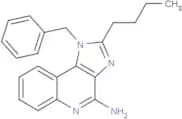
CAS:BBIQ is a powerful vaccine adjuvant that enhances innate immune responses and a potent and selectively toll-like receptor 7 (TLR7) agonist with an EC50 of 59.1Formula:C21H22N4Purity:99.71%Color and Shape:SolidMolecular weight:330.43SM360320
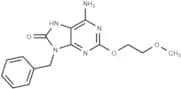
CAS:SM360320 (CL-087) is a selective TLR7 agonist that blocks HCV replication in hepatocytes and aids immunology research.
Formula:C15H17N5O3Purity:99.13%Color and Shape:SolidMolecular weight:315.33Rabeximod
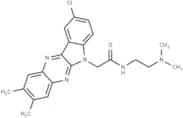
CAS:Rabeximod, an immunomodulator, eases autoimmune diseases, inhibits arthritis, and aids brain recovery post-injury by blocking inflammation.Formula:C22H24ClN5OPurity:99.99%Color and Shape:SolidMolecular weight:409.91TLR7 agonist 23
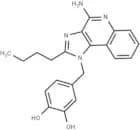
CAS:TLR7 agonist23 (compound 12b) is a potent agonist of Toll-like receptor-7 (TLR7), with an EC50 value of 0.15 uM. It is suitable for research in immune diseases.Formula:C21H22N4O2Color and Shape:SolidMolecular weight:362.42TLR9-IN-1
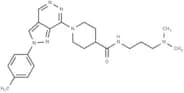
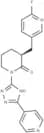
CAS:TLR9-IN-1: selective, potent human TLR9 inhibitor (IC50: 7 nM), useful for researching immune-related diseases.Formula:C23H31N7OColor and Shape:SolidMolecular weight:421.541Z105
CAS:1Z105, an orally active TLR4/MD2 ligand, facilitates dendritic cell maturation and antigen presentation, thereby preventing arthritis.Formula:C25H26N4O2SColor and Shape:SolidMolecular weight:446.57CU-CPD107
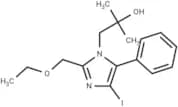
CAS:CU-CPD107 selectively activates TLR8 and ssRNA, inhibits TLR8 with R848 (IC50=13.7 μM), and coactivates with ssRNA.Formula:C16H21IN2O2Purity:98%Color and Shape:SolidMolecular weight:400.25ABR-238901
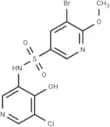
CAS:ABR-238901 is an oral, active S100A8/A9 blocker that inhibits the interaction of S100A8/A9 with its receptors RAGE(receptor for advanced glycation end productsFormula:C11H9BrClN3O4SPurity:98.71% - 99.04%Color and Shape:SolidMolecular weight:394.63Ref: TM-T39115
1mg116.00€5mg281.00€10mg447.00€25mg710.00€50mg973.00€100mg1,333.00€1mL*10mM (DMSO)310.00€Creatine ethyl ester
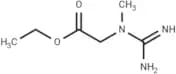
CAS:Creatine ethyl ester (CEE) is a readily available form of creatine commonly used in supplements. It can upregulate TLRs (TLR2, 3, 4, and TLR7) over a short period.Formula:C6H13N3O2Color and Shape:SolidMolecular weight:159.186SARM1-IN-5
CAS:SARM1-IN-5 (compound 1-23-a) is an inhibitor of SARM1, useful for researching diseases related to axonal degeneration, including Alzheimer's disease, Parkinson's disease, amyotrophic lateral sclerosis (ALS), and multiple sclerosis (MS).Formula:C18H17FN6OColor and Shape:SolidMolecular weight:352.37LHC-165
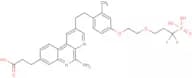
CAS:LHC-165 is an agonist of TLR7. It also has the potential to treat solid tumors.Formula:C29H32F2N3O7PPurity:98%Color and Shape:SolidMolecular weight:603.55SARM1-IN-4
CAS:SARM1-IN-4 (Compound 7) is an orally active SARM1 inhibitor that reduces plasma neurofilament light chain (NfL) levels in a mouse model following a 50 mg/kg oral dose. By inhibiting the NAD+ hydrolase activity of SARM1, it prevents programmed axon degeneration, making it useful for research in neurodegenerative and neurological diseases such as multiple sclerosis, amyotrophic lateral sclerosis, Parkinson's disease, and peripheral neuropathy.Formula:C13H17F2N3O2Color and Shape:SolidMolecular weight:285.29TLR7 agonist 28
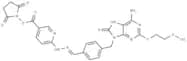
CAS:TLR7 agonist28 (compound 3) is a potent TLR7 agonist. This compound can be combined with anti-tumor monoclonal antibodies (mAb) for use in cancer immunotherapy.Formula:C26H25N9O7Color and Shape:SolidMolecular weight:575.533TLR7/8/9 antagonist 2
CAS:TLR7/8/9 antagonist 2 is an orally active and highly bioavailable vTLR7/8/9 antagonist. It inhibits HEK/hTLR7, HEK/hTLR8, and HEK/hTLR9 with IC50s of 0.011 μM, 0.029 μM, and 0.052 μM, respectively. TLR7/8/9 antagonist 2 can be used to study auto-inflammatory diseases such as systemic lupus erythematosus or lupus nephritis.Formula:C23H31N7Purity:98%Color and Shape:SoildMolecular weight:405.54