Pharmacopoeias, Pharmacy and Drug Related Works
Found 275 products for "Pharmacopoeias, Pharmacy and Drug Related Works".
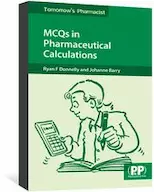
MCQs in Pharmaceutical Calculations
Donnelly, Ryan; Barry, Johanne
First edition
Scheduled closure of pharmpress.com
Ryan F Donnelly - Lecturer in Pharmaceutics and Johanne Barry - Teaching Fellow, Queen's University Belfast
ISBN 978 0 85369 836 4
Published Jun 2009
Paperback 216 x 138mm (224pp)
DESCRIPTION:
MCQs in Pharmaceutical Calculations aims to help pre-registration trainees and pharmacy students with their revision, enabling them to perform calculations accurately and with confidence.
Pharmacists frequently perform simple calculations as part of their professional practice. It is therefore vital that they are able to employ basic numeracy skills accurately so as not to compromise patient safety.
This book contains:
- 360 calculations questions in three commonly used multiple choice formats
- questions based on important areas in pharmaceutical science and practice:
- manipulation of formulae and dilutions
- dosing
- pharmacokinetics
- formulation and dispensing
- pharmaceutical chemistry
- descriptive answers giving the reasoning behind the answers.
MCQs in Pharmaceutical Calculations will be indispensable to pre-registration trainees and pharmacy students to help them prepare for their future career.
MCQs in Pharmaceutical Calculations is also available as an eBook.
CONTENTS:
1. Manipulation of Formulae and Dilutions
2. Dosing
3. Pharmacokinetics
4. Formulations and Dispensing
5. Pharmaceutical Chemistry
6. Practice Tests
REVIEWS:
24-Jul-09, IJPC
'Not only is this book a good review for pharmacy students AND pharmacists, but it can also serve to provide training to pharmacy technicians.'
The International Journal of Pharmaceutical Compounding, Volume 6, Issue 30 24th July 2009
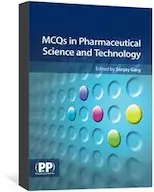
Color and Shape:216 x 138mmMCQs in Pharmaceutical Science and Technology
Garg, Sanjay
First edition
Scheduled closure of pharmpress.com
Edited by Sanjay Garg - Associate Professor and Deputy Head, School of Pharmacy, University of Auckland, New Zealand
ISBN 978 0 85369 913 2
Published Dec 2010
Paperback 234 x 156mm (296pp)
DESCRIPTION:
MCQs in Pharmaceutical Science and Technology is an invaluable resource for students and instructors in pharmaceutical science. With 600 MCQs and answers divided into six sections, the book progresses logically from basic science through to clinical considerations.
Multiple choice questions (MCQs) are a key assessment and study tool in pharmacy courses throughout the world. Questions included in each chapter cover basic, conventional and novel delivery systems and allow you to gain valuable practice in this discipline.
Topics covered include:
- physical pharmaceutics
- pharmacokinetics and biopharmaceutics
- particle science and calculations
- dosage form design
- advanced drug delivery systems
This book, edited by Sanjay Garg and with contributions from a range of distinguished pharmacy educators worldwide, provides a much-needed examination and study guide for pharmacy students in the scientific aspects of their studies.
MCQs in Pharmaceutical Science and Technology is also available as an eBook .
CONTENTS:
Test 1. Physical pharmaceutics
Test 2. Pharmacokinetics and biopharmaceutics
Test 3. Particle Science and calculations
Test 4. Dosage form design
Test 5. Advanced drug-delivery systems
Test 6. Miscellaneous topics
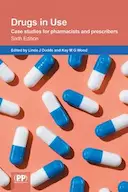
Color and Shape:234 x 156mmDrugs in Use
Edited by Linda J Dodds and Kay M G Wood
Sixth Edition
Scheduled closure of pharmpress.com
ISBN 9780857114181
Published Nov 2021
Paperback 234 x 156 mm (710pp)
DESCRIPTION:
Drugs in Use helps you bridge the gap between theoretical knowledge about medicines and its practical application to patients. The new sixth edition of this popular text has been extensively revised and includes seven new chapters on atrial fibrillation, chronic asthma, chronic pain, sepsis in adults, sepsis in children, deprescribing and supporting adherence. The use of self-study questions and answers to accompany each case helps to challenge you to consider the many options often available when drug-therapy decisions are made. Whenever appropriate, the patient journey is followed across primary and secondary care, reflecting the fact that many chronic conditions are now managed predominantly in primary care. Optimising medicines to ensure only what is needed and what is acceptable to the patient is prescribed is a significant challenge for newly qualified healthcare professionals. This book demonstrates how to apply the knowledge and skills acquired from pharmacology texts and formal learning. It is a valuable resource not only for students, but also for pharmacists and new prescribers. Linda J Dodds, BPharm, PG Cert (HE), MSc (ClinPharm), FRPharmS Kay M G Wood, BSc, DipClinPharm, PhD, PG Cert (HE), FHEA, MRPharmS
CONTENTS:
1. Hypertension
2. Non-ST elevation myocardial infarction
3. Atrial fibrillation
4. ST elevation myocardial infarction
5. Heart failure
6. Stroke
7. Type 1 diabetes
8. Type 2 diabetes
9. Acute kidney injury
10. Acute asthma
11. Chronic asthma
12. Chronic obstructive pulmonary disease
13. Dyspepsia and peptic ulcer disease
14. Ulcerative colitis
15. Alcohol-related liver disease
16 .Rheumatoid arthritis
17. Epilepsy
18. Parkinsons disease
19. Depression
20. Schizophrenia
21. Substance misuse
22. Dementia
23. Oncology
24. Symptom control in palliative care
25. Chronic pain
26. Eczema
27. Psoriasis
28. Surgery
29. Sepsis in an adult
30. Sepsis in a child
31. Polypharmacy
32. Supporting medicines adherence
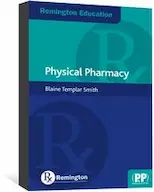
Remington Education: Physical Pharmacy
Smith, Blaine Templar
First edition
Scheduled closure of pharmpress.com
Blaine Templar Smith, RPh, PhD, graduate of the University
of Oklahoma College of Pharmacy and Nuclear Pharmacy programme
ISBN 978 0 85711 106 7
Published Oct 2015
Paperback 234 x 156mm (192pp)
DESCRIPTION:
Remington Education: Physical Pharmacy provides a simple, concise view of the concepts and applications of physical pharmacy. It is laid out in an easy-to-understand structure, guiding students through each relevant component of physical pharmacy.
Remington Education is a series of guides created specifically for pharmacy students to help them integrate the science of pharmacy into practice. By providing a summary of key information in the relevant subject area and including cases and/or questions and answers for self-assessment, they offer a practical way to check knowledge and track progress before, during, and after a course.
Each chapter features:
- Learning objectives
- Key points boxes
- Illustrations
- Assessment questions
- Further reading and references.
Blaine Templar Smith is a graduate of the University of Oklahoma College of Pharmacy and Nuclear Pharmacy programs. He is a registered pharmacist in both Oklahoma and Massachusetts, and has taught for more than 20 years at university level.
CONTENTS:
Intermolecular interactions
Pharmaceutical solvents
Solubility and dissolution
Colligative properties of solutions
Interfacial phenomena
Disperse systems - Colloids
Disperse systems - Coarse dispersions - Suspensions and emulsions
Answers to self-assessment questions
Index
REVIEWS:
December 2015
"The study of physical pharmacy often fills many students with trepidation but this book, published by Pharmaceutical Press, Royal Pharmaceutical Society, can help to alleviate this by providing a simple introduction to the topic. The author defines physical pharmacy as a subcategory of pharmaceuticals that focuses on the reasons that drug delivery systems behave as they do...
"The book is laid out in an easy to understand way, guiding the reader through each relevant component. By providing a summary of important information and including self-assessment questions and answers, the book offers a practical way for students to check knowledge and track progress before, during and after a course in physical pharmacy."
Laurence A. Goldberg, The Pharmaceutical Journal, 22 December 2015
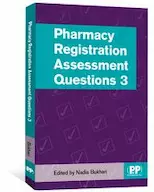
Pharmacy Registration Assessment Questions 3
Edited by Bukhari, Nadia
Third Edition
Scheduled closure of pharmpress.com
Nadia Bukhari - Senior Teaching Fellow in Pharmacy Practice & Pre-Reg Co-ordinator, UCL School of Pharmacy.
ISBN 978 0 85711 357 3
Published Mar 2019
Paperback 216 x 138mm (224pp)
DESCRIPTION:
Pharmacy Registration Assessment Questions 3 is the third volume in a series that follows on from the previous, highly popular Pharmacy Registration Assessment Questions 2. It features more than 400 entirely new, closed book and calculation questions. It can be used in conjunction with the previous volume or on its own. All questions are in line with current GPhC guidance, enabling you to prepare for the pharmaceutical pre-registration exam with confidence. This invaluable tool will help you familiarise yourself with the current style of questions, and give you a head start on preparation, planning and implementation.
Questions are based on print versions of BNF 76 and BNF for Children 2018-2019 alongside the most current treatment guidelines available. Questions feature patient information and pictorial representation of conditions, replicating those you may encounter in the real exam. This revision aid gives you the opportunity to practice a variety of question styles found in the assessment including:
· single best answer questions
· extended matching questions
· calculations
Martindale: The Complete Drug Reference
Brayfield, Alison
Scheduled closure of pharmpress.com
Product code MC_MART
DESCRIPTION:
Martindale: The Complete Drug Reference is a comprehensive and reliable reference resource on drugs and medicines used throughout the world. It is prepared by an experienced team of pharmacists who receive training in literature evaluation and search techniques. They use their professional expertise to provide a digest of the available literature, selecting the most
clinically relevant and appropriate information from reliable published sources.
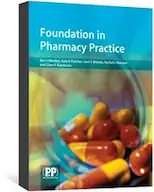
Foundation in Pharmacy Practice
Whalley, Ben J; Fletcher, Kate; Weston, Sam; Howard, Rachel; Rawlinson, Clare
First edition
Scheduled closure of pharmpress.com
Ben J Whalley - Lecturer in Clinical Pharmacy, Reading School of Pharmacy, Kate E Fletcher - Teacher Practitioner, School of Pharmacy, Sam E Weston - Teacher Practitioner, Reading School of Pharmacy, Rachel L Howard - Lecturer in Pharmacy Practice, Reading School of Pharmacy and Clare F Rawlinson - Lecturer in Pharmacy Practice, Reading School of Pharmacy
ISBN 978 0 85369 747 3
Published Jun 2008
Paperback 246 x 189mm (224pp)
DESCRIPTION:
Foundation in Pharmacy Practice is an essential introductory text for first year students. Providing an overview of the principal pharmacy practice topics in a practical and succinct manner, it serves as a starting point for further study.
Major areas covered include:
- an introduction to medicines management
- essential communication skills
- prescription types, legal requirements, interpretation and understanding
- packaging and labelling of medicines
- compliance, adherence and concordance
- sale and supply of medicines.
Foundation in Pharmacy Practice is an essential teaching and learning resource for pharmacy students and their teachers. Facilitated by regular signposting and referencing to specific texts, it includes a useful and easily navigated glossary of reference terms.
CONTENTS:
Section 1 Pharmacy and the Pharmacist
1. What Is Pharmacy Practice
2. Structure and Function of the NHS
3. An Overview of Community Pharmacy
4. An Overview of Hospital Pharmacy
5. An Overview of Industrial Sector Pharmacy
Section 2 Professional Aspects of Pharmacy
6. An Introduction to Medicines Management
7. An Introduction to Law, Ethics, Confidentiality and Duty of Care
8. An Overview of the Structure and Function of the RPSGB
9. Essential Communication Skills for Pharmacists
Section 3 Dispensing
10. Dispensing 1: Prescription Types and Legal Requirements
11. Dispensing 2: Prescription Interpretation and Understanding
12. Labelling and Packaging of Medicines 1: Dispensed Medicines
13. Labelling and Packaging of Medicines 2: Manufacturers Labelling
14. Extemporaneous Dispensing, a Beginner's Guide
15. Principles of Compliance, Adherence and Concordance
16. Sale and Supply of Medicines: Risk and Advice Provision
Appendix 1. Major Routes of Drug Administration
Glossary of Common Parmacy Practice Terms
REVIEWS:
08-Sep-08, Doody Enterprises, Inc.
'This book is detailed enough to provide readers with a strong background in pharmacy practice and to serve as a useful reference for seasoned professionals. It is comprehensive guide to practice.'
Richard P Berardi, RPh, BSc, MHA (Temple University Hospital) Doody Enterprises Sept 2008
Color and Shape:246 x 189mmInjectable Drugs Guide
Gray, Alistair; Wright, Jane; Goodey, Vincent; Bruce, Lynn
Scheduled closure of pharmpress.com
Alistair Gray - Senior Clinical Pharmacist (Community and Paediatric Services), Jane Wright - Lead Pharmacist, Lancashire Care NHS Trust, Vincent Goodey - Deputy Director of Pharmacy, and Lynn Bruce - Senior Clinical Pharmacist (Medical Assessment Unit)
Product code MC_IDG
DESCRIPTION:
Injectable Drugs Guide is a user-friendly, single point of reference for healthcare professionals in the safe and effective prescribing, administration and monitoring of injectable medicines. The guide consists of a A-Z listing of injectable drugs in monograph format. Each monograph covers:
- pre-treatment checks
- dosing regimens
- preparation and administration
- compatibility and stability information
- monitoring requirements during treatment
- side effects, interactions and pharmacokinetic information.
Designed to support the National Patient Safety Agency (NPSA) risk assessment process, each drug has a risk rating, with the text being reviewed and assessed at a number of hospital pharmacies.
CONTENTS:
Preface
How to use the Injectable Drugs Guide monographs
Injectable Drugs Guide on Medicines Complete
Feedback
About the authors
Contributors
Acknowledgements
Abbreviations
Index of cross-referenced terms
Monographs A - Z
Appendix 1. The basics of injectable therapy
Appendix 2. Good management principles
Appendix 3. Usual responsibilities of individual practitioners
Appendix 4. Advantages and disadvantages to parenteral therapy
Appendix 5. Injection techniques and routes
Appendix 6. Extravasation
Appendix 7. Intravascular devices
Appendix 8. Infusion devices
Appendix 9. Syringe drivers
Appendix 10. Ideal body weight, dosing in patients with renal or hepatic impairment
Appendix 11. Risk ratings
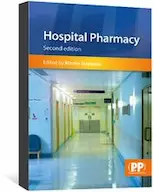
Hospital Pharmacy
Stephens, Martin
Second edition
Scheduled closure of pharmpress.com
Edited by Martin Stephens- Associate Medical Director, Clinical Effectiveness and Medicines Management, Southampton University Hospitals NHS Trust, Southampton, UK
ISBN 978 0 85369 900 2
Published Mar 2011
Paperback 234 x 156mm (352pp)
DESCRIPTION:
Hospital Pharmacy outlines the changes in pharmacy practice within the hospital setting and discusses the vast range of services that are provided. Each chapter is devoted to an area of pharmacy practice and discusses its history, current practice and future developments.
This new edition has been completely revised and updated and includes chapters on:
- pharmacy in the acute independent sector
- controlled drugs in hospital pharmacy
- clinical pharmacy
- pharmacist prescribing
- mental health
- consultant pharmacists.
This book is essential reading for pharmacy undergraduates, pre-registration graduates and newly qualified pharmacists as well as a key reference text for all hospital pharmacists departments. With its broad all-encompassing coverage it will also be of interest to other healthcare professionals.
Hospital Pharmacy is also available as an eBook.
CONTENTS:
1. Hospital Pharmacy within the NHS
2. Pharmacy in the acute independent sector
3. Purchasing medicines
4. Medicines supply and automation
5. Controlled drugs in hospital pharmacy
6. Technical services
7. Quality assurance
8. Medicines iInformation
9. Clinical pharmacy
10. Pharmacist prescribing
11. Strategic medicines management
12. Risks with medicines
13. Mental health pharmacy
14. Community health services
15. Information technology
16. Research and development
17. Workplace development
18. Consultant pharmacists
19. Managing services
REVIEWS:
Patrick McDonnell, Pharm.D.
"a book that details the features of pharmacy services within and from hospital-based
pharmacies in the United Kingdom...This book certainly provides readers with a solid understanding of the practice of hospital-based pharmacy in the U.K.
Patrick McDonnell, Pharm.D. (Temple University School of Pharmacy)
Color and Shape:234 x 156mmPediatric Injectable Drugs
Phelps, Stephanie J; Hak, Emily B; Crill, Catherine M.
Scheduled closure of pharmpress.com
Edited by Stephanie J. Phelps, Emily B. Hak, and Catherine M. Crill
Product code MC_PED
Published Nov 2011
DESCRIPTION:
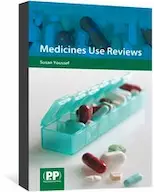
Medicines Use Reviews
Youssef, Susan
First edition
Scheduled closure of pharmpress.com
Susan Youssef - Former Senior Lecturer at DeMontfort University, Leicester, UK
ISBN 978 0 85369 887 6
Published May 2010
Paperback 216 x 138mm (192pp)
DESCRIPTION:
Provides evidence-based information, tips and guidance on how to conduct successful Medicines Use Reviews (MURs).
The ten main chapters identify and discuss specific medical conditions seen in community pharmacy while further sub chapters include advice on treatment options and relevant practical tips.
This comprehensive book also includes:
- an overview of MURs
- explanation of the accreditation process
- advice on MUR form documentation
- guidance on providing a patient-focused service.
This excellent reference enables pharmacists to provide high quality advice to patients. It will be invaluable for all pharmacists carrying out MURs, pre-registration and newly registered pharmacists, clinical pharmacy students, accredited pharmacists setting up a MUR service, pharmacy students and lecturers in pharmacy practice.
Medicines Use Reviews is also available as an eBook.
CONTENTS:
Introduction to Medicine Use Reviews
1. Gastrointestinal Conditions
2. Cardiovascular Conditions
3. Respiratory Conditions
4. Neurological Conditions
5. Endocrine Conditions
6. Urinary Tract Conditions
7. Haematological Conditions
8. Bone and Joint Disorders
9. Eye Conditions
10. Skin Conditions
REVIEWS:
"I didn't expect Youssef's book to be as good as it is: very clear, covers topic from different points of view, brilliantly written."
RLM, Day Lewis Pharmacy, July 2016
"Excellent book. To be used with the BNF. All counselling points summarised with a few words. Can easily be assessed, carried around. Really good for quickly looking up drugs during reviews."
Olaola, Amazon.co.uk, September 2011
RESOURCES:
MUR training website
The author runs a website associated with this book. This website has been developed by practising pharmacists to help pharmacists who want ideas on how to develop their MUR skills. There are several case scenarios for you to work through, accompanied by the main MUR points and the MUR outcomes. There are also videos showing MUR snapshots.
Visit www.murtraining.co.uk
The MUR training website and resources do not express the views or concerns of the Royal Pharmaceutical Society of Great Britain or Pharmaceutical Press. Pharmaceutical Press can accept no responsibility or liability whatsoever in respect of their operation or content.
Color and Shape:216 x 138mmPharmaceutical Compounding and Dispensing
Marriott, John; Wilson, Keith; Langley, Christopher A; Belcher, Dawn
Second edition
Scheduled closure of pharmpress.com
John F Marriott - Senior Lecturer, Pharmacy Practice, Aston University School of Pharmacy, Keith A Wilson - Head of School , Aston University School of Pharmacy, Christopher A Langley - Lecturer in Pharmacy Practice, Aston University School of Pharmacy and Dawn Belcher - Teaching Fellow, Pharmacy Practice, Aston University School of Pharmacy
ISBN 978 0 85369 912 5
Published May 2010
Paperback 246 x 189mm (304pp)
DESCRIPTION:
Pharmaceutical Compounding and Dispensing is a comprehensive guide to producing extemporaneous formulations safely and effectively. This is a modern, detailed and practical book on the theory and practice of extemporaneous compounding and dispensing.
The book covers three core sections:
- the history of compounding
- pharmaceutical forms and their preparation
- product formulae.
Pharmacists have been responsible for compounding medicines for centuries. Although most modern medicines are not compounded in a local pharmacy environment, there are still occasions when it is imperative that pharmacists have this knowledge.
Fully revised and updated, this new edition of Pharmaceutical Compounding and Dispensing is an indispensable reference for pharmacy students and practicing pharmacists.
Videos of dispensing procedures can be viewed with the password from the book.
Pharmaceutical Compounding and Dispensing is also available as an eBook.
CONTENTS:
Part 1 - History of compounding
1. Historical perspective
2. Obsolete dosage forms, equipment and methods of preparation
3. Historical weights and measures
Part 2 - Pharmaceutical forms and their preparation
4. Key formulation skills
5. Extemporaneous dispensing
6. Solutions
7. Suspensions
8. Emulsions
9. Creams
10. Ointments, pastes and gels
11. Suppositories and pessaries
12. Powders and capsules
13. Specialised formulation issues
Part 3 - Product formulae
14. Creams
15. Dusting powders
16. Internal mixtures
17. Liniments, lotions and applications
18. Ointments and pastes
19. Powders
20. Miscellaneous formulae
Appendix 1. Glossary of terms used in formulations
Appendix 2. Abbreviations commonly used in pharmacy
Appendix 3. Changing substance names from British Approved Names to recommended International Non-Proprietary Names
REVIEWS:
February 2011, American Journal of Pharmaceutical Education
"The book is well received, since there are few textbooks or reference books available devoted specifically to compounding. The authors should be commended for emphasizing the historical content in tandem with the preparation instruction...the book remains a good resource for anyone interested in compounding"
Christine R. Birnie, PhD, American Journal of Pharmaceutical Education 75(1), Feb 2011
Color and Shape:246 x 189mmBritish National Formulary
Joint Formulary Committee
Scheduled closure of pharmpress.com
Published jointly by BMJ Publishing Group Ltd and Royal Pharmaceutical Society
Product code MC_BNF
DESCRIPTION:
The BNF provides up-to-date, practical guidance on prescribing, dispensing, and administering medicines. This essential reference reflects current best practice as well as legal and professional guidelines relating to the uses of medicines, including:
- Guidance on the drug management of common conditions
- Details of medicines with special reference to their uses, cautions, contra-indications, side-effects, doses, and relative costs
- Guidance on prescribing, monitoring, dispensing, and administering medicines
for Children at NHS User registration .
Facilitating Learning in Healthcare
Carter, Sarah
First edition
Scheduled closure of pharmpress.com
Edited by Sarah Carter - Research Manager, University of London School of Pharmacy, UK.
ISBN 978 0 85369 954 5
Published Oct 2011
Paperback 234 x 156mm (160pp)
DESCRIPTION:
This practical and easy-to-read guide is designed for people from non-teaching backgrounds who have been asked to facilitate the learning process in the healthcare disciplines. It will enable new teachers, lecturers, assessors, tutors and facilitators to quickly and easily understand common educational concepts, to learn how to effectively assist learning, and to reflect and improve upon their own teaching practice.
Containing top tips, personal accounts and exercises, this book includes:
- teaching and learning theories and concepts
- developing course material
- teaching strategies and approaches to learning
- assessing learning
- evaluating teaching
- reflecting on teaching and learning.
Facilitating Learning in Healthcare is a useful practical resource for new teachers, mentors and group supervisors in all healthcare disciplines.
Facilitating Learning in Healthcare is also available as an ebook.
CONTENTS:
1. Introducing Teaching and Learning
2. Developing Course Material
3. Teaching Strategies and Approaches to Learning
4. Assessing Learning
5. Evaluating Teaching
6. Reflecting on Teaching and Learning
REVIEWS:
May-2012, Nursingtimes.net
"...If teaching is not your main role, this book provides sufficient depth to support your development as an educator along with extensive reference lists to guide your further reading...This is a book that fills an important space on my bookshelf and has proven to be a fantastic, concise resource for teaching and learning theory. For practitioners like me who are developing their teaching skills or undertaking teaching qualifications, this book brings together a range of literature, theories and approaches into one accessible volume."
Simon Browes, Doctoral research student, nursingtimes.net, May 2012
2012, Nursing Standard
"The book would be useful as adjunct reading for those embarking on teaching for the first time. It provides a wealth of information on approaches to use that support learning, its assessment and evaluation, some of which are innovative and could be fun to use. It is well written...I especially like the way the bibliography is broken down into subject areas, enabling readers to spot texts supporting their special interests."
Dame Betty Kershaw, Nursing Standard, 2012
Jan-2012, British Journal of Clinical Pharmacology
"...This book will allow teachers new to the field of healthcare education to understand the common educational concepts and techniques, to learn how to effectively assist learning, and to reflect upon and improve their own teaching practice. This book is however not intended to be a comprehensive teaching manual. It is rather, an easy-to-read guide which will allow the teacher [to] understand common educational concepts and apply these to their every day teaching practice."
David Williams, RCSI/Beaumont Hospital, British Journal of Clinical Pharmacology, January 2012
04-Nov-2011, International Journal of Pharmaceutical Compounding
"As Colleges of Pharmacy seem to be shifting more and more pharmacy education activities to practicing pharmacists, this book will be of some value to those that have limited experience in teaching. It contains tips, personal accounts, and exercises...This book can be of great value to practitioners as well as college faculty and is written by experienced authors."
International Journal of Pharmaceutical Compounding, 4 November 2011
Color and Shape:234 x 156mmPhysicochemical Principles of Pharmacy
Florence, Alexander T; Attwood, David
Sixth edition
Scheduled closure of pharmpress.com
Alexander T Florence - Former Dean, School of Pharmacy, University of London, UK and David Attwood - Professor Emeritus, School of Pharmacy and Pharmaceutical Sciences, University of Manchester, UK
ISBN 978 0 85711 174 6
Published Dec 2015
Paperback 246 x 189mm (664pp)
DESCRIPTION:
Physicochemical Principles of Pharmacy is an established textbook that provides you with full coverage of the physicochemical principles essential to the modern pharmacist and pharmaceutical scientist.
This sixth edition continues to boast a broad chemical and physicochemical base and covers every aspect of drug properties from the design of dosage forms to their delivery by all routes to sites of action in the body. Now with more clinical examples, new questions and extra case studies it encourages you to apply this knowledge and understand how these fundamental concepts relate to both clinical and industrial practice.
It features brand new chapters/sections on:
- Paediatric and geriatric formulations
- Adverse events: the role of formulations and delivery systems
- Generic medicines and biosimilars
- Solid dose form manufacture
Read our author interview .
Written by experienced academics and highly illustrated throughout, Physicochemical Principles of Pharmacy is an approachable and comprehensive resource that is perfect for supporting you through the physical pharmacy and drug delivery elements of pharmacy and pharmaceutical science courses.
CONTENTS:
Solids
Physicochemical properties of drugs in solution
Drug stability
The solubility of drugs
Surfactants
Emulsions, suspensions and related colloidal systems
Polymers and macromolecules
Drug absorption basics and the oral route
Parenteral routes of drug administration
Paediatric and geriatric formulations
Physicochemical interactions and incompatibilities
Adverse events: the role of formulations and delivery systems
Peptides, proteins and monoclonal antibodies
Pharmaceutical nanotechnology
Physical assessment of dosage forms
Generic medicines and biosimilars
REVIEWS:
Australian Prescriber, October 2016
"The text is highly illustrated throughout and includes key points and appropriate examples, providing clinicians with some easily accessible and relevant information...
...Some examples of adverse events due to excipients, impurities, the influence of dosage forms, materials in delivery devices and even light-induced effects are also included. Although the detection of adverse events is not an easy task, these examples may assist clinicians in asking the right questions to predict or identify adverse effects...
...The new focus on applications to clinical practice in this edition has extended its usefulness from pharmacy and pharmaceutical scientist courses to clinicians seeking an understanding of formulations, especially for children and older people, and in identifying the cause of adverse events."
Beverley Glass, Australian Prescriber, October 2016.
The Pharmaceutical Journal, January 2016
"A standard text on physical pharmacy for students around the world.
...The sixth edition features new chapters or sections on paediatric and geriatric formulations, adverse events, generic medicines and biosimilars, and solid dose form manufacture...
...All chapters are well illustrated and tables are clearly set out. Key points and clinical points are highlighted and readers are able to work through calculations and refer to the answers which can be found close by...
...It fulfils an important requirement of describing the principles of physical pharmacy by using pharmaceutical examples to illustrate the topics."
Laurence A. Goldberg, The Pharmaceutical Journal, January 2016
Doody's Notes, March 2016
"Anyone interested in understanding the fundamental physicochemical principles and their application in formulation development should find this an excellent resource...
...This sixth edition has maintained its superior quality both in content and in presentation. It has been recognized as an excellent resource by pharmacy educators and students and by pharmaceutical scientists. I have been using this book for the last 10 years and I have found it to be invaluable."
Rahmat M. Talukder, PhD, RPh, Doody's Notes, March 2016.
From the reviews of previous editions:
"Changes in this edition include the new chapter on pharmaceutical nanotechnology, key learning points, more complete examples of clinical calculations, and a more clear distinction between the basic text and more complex theory. This recommended book is easy-to-read and is an asset to compounding and formulation pharmacists."
International Journal of Pharmaceutical Compounding, October 2011
"This book is excellent. It is the most accessible book I have read on the topic and is perfect for undergraduate pharmacy students."
Michael Taylor, Lecturer in Pharmaceutics, School of Pharmacy and Pharmaceutical Sciences, University of Central Lancashire, January 2010
" an excellent reference for both graduate students and scientists in the pharmaceutical industry, as it provides and overview of the physicochemical principles important in pharmaceutics and biopharmaceutics."
Drug Development and Industrial Pharmacy, 33:209, 2007
FASTtrack: Pharmacology
Randall, Michael D; Kendall, David A; Alexander, Stephen PH
Second edition
Scheduled closure of pharmpress.com
Michael D. Randall - Professor of Pharmacology, School of Biomedical Sciences, University of Nottingham Medical School; David A. Kendall - Professor of Pharmacology, School of Biomedical Sciences, University of Nottingham Medical School; and Stephen PH Alexander, Associate Professor in Molecular Pharmacology, School of Biomedical Sciences, University of Nottingham Medical School.
ISBN 978 0 85711 057 2
Published Apr 2012
Paperback 234 x 156mm (288pp)
DESCRIPTION:
Are your exams coming up? Are you drowning in textbooks and lecture notes and wondering where to begin? Take the FASTtrack route to successful study for your examinations. FASTtrack provides the ultimate lecture notes and is a must-have for all pharmacy students wanting to study and test themselves for forthcoming exams.
FASTtrack: Pharmacology aims to provide a brief account of drug action, as a study and revision aid. In doing this, the authors have generally taken a therapeutic area and considered the major classes of drugs, their actions and, to a limited degree, their uses.
There are many excellent brief guides to pharmacology and so their second aim is to present a study guide which deals with molecular pharmacology at a more advanced level, so that the book is also useful for advanced pharmacology studied in the later years of pharmacy and science degrees. This study guide is therefore useful at each level of undergraduate study.
New in this edition:
- Each chapter completely updated to take account of recent changes, and include future drugs
- Multiple choice tests
- New chapters on immunopharmacology, oral contraceptives and local anaesthetics
- Greater use of summary tables.
FASTtrack: Pharmacology is also available as an ebook.
Visit the FASTtrack website for more MCQs from the FASTtrack series.
CONTENTS:
1. Pharmacodynamics
2. Receptors
3. G-proteins and Their Downstream Signaling Cascades
4. Ion Channels and Transporters
5. Quantitive Pharmacology
6. Autonomic Pharmacology
7. Local Mediators
8. Pharmacokinetics and Drug Metabolism
9. Gastric Pharmacology
10. Lower Gastrointestinal Pharmacology
11. Antiemetics
12. Antiarrhythmics
13. Cardiovascular Drugs
14. Renal and Urinary Pharmacology
15. Antithrombotic Agents
16. Antiobesity Drugs
17. Asthma and Chronic Obstructive Pulmonary Disease
18. Allergy
19. Anxiolytics and Hypnotics
20. Antidepressants
21. Antiepileptic Drugs
22. Antipsychotic Drugs
23. Parkinson's Disease
24. Analgesics
25. Drugs of Abuse
26. General Anaesthetics
27. Neuromuscular Blocking Drugs
28. Thyroid Disorders
29. Diabetes Mellitus
30. Antibacterial Agents
31. Non-bacterial Infections
32. Anticancer Drugs
33. Steroids
34. Oral Contraceptives
35. Immunopharmacology
36. Biopharmaceuticals
37. Variation in Clinical Efficacy
REVIEWS:
May 2013, Doody's Notes
"This book is intended to enhance material covered in traditional pharmacology textbooks...
...Visuals, algorithms, diagrams, and key points interspersed throughout the book help reinforce and summarize the material. Readers will be able to assess their understanding of the material through self-assessment questions at the conclusion of each chapter...
...Undergraduate pharmacy students, as well as other healthcare students, will find this a useful guide to help prepare for examinations."
Neela A. Bhajandas, PharmD, Doody's Notes, May 2013
June 2012, British Journal of Pharmacology
"The book provides good basic knowledge of pharmacology and is well organized, with sections on principles, followed by sections on the drugs used to treat different therapeutic areas...
...Overall the authors have generally obtained a good balance of core information that is accessible, without it being a textbook in disguise!...
...Whilst this book is aimed primarily at Pharmacists, I am sure it would also be of value as a revision aid for Medical students...
...my own daughter who is a 4th year Medical student said she would buy it, an endorsement indeed!"
Professor Clive Page, British Journal of Pharmacology, June 2012
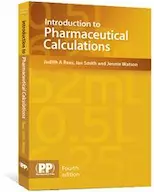
Color and Shape:234 x 156mmIntroduction to Pharmaceutical Calculations
Rees, Judith A; Smith, Ian; Watson, Jennie
Fourth edition
Scheduled closure of pharmpress.com
Judith A Rees - Senior Lecturer, School of Pharmacy, Keele University; Ian Smith - Lecturer in Pharmacy Practice, Keele University; Jennie Watson - Boots Teacher Practitioner, University of Central Lancashire
ISBN 978 0 85711 168 5
Published Apr 2015
Paperback 234 x 156mm (288pp)
DESCRIPTION:
Introduction to Pharmaceutical Calculations is your comprehensive guide to successfully performing pharmaceutical calculations. Now in its fourth edition, this popular book covers everything you need to know to pass those all important pharmacy calculation exams.
Every chapter contains learning objectives, worked examples and sample questions and has been fully updated.
Brand new features include:
- Introduction (including expert tips for approaching calculations)
- Doses in children
- 8 short videos (to help you grasp some of the key concepts) covering:
- Simple dilution
- Proportional sets
- Conversion of units
- Representations of concentrations
- Mixing two concentrations without a final volume
- Displacement values
- Parenteral doses
- Moles
- More images and diagrams
Written by experienced pharmacy lecturers and a teacher practitioner, this book will help you tackle every type of pharmaceutical calculation and is ideal for both students and pre-regs.
We recommend you use it alongside the companion Pharmaceutical Calculations Workbook to practice and perfect your calculation skills.
Good luck in your exams!
Save money by buying our special calculations package .
Videos demonstrating calculations concepts can be viewed with the password from the book.
CONTENTS:
Introduction
Rational numbers
Systems of units
Concentrations
Dilutions
Formulations
Calculation of doses
Doses in children
Density, displacement volumes and displacement values
Calculations involving molecular weights
Parenteral solutions and isotonicity
Accuracy of measurement
Calculations involving information retrieval
Appendix 1: Metric prefixes
Appendix 2: Conversion factors
Appendix 3: Multiplication and division
Appendix 4: Atomic weights of the elements
Appendix 5: Body surface area in children
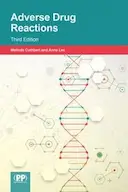
Adverse Drug Reactions
Edited by Anne Lee & Melinda Cuthbert
Third Edition
Scheduled closure of pharmpress.com
ISBN 9780857114006
Published Mar 2023
Paperback 496pp
DESCRIPTION:
Adverse reactions to medicines continue to present a considerable burden on healthcare, causing considerable morbidity and mortality. Healthcare professionals need to understand the problem of adverse drug reactions and be aware of how they can be prevented and managed. The new 3rd edition of Adverse Drug Reactions is a practical guide to the reactions that affect particular organ systems. Covers the most common types of reaction, how to recognise them, and the medicines implicated most often. Offers practical guidance on the most appropriate management of suspected adverse drug reactions. Includes clear learning objectives & case studies About the editors Melinda Cuthbert is Associate Director Pharmacy (Acute), NHS Lothian, Edinburgh Anne Lee is Chief Pharmacist, Scottish Medicines Consortium, Healthcare Improvement Scotland
CONTENTS:
Introduction to adverse drug reactions and pharmacovigilance: Melinda Cuthbert;
Side effects and patients: Sheila C Noble;
Pharmacogenetics: Munir Pirmohamed, Victoria Rollinson;
Pregnancy: Jane Bass, Matthew Caldwell, Sophie Lumley, Catherine Nelson-Piercy, Nanda Surabhi ;
Drug-induced cutaneous reactions: David Clifford, Sylwia Michlewska, Joanna Skwarski;
Gastrointestinal system: Benjamin Kelly Hannan, Lynne Michelle Merchant, Duncan James Wilson;
Hepatic disorders: Robbie Cord;
Renal disorders: Aileen Dunleavy;
Endocrine disorders: Yvonne Clark; Elaine McIvor;
Respiratory disorders: Fiona McTaggart, Jenny Scott;
Musculoskeletal disorders: Christine Randall;
Blood disorders: Kelly Baillie;
Mental health disorders: Anne Lee;
Cardiovascular effects: Aaron Linstead;
Neurological disorders: Fiona Needleman;
Sexual dysfunction and infertility: Sherry A Wright, Joo Thong;
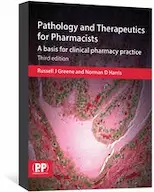
Pathology and Therapeutics for Pharmacists
Greene, Russell J; Harris, Norman D
Third edition
Scheduled closure of pharmpress.com
Russell J Greene - Senior Lecturer in Clinical Pharmacy and Norman D Harris - Emeritus Reader in Pharmaceutics (Clinical Pharmacy)
ISBN 978 0 85369 690 2
Published Feb 2008
Paperback 246 x 189mm (1008pp)
DESCRIPTION:
Pathology and Therapeutics for Pharmacists takes an integrated approach to the pathophysiological and pharmacotherapeutic principles underlying the treatment of disease. It is based on many years' experience of teaching undergraduate clinical pharmacy courses.
This new edition has been completely revised and updated to reflect advances in therapeutic practice and in the understanding of many disease states.
Changes to the third edition include:
- a new chapter on haematological disease
- incorporation of evidence based national and international therapeutic guidelines
- the addition of thyroid disease in the endocrine chapter
- a thoroughly revised chapter on pathological processes
- re-ordered chapters to reflect British National Formulary sequence.
Pathology and Therapeutics for Pharmacists is an essential textbook for undergraduate pharmacists and should be of considerable practical help to practising pharmacists and other healthcare professionals.
CONTENTS:
Section 1:
Therapeutics
General Strategy
Major Pathological Processes in Disease
Section 2:
Gastrointestinal and Liver Disease
Cardiovascular System
Respiratory Disease
Central Nervous System
Pain and Its Treatment
Infections and Antimicrobial Therapy
Endocrine Diseases
Neoplastic Disease
Haematology-anaemia
Rheumatology
Skin Disorders
Renal System
REVIEWS:
08-Sep-08, Irish Pharmacy Journal
'The authors have produced a well written and easy-to-use book. Like its predecessors, this book is one of the essential reference texts for any pharmacy that provides clinical service.'
Sinead McCool, Irish Pharmacy Journal August/ September 2008
09-Sep-08, The Annals of Pharmacotherapy
'This book is well written with respect to its intended audience, providing adequate depth of explanation when necessary but expecting higher baseline knowledge than that of the general public.'
Philip J Wenger PharmD BCPS, The Annals of Pharmacotherapy Volume 42, September 2008
01-May-08, Doody
'The authors have extensive experience in community and hospital pharmacy, as well as teaching appointments at pharmacy schools...this is a useful book for students or pharmacists who would like an overview of treatment options available for certain disease states.'
Melissa M. Ranieri, BS, PharmD(Temple University School of Pharmacy) Doody Enterprises, Inc. May 2008
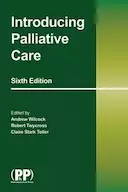
Color and Shape:246 x 189mmIntroducing Palliative Care (IPC 6)
Edited by Andrew Wilcock, Robert Twycross and Claire Stark Toller
Sixth Edition
Scheduled closure of pharmpress.com
ISBN 9780857114174
Published Sep 2021
Paperback 416pp
DESCRIPTION:
Introducing Palliative Care is the well-established introductory resource for students and qualified healthcare professionals in the area of palliative care. The sixth edition has been fully revised in line with current practice. It is split into four parts to cover essential aspects of palliative care and include essential Palliative Care Formulary containing core information about drugs used in palliative care. New edition updates include: Fully revised in line with current practice and the latest edition of the Palliative Care Formulary (PCF7) Split into 4 parts to cover essential aspects of palliative care Updated essential Palliative Care Formulary containing core information about drugs used in palliative care Ethics chapter includes an expanded section on medically-assisted dying Although medically oriented, there is much of use to undergraduates and graduates of other disciplines. The clinical focus is on advanced cancer, but the general principles and most of the details are equally applicable to patients dying from other incurable, progressive, life-threatening conditions. About the Editors Andrew Wilcock is Macmillan Clinical Reader in Palliative Medicine and Medical Oncology, Nottingham University and Honorary Consultant Physician, Hayward House, Nottingham University, Hospitals NHS Trust. Robert Twycross is Emeritus Clinical Reader in Palliative Medicine, Oxford University. Claire Stark Toller is Consultant in Palliative Medicine, Mountbatten Hampshire and University Hospital Southampton NHS Trust.
CONTENTS:
Preface
IPC and beyond
Abbreviations
Part 1
1. Scope of palliative care
2. Ethical aspects
3. Communication
4. Psychological aspects
5. Spiritual aspects
6. Bereavement
Part 2
7. Symptom management: principles and pain
8. Symptom management: alimentary
9. Symptom management: respiratory
10. Symptom management: genito-urinary
11. Symptom management: psychological & neurological
12. Symptom management: other
13. Emergencies
14. End-of-life care: planning and last days of life
Part 3
15. Children: general aspects
16. Children: symptom management
17. Children: bereavement
Part 4
18. The Essential Palliative Care Formulary
Appendices
1. Curriculum for under-graduate medical education
2. Verifying and certifying a death in the UK
3. Palliative care resources for covid-19