Microbiology/Virology
Microbiology and virology inhibitors are compounds that target microorganisms, including bacteria, viruses, and fungi, disrupting their growth, replication, or survival. These inhibitors are essential for studying microbial pathogenesis, understanding resistance mechanisms, and developing new antimicrobial and antiviral therapies. Inhibitors in this category are used to combat infectious diseases, explore microbial ecology, and investigate host-pathogen interactions. At CymitQuimica, we provide a broad selection of high-quality microbiology and virology inhibitors to support your research in infectious diseases, microbiology, and virology.
Subcategories of "Microbiology/Virology"
- Antibacterial(3,303 products)
- Antibiotic(908 products)
- Antifection(23 products)
- DHFR(31 products)
- DNA/RNA Synthesis(690 products)
- HBV(170 products)
- HIV Protease(486 products)
- HSV(87 products)
- Integrase(2 products)
- Ribosome(5 products)
Show 2 more subcategories
Found 5857 products for "Microbiology/Virology".
Sort by
Purity (%)
0
100
|
0
|
50
|
90
|
95
|
100
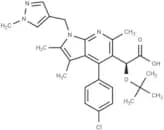
Pirmitegravir
CAS:Pirmitegravir (STP0404) is a potent ALLINI, blocks LEDGF/p75 site, shows antiviral action against HIV.Formula:C27H31ClN4O3Purity:99.79% - 99.79%Color and Shape:SolidMolecular weight:495.01Cilagicin
Cilagicin is a dodecapeptide lipid and serves as an antibiotic (antibiotic) effective against Gram-positive bacteria. It features a dual mechanism that targets polyisoprene phosphate binding, which helps to inhibit the development of resistance.Formula:C68H103N15O21Color and Shape:SolidMolecular weight:1465.7453EBP-59
EBP-59 is a bacterial inhibitor with anti-biofilm activity against Gram-positive bacteria. It effectively inhibits Staphylococcus aureus and MRSA (methicillin-resistant Staphylococcus aureus). EBP-59 is utilized in the study of bacterial infections.Formula:C13H9Cl2F5N2OSColor and Shape:SolidMolecular weight:405.97328Cathelicidin-2 (chicken)
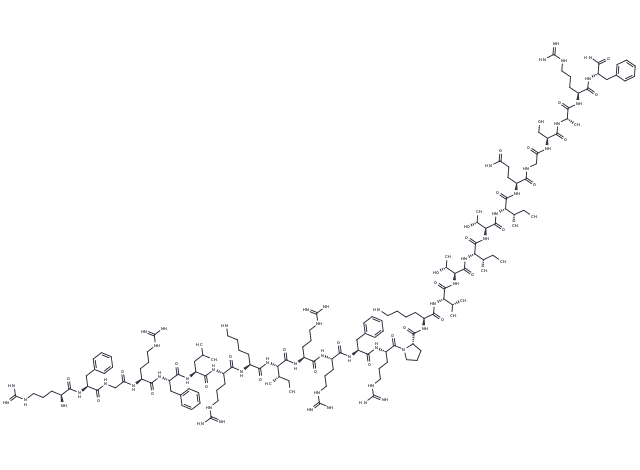
CAS:Cathelicidin-2 chicken is an antimicrobial peptide exhibiting potent bactericidal and fungicidal activity specifically against Salmonella strains isolated from chickens.Formula:C147H245N51O30Color and Shape:SolidMolecular weight:3206.84Antibacterial agent 216
Antibacterialagent 216 (Compound 2a) is an antibacterial agent that demonstrates significant bactericidal activity when used in conjunction with INH and RIF. It shows notable in vitro anti-tuberculosis effects against Mtb H37Rv and MDR clinical isolates, making it useful for tuberculosis research.Formula:C20H13Cl2NO4Color and Shape:SolidMolecular weight:401.02216Gypsogenic acid
CAS:Gypsogenic acid, a triterpenic acid isolated from Miconia stenostachya, exhibits antibacterial and antitrypanosomal activities. This compound demonstrates minimum inhibitory concentrations (MICs) ranging from 50-200 μg/mL against oral bacterial pathogens including Enterococcus faecalis, Streptococcus salivarius, Streptococcus sanguinis, Streptococcus spp., and Streptococcus sobrinus. Additionally, gypsogenic acid can induce the lysis of Trypanosoma cruzi in isolated mouse blood, with an IC50 value of 56.6 μM.Formula:C30H46O5Color and Shape:SolidMolecular weight:486.68GS-443902
CAS:Remdesivir triphosphate (GS-443902) inhibits RSV/HCV RdRp with IC50s: 1.1/5 µM.Formula:C12H16N5O13P3Purity:98%Color and Shape:SolidMolecular weight:531.2Ile-AMS TFA
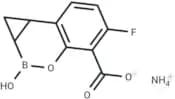
Ile-AMS TFA exhibits activity against P. falciparum, with an ABSIC50 value of 1.19 nM.Formula:C18H27F3N8O8SColor and Shape:SolidMolecular weight:572.52(rac)-Xeruborbactam ammonium
(rac)-Xeruborbactam ammonium is a beta-lactamase inhibitor and can be used in the study of bacterial infections.Formula:C10H11BFNO4Purity:99.71%Color and Shape:SolidMolecular weight:239.01S 82-5455
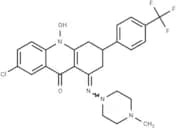
CAS:S 82-5455 is a floxacrine derivative.Formula:C25H24ClF3N4O2Color and Shape:SolidMolecular weight:504.93Antifungal agent 124
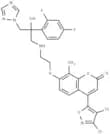
Antifungalagent 257 (Compound 7e) is a broad-spectrum antifungal agent with an EC50 value of 4.15 μM against F. graminearum.Formula:C26H21Cl2F2N5O4SColor and Shape:SolidMolecular weight:608.444Bromochloroacetonitrile
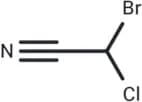
CAS:Bromochloroacetonitrile, a water disinfection by-product, is mutagenic and can break DNA strands.Formula:C2HBrClNColor and Shape:SolidMolecular weight:154.39A 83016F
CAS:A 83016F, an antibiotic from an actinomycete designated A83016, exhibits weak antimicrobial activity.Formula:C37H55NO10Color and Shape:SolidMolecular weight:673.83Spergualin trihydrochloride
CAS:Spergualin trihydrochloride is a natural product that first identified as an antibiotic from culture filtrates of Bacillus laterosporus BMG162-aF2[1].Formula:C17H38ClN7O4Color and Shape:SolidMolecular weight:439.99Malachite Green Carbinol base
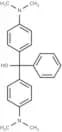
CAS:Malachite Green Carbinol Base (MGOH, MGCB), non-fluorescent MG derivative, changes color under UV, releasing OH- for pH shift.Formula:C23H26N2OColor and Shape:SolidMolecular weight:346.47Mildiomycin
CAS:Mildiomycin, an antibiotic from Streptoverticillium, targets barley mildew, some Mycobacterium, Rhodotorula, but not most fungi/bacteria.Formula:C19H30N8O9Color and Shape:SolidMolecular weight:514.49Antimalarial agent 28
Antimalarial agent 28 (Compound 2i) acts as an antiplasmodial agent, exhibiting inhibition of P.Formula:C27H25ClFN3O2Purity:98%Color and Shape:SolidMolecular weight:477.96Boromycin
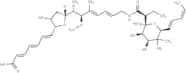
CAS:Boromycin, a boron macrolide from Streptomyces, impedes B. subtilis & B. halodurans, halts cell cycles, and inhibits various HIV strains.Formula:C45H74BNO15Color and Shape:SolidMolecular weight:879.89Homo-BacPROTAC6
Homo-BacPROTAC6, a ClpC1 NTD BacPROTAC degrader, effectively targets ClpC2, while Homo-BacPROTAC7 has been shown to efficiently kill M. tuberculosis [1].Formula:C112H164N22O22Color and Shape:SolidMolecular weight:2170.63SARS-CoV-2 3CLpro-IN-18
SARS-CoV-2 3CLpro-IN-18 (Compound 3C) is a covalent inhibitor of SARS-CoV-2 3CLpro with an IC50 of 0.478 μM.Formula:C17H13ClN2OSPurity:98%Color and Shape:SolidMolecular weight:328.82