Microbiology/Virology
Microbiology and virology inhibitors are compounds that target microorganisms, including bacteria, viruses, and fungi, disrupting their growth, replication, or survival. These inhibitors are essential for studying microbial pathogenesis, understanding resistance mechanisms, and developing new antimicrobial and antiviral therapies. Inhibitors in this category are used to combat infectious diseases, explore microbial ecology, and investigate host-pathogen interactions. At CymitQuimica, we provide a broad selection of high-quality microbiology and virology inhibitors to support your research in infectious diseases, microbiology, and virology.
Subcategories of "Microbiology/Virology"
- Antibacterial(2,966 products)
- Antibiotic(922 products)
- Antifection(23 products)
- DHFR(33 products)
- DNA/RNA Synthesis(710 products)
- HBV(177 products)
- HIV Protease(450 products)
- HSV(91 products)
- Integrase(2 products)
- Ribosome(13 products)
Show 2 more subcategories
Found 5858 products of "Microbiology/Virology"
Sort by
Purity (%)
0
100
|
0
|
50
|
90
|
95
|
100
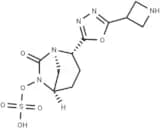
β-Lactamase-IN-4
CAS:<p>β-Lactamase-IN-4 (WO2013149121A1, compound 708) is a potent β-lactamase inhibitor. It serves as a valuable tool in the investigation of bacterial infections.</p>Formula:C11H15N5O6SColor and Shape:SolidMolecular weight:345.33NR-NO2
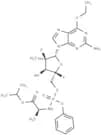
<p>NR-NO2 is a prospective therapeutic agent with targeted delivery and image-guided capability for use in antitumor studies, also demonstrating antibacterial</p>Color and Shape:Odour SolidAL-611
CAS:<p>AL-611 is an HCV NS5B polymerase inhibitor ( EC 50 = 5 nM).</p>Formula:C25H33F2N6O8PColor and Shape:SolidMolecular weight:614.544Antitrypanosomal agent 23
<p>Antitrypanosomal agent 23 is an antiparasitic compound effective against intracellular amastigotes of Trypanosoma cruzi in LLC-MK2 and C2C12 cells, demonstrating activity with IC50 values of 0.10 and 0.11 μM, respectively. It also acts as a weak inhibitor of recombinant Trypanosoma cruzi sialyltransferase (TcTS) with an IC50 of 1.1 mM.</p>Formula:C14H16N4O7Color and Shape:SolidMolecular weight:352.1019Nucleoprotein (396-404)
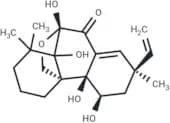
CAS:<p>LCMV nucleoprotein (396-404) is an H-2D(b) epitope, key for studying viral antigens.</p>Formula:C50H71N13O14Purity:98%Color and Shape:SolidMolecular weight:1078.18Diaporthein B
CAS:<p>Diaporthein B, a potent pimarane diterpene, inhibits M. tuberculosis (MIC: 3.1 μg/mL) and combats colon cancer cells (IC50: 1.5-3 μM/L).</p>Formula:C20H28O6Color and Shape:SolidMolecular weight:364.43Antibacterial agent 275
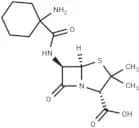
<p>Antibacterialagent 275 (Ⅲ1) is an antibacterial compound with a λmax value of 730 nm. It is applicable for research in antimicrobial photodynamic therapy (aPDT).</p>Formula:C108H118Br4N8O4Color and Shape:SolidMolecular weight:1906.60095Cyclacillin
CAS:Cyclacillin (Wy-4508), an oral aminopenicillin, fights many gram-positive/negative bacteria.Formula:C15H23N3O4SColor and Shape:SolidMolecular weight:341.43Viomycin sulfate hydrate
<p>Viomycin sulfate hydrate is an effective antimycobacterial antibiotic (antibiotic). It rapidly inhibits the elongation of polypeptide chains when added to purified endogenous polypeptide-synthesizing Escherichia coli polypeptide systems.</p>Formula:C25H43N13O10·2H2SO4·5H2OColor and Shape:SolidAntimicrobial agent-39
<p>Antimicrobial agent-39 (Compound 8i) is an antibiotic that targets the 50S ribosomal subunit, inhibiting bacterial protein synthesis. It disrupts bacterial cell membranes, causing leakage of cellular contents and demonstrating broad-spectrum antibacterial activity. Additionally, Antimicrobial agent-39 targets organic cation transporters (OCT) and accumulates in infected kidneys, improving pyelonephritis in mouse models.</p>Formula:C36H46BrN3O4SColor and Shape:SolidMolecular weight:696.74Amythiamicin A
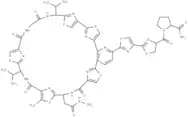
CAS:<p>Amythiamicin A is an antibiotic effective against gram-positive bacteria, including Methicillin-resistant Staphylococcus aureus (MRSA), and exhibits activity against Plasmodium falciparum.</p>Formula:C50H51N15O8S6Color and Shape:SolidMolecular weight:1182.43Alkaline tryptase-IN-1
<p>Alkaline tryptase-IN-1 (compound H-13) is an insecticide that targets alkaline trypsin-like enzymes. It has lethal concentration (LC50) values of 8.72, 13.77, 14.17, 12.96, and 12.35 μg/mL against Schizaphis graminum, Sitobion avenae, Brevicoryne brassicae, Aphis gossypii, Aphis spiraecola, and Myzus persicae, respectively.</p>Formula:C29H33BrN2O2SColor and Shape:SolidMolecular weight:553.55SARS-CoV-2 Mpro-IN-36
<p>SARS-CoV-2 Mpro-IN-36 (Compound 6d) is an inhibitor of SARS-CoV-2 Mpro with an IC50 of 110 nM. This compound demonstrates antiviral activity with an EC50 of 1.6 μM.</p>Formula:C25H34FN5O7Color and Shape:SolidMolecular weight:535.57Brr2-IN-2
<p>Brr2-IN-2 (Compound 30) is an inhibitor of Brr2, exhibiting an IC50 of 42 nM against Brr2 ATPase.</p>Formula:C21H25FN4O2Color and Shape:SolidMolecular weight:384.45Leupeptin
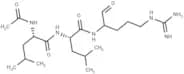
CAS:<p>Leupeptin, from actinomycetes, inhibits various proteases (e.g., trypsin, plasmin, kallikrein, papain, cathepsin B) but not α-chymotrypsin/thrombin.</p>Formula:C20H38N6O4Purity:98%Color and Shape:SolidMolecular weight:426.562Loloatin B 10
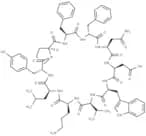
CAS:Loloatin B 10 is a bioactive chemical.Formula:C67H85N13O14Purity:98%Color and Shape:SolidMolecular weight:1296.494HOE 33187-O-CONH-PEG4-phenol-thiophenone-NHPh-COOEt
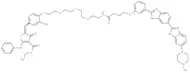
CAS:<p>HOE 33187-O-CONH-PEG4-phenol-thiophenone-NHPh-COOEt inhibits pre-miR-21 RNA, potential for cancer research.</p>Formula:C57H62N8O10SColor and Shape:SolidMolecular weight:1051.21Neomycin C
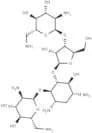
CAS:<p>Neomycin C, less potent isomer of Neomycin complex, is part of a 2-DOS aminoglycoside.</p>Formula:C23H46N6O13Color and Shape:SolidMolecular weight:614.64Cefozopran
CAS:<p>Cefozopran is a fourth-generation cephalosporin.</p>Formula:C19H17N9O5S2Purity:98%Color and Shape:White To Pale-Yellow PowderMolecular weight:515.53Mtb-IN-10
<p>Mtb-IN-10 (Compound P15) is an Rv1625c/Cya activator that influences the growth of Mycobacterium tuberculosis (Mtb) by modulating cAMP metabolism. It demonstrates an anti-tuberculosis activity with an EC50 of 1.96 µM in Mtb-infected macrophage models and achieves an oral bioavailability of 58.0% when administered orally to mice at 20 mg/kg. Mtb-IN-10 potentially regulates intracellular signaling and disrupts cholesterol metabolism within Mtb, thereby inhibiting bacterial proliferation. It holds promise for tuberculosis (TB) research, particularly targeting multidrug-resistant (MDR-TB) and extensively drug-resistant (XDR-TB) strains of Mtb.</p>Formula:C12H14N2O4S2Color and Shape:SolidMolecular weight:314.38