Microbiology/Virology
Microbiology and virology inhibitors are compounds that target microorganisms, including bacteria, viruses, and fungi, disrupting their growth, replication, or survival. These inhibitors are essential for studying microbial pathogenesis, understanding resistance mechanisms, and developing new antimicrobial and antiviral therapies. Inhibitors in this category are used to combat infectious diseases, explore microbial ecology, and investigate host-pathogen interactions. At CymitQuimica, we provide a broad selection of high-quality microbiology and virology inhibitors to support your research in infectious diseases, microbiology, and virology.
Subcategories of "Microbiology/Virology"
- Antibacterial(3,386 products)
- Antibiotic(940 products)
- Antifection(27 products)
- DHFR(30 products)
- DNA/RNA Synthesis(802 products)
- HBV(185 products)
- HIV Protease(506 products)
- HSV(99 products)
- Integrase(2 products)
- Ribosome(6 products)
Show 2 more subcategories
Found 6394 products of "Microbiology/Virology"
Sort by
Purity (%)
0
100
|
0
|
50
|
90
|
95
|
100
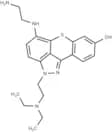
ledoxantrone
CAS:Ledoxantrone, a benzopyranoindazole, stabilizes DNA-topoisomerase II complexes and blocks helicases; shows preclinical promise.Formula:C21H27N5OSColor and Shape:SolidMolecular weight:397.54Harzianopyridone
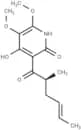
CAS:Harzianopyridone is an atpenin-like compound that functions as an inhibitor of mammalian and nematode mitochondrial complex II, also known as succinate:ubiquinone oxidoreductase (SQR), demonstrating IC50 values of 0.017, 0.2, and 2 μM against bovine, rat, and nematode complex II, respectively. Additionally, it inhibits nematode quinol-fumarate reductase (QFR) with an IC50 value of 0.36 μM. Significantly selective for complex II over complexes I and III in rats and cattle, as well as complex I in nematodes, with IC50 values exceeding 100 μM, it exhibits notable antibacterial and antifungal properties, with EC50 values of 35.9, 42.2, 60.4, and 50.2 μg/ml against R. solani, S. rolfsii, M. phaseolina, and F. oxysporum, respectively.Formula:C14H19NO5Color and Shape:SolidMolecular weight:281.308HCVP-IN-1
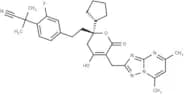
CAS:HCVP-IN-1 (compound 1) is a hepatitis C viral polymerase (HCVP) inhibitor.Formula:C30H34FN5O3Color and Shape:SolidMolecular weight:531.632Antibacterial agent 37
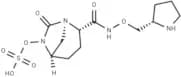
CAS:Agent 37 from patent WO2015063714A1 is a potent antimicrobial for bacterial infection research.Formula:C12H20N4O7SColor and Shape:SolidMolecular weight:364.38PEX5-PEX14 PPI-IN-1
PEX5-PEX14 PPI-IN-1 (Compound 8) is a PEX14-PEX5 protein-protein interaction (PPI) inhibitor that disrupts the interaction between PEX5 and TbPEX14 with anFormula:C26H28N4O3Color and Shape:SolidMolecular weight:444.53Antibacterial agent 47
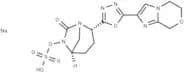
CAS:Agent 47 boosts Ceftazidime's efficacy, lowering its MIC as a potent adjunct antibacterial.Formula:C14H15N6NaO7SColor and Shape:SolidMolecular weight:434.36Emestrin
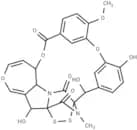
CAS:Emestrin, a mycotoxin with antimicrobial and immunomodulatory properties, combats various pathogens and can induce tissue necrosis.Formula:C27H22N2O10S2Color and Shape:SolidMolecular weight:598.6Brevinin-2EC
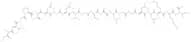
CAS:Brevinin-2EC, an antimicrobial peptide sourced from the skin secretions of the European common frog (Rana esculenta) [1], exhibits potent biological activity.Formula:C154H265N43O46S2Color and Shape:SolidMolecular weight:3519.14MC12
MC12 is a thiazole derivative and an inhibitor of SARS-CoV-2 main protease (IC50: 77.7 nM). It effectively inhibits the main protease of both SARS-CoV and SARS-CoV-2, with low cytotoxicity and good stability. MC12 is suitable for research in anti-COVID-19 drug development.Color and Shape:Odour SolidMaximin 28
Maximin 28, an antimicrobial peptide isolated from toad brain tissue, exhibits activity against various bacterial strains, including Staphylococcus aureus,Formula:C125H211N33O35Color and Shape:SolidMolecular weight:2736.21Antifungal agent 85
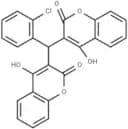
Compound 24f, an antifungal agent also known as 'Antifungal agent 85,' demonstrates potent antibacterial properties, exhibiting minimum inhibitory concentrationColor and Shape:Odour Solid3,3'-((2-Chlorophenyl)methylene)bis(4-hydroxy-2H-chromen-2-one)
CAS:3,3'-((2-Cl-phenyl)methylene)bis(4-OH-2H-chromen-2-one): ENPP1 inhibitor, Ki=50μM; urease inhibitor, IC50=84.53μM.Formula:C25H15ClO6Color and Shape:SolidMolecular weight:446.84Terpenomycin
Terpenomycin is a polyene compound isolated from pathogenic Nocardia terpenica strains in humans, exhibiting both cytotoxic and antifungal activities [1].Formula:C53H82O14Color and Shape:SolidMolecular weight:943.21Fusion glycoprotein (92-106)
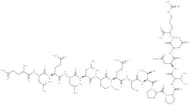
CAS:Fusionglycoprotein92-106 is a peptide derived from the respiratory syncytial virus (RSV) fusion protein. It functions as an MHC class I-restricted cytotoxic T lymphocyte (CTL) epitope, with all 15 amino acids effectively recognized by CTLs.Formula:C73H124N22O25SMolecular weight:1741.96Bombinin H5
CAS:Bombinin H5, an antimicrobial peptide originating from the skin of the (moth) Bombina variegata [1], exhibits potent biocidal properties.Formula:C91H165N23O21Color and Shape:SolidMolecular weight:1917.43Cefuzonam
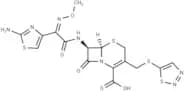
CAS:Cefazolin is a novel cephalosporin with anti-inflammatory activity and may be used in studies of respiratory tract infections and hepatobiliary infections.Formula:C16H15N7O5S4Purity:97.79% - 99.60%Color and Shape:SolidMolecular weight:513.59SEB Domain (152-161) (TFA)
SEB Domain (152-161) TFA represents amino acid positions 152-161 within the structural domain of staphylococcal enterotoxin B, produced by Staphylococcus aureus. This segment is highly conserved and inhibits the transcytosis of multiple staphylococcal enterotoxins, including SEA, SEE, and TSST-1.Color and Shape:Odour SolidMaximin 32
Maximin 32, an antimicrobial peptide originating from toad brain, exhibits activity against Staphylococcus aureus and Escherichia coli, with minimum inhibitoryFormula:C121H208N34O33Color and Shape:SolidMolecular weight:2667.15Antibacterial agent 138
Antibacterial agent 138 effectively targets multi-drug resistant bacteria by inhibiting protein synthesis.Formula:C34H52INO4SColor and Shape:SolidMolecular weight:697.75Bis-Br-ANT-ATP tetrasodium
Bis-Br-ANT-ATP(tetrasodium) is a fluorescent derivative of adenosine-5'-triphosphate (ATP). It selectively inhibits the adenylyl cyclase toxin CyaA of Bordetella pertussis with a Ki of 12.6 nM. This compound is utilized in research related to whooping cough.Color and Shape:Odour Solid