Dyes
Found 418 products of "Dyes"
1,1-Dioctadecyl-3,3,3,3-Tetramethylindotricarbocyanine Iodide
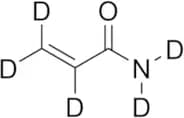
CAS:Formula:C63H101IN2Molecular weight:1013.42Acrylamide-d5
CAS:Controlled ProductStability Light Sensitive
Applications Acrylamide-d5 is a useful reactant for preparation of temperature sensitive composite hydrogels.
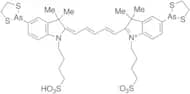
References Meid, J., et al.: Progr. Colloid Polymer. Sci., 140, 91 (2013)Formula:C3D5NOColor and Shape:NeatMolecular weight:76.11Bis(dithiarsolanyl)-bis(sulfobutyl) Cyanine 5
CAS:Controlled ProductFormula:C37H48As2N2O6S6Color and Shape:NeatMolecular weight:959.02Food Red No. 102 (>80%)
CAS:Stability Hygroscopic
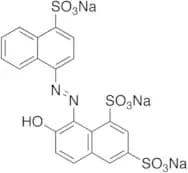
Applications Food Red No. 102 is an artificial coloring food additive. Dye. Dyes and metabolites, Environmental Testing
References McCann, D. et al.: Lancet. 370, 1560 (2007); Kim, Y. et al.: Text. Res. J., 71, 318 (2001);Formula:C20H11N2O10S3·3NaPurity:>80%Color and Shape:NeatMolecular weight:604.47Tartrazine
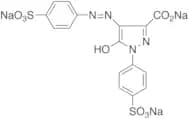
CAS:Applications As a dye for wool and silks; as colorant in food, drugs, and cosmetics. In biochemistry as an adsorption-elution indicator for chloride estimations. Tartrazine (otherwise known as E number E102, C.I. 19140, or FD&C Yellow 5) is a synthetic lemon yellow azo dye used as a food coloring. Tartrazine appears to cause the most allergic and intolerance reactions of all the azo dyes, particularly among asthmatics and those with an aspirin intolerance. Dyes and metabolites, Environmental Testing.A recent report has shown that Tartrazine may be useful in 3D bio-printing of organ-like architectures.
References Rowe, K.S., et al.: J. Pedriatics, 125, 691 (1994), Tanaka, T., et al.: Food Chem. Toxicol., 44, 179 (2006); Chem. and Eng News Page 4 May 6, 2019Formula:C16H9N4O9S2·3NaColor and Shape:YellowMolecular weight:534.36