Coumarins
Found 1125 products of "Coumarins"
7,8-Methylenedioxycoumarin
CAS:7,8-Methylenedioxycoumarin is a furanocoumarin compound, which is a type of organic molecule characterized by a coumarin core with an additional methylenedioxy group. It is primarily sourced from various plant species, particularly those in the Rutaceae family, where it is found in essential oils and extracts. The mode of action of 7,8-Methylenedioxycoumarin involves its natural fluorescing properties, making it highly valuable for use in various biochemical assays where visualization is key. Due to its unique chemical structure, it efficiently absorbs ultraviolet light and emits visible fluorescence, which is exploited in photochemistry and as a biological marker. Its applications extend to the fields of pharmaceuticals and environmental sciences, where it serves in drug development studies and as a tool for tracking organic pollutants in ecosystems. Researchers continue to explore its potential uses due to its distinctive chemical behavior and natural origin.
Formula:C10H6O4Purity:Min. 95%Molecular weight:190.15 g/molcis-Khellactone
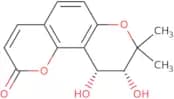
CAS:cis-Khellactone is a naturally occurring organic compound, which is a type of coumarin derivative sourced predominantly from the roots of Peucedanum and Angelica species, plants native to various regions. These botanical sources are known for yielding secondary metabolites with diverse biological properties.
Formula:C14H14O5Purity:Min. 95%Molecular weight:262.26 g/mol7,8-Dihydroxy-4-methylcoumarin
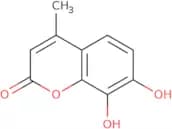
CAS:7,8-Dihydroxy-4-methylcoumarin is a bioactive compound, specifically a derivative of coumarin. This compound is naturally derived from plant sources, where it acts as a metabolite in various biochemical pathways. Its chemical structure is characterized by the presence of two hydroxyl groups at the 7 and 8 positions, along with a methyl group at the 4 position of the coumarin core, contributing to its unique pharmacological profile.
Formula:C10H8O4Purity:Min. 95%Molecular weight:192.17 g/mol(+)-Peucedanol
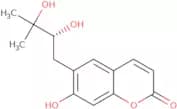
CAS:(+)-Peucedanol is a sesquiterpene compound, which is a type of natural organic compound composed of three isoprene units resulting in a 15-carbon backbone. It is derived from various species within the plant genus Peucedanum, known for their rich content of bioactive compounds. The stereoisomerism indicated by the "(+)" suggests a specific three-dimensional configuration that may influence its biological activity.
Formula:C14H16O5Purity:Min. 95%Molecular weight:264.27 g/molRef: 3D-FP145196
Discontinued productByakangelicin
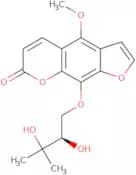
CAS:Byakangelicin is a furanocoumarin compound, which is derived from the roots of various Angelica plant species. This compound is of particular interest due to its complex chemical structure that allows it to interact with biological systems in distinctive ways. Byakangelicin's mode of action includes the inhibition of specific enzymes, interference with signal transduction pathways, and potential modulation of cellular responses, making it a valuable subject for various pharmacological studies.
Formula:C17H18O7Purity:Min. 95%Color and Shape:PowderMolecular weight:334.32 g/mol