Coumarins
Coumarins are a class of polycyclic aromatic compounds consisting of a benzene ring fused to a pyrone ring. These compounds are widely used as fragrances, flavoring agents, and in the synthesis of pharmaceuticals and agrochemicals. Coumarins exhibit various biological activities, including anticoagulant, anti-inflammatory, and antimicrobial properties. At CymitQuimica, we provide a wide selection of high-quality coumarins for your research and industrial applications.
Found 1121 products of "Coumarins"
Sort by
Purity (%)
0
100
|
0
|
50
|
90
|
95
|
100
Potassium 7-nitro-2-oxo-2H-chromene-3-carboxylate
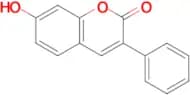
CAS:Formula:C10H4KNO6Purity:97.0%Color and Shape:SolidMolecular weight:273.2414,7-Dihydroxy-3-phenyl-2H-chromen-2-one
CAS:Purity:95.0%Color and Shape:SolidMolecular weight:254.240997314453123-(2-oxo-2H-chromen-3-yl)benzoic acid
CAS:Purity:95.0%Color and Shape:Liquid, No data available.Molecular weight:266.252014160156258-Methoxy-2-oxo-2H-chromene-3-carboxylic acid
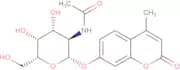
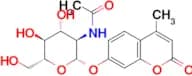
CAS:Purity:95.0%Color and Shape:Solid, solidMolecular weight:220.179992675781254-Methylumbelliferyl N-acetyl-β-D-galactosaminide
CAS:<p>M04120 - 4-Methylumbelliferyl N-acetyl-beta-D-galactosaminide</p>Formula:C18H21NO8Purity:97%Color and Shape:Solid, White to off-white powderMolecular weight:379.365Coumarin
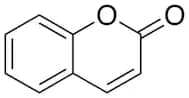
CAS:<p>Applications Coumarin is a pharmaceutic aid (flavor) that is found in tonka beans, levender oil, woodruff, sweet clover.<br> Not a dangerous good if item is equal to or less than 1g/ml and there is less than 100g/ml in the package<br>References Hazleton, L., et al.: J. Pharmacol. Exp. Ther., 118, 348 (1956); Lake, B., et al.: Food Chem. Toxicol., 37, 423 (1999); Frerot, E., et al.: Flavour Fragrance J., 17, 218 (2002); Yang, Z., et al.: Food Chem., 114, 289 (2009);<br></p>Formula:C9H6O2Color and Shape:White To Off-WhiteMolecular weight:146.14Imperatorin
CAS:Controlled Product<p>Applications Imperatorin (cas# 482-44-0) is a compound useful in organic synthesis.<br></p>Formula:C16H14O4Color and Shape:White To Light BeigeMolecular weight:270.282-(7-((((9H-Fluoren-9-yl)methoxy)carbonyl)amino)-2-oxo-2H-chromen-4-yl)acetic acid
CAS:Purity:95%Molecular weight:441.43899536132814-Methylumbelliferyl-N-acetyl-ß-D-glucosaminide
CAS:Purity:95.0%Color and Shape:Solid, White to off-white powderMolecular weight:379.3649902343753-(1-(4-Chlorophenyl)-3-oxobutyl)-4-hydroxy-2H-chromen-2-one
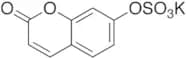
CAS:Purity:98.0%Molecular weight:342.77999877929697-Hydroxy Coumarin Sulfate Potassium Salt
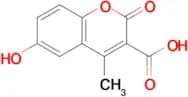
CAS:Controlled Product<p>Applications Metabolite of 7-hydroxycoumarin (7-HC). Found in hepatocyte, microsome, S9 fraction of human, dog, monkey, rat and mouse liver.<br>References Ekins, S., et al.: Drug Metab. Dispos. 24, 990 (1996), Bock, K., et al.: Biochem. Pharmacol. 66, 691 (2003), Naritomi, Y., et al.: Drug Metab. Dispos. 31, 580 (2003).<br></p>Formula:C9H5KO6SColor and Shape:Light YellowMolecular weight:280.306-Hydroxy-4-methyl-2-oxo-2H-1-benzopyran-3-carboxylic acid
CAS:Purity:95%Molecular weight:220.179992675781257-Hydroxy Coumarin-d5
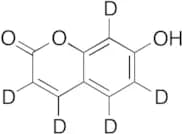
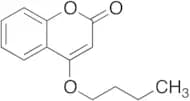
CAS:Controlled Product<p>Applications 7-Hydroxy Coumarin-d5 is the labeled analogue of 7-Hydroxy Coumarin (H924875), a metabolite of Coumarin that is present in many plants and is the aglucon of skimmin.<br>References Schilling, et al.: Nature, 221, 664 (1969); Indahl, S., et al.: Xenobiotica, 1, 13 (1971); Thompson, S.G., et al.: Antimicrob. Agents Chemother., 18, 264 (1980)<br></p>Formula:C9HD5O3Color and Shape:Off-White To Light BeigeMolecular weight:167.174-Butoxy-2H-1-benzopyran-2-one
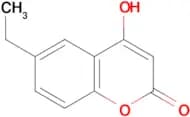
CAS:Controlled ProductFormula:C13H14O3Color and Shape:NeatMolecular weight:218.256-Ethyl-4-hydroxycoumarin
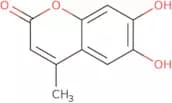
CAS:Formula:C11H10O3Purity:97.0%Color and Shape:CrystallineMolecular weight:190.1984-Methylesculetin
CAS:<p>4-Methylesculetin is a coumarin derivative, which is a type of organic compound. This compound is primarily sourced from various plant species, where it occurs naturally as a secondary metabolite. Known for its bioactive properties, 4-Methylesculetin exhibits significant antioxidant activity by scavenging free radicals and protecting against oxidative stress.</p>Formula:C10H8O4Purity:Min. 95%Color and Shape:PowderMolecular weight:192.17 g/molFraxin
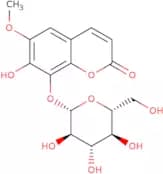
CAS:<p>Fraxin is a naturally occurring anticoagulant, which is derived from the bark of certain species of the Fraxinus tree. It functions by inhibiting thrombin and other key enzymes in the coagulation cascade, thus preventing the formation of blood clots. This mode of action makes it particularly valuable in research settings focused on cardiovascular diseases, as well as in the development of therapeutic agents targeting coagulopathies.</p>Formula:C16H18O10Purity:Min. 95%Color and Shape:PowderMolecular weight:370.31 g/mol