Other Inhibitors
This category encompasses a wide variety of inhibitors that do not fit into the standard classifications but are still critical for various biochemical and pharmacological research. These inhibitors may target unique or less-studied pathways, enzymes, and molecular interactions, providing valuable tools for specialized research areas. At CymitQuimica, we offer a diverse selection of high-quality inhibitors across multiple biological targets and research disciplines, enabling you to explore novel therapeutic avenues and deepen your understanding of complex biological processes.
Found 35858 products of "Other Inhibitors"
Sort by
Purity (%)
0
100
|
0
|
50
|
90
|
95
|
100
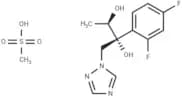
(2R,3R)-2-(2,4-Difluorophenyl)-1-(1H-1,2,4-triazol-1-yl)butane-2,3-diol methanesulfonate
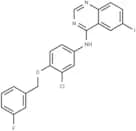
CAS:(2R,3R)-2-(2,4-Difluorophenyl)-1-(1H-1,2,4-triazol-1-yl)butane-2,3-diol methanesulfonate is a useful organic compound for research related to life sciences. The catalog number is T67219 and the CAS number is 1175536-50-1.Formula:C13H17F2N3O5SColor and Shape:SolidMolecular weight:365.35N-(3-Chloro-4-((3-fluorobenzyl)oxy)phenyl)-6-iodoquinazolin-4-amine
CAS:N-(3-Chloro-4-((3-fluorobenzyl)oxy)phenyl)-6-iodoquinazolin-4-amine is a useful organic compound for research related to life sciences. The catalog number is T65343 and the CAS number is 231278-20-9.Formula:C21H14ClFIN3OColor and Shape:SolidMolecular weight:505.71Azide-PEG-amine (MW 5000)
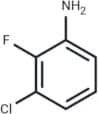
Azide-PEG-amine (MW 5000) is a polyethylene glycol (PEG)-derived linker compound with azide functionality, primarily utilized in the synthesis of proteolysis-targeting chimeras (PROTACs)[1].Purity:98%Color and Shape:Solid3-Chloro-2-fluoroaniline
CAS:3-Chloro-2-fluoroaniline is a useful organic compound for research related to life sciences. The catalog number is T67547 and the CAS number is 2106-04-9.Formula:C6H5ClFNColor and Shape:SolidMolecular weight:145.56Ethyl 8-hydroxy-5-methyl-6-oxo-5,6-dihydro-4H-benzo[f]imidazo[1,5-a][1,4]diazepine-3-carboxylate
CAS:Ethyl 8-hydroxy-5-methyl-6-oxo-5,6-dihydro-4H-benzo[f]imidazo[1,5-a][1,4]diazepine-3-carboxylate is a useful organic compound for research related to life sciences. The catalog number is T66942 and the CAS number is 131666-45-0.Formula:C15H15N3O4Color and Shape:SolidMolecular weight:301.302Amino-PEG5-CH2COOH
CAS:Amino-PEG5-CH2COOH is a PEG-based linker for PROTACs, joining two essential ligands to form PROTAC molecules and enabling selective protein degradation via the ubiquitin-proteasome system within cells (PROTACs) [ubiquitin-proteasome system].Formula:C12H25NO7Purity:98%Color and Shape:SolidMolecular weight:295.33n-Hexadecyl β-D-maltoside
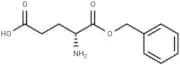
n-Hexadecyl β-D-maltoside is a useful organic compound for research related to life sciences and the catalog number is T64463.Color and Shape:SolidH-D-Glu-OBzl
CAS:H-D-Glu-OBzl, identified by catalog number T65224 and CAS number 79338-14-0, is a valuable organic compound for life sciences research.Formula:C12H15NO4Color and Shape:SolidMolecular weight:237.2556-HAP
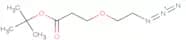
6-HAP is a useful organic compound for research related to life sciences and the catalog number is T64946.Color and Shape:Odour SolidAzido-PEG1-Boc
CAS:Azido-PEG1-Boc, a PEG-based linker for PROTACs, connects two essential ligands crucial for forming PROTAC molecules, enabling selective protein degradation by leveraging the ubiquitin-proteasome system within cells.Formula:C9H17N3O3Purity:98%Color and Shape:SolidMolecular weight:215.2496Mal-PEG4-propargyl
CAS:Mal- PEG4- propargyl is a PEG-based PROTAC linker that can be used in the synthesis of PROTACs[1].Formula:C15H21NO6Purity:98%Color and Shape:SolidMolecular weight:311.33Immuno-Oncology Screening Library
Immuno-Oncology Screening Library with 90+ cancer/immunology compounds in 96-well format, 10 mM DMSO solutions, including various target modulators.
Color and Shape:Solid(S)-Xyl-SDP
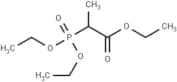
(S)-7,7'-Bis(bis(3,5-dimethylphenyl)phosphaneyl)-2,2',3,3'-tetrahydro-1,1'-spirobi[indene] is a useful organic compound for research related to life sciences and the catalog number is T65595.Color and Shape:SolidTriethyl 2-phosphonopropionate
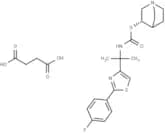
CAS:Triethyl 2-phosphonopropionate is a useful organic compound for research related to life sciences. The catalog number is T65480 and the CAS number is 3699-66-9.Formula:C9H19O5PColor and Shape:SolidMolecular weight:238.22Ibiglustat succinate
CAS:Ibiglustat (Venglustat) succinate is an orally active, brain-penetrant inhibitor of glucosylceramide synthase (GCS) utilized in the investigation of Gaucher disease type 3, Parkinson's disease associated with GBA mutations, Fabry disease, GM2 gangliosidosis, and autosomal dominant polycystic kidney disease.Formula:C24H30FN3O6SColor and Shape:SolidMolecular weight:507.584-Iodo-N-[(phenylmethoxy)carbonyl]-L-phenylalanine
CAS:4-Iodo-N-[(phenylmethoxy)carbonyl]-L-phenylalanine (catalog number T66874, CAS number 220400-04-4) is a valuable organic compound for life sciences research.Formula:C17H16INO4Color and Shape:SolidMolecular weight:425.222D-Luciferin 6′-methyl ether
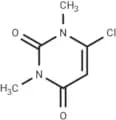
CAS:D-Luciferin 6′-methyl ether (also known as 6′-Methoxyluciferin or compound 19a) is a highly effective inhibitor of luciferase obtained from the North American firefly Photinus pyralis (PpyLuc), exhibiting an IC50 value of 0.1 μM. This analog of D-luciferin interacts non-specifically with the ATP and luciferin binding sites within the active site of PpyLuc.Formula:C12H10N2O3S2Color and Shape:SolidMolecular weight:294.346-Chloro-1,3-dimethylpyrimidine-2,4(1H,3H)-dione
CAS:6-Chloro-1,3-dimethylpyrimidine-2,4(1H,3H)-dione is a useful organic compound for research related to life sciences. The catalog number is T66854 and the CAS number is 6972-27-6.Formula:C6H7ClN2O2Color and Shape:SolidMolecular weight:174.581-(4-Chlorophenyl)-1-phenylethanol
CAS:1-(4-Chlorophenyl)-1-phenylethanol is a useful organic compound for research related to life sciences. The catalog number is T65600 and the CAS number is 59767-24-7.Formula:C14H13ClOColor and Shape:SolidMolecular weight:232.71Bromo-PEG4-MS
CAS:Bromo-PEG4-MS is a PEG-based linker for PROTACs that connects two essential ligands, facilitating the formation of PROTAC molecules and enabling selective protein degradation by utilizing the ubiquitin-proteasome system within cells.Formula:C9H19BrO6SColor and Shape:SolidMolecular weight:335.21


![Ethyl 8-hydroxy-5-methyl-6-oxo-5,6-dihydro-4H-benzo[f]imidazo[1,5-a][1,4]diazepine-3-carboxylate](/_next/image/?url=https%3A%2Fstatic.cymitquimica.com%2Fproducts%2FTM%2Fthumb-webp%2FT66942.webp&w=3840&q=75)


![4-Iodo-N-[(phenylmethoxy)carbonyl]-L-phenylalanine](/_next/image/?url=https%3A%2Fstatic.cymitquimica.com%2Fproducts%2FTM%2Fthumb-webp%2FT66874.webp&w=3840&q=75)