Cytoskeletal Signaling
Cytoskeletal signaling inhibitors are compounds that disrupt the signaling pathways regulating the cytoskeleton, which is crucial for cell shape, motility, division, and intracellular transport. These inhibitors are used to study the dynamics of cytoskeletal proteins, such as actin and tubulin, and their role in processes like cell migration, adhesion, and cancer metastasis. Cytoskeletal signaling inhibitors are valuable in research on cell biology, cancer, and neurobiology. At CymitQuimica, we offer a comprehensive range of high-quality cytoskeletal signaling inhibitors to support your research in these areas.
Found 1382 products of "Cytoskeletal Signaling"
Sort by
Purity (%)
0
100
|
0
|
50
|
90
|
95
|
100
Tubulin polymerization-IN-77
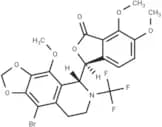
CAS:<p>Tubulin polymerization-IN-77 (Compound 15c) is a microtubule polymerization inhibitor that exhibits anti-glioblastoma activity by hindering microtubule polymerization. It demonstrates significant blood-brain barrier permeability, effectively induces G2/M phase arrest in GBM cells, and triggers apoptosis, while also markedly inhibiting tumor cell migration.</p>Formula:C22H19BrF3NO7Color and Shape:SolidMolecular weight:546.288Terpendole E
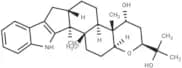
CAS:<p>Terpendole E is an atypical L5 site inhibitor.</p>Formula:C28H39NO3Color and Shape:SolidMolecular weight:437.61KU-32
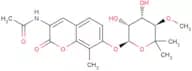
CAS:<p>KU-32 is a novel and novobiocin-based Hsp90 inhibitor. It can protect against neuronal cell death.</p>Formula:C20H25NO8Purity:98%Color and Shape:SolidMolecular weight:407.41JC168
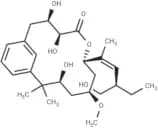
CAS:<p>JC168 is a phenyl analog of peloruside and functions as a microtubule inhibitor with antiproliferative and anticancer properties. It enhances tubulin polymerization, thereby disrupting microtubule dynamics, making it a useful agent in the study of microtubule-associated diseases.</p>Formula:C26H40O7Color and Shape:SolidMolecular weight:464.592APN/AKT-IN-1
<p>APN/AKT-IN-1, a dual APN (IC50=0.21μM) & AKT (IC50=0.27μM) inhibitor, hinders GSK3β phosphorylation.</p>Formula:C18H27N7O3Color and Shape:SolidMolecular weight:389.45Si306
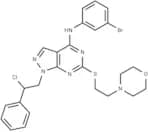
CAS:<p>Si306, an Src inhibitor, exhibits antitumor activity by reducing the phosphorylation of focal adhesion kinase (FAK) and the expression of epidermal growth factor receptor (EGFR), thereby inhibiting the invasion of human glioblastoma (GBM).</p>Formula:C25H26BrClN6OSColor and Shape:SolidMolecular weight:573.94Nic-15
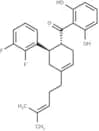
CAS:<p>Nic-15 (compound 4n) serves as an anti-constrictive agent targeting the low vascular characteristics of pancreatic tumors. These characteristics enable cancer cells to adapt to the nutrient-deficient tumor microenvironment and develop resistance to treatment. Nic-15 modulates the PI3K/Akt/mTOR pathway and alleviates ER stress induced by Gemcitabine. It significantly inhibits migration and colony formation in MIA PaCa-2 and PANC-1 pancreatic cancer cells. When used in combination with Gemcitabine, Nic-15 effectively addresses resistance issues in pancreatic tumors. In xenograft models in vivo, Nic-15 notably enhances the efficacy of Gemcitabine.</p>Formula:C25H26F2O3Color and Shape:SolidMolecular weight:412.47Myoseverin B
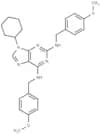
CAS:<p>Myoseverin B is a microtubule assembly inhibitor that impedes tubulin polymerization (IC50 = 2 μM) and generally exhibits low cytotoxicity across most cell types. It is utilized in antitumor agent research.</p>Formula:C27H32N6O2Color and Shape:SolidMolecular weight:472.582β-Catenin modulator-8
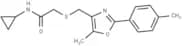
CAS:<p>β-Catenin modulator-8 (Compound Ⅸa) is a specific β-catenin modulator for use in cancer research.</p>Formula:C17H20N2O2SPurity:99.97%Color and Shape:SolidMolecular weight:316.42Epothilone E
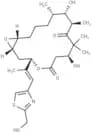
CAS:<p>Epothilone E, a derivative of epothilone, functions by inhibiting microtubule protein activity, thereby halting cell division and exhibiting anti-tumor</p>Formula:C26H39NO7SColor and Shape:SolidMolecular weight:509.66HSP90-IN-11
<p>HSP90-IN-11: potent HSP90 inhibitor, akin to AUY-922; hinders CRC/NSCLC cell proliferation; degrades EGFR, Akt proteins.</p>Formula:C27H30FN3O6Color and Shape:SolidMolecular weight:511.54MKLP2-IN-1
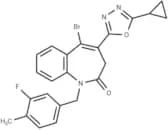
CAS:<p>MKLP2-IN-1 (compound 12a) is an inhibitor of MKLP2 that demonstrates excellent oral bioactivity. In vitro, MKLP2-IN-1 inhibits the ATPase activity stimulated by recombinant MKLP2 microtubules and, in a mouse Calu-6 lung cancer model, it effectively suppresses tumor growth.</p>Formula:C23H19BrFN3O2Color and Shape:SolidMolecular weight:468.318Tyrosine kinase-IN-9
CAS:<p>Tyrosine kinase-IN-9 (Compound B) is an inhibitor of c-Abl. It is useful for studying neurodegenerative diseases, such as Alzheimer's disease and Parkinson's disease.</p>Formula:C20H14ClN3O3Color and Shape:SolidMolecular weight:379.796AM-9022
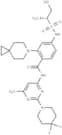
CAS:<p>AM-9022 is a potent and selective KIF18A inhibitor, orally active and suitable for cancer research [1].</p>Formula:C27H36F2N6O4SColor and Shape:SolidMolecular weight:578.67Antitubulin agent 1
<p>Antitubulin agents-1 disrupts microtubules, ups α-tubulin acetylation, and has anticancer properties.</p>Formula:C21H19N3O3Color and Shape:SolidMolecular weight:361.39TACC3 inhibitor 2
CAS:<p>TACC3 inhibitor 2 (Compound 13b) is a TACC3 inhibitor with an IC50 of 200 nM. It induces mitotic arrest, apoptosis (Apoptosis), and DNA damage. TACC3 inhibitor 2 is applicable for research in the field of cancer.</p>Formula:C20H22FN5O2Color and Shape:SolidMolecular weight:383.419KUNG65
CAS:<p>KUNG65 acts as a selective Grp94 inhibitor, demonstrating a target dissociation constant (K_d) of 540 nM. It exhibits a minimum selectivity of 73-fold compared to other Hsp90 isoforms.</p>Formula:C23H20ClFO4Color and Shape:SolidMolecular weight:414.85α5β1 integrin agonist-1
CAS:<p>α5β1 integrin agonist-1 is an α5β1 integrin agonist that selectively delivers 5-FU to tumour cells and induces tumour cell death.</p>Formula:C24H26FN5O9Color and Shape:SolidMolecular weight:547.49Zalunfiban dihydrochloride
<p>Zalunfiban (RUC-4) is a potent αIIbβ3 platelet antagonist, IC50 45 nM, used in myocardial infarction research.</p>Formula:C16H20Cl2N8O2SColor and Shape:SolidMolecular weight:459.35PP487
CAS:<p>PP487 is a dual tyrosine kinase/PI(3)K inhibitor, exhibiting IC50 values of 0.017 μM, 0.072 μM, 0.004 μM, 0.01 μM, 0.55 μM, 0.22 μM, and < 0.01 μM against DNA-PK, mTOR, Hck, Src, EGFR, EphB4, and PDGFR, respectively. It is applicable in cancer research [1].</p>Formula:C14H14BrN5OColor and Shape:SolidMolecular weight:348.2