Miscellaneous Organic Molecules with Isotopical Substitutions
Subcategories of "Miscellaneous Organic Molecules with Isotopical Substitutions"
Found 1991 products of "Miscellaneous Organic Molecules with Isotopical Substitutions"
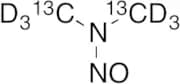
N-Nitrosodimethylamine-13C2D6
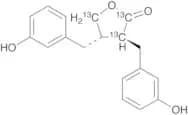
Controlled ProductFormula:C2D6N2OColor and Shape:Colourless OilMolecular weight:82.1rac Enterolactone -13C3
CAS:Stability Hygroscopic
Applications A labelled metabolite of sesame lignans (sesamin, sesamolin). Inhibits colonic cancer cell growth by inducing cell cycle arrest and apoptosis. Possible relationship between exposure and reduced risk of breast cancer.
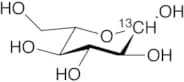
References Ayella, A. et al.: Nut. Res., 30, 762 (2010); Pianjing, P. et al.: J. Agric. Food Chem., 59, 212 (2011); Buck, K. et al.: Am. J. Clinic. Nut., 92, 141 (2010);Formula:C1513C3H18O4Color and Shape:NeatMolecular weight:301.31L-Idose-1-13C (0.16M Aqueous Solution)
CAS:Controlled ProductApplications Isotope labelled L-Isomer of D-Idose (I175050), a monosaccharide that has is an important component of dermatan sulfate and heparan sulfate.
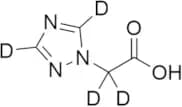
References Olsen, S.G., et al.: J. Biol. Chem., 264, 15982 (1989);Formula:CC5H12O6Color and Shape:Single SolutionMolecular weight:180.162-(1H-1,2,4-Triazol-1-yl)acetic Acid-D4
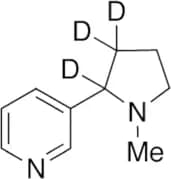
CAS:Controlled ProductFormula:C4D4HN3O2Color and Shape:NeatMolecular weight:131.126rac-Nicotine-2’,3’,3’-d3
CAS:Controlled ProductApplications Labelled rac-Nicotine (N412420). Nicotine is an alkaloid isolated from plants. Nicotine is an active stimulant, having both addictive and carcinogenic properties. Nicotine can be absorbed through the alimentary canal, respiratory tract and intact skin. Nicotine is used in the treatment of smoking withdrawal syndrome. Nicotine has been used as an anthelmintic.
Not a dangerous good if item is equal to or less than 1g/ml and there is less than 100g/ml in the package
References Ferretti, G., et al.: J. Med. Chem., 45, 4724 (2002), Guillen, M., et al.: J. Agric. Food Chem., 53, 1093 (2005), Ramunno, A., et al.: Bioorg. Med. Chem. Lett., 15, 3237 (2005), Alburges, M., et al.: Eur. J. Pharmacol., 573, 124 (2007),Formula:C10H11D3N2Color and Shape:NeatMolecular weight:165.25N-(Acetyl-d3)-S-allyl-L-cysteine
CAS:Controlled ProductApplications A component of garlic which revealed antiplatelet, antithrombotic activity and reduced LDL oxidation thus indicating their possible use for cardiovascular disease.
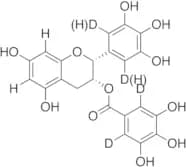
References Steinberg, D., et al.: J. Biol. Chem., 272, 20963 (1997), Lawson, L., et al.: J. Agric. Food Chem., 53, 6254 (2005), Gonen, A., et al.: Pathobiology, 72, 325 (2005),Formula:C8H10D3NO3SColor and Shape:NeatMolecular weight:206.28(-)-Epigallocatechin Gallate-d3/d4
CAS:Controlled ProductStability Hygroscopic
Applications Labelled (-)-Epigallocatechin Gallate, a tumor-inhibiting constituent of green tea. (-)-Epigallocatechin Gallate alters the cleavage of amyloid precursor protein, decreasing production of amaloid-ß and amaloid plaques in mice.
References Yamane, T. et al.: Cancer Res., 55, 2081 (1995); Tan, J. et al.: J. Neurosci. 25, 8807 (2005);Formula:C22D3H15O11Color and Shape:NeatMolecular weight:461.39n-Butyraldehyde-2,2,3,3,4,4,4-d7
CAS:Controlled ProductApplications n-Butyraldehyde-2,2,3,3,4,4,4-d7 (CAS# 951209-46-4) is a useful isotopically labeled research compound.
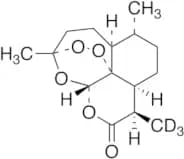
Formula:C4HD7OColor and Shape:ColourlessMolecular weight:79.15Artemisinin-d3
CAS:Applications Active antimalarial constituent of the tradional Chinese medicinal herb Artemisia annua L., Compositae, which has been known for almost 2000 years as Qinghao. Antimalarial.
References Klayman, D.L., et al.: Science, 228, 1049 (1985), Price, R.N., et al.: Expert Opin. Invest. Drugs, 9, 1815 (2000), Meshnick, S.R., et al.: Int. J., Parasitol., 32, 1655 (2002),Formula:C152H3H19O5Color and Shape:White to Off-White SolidMolecular weight:285.35