Deuterated Compounds
Deuterated compounds are organic molecules in which one or more hydrogen atoms are replaced with deuterium, a stable isotope of hydrogen. These compounds are essential in various scientific fields, including NMR spectroscopy, mass spectrometry, and kinetic isotope studies. Deuterated compounds improve signal clarity and accuracy in analyses by reducing background noise and providing unique insights into reaction mechanisms and molecular structures. At CymitQuimica, you will find a wide range of deuterated compounds specifically designed to support your research in analytical chemistry and molecular studies.
Found 4232 products of "Deuterated Compounds"
Sort by
Purity (%)
0
100
|
0
|
50
|
90
|
95
|
100
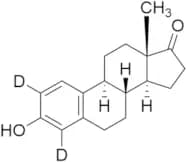
Estrone-2,4-d2
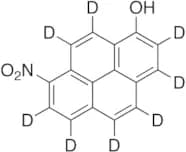
CAS:Controlled Product<p>Applications Estrone-2,4-d2 (CAS# 350820-16-5) is a useful isotopically labeled research compound.<br></p>Formula:C182H2H20O2Color and Shape:NeatMolecular weight:272.388-Nitro-1-pyrenol-d8 (~85%)
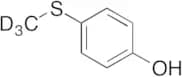
CAS:Controlled Product<p>Applications 8-Nitro-1-pyrenol is a urinary hydroxylated metabolites used as a biomarkers of exposure of polycyclic aromatic hydrocarbons. This is the labeled analog.<br>References Toriba, A., et al.: J. Health. Sci., 53; 631 (2007); Chae, Y.H., et al.: Cancer Res., 59, 1473 (1999); Sangaiah, R., et al.: Poly. Aro. Comp., 11, 283 (1996);<br></p>Formula:C16HD8NO3Purity:~85%Color and Shape:NeatMolecular weight:271.394-(Methyl-d3-thio)-phenol
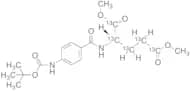
CAS:Controlled ProductFormula:C7D3H5OSColor and Shape:NeatMolecular weight:143.221N-Boc-(p-Aminobenzoyl)-L-glutamic Acid Dimethyl Ester-13C5
Controlled Product<p>Applications N-Boc-(p-Aminobenzoyl)-L-glutamic Acid Dimethyl Ester-13C5 is an intermediate used in the synthesis of Folic Acid-13C5 (F680303), which is a vitamin needed to synthesize DNA, conduct DNA repair and methylate DNA, it also acts as a cofactor in biological reactions involving folate.<br>References Xu, L., et al.: Mol. Pharm., 7, 1311 (2010), Everette, J., et al.: J. Agric. Food Chem., 58, 8139 (2010), Alshatwi, A., et al.: Food, Chem., Toxicol., 48, 1881 (2010), McKay, D., et al.: Nut. J., 9 (2010),<br></p>Formula:C5C14H26N2O7Color and Shape:NeatMolecular weight:399.3824-Bromomethcathinone-d3 Hydrochloride
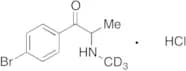
CAS:Controlled Product<p>Applications 4-Bromomethcathinone-D3 hydrochloride is a labelled analogue of 4-Bromomethcathinone hydrochloride (B686080). 4-Bromomethcathinone is part of a family of synthetic cathinone compounds called aminopropiophenones (which have high potential for abuse). Aminopropiophenones have potential psychoactive effects, can lead to death, and are labelled as highly controlled substances in many countries.<br>References Foley, K. & Cozzi, N.: Drug Dev. Res., 60, 252 (2003); Mas-Morey, P., et al.: J. Pharm. Pract., 26, 353 (2013); Penders, T., et al.: Gen. Hosp. Psych., 34, 647 (2012); Spiller, H., et al.: Clin. Toxicol., 49, 499 (2011)<br></p>Formula:C10H9BrD3NO·HClColor and Shape:NeatMolecular weight:281.592p-Methoxyphenethyl Methyl Ether-d3
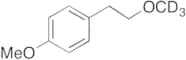
CAS:Controlled ProductFormula:C10D3H11O2Color and Shape:NeatMolecular weight:169.236Ursodeoxycholic Acid-24-13C
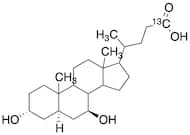
CAS:Controlled Product<p>Applications Ursodeoxycholic Acid-24-13C is the labeled compound of Ursodeoxycholic Acid (U850000). It is used as an anticholelithogenic. Epimer with Chenodiol with respect to the hydroxyl group at C7.<br></p>Formula:C23C)H40O4Color and Shape:NeatMolecular weight:393.572-Ethyl-1-hexanol-D5
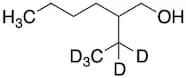
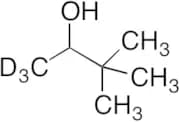
CAS:Controlled Product<p>Applications 2-Ethyl-1-hexanol-D5 is an intermediate in the synthesis of Alexidine-d10 Dihydrochloride (A525002), which has antibacterial, antiplaque properties against Streptococcus mutans, Actinomyces ciscosus, and Actinomyces naesludii.<br>References Coburn, R.A., et al.: J. Med. Chem., 21, 8, 829 (1978), Takayama, K., et al.: J. Biol. Chem., 269, 2241 (1994), Faure, P., et al.: Biochimie, 86, 411 (2004),<br></p>Formula:C8D5H13OColor and Shape:NeatMolecular weight:135.263,3-Dimethyl-2-butanol-d3
CAS:Controlled Product<p>Applications 3,3-Dimethyl-2-butanol-d3 is an isotopic analog of 3,3-Dimethyl-2-butanol (D471480), a reagent used in the synthesis of 2,4-dicarboxy-pyrroles as selective non-competitive mGluR1 antagonists. 3,3-Dimethyl-2-butanol is also used in the preparation of dihydropyrrole derivatives containing N-sulfanyl, sulfinyl, and sulfonyl moieties which have insecticidal activity.<br>References Ito, M., et al.: Bioorg. Med. Chem., 11, 489 (2003); Micheli, F., et al.: Bioorg. Med. Chem., 11, 171 (2003)<br></p>Formula:C6D3H11OColor and Shape:NeatMolecular weight:105.1931-Bromo-4-nitrobenzene-d4
CAS:Controlled Product<p>Stability Easily Oxidized<br>Applications 1-Bromo-4-nitrobenzene-d4 (cas# 350820-19-8) is a compound useful in organic synthesis.<br> Not a dangerous good if item is equal to or less than 1g/ml and there is less than 100g/ml in the package<br></p>Formula:C62H4BrNO2Color and Shape:NeatMolecular weight:206.03Pyridine-4-d1
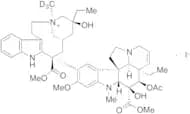
CAS:Controlled Product<p>Applications Pyridine-4-d1 (CAS# 10259-15-1) is a useful isotopically labeled research compound.<br></p>Formula:C5H4DNColor and Shape:NeatMolecular weight:80.11Vinblastine-d3 Methiodide
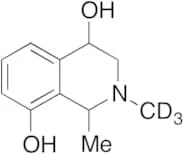
CAS:Controlled Product<p>Applications Vinblastine-d3 Methiodide is the labeled analogue of Vinblastine Methiodide (V314015), an adduct of Vinblastine (V314000), an antitumor alkaloid isolated from periwinkle, Vinca rosea Linn., Apocynaceae; inhibits microtubule assembly. An antineoplastic.<br>References Dorman, D.E., Paschal, J.W.: Org. Magnetic Resonance, 8, 413 (1976); Lu, C., et al.: Cancer Research, 39, 3575 (1979); Gobbi, P.G., et al.: J. Clin. Oncol., 14, 527 (1996); Muhtadi, F.J., et al.: Anal. Profiles Drug Subs. Excip., 21, 611 (1992)<br></p>Formula:C47H58D3N4O9•IColor and Shape:NeatMolecular weight:955.931,2,3,4-tetrahydro-1,2-dimethyl-4,8-isoquinolinediol-d3
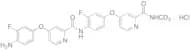
CAS:Controlled ProductFormula:C11D3H12NO2Color and Shape:NeatMolecular weight:196.2614-(4-Amino-3-fluorophenoxy)-N-(2-fluoro-4-((2-(methyl-d3-carbamoyl)pyridin-4-yl)oxy)phenyl)picolinamide Hydrochloride
Controlled ProductFormula:C25H17D3ClF2N5O4Color and Shape:NeatMolecular weight:530.93D,L-Carnitine-d3 Chloride
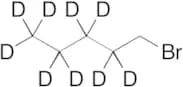
CAS:Controlled Product<p>Applications D,L-Carnitine-d3 Chloride is the isotope labelled analog of D,L-Carnitine Chloride (C184100); a vitamin (enzyme cofactor). It is an essential cofactor of fatty acid metabolism and is required for the transport of fatty acids through the inner mitochondrial membrane. Synthetized primarily in the liver and kidney with the highest concentrations found in heart and skeletal muscle. Dietary sources include red meat, dairy products, beans, avocado.<br>References Mitchell, M.E., et al.: Am. J. Clin. Nutr., 31, 293 (1978); Lango, R., et al.: Cardiovasc. Res., 51, 21 (2001); Vaz, F.M., et al.: Biochem. J., et al.: 361, 417 (2002); Karlic, H., et al.: Nutrition, 20, 709 (2004)<br></p>Formula:C7H13D3ClNO3Color and Shape:NeatMolecular weight:200.685-Bromo Pentane-1,1,1,2,2,3,3,4,4-d9
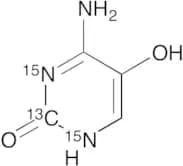
CAS:Controlled Product<p>Applications 5-Bromo Pentane-1,1,1,2,2,3,3,4,4-d9 is a isotope labeled building block.<br></p>Formula:C5H2D9BrColor and Shape:NeatMolecular weight:160.15-Hydroxycytosine-13C, 15N2
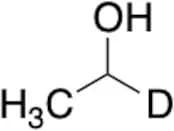
CAS:Controlled ProductFormula:CC3H515N2NO2Color and Shape:NeatMolecular weight:130.081Ethyl-1-d1 Alcohol
CAS:Controlled Product<p>Applications Ethyl-1-d1 Alcohol (CAS# 1624-36-8) is a useful isotopically labeled research compound.<br></p>Formula:C2H5DOColor and Shape:NeatMolecular weight:47.081,4-Dibromobutane-13C4
CAS:Controlled ProductFormula:C4H8Br2Color and Shape:NeatMolecular weight:217.869