Deuterated Compounds
Found 4238 products of "Deuterated Compounds"
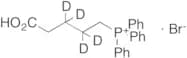
(4-Carboxybutyl-d4)triphenylphosphonium Bromide
CAS:Controlled ProductApplications (4-Carboxybutyl-d4)triphenylphosphonium Bromide is a reactant in the preparation of deuterated nocloprost.
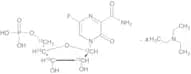
References Krause, W., et. al.: Prostaglandins, 40, 283 (1990)Formula:C23D4H20O2P·BrColor and Shape:NeatMolecular weight:447.34T-705RMP-13C5 TEA Salt
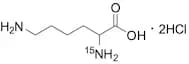
CAS:Controlled ProductFormula:C5C5H13FN3O9P•x(C6H15N)Color and Shape:NeatMolecular weight:374.16 + x(101.19)DL-Lysine-2-15N 2HCl
CAS:Controlled ProductApplications DL-Lysine-2-15N 2HCl (CAS# 2747-89-9) is a useful isotopically labeled research compound. This compound can be used for spectrophotometric analysis to determine the mechanism of electron-capture-induced dissociation of various peptides.
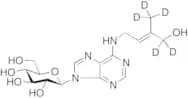
References Holm, A., et.al., J. Phy. Chem.A.,111,9641-9643,(2007); Nakamura, A. Nippon Kagaku Zasshi,86,500-505,(1965);Formula:C6H16Cl2NN)O2· 2HClColor and Shape:NeatMolecular weight:147.19 + 72.92trans-Zeatin-d5 N9-glucoside
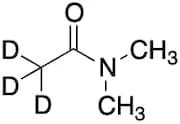
CAS:Controlled ProductFormula:C16D5H18N5O6Color and Shape:NeatMolecular weight:386.414N,N-Dimethylacetamide-2,2,2-d3
CAS:Controlled ProductApplications N,N-Dimethylacetamide-2,2,2-d3 (CAS# 20255-66-7) is a useful isotopically labeled research compound.
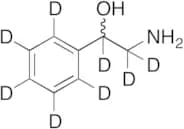
Formula:C4H6D3NOColor and Shape:NeatMolecular weight:90.14DL-Phenylethanolamine-d8
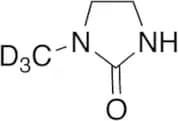
CAS:Controlled ProductFormula:C8D8H3NOColor and Shape:NeatMolecular weight:145.2281-(Methyl-d3)-2-imidazolidinone
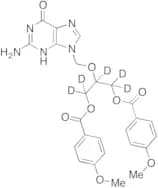
CAS:Controlled ProductFormula:C4D3H5N2OColor and Shape:NeatMolecular weight:103.138Ganciclovir-d5 di-O-p-Methoxybenzoate
Controlled ProductFormula:C25H20D5N5O8Color and Shape:NeatMolecular weight:525.077(R)-Benalaxyl-d5
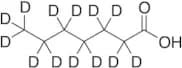
CAS:Controlled ProductFormula:C20D5H18NO3Color and Shape:NeatMolecular weight:330.432Heptanoic Acid (D13, 98%)
CAS:Controlled ProductApplications Heptanoic Acid (D13, 98%) (cas# 130348-93-5) is a useful research chemical.
Formula:C7H14O2Purity:98%Color and Shape:NeatMolecular weight:143.27Decanoic-10,10,10-d3 Acid
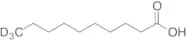
CAS:Controlled ProductApplications Decanoic-10,10,10-d3 Acid is the isotope labelled analog of Decanoic Acid (D212525); a compound used in the manufacturing of esters for artificial fruit flavors and perfumes.
References Oro, L., et al.: Acta Pharmacol. Toxicol., 18, 141 (1961)Formula:C10D3H17O2Color and Shape:NeatMolecular weight:175.282-((Hexyl-d4)oxy)tetrahydropyran
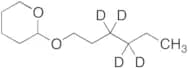
CAS:Controlled ProductApplications 2-((Hexyl-d4)oxy)tetrahydropyran is a proposed intermediate in the synthesis of 1-Octen-3-one-D4 (O239252), a labelled analogue of 1-Octen-3-one (O239250). 1-Octen-3-one is a volatile unsaturated ketone that has a strong mushroom-like odour. 1-Octen-3-one is also a flavour component of the Agaricus bisporus mushroom and is used in a variety of food products.
References Culleré, L., et al.: Anal. Chim. Acta, 563, 51 (2006); Fickert, B. & Schieberle, P.: Food/Nahrung, 42, 371 (1998); Husson, F., et al.: Proc. Biochem., 37, 177 (2001)Formula:C11D4H18O2Color and Shape:NeatMolecular weight:190.316Cholesterol-2,2,3,4,4,6-d6
CAS:Controlled ProductCholesterol-2,2,3,4,4,6-d6 is a chemical compound that is used as a reference standard for cholesterol. It is typically used in the preparation of samples for analysis by nuclear magnetic resonance spectroscopy and other analytical techniques. Cholesterol-2,2,3,4,4,6-d6 has been shown to be an effective inhibitor of influenza virus replication in vitro and in vivo. It also inhibits the replication of a number of other viruses including papillomavirus and herpes simplex virus. The molecule has been shown to bind to the viral membrane system with high affinity and specificity. Cholesterol-2,2,3,4,4,6-d6 also prevents the fusion of influenza virus with host cell membranes by inhibiting the conformational changes required for this process.Formula:C27D6H40OPurity:Min. 95%Molecular weight:392.69 g/molProgesterone-d9
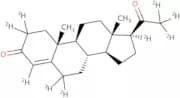
CAS:Controlled ProductProgesterone-d9 is a compound that is used in the diagnosis of adrenocortical carcinoma. It can be extracted from the serum of patients with this cancer using an acetate extraction technique. Progesterone-d9 has been shown to be a useful biomarker for short-term exposure to water contaminated with nomegestrol acetate, and it has also been shown to be a useful tool for wastewater treatment. The use of Progesterone-d9 as a biomarker is limited by its instability in human serum and its susceptibility to matrix effects. This compound can be analyzed by liquid chromatography mass spectrometry (LC-MS/MS) methods, which are sensitive and specific. A drawback of this analytical method is that it requires extensive sample preparation. The LC-MS/MS method can also be used to measure prosteroid levels, which have been found to correlate with levels of camp in humans.Formula:C21H21O2D9Purity:Min. 95%Color and Shape:Off-White To Yellow SolidMolecular weight:323.51 g/molChloroacetic Acid-13C2
CAS:Please enquire for more information about Chloroacetic Acid-13C2 including the price, delivery time and more detailed product information at the technical inquiry form on this pagePurity:Min. 95%1-Amino-2,4-imidazolidinedione-13C3
CAS:1-Amino-2,4-imidazolidinedione-13C3 is an antibiotic that belongs to the group of nitrofurans. It is used for the treatment of infections caused by bacteria that are resistant to other antibiotics. The LC-MS/MS analysis showed that 1-aminohydantoin was formed as a degradation product of chloramphenicol and that this metabolite had been detected in urine samples from patients treated with chloramphenicol. Nitrofuran is also a possible degradation product. A reaction monitoring experiment using ionization monitoring and monitoring on the precursor ion at m/z 287 confirmed the presence of 1-aminohydantoin in a sample containing both chloramphenicol and nitrofuran. Quantification was performed using calibration curves obtained from pure standards.Formula:C3H5N3O2Purity:Min. 95%Molecular weight:118.12 g/molVitamin D3-d6
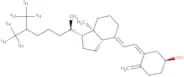
CAS:Controlled ProductVitamin D3-d6 is a vitamin that has ionizable properties. It is available in the form of an oil and can be used as a dietary supplement for infants, as well as adults. Vitamin D3-d6 has been validated by various assays, including those based on chemical ionization, high-performance liquid chromatography, and gas chromatography. Sample preparation procedures include saponification and extraction with isooctane. The analytical method involves detection by UV light at 254 nm or fluorescence at 365 nm. The efficiency of this vitamin is low because it easily degrades when exposed to light or air.Formula:C27H38D6OPurity:Min. 95%Color and Shape:PowderMolecular weight:390.67 g/mol24,25-Dihydroxy vitamin D2
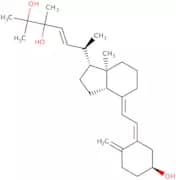
CAS:24,25-Dihydroxy vitamin D2 is a form of vitamin D that has been shown to be effective in the treatment of biliary cirrhosis and neonatal cirrhosis. It is synthesized from 25-hydroxyvitamin D3 by the enzyme 24-hydroxylase. The assay sensitivity for this compound is 10 ng/mL. This form of vitamin D has been shown to have an effect on serum bilirubin levels in patients with biliary cirrhosis. 24,25-Dihydroxy vitamin D2 can also be used to treat patients with chronic renal failure who are deficient in vitamin D3. The plasma concentration of 24,25-dihydroxyvitamin D2 is lower than that of 25-hydroxyvitamin D2 and 1,25-dihydroxyvitamin D2 because it is more rapidly metabolized by the liver.
Formula:C28H44O3Purity:Min. 98 Area-%Color and Shape:PowderMolecular weight:428.65 g/molTrideuteriomethylbenzene
CAS:Controlled ProductTrideuteriomethylbenzene is a chemical compound that contains three deuterium atoms. It is a member of the class of compounds called alkyl-deuteriomethylbenzenes, which are used as proton donors in chemical reactions. It has been shown to be an effective supercritical solvent for the separation of long-chain alcohols from hydrocarbons. Trideuteriomethylbenzene may also be used as a photoelectron donor for the determination of time constants and depression constants by electron diffraction.
Formula:C7H5D3Purity:Min. 95%Molecular weight:95.16 g/molOxaloacetic acid-13C4
CAS:A labelled form of the oxalacetic acid (FO12113).Formula:C4H4O5Purity:Min. 95%Molecular weight:136.04 g/mol