


Deuterated Compounds
Found 4238 products of "Deuterated Compounds"
Benzidine D8
CAS:Controlled ProductBenzidine D8 is a benzidine compound that has been shown to be carcinogenic. It is used in the production of dyes and colorants, and it is found in wastewater from dyeing factories. Benzidine D8 has been detected in human urine, which may be due to occupational exposure. This chemical can also be found in the environment as a result of industrial discharge. The carcinogenicity of benzidine D8 is mediated by its ability to produce reactive metabolites that bind to DNA, forming adducts. These adducts inhibit DNA replication and transcription, leading to cell death through inhibition of protein synthesis. Benzidine D8 undergoes metabolism via oxidative reactions with amines or hydrolysis with hydrophilic compounds such as alcohols or phenols, which are present at high levels in the bladder tissue. The risk of bladder cancer increases when benzidine D8 binds to these amines or hydrophilic compounds, resulting in the formation of reactive metabolites that can bind to DNA
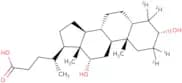
Formula:C12H4D8N2Purity:Min. 95%Molecular weight:192.28 g/molDeoxycholic acid-D4
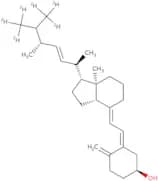
CAS:Controlled ProductDeoxycholic acid-D4 is a bile acid that is produced by the liver. It has been shown to be an indicator of insulin resistance in women with breast cancer. Deoxycholic acid-D4 has also been found to have significant interactions with other drugs, such as phenytoin, carbamazepine, and penicillin. The concentration of deoxycholic acid-D4 in the serum may be reduced by taking these drugs. This drug has a detection time of 3 hours and can be detected by liquid chromatography. Deoxycholic acid-D4 is metabolized through the human metabolism pathway, which includes dietary and logistic regression models.Formula:C24H36D4O4Purity:Min. 95%Molecular weight:396.6 g/molVitamin D2-d6
CAS:Controlled ProductVitamin D2-D6 is a dietary supplement that comes in the form of an oil. It is an ionizable vitamin and is structurally similar to Vitamin D3. The most common form of this vitamin is cholecalciferol, which is found in fish oils and dairy products. Vitamin D2-D6 has been shown to be efficacious at increasing mineralization in skin cells, as well as preventing symptoms of rickets. This nutrient also assists with calcium metabolism and the absorption of dietary calcium. It can be taken by infants or adults who may have low levels of Vitamin D due to a lack of exposure to sunlight or ingestion of a poor diet.Formula:C28H38D6OPurity:Min. 99.0 Area-%Color and Shape:PowderMolecular weight:402.68 g/molChloroacetic Acid-13C2
CAS:Please enquire for more information about Chloroacetic Acid-13C2 including the price, delivery time and more detailed product information at the technical inquiry form on this pagePurity:Min. 95%17β-Estradiol-d2
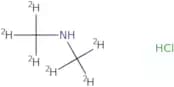
CAS:Controlled Product17-Estradiol-3,17-diol (17-E2) is the most potent estrogen found in humans. It has been shown to be able to stimulate the growth of breast cancer cells and is a known carcinogen in animals. 17-E2 is metabolized by cytochrome P450 enzymes into catechol estrogens, which are reactive and can bind to DNA. These metabolites can cause mutations that lead to cancer. Analysis of human breast tissue has revealed that 17-E2 is synthesized from estradiol by aromatase and then converted into catechol estrogens by 17β-hydroxysteroid dehydrogenase type 1. 17-E2 also binds to estrogen receptors, which may be linked with the development of certain cancers. The presence of 17-E2 in the environment has been linked with an increased risk for cancer in humans, as it can enter the body through water or food contaminated with waste products.Formula:C18H22D2O2Purity:Min. 95%Color and Shape:PowderMolecular weight:274.39 g/molDimethyl-d6-amine HCl
CAS:Controlled ProductDimethyl-d6-amine HCl is a drug that inhibits the growth of cancer cells. It is an inhibitor of epidermal growth factor (EGF), which has been shown to be effective in the treatment of skin cancer. Dimethyl-d6-amine HCl is also effective against some strains of bacteria that are resistant to other antibiotics, such as erythromycin and tetracycline. Dimethyl-d6-amine HCl has been shown to have a suppressive effect on the production of sesquiterpene lactones by dehydrocostus lactone, which may be responsible for its anti-inflammatory properties.Formula:C2H2ClD6NPurity:Min. 95%Color and Shape:White PowderMolecular weight:87.58 g/molCD36 (93-110)-Cys
CAS:Please enquire for more information about CD36 (93-110)-Cys including the price, delivery time and more detailed product information at the technical inquiry form on this pageFormula:C96H151N29O33SPurity:Min. 95%Molecular weight:2,271.47 g/mol([D2]Gly4)-Cholecystokinin Octapeptide (sulfated) ammonium salt
Please enquire for more information about ([D2]Gly4)-Cholecystokinin Octapeptide (sulfated) ammonium salt including the price, delivery time and more detailed product information at the technical inquiry form on this pageFormula:C49H60D2N10O16S3Purity:Min. 95%Molecular weight:1,145.28 g/mol(Cys(Bzl)84)-CD4 (81-92)
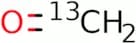
CAS:The CD4 molecule is a major component of the human immune system. It interacts with other cells, such as T-cells, and plays an important role in the immune response. The CD4 molecule is a glycoprotein that consists of two subunits, (Cys(Bzl)84)-CD4 and (81-92) H-Thr-Tyr-Ile-Cys(Bzl)-Glu-Val-Glu-Asp-Gln-Lys-Glu-. The sequence of this molecule is important for its function, as it has been shown to be essential for binding to HIV particles. This protein may also play a role in regulating the growth of T cells. It was found that the amino acid sequence of CD4 is not conserved among different species. The amino acid sequence specificity in the CD4 molecule is due to the cysteine residues. These residues are able to form disulfide bridges with other cysteFormula:C69H102N14O26SPurity:Min. 95%Molecular weight:1,575.69 g/molFormaldehyde-13C solution
CAS:20% by weight in water. 98 atom % 13CFormula:H13CHOPurity:Min. 95%Molecular weight:42.12 g/mol([15N]Gly)-Glutathione (reduced)
CAS:Please enquire for more information about ([15N]Gly)-Glutathione (reduced) including the price, delivery time and more detailed product information at the technical inquiry form on this pagePurity:Min. 95%Cys-CD36 (139-155) trifluoroacetate salt
CAS:Please enquire for more information about Cys-CD36 (139-155) trifluoroacetate salt including the price, delivery time and more detailed product information at the technical inquiry form on this pageFormula:C87H133N25O26SPurity:Min. 95%Molecular weight:1,977.21 g/molFmoc-[D4]Ala-OH
CAS:Controlled ProductPlease enquire for more information about Fmoc-[D4]Ala-OH including the price, delivery time and more detailed product information at the technical inquiry form on this pageFormula:C18H13D4NO4Purity:Min. 95%Color and Shape:PowderMolecular weight:315.35 g/molBenzoic- d5- acid
CAS:Controlled ProductBenzoic acid is a carboxylic acid that is found naturally in many plants, fruits and vegetables. It has been shown to be an effective inhibitor of bacterial growth by binding to the glycan moiety of peptidoglycans. Benzoic acid can be used as a calibrant for mass spectrometry. The molecular weight of benzoic acid is 100.06 g/mol and its melting point is 152 °C (309 °F). Benzoic acid has two structural isomers: ortho-benzoic acid and meta-benzoic acid. Ortho-benzoic acid has a molecular weight of 102.09 g/mol and a melting point of 145 °C (293 °F). Meta-benzoic acid has a molecular weight of 104.10 g/mol and a melting point of 155 °C (311 °F). Benzoate may also be produced from the reaction between benzoyl chloride with sodium benzoFormula:C7HD5O2Purity:Min. 95%Molecular weight:127.15 g/molFmoc-[ring-D5]Phe-OH
CAS:Controlled ProductPlease enquire for more information about Fmoc-[ring-D5]Phe-OH including the price, delivery time and more detailed product information at the technical inquiry form on this pageFormula:C24H16D5NO4Purity:Min. 95%Molecular weight:392.46 g/mol([13C6]Leu10)-CRF (human, rat) trifluoroacetate salt
Please enquire for more information about ([13C6]Leu10)-CRF (human, rat) trifluoroacetate salt including the price, delivery time and more detailed product information at the technical inquiry form on this pagePurity:Min. 95%Fmoc-[15N]Leu-OH
CAS:Fmoc-[15N]Leu-OH is a research chemical that has various applications in the field of biosynthesis and antibody production. It is commonly used in peptide synthesis and as a building block for the preparation of peptides and proteins. Fmoc-[15N]Leu-OH is known for its high purity and quality, making it an ideal choice for researchers and scientists working in the field of molecular biology. This compound can be easily dissolved in ethanol or other organic solvents, allowing for convenient use in laboratory experiments. With its unique characteristics and wide range of applications, Fmoc-[15N]Leu-OH is a valuable tool for those involved in biochemical research.Formula:C21H23NO4Purity:Min. 95%Molecular weight:354.41 g/molFmoc-[15N]Val-OH
CAS:Fmoc-[15N]Val-OH is an epidermal growth factor receptor (EGFR) ligand that can be used to identify phosphorylation sites on EGFR. Fmoc-[15N]Val-OH binds to the tyrosine kinase domain of the EGFR and is phosphorylated by the intracellular protein tyrosine kinases, which leads to receptor activation. This compound has been shown to have a high affinity for human epidermoid carcinoma cells and can be used in cancer research as a potent and selective ligand. Fmoc-[15N]Val-OH is also known as a growth factor and has been shown to stimulate a number of cellular responses such as cell proliferation, migration, differentiation, and adhesion.Purity:Min. 95%Protein Kinase P34 (cd2) Substrate trifluoroacetate salt
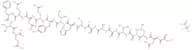
CAS:H-ADAQHATPPKKKRKVEDPKDF-OH peptide, which can act as a substrate of Protein Kinase P34 (cd2). The peptide is supplied as a trifluoroacetate salt.Formula:C106H172N32O32Purity:Min. 95%Molecular weight:2,406.7 g/mol([ring-D5]Phe3)-Octreotide acetate salt
CAS:Controlled ProductPlease enquire for more information about ([ring-D5]Phe3)-Octreotide acetate salt including the price, delivery time and more detailed product information at the technical inquiry form on this pageFormula:C49H61D5N10O10S2Purity:Min. 95%Molecular weight:1,024.27 g/mol





![([D2]Gly4)-Cholecystokinin Octapeptide (sulfated) ammonium salt](/_next/image/?url=https%3A%2Fstatic.cymitquimica.com%2Fproducts%2F3D%2Fthumb-webp%2FFG110020.webp&w=3840&q=75)

![([15N]Gly)-Glutathione (reduced)](/_next/image/?url=https%3A%2Fstatic.cymitquimica.com%2Fproducts%2F3D%2Fthumb-webp%2FFG109306.webp&w=3840&q=75)
![Fmoc-[D4]Ala-OH](/_next/image/?url=https%3A%2Fstatic.cymitquimica.com%2Fproducts%2F3D%2Fthumb-webp%2FFF111394.webp&w=3840&q=75)

![Fmoc-[ring-D5]Phe-OH](/_next/image/?url=https%3A%2Fstatic.cymitquimica.com%2Fproducts%2F3D%2Fthumb-webp%2FFF111391.webp&w=3840&q=75)
![([13C6]Leu10)-CRF (human, rat) trifluoroacetate salt](/_next/image/?url=https%3A%2Fstatic.cymitquimica.com%2Fproducts%2F3D%2Fthumb-webp%2FFL110016.webp&w=3840&q=75)
![Fmoc-[15N]Leu-OH](/_next/image/?url=https%3A%2Fstatic.cymitquimica.com%2Fproducts%2F3D%2Fthumb-webp%2FFF111321.webp&w=3840&q=75)
![Fmoc-[15N]Val-OH](/_next/image/?url=https%3A%2Fstatic.cymitquimica.com%2Fproducts%2F3D%2Fthumb-webp%2FFF111322.webp&w=3840&q=75)
![([ring-D5]Phe3)-Octreotide acetate salt](/_next/image/?url=https%3A%2Fstatic.cymitquimica.com%2Fproducts%2F3D%2Fthumb-webp%2FFR110015.webp&w=3840&q=75)