Deuterated Compounds
Found 4238 products of "Deuterated Compounds"
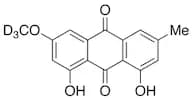
Physcion-d3
CAS:Controlled ProductApplications Labelled Physcion. A natural anthraquinone derivative, on the infection process of Blumeria graminis on wheat. Physcion is one of the important active ingredients of ethanol extract from the roots of Chinese rhubarb (Rheum officinale) for controlling powdery mildew.
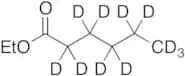
References Thiericke, R., et al.: Nat. Prod. Rep.,10, 265 (1993), Lin, C., et al.: J. Nat. Prod., 58, 1934 (1995), Julia, S., et al.: J. Biotechnol., 124, 690 (2006), Wang, W., et al.: J. Antibiot., 60, 603 (2007),Formula:C16H9D3O5Color and Shape:NeatMolecular weight:287.28Ethyl Caproate-d11
CAS:Controlled ProductApplications Isotope labelled Ethyl Caproate is used in the synthesis of novel EP2/EP4 dual agonist of γ-lactam prostaglandin E1 analogs. Also used as a chemical reagent in the synthesis of PPARα antagonists in the treatment of metabolic diseases.
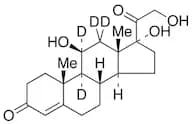
References Kambe, T. et al. Bioorg. Med. Chem. Lett., 22, 396 (2012); Ammazzalorso, A. et al.: Bioorg. Med. Chem. Lett., 21, 4869 (2011);Formula:C82H11H5O2Color and Shape:NeatMolecular weight:155.28Cortisol-9,11,12,12-d4
CAS:Controlled ProductApplications Labelled Cortisol (H714615). Cortisol, or Hydrocortisone, is a steroid hormone, more specifically a glucocorticoid, produced by the zona fasciculata of the adrenal gland. Cortisol is released in response to stress and a low level of blood glucocorticoids. Its primary functions are to increase blood sugar through gluconeogenesis; suppress the immune system; and aid in fat, protein and carbohydrate metabolism.
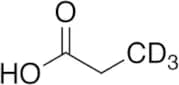
References Hechter, O., et al.: Arch. Biochem. Biophys., 25, 457 (1950), Colingsworth, D.R., et al.: J. Biol. Chem., 203, 807 (1953), Florey, K., et al.: Anal. Profiles Drug Subs., 12, 277 (1983),Formula:C212H4H26O5Color and Shape:Off-WhiteMolecular weight:366.48Propionic Acid-d3
CAS:Controlled ProductApplications Labelled Propionic Acid, used in the synthesis of novel inhibitors of signal transducer and activator of transcription 3 signaling pathway in the potential treatment of human cancers. In addition it is used in the synthesis of morphans.
Not a dangerous good if item is equal to or less than 1g/ml and there is less than 100g/ml in the package
References Zhang, M. et al.: Eur. J. Med. Chem., 62, 301 (2013); Bradshaw, B. et al.: Org. Lett., 15, 2458 (2013);Formula:C3D3H3O2Color and Shape:NeatMolecular weight:77.1Uracil-15N2
CAS:Controlled ProductApplications Uracil-15N2 can be used as a stable-isotopic standard to measure of post-replicative DNA metabolic and damage in brains of rodents. This compound can also be used for isotope tracing to determine the mechanism and stem-cell activity of 5-carboxycytosine decarboxylation.
References Patel, J.P., et.al., Chem. Res. Toxicol., 28, 2352-2363, (2015); Schiesser, S., et.al., Angew. Chem. Int. Ed., 51,6516-6520, (2012);Formula:C4H415N2O2Color and Shape:NeatMolecular weight:114.079-cis-Retinyl Stearate-d5
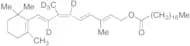
CAS:Controlled ProductApplications 9-cis-Retinyl Stearate-d5, is the labeled analogue of 9-cis-Retinyl Stearate (R275600), a fatty acid ester of Retinol isomer, found mainly in the retina.
References Bridges, C.D.B., et al.: Methods Enzymol., 81, 463 (1982),Formula:C38D5H59O2Color and Shape:NeatMolecular weight:557.944Suvorexant-d6
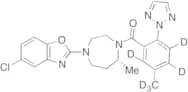
CAS:Controlled ProductApplications Suvorexant-d6 is the labeled analog of Suvorexant (S870000), a dual (non-selective) orexin receptor antagonist in development by Merck & Co. for the treatment of insomnia. It works by turning off wakefulness rather than by inducing sleep. Users of higher doses had an increased rate of suicidal ideation.
References Cox, C., et al.: J. Med. Chem., 53, 5320 (2010); Baxter, C., et al.: Org. Process Res. Dev., 15, 367 (2011); Winrow, C., et al.: J. Neurogenet., 25, 52 (2011); Mieda, M., et al.: CNS Drugs, 27, 83 (2013); Osborne, R.: Nat. Rev. Drug Discov., 12, 492 (2013)Formula:C23H17D6ClN6O2Color and Shape:NeatMolecular weight:456.96Hydrochlorothiazide-13C,15N2,d2
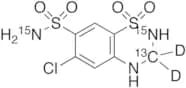
CAS:Controlled ProductApplications Labelled Hydrochlorothiazide (H714560). Hydrochlorothiazide is a carbonic anhydrase inhibitor as a diuretic.
References Piala, J.J., et al.: J. Pharmacol. Exp. Ther., 134, 273 (1961), Deppeler, H.P., et al.: Anal. Profiles Drug Subs., 10, 405 (1981),Formula:C613CH6D2ClN15N2O4S2Color and Shape:NeatMolecular weight:302.731-Nitropiperazine-d8
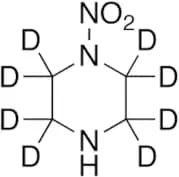
CAS:Controlled ProductApplications Labelled nitro substituted piperazine.
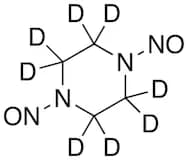
Formula:C4HD8N3O2Color and Shape:NeatMolecular weight:139.181,4-Dinitrosopiperazine-d8
CAS:Controlled ProductStability Hygroscopic
Applications Labelled 1,4-Dinitrosopiperazine. N,N'-Dinitrosopiperazine (DNP) induces nasopharyngeal carcinoma (NPC) and shows organ specificity to the nasopharyneal epithelium.
Not a dangerous good if item is equal to or less than 1g/ml and there is less than 100g/ml in the package
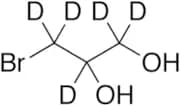
References Lanier, A., et al.: Cancer, 46, 2100 (1980), Waalkes, M., et al.: Carcinogenesis, 25, 133 (2004), Toth, E., et al.: Int. J. Cancer, 121, 1744 (2007),Formula:C4D8N4O2Color and Shape:Off-White To Light YellowMolecular weight:152.1813-Bromo-1,2-propanediol-d5
CAS:Controlled ProductApplications Labelled glycerol kinase substrate specificity.
Not a dangerous good if item is equal to or less than 1g/ml and there is less than 100g/ml in the package
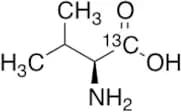
References Castro, C., et al.: Biochemistry, 7, 3213 (1968), Janssen, D., et al.: Eur. J. Biochem., 171, 67 (1988), Kurihara, T., et al.: J. Biochem., 117, 1317 (1995),Formula:C3D5H2BrO2Color and Shape:Colourless To Light YellowMolecular weight:160.02L-Valine-13C
CAS:Applications L-Valine (1-13c, 99%) (cas# 81201-85-6) is a useful research chemical.
Formula:C413CH11NO2Color and Shape:NeatMolecular weight:118.14Adenosine-5',5''-d2
CAS:Controlled ProductApplications Labelled analogue of Adenosine (A280400), a purine nucleoside that plays an important role in various biochemical processes.
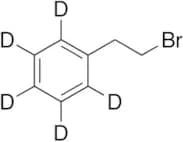
References Long, X., et al.: J. Pharmacol. Exper. Ther., 335, 781 (2010); Ham, M., et al.: J. Pharmacol. Exper. Ther., 335, 607 (2010)Formula:C10H11D2N5O4Color and Shape:White SolidMolecular weight:269.26(2-Bromoethyl)benzene-d5
CAS:Controlled ProductApplications Isotope labelled (2-Bromoethyl)benzene is an intermediate widely used in organic synthesis.
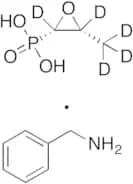
References Suzuki, T., et al.: J. Med. Chem., 55, 9562 (2012); Mohanazadeh, F., et al.: Lett. Org. Chem., 9, 598 (2012);Formula:C8D5H4BrColor and Shape:NeatMolecular weight:190.09rac Fosfomycin-D5 (Major) Benzylamine Salt
CAS:Controlled ProductApplications rac Fosfomycin-D5 (Major) Benzylamine Salt is the deuterium labelled analogue of Fosfomycin antibiotic. Related to Fosfomycin Disodium Salt (F727500), rac Fosfomycin-13C3 Benzylamine Salt (F727502), Fosfomycin Tromethamine (F727505), and Fosfomycin Calcium (F727508).
References Goto, M., et al.: Antimicrob. Agents Chemother., 20, 393 (1981); Michalopoulos, A. et al.: Int. J. Infect. Dis., 15, e732 (2011); Matsumoto, T. et al.: J. Infection. Chemother., 17, 80 (2011); Keating, G. et al.: Drugs, 73, 1951 (2013); Demir, T. et al.: Int. J. Infect. Dis., 17, e966 (2013);Formula:C3H2D5O4P•(C7H9N)Color and Shape:NeatMolecular weight:250.24L-Asparagine-13C4, 15N2 Hydrate
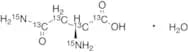
CAS:Controlled ProductFormula:C4H815N2O3H2OColor and Shape:NeatMolecular weight:138.081802ε-Aminocaproic Acid-d10 Hydrochloride
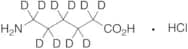
CAS:Controlled ProductApplications Labelled ε-Aminocaproic Acid. Used in the preparatiom of esters of 6-aminohexanoic acid as antibacterial agents. EACA is reported to inhibit chymotrypsin, Factor VIIa, lysine carbo xy peptidase, plasmin, and plasminogen activator.
References Dolezal, P., et al.: Pharm. Res., 10, 1015 (1993), Vavrova, K., et al.: Curr. Med. Chem., 12, 2273 (2005), Holas, T., et al.: Bioorg. Med. Chem., 14, 7671 (2006),Formula:C6H4D10ClNO2Color and Shape:NeatMolecular weight:177.7n-Dotriacontane-d66
CAS:Controlled ProductApplications n-Dotriacontane-d66 (CAS# 62369-68-0) is a useful isotopically labelled research compound. It has been studied as a potential generator to supply charged particles to plastic nuclear track detectors for high-energy neutrons.
References Oda, K., et al.: Radiation Measurements, 36, 119 (2003)Formula:C32D66Color and Shape:Off-WhiteMolecular weight:517.272,4-Dichlorophenol-13C6
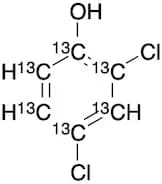
CAS:Applications 2,4-Dichlorophenol-13C6 is the labelled analog of 2,4-Dichlorophenol (D435685). 2,4-Dichlorophenol is a chlorinated derivative of phenol and is used as an intermediate for the preparation of herbicide 2,4-dichlorophenoxyacetic acid (D435680).
Not a dangerous good if item is equal to or less than 1g/ml and there is less than 100g/ml in the package
References Zhong, W., et al.: J. Hazard. Mat., 217, 286 (2012); Rowe, V.K., et al.: Am. J. Vet. Res., 15, 622 (1954), Way, J.M., et al.: Residue Rev., 26, 37 (1969)Formula:C6H4Cl2OColor and Shape:NeatMolecular weight:168.96Indocyanine Green >d6
CAS:Controlled ProductApplications It is the labeled analogue of Indocyanine Green (I697000), a tricarbocyanine type of dye with infrared absorbing properties that can be used as a diagnostic aid (blood volume determination, cardiac output, hepatic function).
References Papageorgiou, P., et al.: Br. J. Dermatol., 142, 973 (2000), Dreno, B., et al.: Dermatology, 203, 135 (2001), Gollnick, H., et al.: Drugs, 63, 1579 (2003), Seaton, E., et al.: Lancet, 362, 1347 (2003),Formula:C7H14N2OColor and Shape:NeatMolecular weight:NA