Deuterated Compounds
Found 4238 products of "Deuterated Compounds"
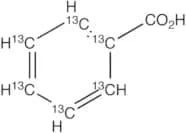
Benzoic Acid-13C6
CAS:Controlled ProductApplications Benzoic Acid-13C6 (cas# 125945-98-4) is a compound useful in organic synthesis.
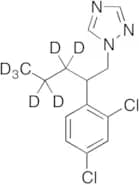
Formula:C6CH6O2Color and Shape:NeatMolecular weight:128.08Penconazole-d7
CAS:Controlled ProductApplications Isotope labelled penconazole is an conazole based fungicide that works by inhibiting cell membrane ergosterol biosynthesis, thus stopping the development of fungi.
Not a dangerous good if item is equal to or less than 1g/ml and there is less than 100g/ml in the package
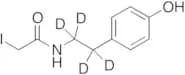
References Sharma, H., et al.: J. Mycol. Plant. Pathol., 42, 494 (2012); Sen, K., et al.: Food. Chem. Toxicol., 50, 3990 (2012); Pitt, W.M., et al.: Plant Disease., 96, 1303 (2012);Formula:C13D7H8Cl2N3Color and Shape:White To Off-WhiteMolecular weight:291.23N-Iodoacetyltyramine-d4
CAS:Controlled ProductApplications Isotope labelled N-Iodoacetyltyramine (I685880) is used in iodine-125 labelling of various molecules for chemical analysis.
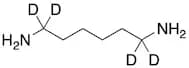
References Lin, C. et al.: Anal. Biochem., 179, 389 (1989);Formula:C10H8D4INO2Color and Shape:NeatMolecular weight:309.141,6-Hexane-1,1,6,6-d4-diamine
CAS:Controlled ProductApplications 1,6-Hexane-1,1,6,6-d4-diamine (CAS# 115797-49-4) is a useful isotopically labeled research compound.
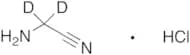
Formula:C6H12D4N2Color and Shape:NeatMolecular weight:120.232-Amino-acetonitrile-2,2-d2 Hydrochloride
CAS:Controlled ProductApplications Isotope labelled Aminoacetonitrile Hydrochloride (A580055), a useful synthetic intermediate. It is a reagent used to synthesize dipeptide nitriles as reversible and potent cathepsin S inhibitors. It can also used to prepare substituted cyclic ureas as possible HIV protease inhibitors.
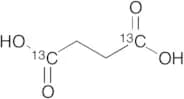
References Ward, Y., et al.: J. Med. Chem., 45, 5471 (2002); Wilkerson, W., et al.: J. Med. Chem., 40, 4079 (1997)Formula:C2H2D2N2·HClColor and Shape:White To Off-WhiteMolecular weight:94.54Succinic Acid-1,4-13C2
CAS:Controlled ProductApplications Succinic Acid-1,4-13C2 (cas# 79864-95-2) is a compound useful in organic synthesis.
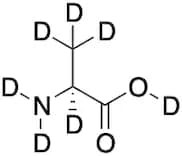
Formula:C2C2H6O4Color and Shape:NeatMolecular weight:120.07L-Alanine-d7
CAS:Controlled ProductApplications L-Alanine-d7 (CAS# 74280-71-0) is a useful isotopically labeled research compound.
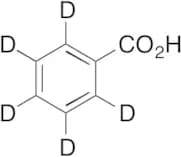
Formula:C3D7NO2Color and Shape:Off-WhiteMolecular weight:96.14Benzoic Acid-d5
CAS:Controlled ProductApplications Benzoic Acid-d5 is a compound useful in organic synthesis. A pentadeuterated form of benzoic acid for proteomics research.
References Kurogochi, M., et al.: Molecules, 19, 9944 (2014); Liang, X., et al.: Asian J. Org. Chem., 6, 1063 (2017)Formula:C72H5HO2Color and Shape:NeatMolecular weight:127.15N-Butylbenzenesulfonamide-d9
CAS:Controlled ProductApplications N-Butylbenzenesulfonamide, is the labeled analogue of N-Butylbenzenesulfonamide, which is a plasticizer used commercially in the polymerization of polyamide compounds.
References Strong M.J., et al.: Acta Neuropathologica, 81(3), 235-241 (1991);Formula:C10H6D9NO2SColor and Shape:NeatMolecular weight:213.306-Methylthioguanine-d3
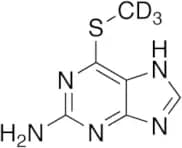
CAS:Controlled ProductApplications A labelled metabolite of 2’-Deoxy-6-thio Guanosine (D281650) and 6-Thioguanine. An effective immunosuppressant and anticancer agent, however chronic exposure can be mutagenic in human cells as long-term use of thiopurines was found to be associated with a significantly increased risk of various types of cancer.
References Loo, T.L. et al.: Cancer Chemother. Pharmacol., 6, 131 (1981); Yuan, B. et al.: ACS Chem. Biol., 5, 1021 (2010); Kroplin, T. et al.: Adv. Exp. Med. Biol., 431, 741 (1998);Formula:C62H3H4N5SColor and Shape:NeatMolecular weight:184.24n-Octadecane-d38
CAS:Controlled ProductApplications n-Octadecane-d38 (CAS# 16416-31-2) is a useful isotopically labeled research compound.
Formula:C18D38Color and Shape:NeatMolecular weight:292.734-tert-Butylphenol-d9 (Major)
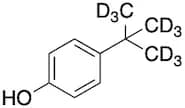
CAS:Controlled ProductApplications 4-tert-Butylphenol-D9 is the labelled analogue of 4-tert-Butylphenol (B694105). 4-tert-Butylphenol is a reactant in the preparation of (2-bromocyclopent-2-en-1-yl)phenols.
Not a dangerous good if item is equal to or less than 1g/ml and there is less than 100g/ml in the package
References Speck, K., et. al.: Org. Lett., 17, 1982 (2015)Formula:C10H5D9OColor and Shape:NeatMolecular weight:159.272-Bromoethanol-d4
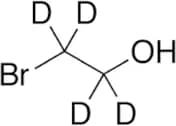
CAS:Controlled ProductApplications Isotope labelled 2-Bromoethanol is an widely used intermediate in organic synthesis.
Not a dangerous good if item is equal to or less than 1g/ml and there is less than 100g/ml in the package
References Tian, Z., et al.: Int. J. Quant. Chem., 111, 631 (2011); Thayer, F.K., et al.: Org. Syntheses., 6, (1926);Formula:C22H4HBrOColor and Shape:NeatMolecular weight:128.99Aminomethanephosphonic Acid-13C,15N
CAS:Stability Hygroscopic
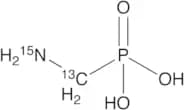
Applications Isotope labelled analog of aminomethanephosphonic acid (A617340), a degradation product of glyphosate (G765000).
Not a dangerous good if item is equal to or less than 1g/ml and there is less than 100g/ml in the package
References Goupe, R.H., et al.: Pest. Manag. Sci., 68, 16 (2012); Saxton, M.A., et al.: J. Great. Lakes. Res., 37, 683 (2011);Formula:CH615NO3PColor and Shape:White To Off-WhiteMolecular weight:113.02311-Naphthoic Acid-d7
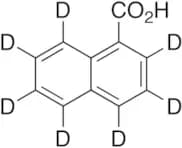
CAS:Controlled ProductApplications 1-Naphthoic Acid-d7 (cas# 634179-80-9) is a compound useful in organic synthesis.
Formula:C112H7HO2Color and Shape:NeatMolecular weight:179.22Melamine-15N3
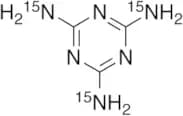
CAS:Applications Isotope labelled Melamine (M208703), which forms synthetic resins with formaldehyde. It remains largely non-metabolized in male Wistar rats with 90% of the administered dose excreted in the urine (1,2) and thus acts as a non-protein nitrogen food additive found in milk (3). Drinking water contaminant candidate list 3 (CCL 3) compound as per United States Environmental Protection Agency (EPA), environmental, and food contaminants.
References 1. Mast, R. et al.: Food Chem Toxicol. 1983 Dec;21(6):807-10.2. Smith, J. et al.: Toxicol Appl Pharmacol. 1994 Apr;125(2):296-308.3. Anirudhan, T. et al.: Food Chem. 2017 Jul 15;227:85-92.Formula:C3H615N3N3Color and Shape:White To Off-WhiteMolecular weight:129.1Methacrylic Acid-d6
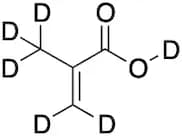
CAS:Controlled ProductApplications Methacrylic Acid-d6 (CAS# 92140-95-9) is a useful isotopically labeled research compound.
Formula:C4D6O2Color and Shape:NeatMolecular weight:92.13(R)-10-Monohydroxy-10,11-dihydro Carbamazepine-d3
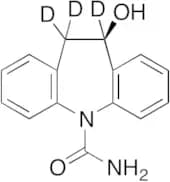
CAS:Controlled ProductApplications (R)-10-Monohydroxy-10,11-dihydro Carbamazepine-d3 is labelled (R)-10-Monohydroxy-10,11-dihydro Carbamazepine which is the metabolite of Oxcarbazepine (OXC) and Eslicarbazepine acetate, (BIA 2-093, ESL), novel central nervous system drugs.
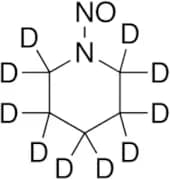
References Duncan, J., et al.: Br. J. Clin. Pharmacol., 53, 123 (2002), Almeida, L., et al.: J. Clin. Pharmacol., 45, 1062 (2005), Coppola, G., et al.: CNS Drugs, 18, 133 (2004),Formula:C15H11D3N2O2Color and Shape:White To Off-WhiteMolecular weight:257.3N-Nitrosopiperidine-d10
CAS:Controlled ProductApplications Labelled N-Nitrosopiperidine (N545370). A carcinogenic nitrosocompound.
Not a dangerous good if item is equal to or less than 1g/ml and there is less than 100g/ml in the package
References Bos, J., et al.: Cancer Res., 49, 4682 (1989), Wong, H., et al.: Carcinogenesis, 24, 291 (2003), Gonzalez-Mancebo, S., et al.: Mutat. Res., 558, 45 (2004), Gonzalez, M., et al.: Bioorg. Med. Chem., 13, 601 (2005),Formula:C52H10N2OColor and Shape:Colourless To YellowMolecular weight:124.21Sulfanilic Acid-d4
CAS:Controlled ProductApplications Labelled Sulfanilic acid (S689095). Sulfanilic acid is a toxic metabolite of Tartrazine (T007700). Used as Ehrlich’s reagent, for detecting of nitrites. Antibacterial.
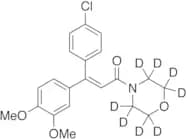
References Collins, T., et al.: Food Chem. Toxic., 28, 821 (1990), Levine, W., et al.: Drug Metab. Rev., 23, 235 (1991), Sasaki, Y., et al.: Mutat. .Res., 519, 103 (2002),Formula:C6H3D4NO3SColor and Shape:White To BeigeMolecular weight:177.21Dimethomorph-d8
CAS:Controlled ProductApplications Labelled Dimethomorph (D460530). Agricultural fungicide.
Not a dangerous good if item is equal to or less than 1g/ml and there is less than 100g/ml in the package
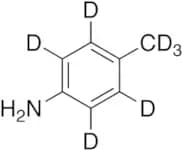
References Lu, X., et al.: Phytopathol., 100, 1162 (2010), Schafer, R., et al.: Environ. Sci. Technol., 45, 1665 (2011),Formula:C21D8H14ClNO4Color and Shape:YellowMolecular weight:395.914-Toluidine-d7 (Major)
CAS:Controlled ProductApplications 4-Toluidine-d7 (Major) (cas# 68693-08-3) is a compound useful in organic synthesis.
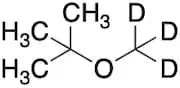
Not a dangerous good if item is equal to or less than 1g/ml and there is less than 100g/ml in the packageFormula:C7D7H2NColor and Shape:NeatMolecular weight:114.2tert-Butyl Methyl-d3 Ether
CAS:Controlled ProductApplications tert-Butyl Methyl-d3 Ether (CAS# 29366-08-3) is a useful isotopically labeled research compound.
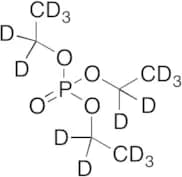
Formula:C5D3H9OColor and Shape:ColourlessMolecular weight:91.17Triethyl Phosphate-d15
CAS:Controlled ProductApplications Isotope labelled Triethyl Phosphate is a useful synthetic intermediate. It was used in the synthesis of mesoporous spheres of metal oxides and phosphates. It was also used to prepare α,β-unsatd. tricyclic enones via an intramolecular Horner-Wadsworth-Emmons cyclization. Phosphorus Flame Retardant.
References Dong, A., et al.: J. Am. Chem. Soc., 125, 4976 (2003); Pace, V., et al.: Tetrahedron Lett., 50, 3050 (2009)Formula:C6D15O4PColor and Shape:ColourlessMolecular weight:197.25Methanol-d3
CAS:Controlled ProductApplications Isotope labelled Methanol (M276585), which is a common chemical reagent in organic synthesis participating in a variety of reactions. Used to prepare novel triazole-polyphenol hybrid compounds as FabG4 (Rv0242c) enzyme inhibitors for the treatment of Mycobacterium Tuberculosis (1). Also used in the synthesis of prodelphinidin B1/B2/B4 which display antitumor activities against prostate cancer cells.Drinking water contaminant candidate list 3 (CCL 3) compound as per United States Environmental Protection Agency (EPA), environmental, and food contaminants.
Not a dangerous good if item is equal to or less than 1g/ml and there is less than 100g/ml in the package
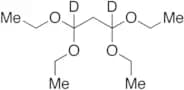
References 1. Banerjee, D. et al.: Org. Biomol. Chem. 2014 Jan 7;12(1):73-85.Formula:CHD3OColor and Shape:NeatMolecular weight:35.061,1,3,3-Tetraethoxypropane-1,3-d2
CAS:Controlled ProductApplications The precursor of the ubiquitous natural compound malondialdehyde.
References Basu, A.K., et al.: J. of Labelled Compounds & Radiopharmaceuticals, XX11, 11, 1175 (1985)Formula:C112H2H22O4Color and Shape:ColourlessMolecular weight:222.32rac 3,4-Dihydroxyphenylethylene Glycol-d5
CAS:Controlled ProductApplications A labelled metabolite of Catecholamines.
References Kopin, I.J., et al.: J. Biol. Chem., 236, 2109 (1961), Short, F.W., et al.: J. Med. Pharm. Chem., 5, 642 (1962)Formula:C8H5D5O4Color and Shape:NeatMolecular weight:175.19Palmitoyl-16,16,16-d3-L-carnitine Hydrochloride
CAS:Controlled ProductApplications Palmitoyl-16,16,16-d3-L-carnitine Hydrochloride is the isotope labelled analog of Palmitoyl-L-carnitine Hydrochloride (P155050); a long-chain fatty ester of carnitine which is accumulated and released into the circulation in fatty-acid oxidation defects.
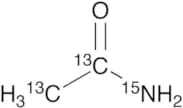
References Ventura, F., et al.: Clinica Chimica Acta, 281, 1 (1999); Pourfarzam, M., et al.: Clinical Chem,, 40, 2267 (1994); Schaefer, J., et al.: Pediatric Res., 37, 354 (1995)Formula:C23H43D3NO4•ClColor and Shape:NeatMolecular weight:439.09Acetamide-13C2,15N
CAS:Controlled ProductApplications Isotope labelled Acetamide (A133060) which is often used as plasticizer and as industrial solvent (1). It can also be used for the transamidation of carboxamides in 1,4-dioxane in the absence of a catalyst (2) . Drinking water contaminant candidate list 3 (CCL 3) compound as per United States Environmental Protection Agency (EPA), environmental, and food contaminants.
References 1. Ma, X. et al.: Carb. Polym. 2004 Aug:57(2):197-2032. Vanjari, R. et al.: Tetrahedron. Lett. 2013 MayL54(20):2553-5Formula:C2H515NOColor and Shape:White To Off-WhiteMolecular weight:62.05Bis(2,3-dibromopropyl) Phosphate-d10
CAS:Controlled ProductApplications Bis(2,3-dibromopropyl) Phosphate-d10 is the isotope labelled analog of Bis(2,3-dibromopropyl) Phosphate. Bis(2,3-dibromopropyl) Phosphate is a derivative of Tris(2,3-dibromopropyl) Phosphate, a widely used flame retardant in plastic and textiles.
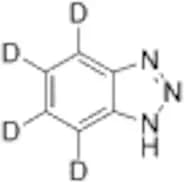
References Elliott, W.C., et al.: Life. Sci., 7, 1107 (1983);Formula:C6HD10Br4O4PColor and Shape:NeatMolecular weight:507.8Benzotriazole-d4
CAS:Controlled ProductApplications Labelled Benzotriazole. BT is an anticorrosive agent well known for its use in aircraft deicing and antifreeze fluids but also used in dishwasher detergents. Benzotriazole is antiestrogenic in vitro but not in vivo.Isotopic purity: 97% d4, 3% d3.
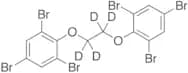
References Rollinson, G., et al.: Biotechnol. Lett., 8, 303 (1986), Cancilla, D., et al.: Environ. Toxicol. Chem., 16, 430 (1997), Beresford, N., et al.: Toxicol. Appl. Pharmacol., 162, 22 (2000), Cornell, J., et al.: Environ. Toxicol. Chem., 19, 1465 (2000), Giger, W., et al.: Environ. Sci. Technol., 40, 7186 (2006),Formula:C6D4HN3Color and Shape:NeatMolecular weight:123.151,2-Bis(2,4,6-tribromophenoxy)ethane-d4
CAS:Controlled ProductApplications Labelled 1,2-Bis(2,4,6-tribromophenoxy)ethane (B585425). One of the major "novel" brominated flame retardants (NBFRs) from varous polymer materials. An environmental pollutant.
References Zhu, L., et al.: Environ. Sci. Technol., 40, 3711 (2006), Qui, X., et al.: Environ. Sci. Technol., 42, 31 (2008), Stone, R., et al.: Science, 325, 1055 (2009),Formula:C14H4D4Br6O2Color and Shape:NeatMolecular weight:691.66Azoniaspironortropanol-d8 Chloride
CAS:Controlled ProductApplications Azoniaspironortropanol-d8 Chloride is the labeled analogue of Azoniaspironortropanol Chloride (A965125), an intermediate used for the synthesis of Trospium Chloride (T892800), an Antispasmodic, used in treatment of urinary incontinence.
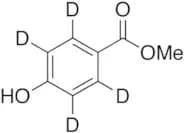
References Antweiler, H., et al.: Arzneim.-Forsch., 16, 1581 (1966); Lux, G., et al.: Fortschr. Med., 96, 2113 (1978); Madersbacher, H., et al.: Br. J. Urol., 75, 452 (1995); Zinner, N.R., et al.: Expert Opin. Pharmacother., 6, 1409 (2005)Formula:C11D8H12NO·ClColor and Shape:NeatMolecular weight:225.785Methyl Paraben-d4
CAS:Controlled ProductApplications Labelled Methylparaben (M325660). It is used as preservative in foods, beverages and cosmetics.
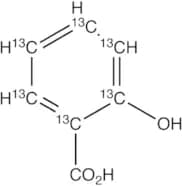
References Goodwin, M., et al.: Science, 203, 559 (1979),Formula:C82H4H4O3Color and Shape:White To Light YellowMolecular weight:156.17Salicylic Acid-13C6
CAS:Applications Labelled acetylsalicylic acid impurity B.
References Walter, M., et al.: Eur. J. Biochem., 1996, 239, 281 (1996), Bantignies, B., et al.: Plant Mol. Biol., 42, 871 (2000), Bais, H., et al.: J. Biol. Chem., 278, 32413 ( 2003), Finkler, C., et al.: Genetica, 124, 117 (2005),Formula:C6CH6O3Color and Shape:NeatMolecular weight:144.08Diphenyl Methyl Phosphate-d3
CAS:Controlled ProductApplications Diphenyl Methyl Phosphate-d3 is the deuterated form of Diphenyl Methyl Phosphate (D492423), which is a phosphorus flame retardant additive.
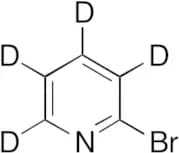
References Stapleton, H. M., et al.: Environ. Sci. Technol., 46, 13432(2012)Formula:C13D3H10O4PColor and Shape:NeatMolecular weight:267.2322-Bromopyridine-d4
CAS:Controlled ProductApplications Isotope Labelled 2-Bromopyridine is a 2-halogenated pyridine used in the preparation of a variety of biologically active compounds such as antimalarial agents and beta-adrenoceptor agonist.
Not a dangerous good if item is equal to or less than 1g/ml and there is less than 100g/ml in the package
References LaMontagne, M.P. et al.: J. Med. Chem., 17, 519 (1974); Yoshizaki, S. et al.: Chem. Pharm. Bull., 37, 3430 (1989);Formula:C52H4BrNColor and Shape:NeatMolecular weight:162.02Monobutyl Phosphate-d9
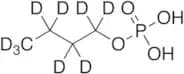
CAS:Controlled ProductApplications Labelled Monobutyl Phosphate (M525050). Mono and dibasic phosphate esters are anionic surfactants which have the main feature of the stability in alkaline conditions over other surfactants. They have a wide range of properties including outstanding wetting, emulsification, lubrication, coupling activity and detergency.
Not a dangerous good if item is equal to or less than 1g/ml and there is less than 100g/ml in the package
References Ramirez, F., et al.: Tetrahedron, 35, 1581 (1979);Formula:C4H2D9O4PColor and Shape:NeatMolecular weight:163.16Isovaleryl L-Carnitine-d3 Chloride
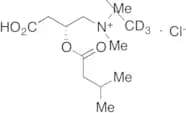
CAS:Controlled ProductApplications Isovaleryl L-Carnitine-d3 Chloride is labelled Isovaleryl L-Carnitine Chloride (I917580) which is used to prepare carnitine benzyl esters as neuroprotectant prodrugs.
References Gong, X., et al.: J. Chem. Res., 6, 327 (2008)Formula:C12D3H21NO4·ClColor and Shape:NeatMolecular weight:284.795Bromoacetic-2-13C Acid
CAS:Controlled ProductApplications Bromoacetic-2-13C Acid is the isotope labelled analog of Bromoacetic Acid (B679075); a relatively strong alkylating agent as well as a versatile building block used very commonly in organic synthesis. Bromoacetic acid has been shown to reversibly inhibit human erythrocyte carbonic anhydrase B.
Not a dangerous good if item is equal to or less than 1g/ml and there is less than 100g/ml in the package
References Song, C. et al.: J. Org. Synth., 74, 8980 (2009); Kramer, S.P. et al.: J. Nat. Cancer Inst., 31, 297 (1963); Whitney, P.L. et al.: Eur. J. Biochem., 16, 126 (1970)Formula:C13CH3BrO2Color and Shape:NeatMolecular weight:139.94Hydantoin-5-13C,1-15N
CAS:Applications Hydantoin-5-13C,1-15N (cas# 1189697-61-7) is a compound useful in organic synthesis.
Formula:C213CH4N15NO2Color and Shape:Off-White To Light BeigeMolecular weight:102.06Dimethyl phthalate-3,4,5,6-d4
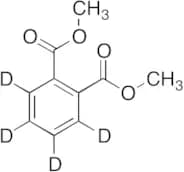
CAS:Controlled ProductApplications Dimethyl phthalate-3,4,5,6-d4
Formula:C102H4H6O4Color and Shape:YellowMolecular weight:198.21Hexadecyltrimethylammonium Bromide-d3
CAS:Controlled ProductApplications Isotope labelled Hexadecyltrimethylammonium Bromide (CTAB) (H293860), is a cationic surfactant used as a template in the synthesis of Mesoporous γ-Fe2O3.
Not a dangerous good if item is equal to or less than 1g/ml and there is less than 100g/ml in the package
References Yu, H.-h., et al.: Gongneng Cailiao, 42, 2005 (2011),Formula:C192H3H39N·BrColor and Shape:NeatMolecular weight:367.47Cyclopentanone-2,2,5,5-d4
CAS:Controlled ProductApplications Cyclopentanone-2,2,5,5-d4 (CAS# 3997-89-5) is a useful isotopically labeled research compound.
Formula:C5H4D4OColor and Shape:NeatMolecular weight:88.14Sodium Formate-1-13C
CAS:Controlled ProductApplications Labelled Sodium Formate is used in various organic reactions and syntheses. It is used in the preparation of [3,2b]pyridines as well as the palladium-catalyzed coupling of vinyl triflates with organostannanes.
References Mathes, B. et al.: Tetra., 44, 725 (2003); Scott, W. et al.: J. Am. Chem. Soc., 108, 3033 (1986);Formula:CHO2·NaColor and Shape:NeatMolecular weight:69.01-Naphthalenemethanol-d7
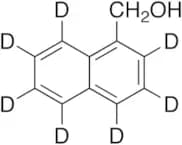
CAS:Controlled ProductApplications 1-Naphthalenemethanol-d7 (cas# 1189876-86-5) is a compound useful in organic synthesis.
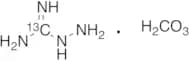
Formula:C11H3D7OColor and Shape:Light BrownMolecular weight:165.24Aminoguanidine-13C Bicarbonate
CAS:Controlled ProductApplications Aminoguanidine-13C Bicarbonate is a compound useful in organic synthesis.
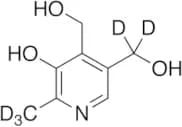
Formula:CCH8N4O3Color and Shape:NeatMolecular weight:137.1Pyridoxine-d5 (Major)
CAS:Controlled ProductApplications One of the vitamins of the B6 complex; present in many foodstuffs (yeast, liver and cereals). It has a role in transporting protein Bsu1, contributes to thiamine uptake; characterization of thiamine (vitamin B1) transporter Thi9 from Schizosaccharomyces pombe.
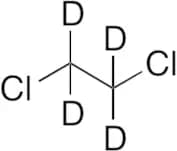
References Williams, R., et al.: J. Biol. Chem., 87, 581 (1930), Rodionov, D., et al.: J. Biol. Chem., 277, 48949 (2002),Nosaka, K., et al.: Mol. Microbiol., 58, 467 (2005),Formula:C8H6D5NO3Color and Shape:NeatMolecular weight:174.211,2-Dichloroethane-D4
CAS:Controlled ProductStability Volatile
Applications 1,2-Dichloroethane-D4 is a labelled analogue of 1,2-Dichloroethane (D434325). 1,2-Dichloroethane is one of the major waste products of the Vinyl Chloride industries, and has also been classified as a potential human carcinogen.
Not a dangerous good if item is equal to or less than 1g/ml and there is less than 100g/ml in the package
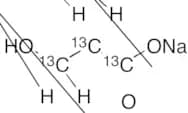
References Hung, W., et al.: Appl. Surf. Sci., 255, 2205 (2008); Rannug, U., et al.: Chem.-Biol. Int., 20, 1 (1978)Formula:C22H4Cl2Color and Shape:ColourlessMolecular weight:102.983-Hydroxypropionic Acid-13C3 Sodium Salt
CAS:Applications 3-Hydroxypropionic Acid-13C3 Sodium Salt is isotope labelled analogue of 3-Hydroxypropionic Acid Sodium Salt (H952480), which is beta hydroxy acid derived from plants and crops such as corn. 3-Hydroxypropionic Acid is used in the preparation of acrylates and biodegradable polymer polyester.
References Wang, Y. et al.: Biomacromol., 3, 828 (2002); Jiang, X. et al.: Appl. Microbiol. Biotech., 82, 995 (2009);Formula:C3H5NaO3Color and Shape:NeatMolecular weight:115.04