Deuterated Compounds
Found 4238 products of "Deuterated Compounds"
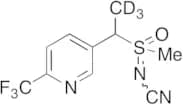
Sulfoxaflor-d3
CAS:Controlled ProductApplications Sulfoxaflor-d3 is the isotope analog of Sulfoxaflor. Sulfoxaflor, is a new insecticide which acts as an insect neurotoxin, and is the only member of class of chemicals called the sulfoximines which act on the central nervous system of insects with much lower toxicity to mammals.
Not a dangerous good if item is equal to or less than 1g/ml and there is less than 100g/ml in the package
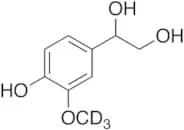
References Anon, IP.com J., 12, 19 (2011)Formula:C10H7D3F3N3OSColor and Shape:White To Off-WhiteMolecular weight:280.28rac 4-Hydroxy-3-methoxyphenylethylene Glycol-d3
CAS:Controlled ProductApplications A labelled metabolite of Catecholamines.
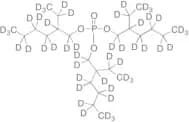
References Kopin, I.J., et al.: J. Biol. Chem., 236, 2109 (1961), Short, F.W., et al.: J. Med. Pharm. Chem., 5, 642 (1962)Formula:C92H3H9O4Color and Shape:NeatMolecular weight:187.21Tris(2-ethylhexyl) Phosphate-d51
CAS:Controlled ProductStability Hygroscopic
Applications Tris(2-ethylhexyl) Phosphate-d51 is labelled Tris(2-ethylhexyl) Phosphate (T884650) which is used as a phosphorous flame retardant. Tris(2-ethylhexyl) Phosphate (T884650) is also used as a plasticizer in the preparation of a new potentiometric membrane sensor.
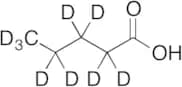
References Ballesteros-Gomez, A. et al.: Anal. Chem., 85, 9572 {2013); Gholivand, M. et al.: Adv. Sci. Eng. Med., 5, 73 (2013);Formula:C242H51O4PColor and Shape:ColourlessMolecular weight:485.95Valeric Acid-d9
CAS:Controlled ProductApplications Valeric Acid-d9 is the isotope labelled analog of Valeric Acid which is used in biological studies of (D)-β-hydroxybutyrate which inhibits adipocyte lipolysis via the nicotinic acid receptor PUMA-G.
Not a dangerous good if item is equal to or less than 1g/ml and there is less than 100g/ml in the package
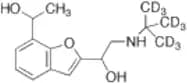
References Taggart, A.K.P., et al.: J. Bio. Chem., 280, 26649 (2005);Formula:C5D9HO2Color and Shape:NeatMolecular weight:111.191?-Hydroxy Bufuralol-d9 (Mixture of Diastereomers)
CAS:Controlled ProductStability Hygroscopic
Applications A metabolite of Bufuralol, a β-Adrenergic blocker with peripheral vasodilating activity.
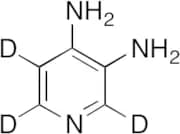
References Boobis, A.R., et al.: Biochem. Pharmacol., 34, 65 (1985), Yamazaki, H., et al.: Mol. Pharmacol., 46, 568 (1994), Mast, N., et al.: Biochem., 42, 14284 (2003),Formula:C16H14D9NO3Color and Shape:White To YellowMolecular weight:286.413,4-Diaminopyridine-d3
CAS:Controlled ProductApplications 3,4-Diaminopyridine-d3 is the deuterium labelled analog of the drug 3,4-Diaminopyridine (D415950), which is used as a reagent in the preparation of 9-deazaxanthine derivatives which has activity as dual A2A antagonists/MAO-B inhibitors with potential as anti-Parkinson's agents.
Not a dangerous good if item is equal to or less than 1g/ml and there is less than 100g/ml in the package
References Rivara, S., et al.: J. Med. Chem., 56, 1247 (2013)Formula:C5H4D3N3Color and Shape:NeatMolecular weight:112.15n-Dotriacontane-d66
CAS:Controlled ProductApplications n-Dotriacontane-d66 (CAS# 62369-68-0) is a useful isotopically labelled research compound. It has been studied as a potential generator to supply charged particles to plastic nuclear track detectors for high-energy neutrons.
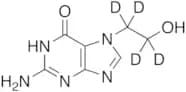
References Oda, K., et al.: Radiation Measurements, 36, 119 (2003)Formula:C32D66Color and Shape:Off-WhiteMolecular weight:517.27N7-(2-Hydroxyethyl)guanine-d4
CAS:Controlled ProductApplications A labelled ethylene oxide-DNA adduct. Ethylene oxide (EtO) is classified as a known human carcinogen. The formation of EtO-DNA adducts is considered as an important early event in the EtO carcinogenic process.
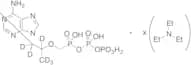
References Walker, V., et al.: Cancer Res., 52, 4320 (1992), Wu, K., et al.: Chem. Res. Toxicol., 12, 722 (1999), van Sittert, N., et al.: Mutat. Res., 447, 27 (2000),Formula:C7H5D4N5O2Color and Shape:NeatMolecular weight:199.2rac Tenofovir-d6 Diphosphate Triethylamine Salt (mixture of diastereomers)
CAS:Controlled ProductStability Very Hygroscopic
Applications rac Tenofovir-d6 Diphosphate Triethylamine Salt is an isotopic analog of Tenofovir Diphosphate Triethylamine Salt (T018525), which is a metabolite of Tenofovir (T018500).
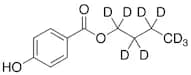
References Hazra, R., et al.: Antimicrob. Agents Chemother., 48, 124 (2004), Piketty, C., et al.: Antivir. Ther., 11, 213 (2006), Molto, J., et al.: Ther. Drug Monit., 29, 648 (2007),Formula:C9H10D6N5O10P3•x(C6H15N)Color and Shape:NeatMolecular weight:453.21Butyl-d9 Paraben
CAS:Controlled ProductApplications Labelled Butylparaben. An antimicrobial agent used in cosmetic products.
References Gilliland, D., et al.: J. Appl. Bacteriol., 72, 258 (1992), Routledge, E., et al.: Toxicol. Appl. Pharmacol., 153, 12 (1998), Miller, C., et al.: J. Biol. Chem., 272, 32824 (1997), Nakagawa, Y., et al.: Biochem. Pharmacol., 55, 1907 (1998),Formula:C11H5D9O3Color and Shape:NeatMolecular weight:203.281,2-Dichloroethane-D4
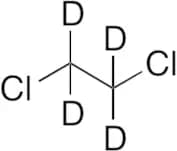
CAS:Controlled ProductStability Volatile
Applications 1,2-Dichloroethane-D4 is a labelled analogue of 1,2-Dichloroethane (D434325). 1,2-Dichloroethane is one of the major waste products of the Vinyl Chloride industries, and has also been classified as a potential human carcinogen.
Not a dangerous good if item is equal to or less than 1g/ml and there is less than 100g/ml in the package
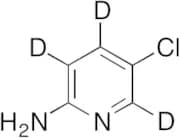
References Hung, W., et al.: Appl. Surf. Sci., 255, 2205 (2008); Rannug, U., et al.: Chem.-Biol. Int., 20, 1 (1978)Formula:C22H4Cl2Color and Shape:ColourlessMolecular weight:102.985-Chloro-2-pyridinamine-3,4,6-d3
CAS:Controlled ProductApplications 5-Chloro-2-pyridinamine-3,4,6-d3 is labelled 5-Chloro-2-pyridinamine which is an intermediate used to synthesize zopiclone (Z700500), a cyclopyrrolone member of a family of non-benzodiazepine GABAA receptor agonists.
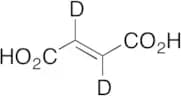
References Noble, S., et al.: Drugs, 55, 277 (1998), Musch, B., et al.: Int. J. Clin. Psychopharmacol., 5, 147 (1990)Formula:C5D3H2ClN2Color and Shape:NeatMolecular weight:131.58Fumaric Acid-d2
CAS:Controlled ProductApplications Fumaric Acid-d2 is the isotope labelled analog of Fumaric Acid. Fumaric acid is a compound that occurs in many plants. It is essential to vegetable and tissue respiration and also used as an antioxidant. Fumaric acid is also a metabolite of Dimethyl Fumarate (D464965), a compound used as a treatment for the relapsing forms of multiple sclerosis and psoriasis.
References Jelitto, T., et al.: Planta, 188, 238 (1992); Schimrigk, S., et al.: Eur. J. Neurol., 13, 604 (2006); Son, H., et al.: J. Agric. Food Chem., 56, 8007 (2008);Formula:C4D2H2O4Color and Shape:NeatMolecular weight:118.08(±)-α-Bisabolol-d3 (racemic and diastereomeric mixture)
CAS:Controlled ProductApplications Deuterium labelled analog of (±)-α-Bisabolol, which is found in a variety of beauty and skin care products, including compositions for skin lightening cosmetic creams, color change cosmetic compositions for makeup fused with antioxidant function and oil-to-gel makeup removing compositions.
Not a dangerous good if item is equal to or less than 1g/ml and there is less than 100g/ml in the package
References Ma, P. et al.: Faming Zhuanli Shenqing 11pp. Patent 2017 CODEN:CNXXEV; Son, T.; et al.: Repub. Korean Kongkae Taeho Kongbo 14pp.; Chemical Indexing Equivalent to 167:543596 (WO) Patent 2017 CODEN:KRXXA7; Lin, X.; et al.; Faming Zhuanli Shenqing 8pp. Patent 2017 CODEN:CNXXEVFormula:C15H23D3OColor and Shape:NeatMolecular weight:225.384-Aminoacetophenone-13C
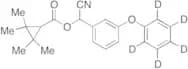
CAS:Controlled ProductFormula:CC7H9NOColor and Shape:NeatMolecular weight:136.156Fenpropathrin-d5
CAS:Controlled ProductApplications Fenpropathrin-d5 is labelled Fenpropathrin (F249300), a pesticide.
Not a dangerous good if item is equal to or less than 1g/ml and there is less than 100g/ml in the package
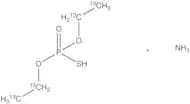
References Lehotay, S., et al.: J. AOAC International, 88, 595 (2005); Andersen, H., et al.: Toxicol. Appl. Pharmacol., 179, 1 (2002)Formula:C22H18D5NO3Color and Shape:NeatMolecular weight:354.45O,O-Diethyl Thiophosphate-13C4 Ammonium Salt
CAS:Controlled ProductStability Hygroscopic
Applications Labelled O,O-Diethyl Thiophosphate (D445120). Used in the synthesis of novel phosphorothioates and phosphorodithioates as cholinesterase inhibitor.
References Sussman, J., et al.: Science, 253, 872 (1991), Mallender, W., et al.: J. Biol. Chem 1999, 274, 8491,Formula:C4H14NO3PSColor and Shape:White To Off-WhiteMolecular weight:191.174-N-Acetylaminobenzene-13C6-sulfonyl Chloride
CAS:Controlled ProductApplications 4-N-Acetylaminobenzene-13C6-sulfonyl Chloride (cas# 1216418-07-3) is a compound useful in organic synthesis.
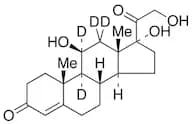
References Tashiro, T., et al.: Bioorg. Med. Chem., 16, 8896 (2008), Alcalde, E., et al.: J. Med. Chem., 52, 675 (2009),Formula:C213C6H8ClNO3SColor and Shape:NeatMolecular weight:239.63Cortisol-9,11,12,12-d4
CAS:Controlled ProductApplications Labelled Cortisol (H714615). Cortisol, or Hydrocortisone, is a steroid hormone, more specifically a glucocorticoid, produced by the zona fasciculata of the adrenal gland. Cortisol is released in response to stress and a low level of blood glucocorticoids. Its primary functions are to increase blood sugar through gluconeogenesis; suppress the immune system; and aid in fat, protein and carbohydrate metabolism.
References Hechter, O., et al.: Arch. Biochem. Biophys., 25, 457 (1950), Colingsworth, D.R., et al.: J. Biol. Chem., 203, 807 (1953), Florey, K., et al.: Anal. Profiles Drug Subs., 12, 277 (1983),Formula:C212H4H26O5Color and Shape:Off-WhiteMolecular weight:366.48Glyme (1,2-dimethoxyethane-d10)
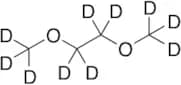
CAS:Controlled ProductStability Volatile
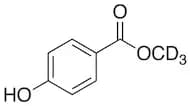
Applications Glyme (1,2-Dimethoxyethane) (D10, 99%) (cas# 107975-86-0) is a useful research chemical.Formula:C4D10O2Color and Shape:NeatMolecular weight:100.18Methyl-d3 Paraben
CAS:Controlled ProductApplications Labelled Methylparaben (M325660). It is used as preservative in foods, beverages and cosmetics.
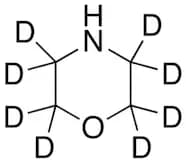
References Goodwin, M., et al.: Science, 203, 559 (1979),Formula:C8D3H5O3Color and Shape:NeatMolecular weight:155.166Morpholine-d8
CAS:Controlled ProductApplications Labelled Morpholine. Morpholines compounds used as selective inhibitors of cytochrome p450 2a13 in treatment of cancer. Salicylate as analgesic; antipyretic; anti-inflammatory.
E0
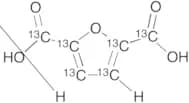
References Paladini, D., et al.: Biochem., 48, 5760 (2009), Bard, B., et al.: J. Med. Chem., 52, 3416 (2009),Formula:C42H8HNOColor and Shape:Colourless OilyMolecular weight:95.172,5-Furandicarboxylic Acid-13C6
CAS:Controlled ProductApplications 2,5-Furandicarboxylic Acid-13C6 is isotopically labelled analogue of 2,5-Furandicarboxylic Acid (F863750), which is Furan (F863650) derivative that can be produced from biomass derived sugars using catalytic processes.
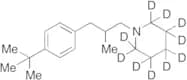
References Tong, X., et al.: Appl. Catal., A, 385, 1 (2010);Formula:C6H4O5Color and Shape:NeatMolecular weight:162.05Fenpropidin-d10
CAS:Controlled ProductApplications Fenpropidin-d10 is the labeled analogue of Fenpropidin (F249470), a fungicide.
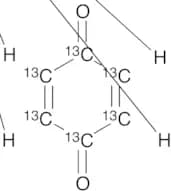
References Leroux, P. Walker, A.: Eur. J. Plant Path., 135, 683 (2013); Zhao, H., et. al.: Ecotox. Environ. Safe., 77, 52 (2012)Formula:C19H21D10NColor and Shape:White To Light YellowMolecular weight:283.52p-Benzoquinone-13C6
CAS:Controlled ProductApplications p-Benzoquinone-d4 is the labelled analogue of p-Benzoquinone (B206580) which is used as a catalyst in the preperation of allyl silyl ethers. p-Benzoquinone is a superoxide scavenger that has been used in the characterization of carnation-like SnS2 nanostructure photocatalysts for photodegredation. p-Benzoquinone is a toxic metabolite found in human blood.
References Kinoshita, H., et. al.: Org. Lett., 15, 5538 (2013); Liu, H., et. al.: J. Mol. Catal. A-Chem., 288, 19221 (2013); Du, H., et. al.: Environ Sci. Technol., 47, 2823 (2013)Formula:C6H4O2Color and Shape:NeatMolecular weight:114.05Triethyl Phosphate-d15
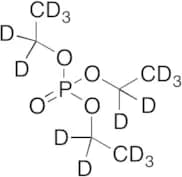
CAS:Controlled ProductApplications Isotope labelled Triethyl Phosphate is a useful synthetic intermediate. It was used in the synthesis of mesoporous spheres of metal oxides and phosphates. It was also used to prepare α,β-unsatd. tricyclic enones via an intramolecular Horner-Wadsworth-Emmons cyclization. Phosphorus Flame Retardant.
References Dong, A., et al.: J. Am. Chem. Soc., 125, 4976 (2003); Pace, V., et al.: Tetrahedron Lett., 50, 3050 (2009)Formula:C6D15O4PColor and Shape:ColourlessMolecular weight:197.25Melamine-13C3,15N3
CAS:Controlled ProductApplications Isotope labelled Melamine (M208703), which forms synthetic resins with formaldehyde. It remains largely non-metabolized in male Wistar rats with 90% of the administered dose excreted in the urine (1,2) and thus acts as a non-protein nitrogen food additive found in milk (3). Drinking water contaminant candidate list 3 (CCL 3) compound as per United States Environmental Protection Agency (EPA), environmental, and food contaminants.
References 1. Mast, R. et al.: Food Chem Toxicol. 1983 Dec;21(6):807-10.2. Smith, J. et al.: Toxicol Appl Pharmacol. 1994 Apr;125(2):296-308.3. Anirudhan, T. et al.: Food Chem. 2017 Jul 15;227:85-92.Formula:C3H6N315N3Color and Shape:NeatMolecular weight:132.086-Fluorovitamin D3
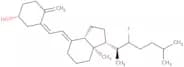
CAS:6-Fluorovitamin D3 is a synthetic analog of vitamin D3, which is a modified form of the naturally occurring hormone known as cholecalciferol. This molecule is typically derived through chemical synthesis, incorporating a fluorine atom at a specific position on the vitamin D3 structure. The introduction of the fluorine atom is designed to enhance the stability of the compound and potentially alter its biological activity.Formula:C27H43FOPurity:Min. 95%Molecular weight:402.63 g/molL-Proline-13C5
CAS:L-Proline-13C5 is a high quality, reagent grade, complex compound that is useful as an intermediate for the synthesis of fine chemicals. It has CAS No. 201740-83-2 and can be used in a variety of chemical reactions to produce useful scaffolds or building blocks. L-Proline-13C5 is also a versatile building block that can be used in research or pharmaceutical applications. It is a speciality chemical that has many uses including reaction components for the synthesis of other compounds.Formula:C5H9NO2Purity:Min. 95%Color and Shape:PowderMolecular weight:120.13 g/molTolterodine-D14
CAS:Tolterodine-D14 is a postoperative drug that belongs to the class of non-selective muscarinic receptor antagonists. It has been evaluated for pharmacokinetic properties in plasma samples from patients undergoing surgery. Tolterodine-D14 undergoes extensive hepatic metabolism, with only about 50% of the drug being excreted unchanged in urine. The elimination half-life of this drug ranges from 2 to 3 hours. Tolterodine-D14 has been shown to be bioequivalent to the reference drug (tolterodine) and can be used as a control level for chromatographic analyses.Formula:C22H17D14NOPurity:Min. 95%Molecular weight:339.57 g/molAlbendazole-sulphone-D3
CAS:Albendazole-sulphone-D3 is an analyte that is extracted from a dispersive sulphoxide. It is extracted by an acetonitrile phase extraction and analyzed by liquid chromatography. Albendazole-sulphone-D3 has been shown to have anthelmintic properties, which are due to its ability to inhibit the synthesis of folic acid in nematodes. This drug binds to the acetylcholine receptor site on the worm's neuromuscular junction, preventing acetylcholine from accessing this site and causing paralysis. It has also been shown to be effective against roundworms (Ascaris lumbricoides), hookworms (Ancylostoma duodenale), and whipworms (Trichuris trichiura).Formula:C12H12D3N3O4SPurity:Min. 95%Color and Shape:PowderMolecular weight:300.35 g/mol25-Hydroxyvitamin D3 monohydrate
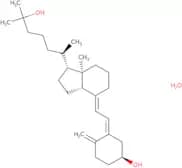
CAS:25-Hydroxyvitamin D3 monohydrate is a vitamin D analog that has been shown to reduce elevated levels of parathyroid hormone and improve bone mineral density. It is used for the treatment of chronic kidney disease, hyperparathyroidism, and osteoporosis. 25-Hydroxyvitamin D3 monohydrate has been found to be effective in the treatment of these conditions because it increases the body's production of calcitriol, the active form of vitamin D. Calcitriol promotes calcium absorption in the gut and reduces renal excretion of calcium by inhibiting parathyroid hormone synthesis. This drug also inhibits pro-inflammatory cytokines such as IL-1β, IL-6, and TNF-α.Formula:C27H44O2·H2OPurity:Min. 97 Area-%Color and Shape:White PowderMolecular weight:418.65 g/mol22-Fluorovitamin D3
CAS:22-Fluorovitamin D3 is a synthetic analog of vitamin D3, which is derived from chemical synthesis involving fluorination at the C-22 position. This modification results in a compound that mimics the structure and activity of naturally occurring vitamin D3 but with altered pharmacokinetics and metabolic stability. The fluorine atom, due to its size and electronegativity, influences the binding affinity and activity of the compound at vitamin D receptors.Formula:C27H43FOPurity:Min. 95%Molecular weight:402.63 g/molCholine O-sulfate - D13 ,98%
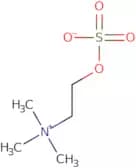
CAS:Choline O-sulfate is a choline salt that is used as a dietary supplement. It has been shown to be effective in the prevention of neural tube defects in pregnant women. Choline O-sulfate has been shown to increase acetylcholine levels in the brain and may be useful in the treatment of Alzheimer's disease. The biological activity of this compound is due to its ability to act as a substrate for enzymes such as polymerase chain reaction and calcium pantothenate, which are required for cell growth and energy metabolism respectively. The structural formula of this compound was determined using x-ray diffraction data collected from wild-type strains and an atherosclerotic lesion model system.Formula:C5D13NO4SPurity:Min. 95%Color and Shape:PowderMolecular weight:196.3 g/mol5-(Hydroxymethyl)-2’-deoxycytidine-d3
CAS:Controlled Product5-(Hydroxymethyl)-2’-deoxycytidine is an activator that can be used in the synthesis of nucleosides and phosphoramidites. It is a novel compound that has antiviral, anticancer, and ribonucleoside activities. 5-(Hydroxymethyl)-2’-deoxycytidine is a monophosphate derivative that can be used to synthesize diphosphates, which are important for DNA replication. The drug has been shown to have anticancer properties against breast cancer cells. It also inhibits the growth of leukemia cells by preventing the synthesis of DNA and RNA.
Formula:C10H12D3N3O5Purity:Min. 95%Color and Shape:PowderMolecular weight:260.26 g/mol(13C2,15N)Glycine
CAS:Glycine is an amino acid that is found in the human blood. It is a non-essential amino acid and has a high level of stability. Glycine can be used as an untreated control to measure the stability of other compounds; it has been shown to be stable for up to six months at room temperature and for more than one year when frozen. Glycine is not found in any food sources, but can be synthesized by the body from other amino acids. The following are sample product descriptions: Rifapentine Rifapentine is an anti-tuberculosis drug that belongs to the class of rifamycins. It is the most active of the rifamycins for the treatment of tuberculosis. Rifapentine inhibits bacterial growth by binding to DNA-dependent RNA polymerase, thereby preventing transcription and replication. The high frequency of human activity has been shown using a patch-clamp technique on humanPurity:Min. 95%Color and Shape:PowderMolecular weight:77.99 g/molVitamin D2
CAS:Vitamin D2 is a fat-soluble vitamin that is required for the absorption of calcium and phosphate. It can be obtained through dietary supplements or by exposure to sunlight. Vitamin D2 is a prohormone that needs to undergo two hydroxylation reactions in the liver and kidney before it becomes the active form, calcitriol. Vitamin D2 has been shown to have beneficial effects on bone mineralization and phosphatase activity, as well as an inhibitory effect on the production of parathyroid hormone. Hydroxyapatite, a component of bone tissue, has been shown to react with vitamin D2 in vitro, which may be due to its ability to act as an additive or stabilizer.END>>
Formula:C28H44OPurity:Min. 97 Area-%Color and Shape:PowderMolecular weight:396.65 g/molLeucocrystal Violet-d6
CAS:Controlled ProductLeucocrystal violet-d6 is a dye that has been used for decades as a fluorescent marker for chromatographic analysis. It is commonly used as an indicator to determine the purity of acetonitrile in analytical methods. Leucocrystal violet-d6 is prepared by dissolving the dye in acetonitrile and adding it to a test sample. The solvent is then evaporated and the dye will be left behind. Leucocrystal violet-d6 has a strong absorption band at approximately 605 nm, which can be detected using a spectrometer. The major limitation of this method is that it cannot be used to analyze samples containing water or organic solvents such as methanol or ethanol.Formula:C25D6H25N3Purity:Min. 95%Color and Shape:PowderMolecular weight:379.57 g/molChlorobenzene-d5
CAS:Controlled ProductChlorobenzene-d5 is a synthetic compound that can be used as an analytical reference material. It is reactive and has been shown to have chemical ionization, vibrational, and light emission properties. Chlorobenzene-d5 has been used in the analysis of solutes in the environment, detection of volatile organic compounds (VOCs), and identification of unknown substances. The usefulness of chlorobenzene-d5 as a reference material is due to its stability and high abundance in nature.Formula:C6D5ClPurity:Min. 95%Color and Shape:Colorless Clear LiquidMolecular weight:117.58 g/mol4-Bromofluorobenzene-D4
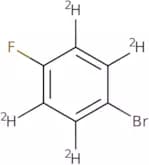
CAS:Controlled ProductPlease enquire for more information about 4-Bromofluorobenzene-D4 including the price, delivery time and more detailed product information at the technical inquiry form on this pageFormula:C6D4BrFPurity:Min. 95%Color and Shape:Clear LiquidMolecular weight:179.02 g/molDiethylstilbestrol-d8
CAS:Controlled ProductDiethylstilbestrol-d8 is a synthetic estrogen that is used as an analytical standard for the detection of 17β-estradiol and estrone. Diethylstilbestrol-d8 has been used to monitor the synthesis of estrogens in human tissues and to measure the effects of estrogen on target cells. It has been shown that this compound binds to the estrogen receptor, which mediates its effects in a similar manner as natural estrogens. Diethylstilbestrol-d8 is also used to determine if the estrogen receptors are present in a sample. This can be done by measuring the response of cells to diethylstilbestrol-d8 or by measuring its binding to any receptor sites in a sample. Diethylstilbestrol-d8 has also been shown to have anti-inflammatory properties, which may be due to its inhibition of prostaglandin synthesis.Formula:C18H12D8O2Purity:Min. 95%Color and Shape:PowderMolecular weight:276.4 g/molDL-Pipecolic acid-d9
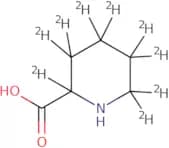
CAS:Controlled ProductDL-Pipecolic acid-d9 is a form of pipecolic acid that is used to prepare samples for analysis. It is analysed in the form of a nonresponsive interaction with bioanalysis, which is then profiled to provide population data. This compound has been validated for neonates and infants. The flow rate for DL-pipecolic acid-d9 is 3 mL/min.Formula:C6H2D9NO2Purity:Min. 95%Color and Shape:PowderMolecular weight:138.21 g/mol2-Butynol-d2
CAS:Controlled ProductApplications 2-Butynol-d2 is an isotope labelled substituent in the synthesis of various pharmaceutical goods.
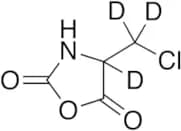
References Harada, A., et al.: J. Am. Chem. Soc., 136, 13932 (2014);Formula:C4H4D2OColor and Shape:NeatMolecular weight:72.14-(Chloromethyl)-2,5-oxazolidinedione-d3
CAS:Controlled ProductApplications Intermediate in the preparation of labelled Cycloserine (C988802).
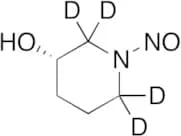
Formula:C4HD3ClNO3Color and Shape:NeatMolecular weight:152.55(S)-1-Nitrosopiperidin-3-ol-d4
Controlled ProductApplications (S)-1-Nitrosopiperidin-3-ol-d4 is an intermediate in synthesizing Ibrutinib-d4 (I124971), a labelled analogue of Ibrutinib (I124970). Ibrutinib is a highly selective Bruton’s tyrosine kinase (Btk) irreversible inhibitor.
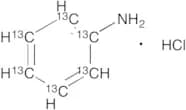
References MacGlashan, D., et. al.: Int. Immunol., 11, 475 (2011)Formula:C5D4H6N2O2Color and Shape:OrangeMolecular weight:134.17Aniline-13C6 Hydrochloride
CAS:Controlled ProductApplications Aniline-13C6 Hydrochloride is an intermediate in the synthesis of Indole-3-carboxaldehyde-13C8 (I614993), the labelled version of Indole-3-carboxaldehyde (I615020) which is a tryptophan (T947200) metabolite from Streptomyces staurosporeus and it is chemical constituent from Inula wissmanniana. Indole-3-carboxaldehyde and other tryptophan metabolites play an important role in mammalian gut immune homeostasis.
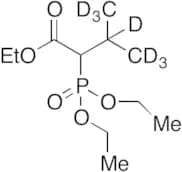
References Yang, S., et al.: J. Nat. Prod., 60, 44 (1997); Cheng, X. et al.: Chem. Nat. Compd., 49, 815 (2013); Zelante, T., et al,: Immunity, 39, 372 (2013)Formula:C6H7NHClColor and Shape:NeatMolecular weight:135.542-Phosphono-3-(methylbutyric Acid) Triethyl Ester-d7
CAS:Controlled ProductApplications 2-Phosphono-3-(methylbutyric Acid) Triethyl Ester-d7 is an isotope labelled intermediate in the synthesis of (+)-amabiline, an unsaturated pyrrolizidine alkaloid from Cynoglossum amabile.
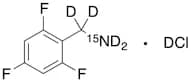
References Senter, T. J., et al.: Org. Lett., 14, 1869 (2012);Formula:C11D7H16O5PColor and Shape:NeatMolecular weight:273.3142,4,6-Trifluorobenzenemethanamine-d4,15N Deuterium Chloride
CAS:Controlled ProductApplications 2,4,6-Trifluorobenzenemethanamine-d4,15N Deuterium Chloride is an intermediate in the synthesis of Bictegravir-15N, d2 (B382096), which is the labeled version of Bictegravir, which is a novel, potent inhibitor of HIV-1 integrase with an IC50 of 7.5 nM.
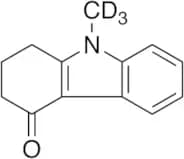
References Tsiang M. et al.: Antimicrob Agents Chemother. 2016 Nov 21;60(12):7086-7097;Formula:C7H2D4F3N•DClColor and Shape:NeatMolecular weight:203.611,2,3,9-Tetrahydro-9-(methyl-d3)-4H-carbazol-4-one
CAS:Controlled ProductApplications 1,2,3,9-Tetrahydro-9-(methyl-d3)-4H-carbazol-4-one is used in the preparation of 5-HT3 modulators useful in the treatment and prevention of 5-HT3 receptor-mediated diseases.
References Huang, W. et al.: Zhong. Yao. Dax. Xueb., 30, 1 (1999); Kim, M. et al.: Heterocycles, 45, 2041 (1997);Formula:C13H10D3NOColor and Shape:NeatMolecular weight:202.27N-Isopropyl-N-methylamine-d7 Hydrochloride
CAS:Controlled ProductApplications N-Isopropyl-N-methylamine-d7 Hydrochloride is an intermediate in the synthesis of Saflufenacil-d7 (S081802). Saflufenacil-d7 is the labeled version of Saflufenacil (S081800), which is a herbicide of the pyrimidinedione chemical class used for the preplant burndown and selective preemergence dicot weed control in different field crops. It was found to inhibit protoporphyrinogen IX oxidase (PPO) enzyme.
References Knezevic, S., et al.: Crop Prot., 29, 148 (2010); Grossmann, K., et al.: Weed Sci., 58, 1 (2010)Formula:C4H4D7N·(HCl)Color and Shape:NeatMolecular weight:116.64