Organic Halides
Subcategories of "Organic Halides"
Found 20442 products of "Organic Halides"
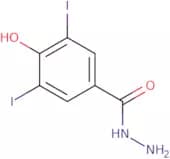
3,5-Diiodo-4-hydroxybenzhydrazide
CAS:3,5-Diiodo-4-hydroxybenzhydrazide is a chemical compound that is useful as a building block in organic synthesis. It is a versatile intermediate and can be used in the preparation of heterocyclic compounds and pharmaceuticals. 3,5-Diiodo-4-hydroxybenzhydrazide reacts with alkyl halides to form alkyl iodides, which are important reagents for organic synthesis. 3,5-Diiodo-4-hydroxybenzhydrazide has been used as an effective reagent for the formation of new carbon–carbon bonds and has been shown to be an excellent starting point for the synthesis of biologically active molecules.
Formula:C7H6I2N2O2Purity:Min. 95%Color and Shape:PowderMolecular weight:403.94 g/molRef: 3D-FD67992
Discontinued product4,5-Dibromo-1,2,6,7-tertahydro-8H-indeno[5,4-b]furan-8-one
CAS:4,5-Dibromo-1,2,6,7-tertahydro-8H-indeno[5,4-b]furan-8-one is a chemical reagent that is used for the debromination of ethyl cyanoacetate. The nucleophilic nature of the hydroxyl group in the target compound makes it an efficient substrate for this reaction. This reagent can be used to synthesize ramelteon which is a drug approved by the U.S. Food and Drug Administration (FDA) for insomnia treatment. This high yield synthesis highlights 4,5-dibromo-1,2,6,7-tertahydro-8H-indeno[5,4b]furan-8one's usefulness as a debrominating agent.
Formula:C11H8Br2O2Purity:Min. 95%Molecular weight:331.99 g/molRef: 3D-FD21568
Discontinued product9-Fluorenone hydrazone
CAS:9-Fluorenone hydrazone is a compound that belongs to the group of chemical compounds known as heterocycles. It can be synthesized by reacting 9-fluorenone with hydrazine. The synthesis proceeds via an intramolecular hydrogen transfer reaction, which forms an unsymmetrical aldehyde. This aldehyde is oxidized to form the corresponding hydrazone through protonation and subsequent attack of a nitrogen nucleophile. Hydrazones are important for their antimicrobial properties and are used in the treatment of bacterial infections such as tuberculosis and leprosy. They are also used in the production of dyes and pharmaceuticals. The mechanism for this reaction involves the formation of an intermediate carbocation, followed by deprotonation to form the final product.
Formula:C13H10N2Purity:Min. 95%Color and Shape:Yellow PowderMolecular weight:194.23 g/molAcetyl-PACAP-38 (human, mouse, ovine, porcine, rat) trifluoroacetate salt
CAS:Please enquire for more information about Acetyl-PACAP-38 (human, mouse, ovine, porcine, rat) trifluoroacetate salt including the price, delivery time and more detailed product information at the technical inquiry form on this pageFormula:C205H333N63O54SPurity:Min. 95%Molecular weight:4,576.3 g/molRef: 3D-FA109807
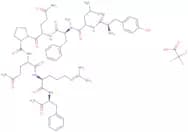
Discontinued product(D-Tyr1,N-Me-Phe3)-Neuropeptide FF trifluoroacetate salt
CAS:Please enquire for more information about (D-Tyr1,N-Me-Phe3)-Neuropeptide FF trifluoroacetate salt including the price, delivery time and more detailed product information at the technical inquiry form on this pageFormula:C55H78N14O11Purity:Min. 95%Molecular weight:1,111.3 g/molRef: 3D-FT109351
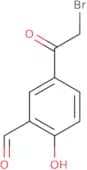
Discontinued product5-(2-Bromo-acetyl)-2-hydroxy-benzaldehyde
CAS:5-Bromo-2-hydroxybenzaldehyde is an organic compound with a chemical formula of CHBrO. It is a white solid that is soluble in water, ethanol, and acetone. The synthesis of 5-bromo-2-hydroxybenzaldehyde has been achieved by the acylation reaction of benzaldehyde with bromide ion. The selectivity for this reaction can be increased by using sodium borohydride as a reducing agent instead of lithium aluminum hydride. This method can be applied to the synthesis of salmeterol, which is used as a medicine in the treatment of asthma.
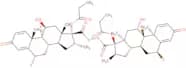
Formula:C9H7BrO3Purity:Min. 95%Molecular weight:243.05 g/molDesfluoromethyl fluticasone propionate disulfide
CAS:Please enquire for more information about Desfluoromethyl fluticasone propionate disulfide including the price, delivery time and more detailed product information at the technical inquiry form on this page
Formula:C48H58F4O10S2Purity:Min. 95%Color and Shape:PowderMolecular weight:935.09 g/molRef: 3D-FD91086
Discontinued productZ-Arg-AMC hydrochloride salt
CAS:Z-Arg-AMC hydrochloride salt is a proteolytic agent that inhibits serine proteases. It can be used to study the biological function of proteases and as a tool in the kinetic analysis of protease activity. Z-Arg-AMC hydrochloride salt has been shown to inhibit trypsin, chymotrypsin, and elastase enzymes at nanomolar concentrations. This compound also inhibits human pathogens such as enterovirus 71 and herpes simplex virus type 1, which are associated with severe disease symptoms. The structural analysis of Z-Arg-AMC hydrochloride salt has shown it to be a racemic mixture of L-Arginine and D-Arginine with an average molecular weight of 313.5 Da.
Formula:C24H27N5O5Purity:Min. 95%Molecular weight:465.5 g/molRef: 3D-FA110490
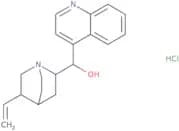
Discontinued productCinchonine Hydrochloride Hydrate
CAS:Cinchonine hydrochloride hydrate is a compound that belongs to the class of amines. It is used as an anti-malarial drug, an anti-arrhythmic agent, and a vasodilator. Cinchonine hydrochloride hydrate has been shown to be heat resistant and can be used in pharmaceutical preparations such as gel permeation chromatography. This compound also has a catalytic effect on reactions with glycerin and piperidone, which are used in the production of various dyes. Cinchonine hydrochloride hydrate can also be used as a solid catalyst for viscosity measurements in wastewater treatment plants.
Formula:C19H22N2O·HCl·xH2OPurity:Min. 95%Molecular weight:330.85 g/molRef: 3D-FC59909
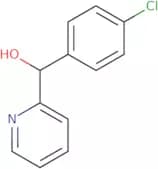
Discontinued product4-Chlorophenyl-2-pyridinylmethanol
CAS:Please enquire for more information about 4-Chlorophenyl-2-pyridinylmethanol including the price, delivery time and more detailed product information at the technical inquiry form on this page
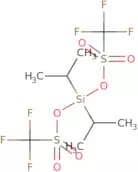
Formula:C12H10ClNOPurity:Min. 95%Molecular weight:219.67 g/molDiisopropylsilyl Bis(Trifluoromethanesulfonate)
CAS:Diisopropylsilyl bis(trifluoromethanesulfonate) is a bifunctional reagent that can be used to prepare the trifluoromethanesulfonic acid. It reacts with an alcohol in the presence of base to generate an ester, and then hydrolyzes the ester in the presence of water to generate the desired acid. Diisopropylsilyl bis(trifluoromethanesulfonate) is pale yellow and soluble in argon, nitrogen, and solvents such as ethyl acetate.
Formula:C8H14F6O6S2SiPurity:Min. 95%Molecular weight:412.4 g/molRef: 3D-FD90402
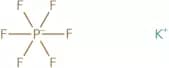
Discontinued productPotassium hexafluorophosphate
CAS:Potassium hexafluorophosphate is a chemical compound that is used as an antimicrobial agent in the laboratory. It reacts with hydroxyl groups on various surfaces to form potassium hexafluorophosphate and water. The reaction solution can be used to disinfect equipment and surfaces, and is stable at room temperature. Potassium hexafluorophosphate has been shown to have biological properties such as inhibiting the growth of bacteria and fungi, but not viruses. This chemical compound has been shown to be effective against E. coli, Klebsiella pneumoniae, Staphylococcus aureus, Proteus vulgaris, Bacillus subtilis, Pseudomonas aeruginosa, Aspergillus niger, Candida albicans, or Saccharomyces cerevisiae.
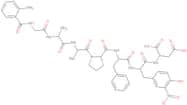
Formula:KPF6Purity:Min. 95%Color and Shape:PowderMolecular weight:184.06 g/molAbz-Gly-Ala-Ala-Pro-Phe-3-nitro-Tyr-Asp-OH trifluoroacetate salt
CAS:Please enquire for more information about Abz-Gly-Ala-Ala-Pro-Phe-3-nitro-Tyr-Asp-OH trifluoroacetate salt including the price, delivery time and more detailed product information at the technical inquiry form on this pageFormula:C42H49N9O14Purity:Min. 95%Molecular weight:903.89 g/molRef: 3D-FA110962
Discontinued product(D-Ser4)-LHRH trifluoroacetate salt
CAS:Please enquire for more information about (D-Ser4)-LHRH trifluoroacetate salt including the price, delivery time and more detailed product information at the technical inquiry form on this page
Formula:C55H75N17O13Purity:Min. 95%Molecular weight:1,182.29 g/molRef: 3D-FS109340
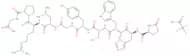
Discontinued productNeuromedin S (human) trifluoroacetate salt
Please enquire for more information about Neuromedin S (human) trifluoroacetate salt including the price, delivery time and more detailed product information at the technical inquiry form on this page
Formula:C173H265N53O44Purity:Min. 95%Molecular weight:3,791.29 g/molRef: 3D-FN109764
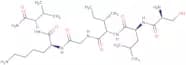
Discontinued productPAR-2 (1-6) amide (human) trifluoroacetate salt
CAS:PAR-2 (1-6) amide (human) trifluoroacetate salt H-Ser-Leu-Ile-Gly-Lys-Val-NH2 trifluoroacetate salt is a protease inhibitor that inhibits the activity of PAR2, a protein receptor. PAR2 is implicated in cancer and inflammation. It has been shown to inhibit growth factor signaling, as well as activate toll-like receptor 4 and other inflammatory pathways. PAR2 inhibition has also been studied in vivo and found to be effective in treating wild type mice with melanoma cells. In vitro studies have shown that PAR2 inhibition by PAR 2 (1-6) amide (human) trifluoroacetate salt H-Ser-Leu-Ile-Gly-Lys-Val NH2 trifluoroacetate salt blocks the production of tumour necrosis factor alpha and interleukin 6.Formula:C28H54N8O7Purity:Min. 95%Molecular weight:614.78 g/molRef: 3D-FP109317
Discontinued productAmyloid beta-Protein (1-42) (scrambled) trifluoroacetate salt
CAS:Please enquire for more information about Amyloid beta-Protein (1-42) (scrambled) trifluoroacetate salt including the price, delivery time and more detailed product information at the technical inquiry form on this page
Formula:C203H311N55O60SPurity:Min. 95%Molecular weight:4,514.04 g/molRef: 3D-FA110090
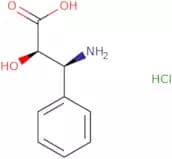
Discontinued product(2R,3S)-3-Amino-2-hydroxy-3-phenylpropanoic acid hydrochloride
CAS:(2R,3S)-3-Amino-2-hydroxy-3-phenylpropanoic acid hydrochloride is an organic compound that is used in the manufacture of taxol, an anticancer drug. It is synthesized by reacting chloroacetic acid with a metal hydroxide, such as sodium hydroxide or potassium hydroxide. The reaction proceeds spontaneously to form the enantiomerically pure (2R,3S) form and unreacted (2S,3R) form. The (2R,3S) enantiomer has been found to be more reactive than the (2S,3R) form. Quaternary ammonium salts are formed when the (2R,3S) enantiomer reacts with quaternary ammonium compounds such as benzyltrimethylammonium chloride. This compound can also be used in catalytic reactions to produce drugs such as carbapenems and pen
Formula:C9H12ClNO3Purity:Min. 95%Molecular weight:217.65 g/molRef: 3D-FA140332
Discontinued productBuccalin trifluoroacetate salt
CAS:Buccalin is a cholinergic pharmaceutical drug that has been shown to have metabolic, growth factor, and chemotactic activities. It has been used in the treatment of various autoimmune diseases and infectious diseases. The mechanism of action for buccalin is unknown. Buccalin has been shown to have receptor activity in a variety of diagnostic agents such as monoclonal antibodies and fatty acids. It binds to acetylcholine receptors at the neuromuscular junction, leading to activation of muscle fibers by acetylcholine release from nerve endings.Formula:C45H72N12O15SPurity:Min. 95%Molecular weight:1,053.19 g/molRef: 3D-FB110404
Discontinued productBoc-Leu-Lys-Arg-AMC hydrochloride salt
CAS:Boc-Leu-Lys-Arg-AMC is a synthetic substrate that has been used in a number of clinical studies to identify the serine proteases that are involved in autoimmune diseases. It is a synthetic peptide composed of the amino acid sequence found in soybean trypsin. The peptide was shown to have high salt tolerance and was able to be hydrolyzed by polyclonal antibodies with specificity for amyloid protein, suggesting it may be useful as a biochemical marker for Alzheimer's disease. Boc-Leu-Lys-Arg-AMC has also been shown to be an efficient substrate for collagenase, which is an enzyme that breaks down collagen and causes tissue damage. This property makes this compound useful as a proteolytic agent for the removal of unwanted scar tissue or other lesions from diseased organs. Boc-Leu-Lys-Arg-AMC also has an optimum pH level of 7.5 and is active against influenzaFormula:C33H52N8O7Purity:Min. 95%Molecular weight:672.82 g/molRef: 3D-FB110554
Discontinued product(Pro18,Asp21)-Amyloid b-Protein (17-21) trifluoroacetate salt
CAS:Please enquire for more information about (Pro18,Asp21)-Amyloid b-Protein (17-21) trifluoroacetate salt including the price, delivery time and more detailed product information at the technical inquiry form on this pageFormula:C33H43N5O8Purity:Min. 95%Molecular weight:637.72 g/molRef: 3D-FP109385
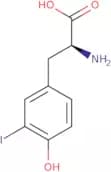
Discontinued product3-Iodo-L-tyrosine
CAS:Please enquire for more information about 3-Iodo-L-tyrosine including the price, delivery time and more detailed product information at the technical inquiry form on this page
Formula:C9H10INO3Purity:Min. 96.0 Area-%Color and Shape:PowderMolecular weight:307.09 g/molRef: 3D-FI12110
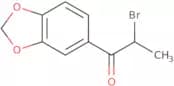
Discontinued product2-Bromo-3',4'-(methylenedioxy)propiophenone
CAS:Controlled ProductPlease enquire for more information about 2-Bromo-3',4'-(methylenedioxy)propiophenone including the price, delivery time and more detailed product information at the technical inquiry form on this page
Formula:C10H9BrO3Purity:Min. 95%Color and Shape:PowderMolecular weight:257.08 g/mol(Nle 13,Glu14)-Motilin (human, porcine) trifluoroacetate salt
CAS:Please enquire for more information about (Nle 13,Glu14)-Motilin (human, porcine) trifluoroacetate salt including the price, delivery time and more detailed product information at the technical inquiry form on this pageFormula:C121H189N33O36Purity:Min. 95%Molecular weight:2,682 g/molRef: 3D-FN109255
Discontinued productNeuromedin S (rat) trifluoroacetate salt
CAS:Please enquire for more information about Neuromedin S (rat) trifluoroacetate salt including the price, delivery time and more detailed product information at the technical inquiry form on this pageFormula:C193H307N57O49SPurity:Min. 95%Molecular weight:4,241.92 g/molRef: 3D-FN109763
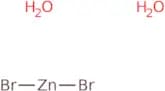
Discontinued productZinc bromide dihydrate
CAS:Zinc bromide dihydrate is a crystalline compound that is used as a catalyst for the conversion of metalloporphyrins to hydroporphyrins. This process is used in the production of vitamin B12. Zinc bromide dihydrate can also be used to inhibit the function of ion pumps, which are proteins that pump ions across membranes. The inhibition of these pumps may lead to a decrease in intracellular calcium levels and an increase in free radicals.
Zinc bromide dihydrate has been shown to react with chlorophylls, vinylated heterostructures, and polyvinyl nonmetals. These reactions produce morphology changes in zinc bromide dihydrate crystalsFormula:ZnBr2•2H2OPurity:Min. 95%Color and Shape:PowderMolecular weight:261.22 g/mol8-Desmethoxy-8-fluoro moxifloxacin
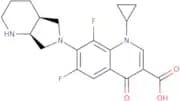
CAS:8-Desmethoxy-8-fluoro moxifloxacin is a photolytic drug that is used to treat bacterial infections. It has a high degree of antibacterial activity against methicillin-resistant staphylococcus aureus, including methicillin resistant strains of Staphylococcus epidermidis. 8-Desmethoxy-8-fluoro moxifloxacin hydrochloride is produced by the addition of hydrochloric acid to moxifloxacin, which is then purified by ion chromatography. The compound has been shown to have good stability in human plasma and urine. It also shows excellent recoveries in acetonitrile and quantification results in flow rates.
Formula:C20H21F2N3O3Purity:Min. 95%Molecular weight:389.4 g/molRef: 3D-FD21225
Discontinued product(Asp371)-Tyrosinase (369-377) (human) trifluoroacetate salt
CAS:Trifluoroacetate saltFormula:C42H66N10O16S2Purity:Min. 95%Molecular weight:1,031.16 g/molRef: 3D-FA110240
Discontinued productDnp-(Leu421)-Collagen Type VIII a1 Chain (419-426) amide (human, mouse) trifluoroacetate salt
Please enquire for more information about Dnp-(Leu421)-Collagen Type VIII a1 Chain (419-426) amide (human, mouse) trifluoroacetate salt including the price, delivery time and more detailed product information at the technical inquiry form on this page
Formula:C40H64N14O12SPurity:Min. 95%Molecular weight:965.09 g/molRef: 3D-FD110972
Discontinued productNeuropeptide VF (56-92) (human) trifluoroacetate salt
Please enquire for more information about Neuropeptide VF (56-92) (human) trifluoroacetate salt including the price, delivery time and more detailed product information at the technical inquiry form on this page
Formula:C195H304N52O51S2Purity:Min. 95%Molecular weight:4,256.95 g/molRef: 3D-FN109557
Discontinued productN-[(RS)-1-Carboxy-3-phenyl-propyl]-Ala-Ala-Phe-4-Abz-OH trifluoroacetate salt
CAS:The N-[(RS)-1-carboxy-3-phenyl-propyl]-Ala-Ala-Phe-4-Abz-OH trifluoroacetate salt is a synthetic substrate for the study of metalloendopeptidase. This compound was used to develop a model system to study the function of human liver, and has been shown to inhibit the growth of PC12 cells. The N-[(RS)-1-Carboxy-3-phenyl-propyl]-Ala-Ala-Phe-4-Abz-OH trifluoroacetate salt is also an experimental model for congestive heart failure. This compound has been shown to increase glomerular filtration rate in experimental animals as well as basic fibroblast growth factor activity in cell culture by increasing intracellular calcium levels.Formula:C32H36N4O7Purity:Min. 95%Molecular weight:588.65 g/molRef: 3D-FR111118
Discontinued productTRAP-6 (2-6) trifluoroacetate salt
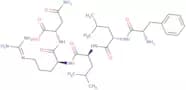
CAS:TRAP-6 (2-6) is a monoclonal antibody that binds to the enzyme collagenase, which is an important factor in tumor invasion and metastasis. The antibody binds to the active site of collagenase, thereby inhibiting its activity. TRAP-6 (2-6) has been shown to reduce the growth of cancer cells by inhibiting the production of β-amino acids and zymogens, which are required for tumor cell proliferation. It also inhibits serine proteases, such as thrombin receptor, which play an important role in tumor invasion and metastasis. TRAP-6 (2-6) also has anti-inflammatory properties and can be used for the treatment of basophilic leukemia.Formula:C31H51N9O7Purity:Min. 95%Molecular weight:661.79 g/molRef: 3D-FT110302
Discontinued productOxyntomodulin (bovine, dog, porcine) trifluoroacetate salt
CAS:Please enquire for more information about Oxyntomodulin (bovine, dog, porcine) trifluoroacetate salt including the price, delivery time and more detailed product information at the technical inquiry form on this pageFormula:C192H295N59O60SPurity:Min. 95%Molecular weight:4,421.82 g/molAmmonium Undecafluorohexanoate
CAS:Undecafluorohexanoic acid is a perfluoroalkyl carboxylic acid that has been shown to disrupt steroidogenesis in vitro. It may be able to inhibit the transport of cholesterol, fats, and other lipids in cells, which causes disruption in steroidogenesis. This compound also has anti-cancer properties due to its ability to induce apoptosis and arrest cancer cell proliferation. Undecafluorohexanoic acid may also have developmental effects on animals because it can bind to estrogen receptors and disrupt the normal process of estrogen-mediated signaling pathways.
Formula:C6H4F11NO2Purity:Min. 95%Molecular weight:331.08 g/molRef: 3D-FA79593
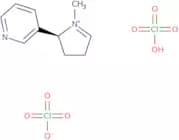
Discontinued productS-(-)-Nicotine-delta1’-(5’)-iminium diperchlorate salt
CAS:Please enquire for more information about S-(-)-Nicotine-delta1’-(5’)-iminium diperchlorate salt including the price, delivery time and more detailed product information at the technical inquiry form on this page
Formula:C10H14Cl2N2O8Purity:Min. 95%Molecular weight:361.13 g/mol2,3,5-Trichlorobenzaldehyde
CAS:2,3,5-Trichlorobenzaldehyde is a chemical compound that has been shown to have anticancer and apoptotic effects. It inhibits the growth of bacteria by chelating iron ions and inhibiting bacterial dna synthesis. 2,3,5-Trichlorobenzaldehyde has also been shown to inhibit the growth of cancer cells in culture in an experimental study. This chemical has been used as a substrate for nmr spectroscopy to study its functional groups and radical scavenging activities. 2,3,5-Trichlorobenzaldehyde can be synthesized from phenacyl chloride and benzaldehyde in the presence of hydrogen chloride gas. The carbonyl group in 2,3,5-trichlorobenzaldehyde may cause metabolic disorders such as diabetes mellitus or hyperglycemia.
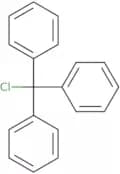
Formula:C7H3Cl3OPurity:Min. 95%Color and Shape:PowderMolecular weight:209.46 g/molTrityl chloride resin
CAS:Trityl chloride resin is a chemical compound that is used as a model system for the study of trifluoroacetic acid and its reactions. Trityl chloride resin is insoluble in water and has been used as a reaction solution for transfer reactions. It has been shown to be an effective ligand for many types of receptors, with binding constants ranging from 10 M-1 to 10 M-10. Trityl chloride resin can also be chiral, which means that it may exist in two forms that are mirror images of each other. The physiological effects of this compound are not well understood, but it has been shown to have an effect on coordination geometry.
Color and Shape:PowderRef: 3D-FT29918
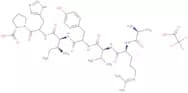
Discontinued productAngiotensin A (1-7) trifluoroacetate
CAS:Endogenous heptapetide which causes vasodilation and has anti-hypertensive properties.
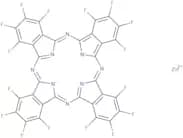
Formula:C40H62N12O9•(C2HF3O2)xPurity:Min. 95%Color and Shape:PowderMolecular weight:855 g/molZinc 1,2,3,4,8,9,10,11,15,16,17,18,22,23,24,25-hexadecafluoro-29H,31H-phthalocyanine
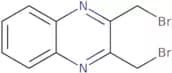
CAS:Please enquire for more information about Zinc 1,2,3,4,8,9,10,11,15,16,17,18,22,23,24,25-hexadecafluoro-29H,31H-phthalocyanine including the price, delivery time and more detailed product information at the technical inquiry form on this pageFormula:C32F16N8ZnPurity:Min. 95%Molecular weight:865.75 g/mol2,3-Bis(bromomethyl)quinoxaline
CAS:2,3-Bis(bromomethyl)quinoxaline is a nitrogenous heterocyclic compound that has a coordination geometry of square planar. It has been used as an inhibitor for the protein p21 and the nucleophile in palladium complexes. 2,3-Bis(bromomethyl)quinoxaline is also a model system for studying reaction mechanisms and chemical structures. The electron density map of the compound was obtained by X-ray crystal structure analysis. The reaction mechanism of this molecule is proposed to be through a chelate ring cross-coupling process.
Formula:C10H8Br2N2Purity:Min. 95%Color and Shape:Brown PowderMolecular weight:315.99 g/molRef: 3D-FB04248
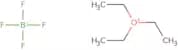
Discontinued productTriethyloxonium tetrafluoroborate
CAS:Triethyloxonium tetrafluoroborate is an antimicrobial agent that inhibits the transfer of electrons from one molecule to another. It has been shown to be effective against methicillin-resistant Staphylococcus aureus and Mycobacterium tuberculosis. Triethyloxonium tetrafluoroborate binds to the bacterial enzyme, Jak1, which is involved in the formation of cytokines and interleukins. This binding inhibits the production of these molecules, leading to cell death by apoptosis. The use of triethyloxonium tetrafluoroborate as a research tool has facilitated its discovery as a potential anti-inflammatory drug for autoimmune diseases such as type 1 diabetes mellitus and rheumatoid arthritis. Triethyloxonium tetrafluoroborate can be used to inhibit amide synthesis, which may have applications in the study of carbohydrate chemistry and nitrogen atoms in biological systems. This compound has also been used
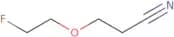
Formula:C6H15BF4OPurity:Min. 95%Color and Shape:PowderMolecular weight:189.99 g/mol3-(2-Fluoroethoxy)Propanenitrile
CAS:3-(2-Fluoroethoxy)Propanenitrile is a chemical with toxic properties. It is classified as a fluoroacetic acid and has been used in the production of other chemicals. Fluoroacetic acid is toxic to humans, showing signs of skin irritation, respiratory tract irritation, and kidney damage. 3-(2-Fluoroethoxy)Propanenitrile is not found naturally and has been sponsored by many companies.
Formula:C5H8FNOPurity:Min. 95%Molecular weight:117.12 g/molRef: 3D-FF80270
Discontinued product

![4,5-Dibromo-1,2,6,7-tertahydro-8H-indeno[5,4-b]furan-8-one](/_next/image/?url=https%3A%2Fstatic.cymitquimica.com%2Fproducts%2F3D%2Fthumb-webp%2FFD21568.webp&w=3840&q=75)







![N-[(RS)-1-Carboxy-3-phenyl-propyl]-Ala-Ala-Phe-4-Abz-OH trifluoroacetate salt](/_next/image/?url=https%3A%2Fstatic.cymitquimica.com%2Fproducts%2F3D%2Fthumb-webp%2FFR111118.webp&w=3840&q=75)