Organic Halides
In this category, you can find organic molecules containing one or more halogen atoms in their structure. These organic halides include brominated, iodinated, chlorinated, and cyclic halide compounds. Organic halides are widely used in organic synthesis, pharmaceuticals, agrochemicals, and materials science due to their reactivity and ability to undergo a variety of chemical transformations. At CymitQuimica, we offer a comprehensive selection of high-quality organic halides to support your research and industrial applications, ensuring reliable and effective performance in your synthetic and analytical projects.
Subcategories of "Organic Halides"
Found 20440 products of "Organic Halides"
Sort by
Purity (%)
0
100
|
0
|
50
|
90
|
95
|
100
(Fluoro-Methylphosphoryl)Oxycyclohexane
CAS:Controlled Product<p>(Fluoro-Methylphosphoryl)Oxycyclohexane is an organophosphorus compound that acts as a nerve agent. It inhibits the enzyme acetylcholinesterase, which is responsible for breaking down acetylcholine, leading to excess cholinergic stimulation. This can cause excessive contraction of muscles or even death. The exposure to (Fluoro-Methylphosphoryl)Oxycyclohexane can be detected by analytical methods such as gas chromatography/mass spectrometry. Oximes are used in the reactivation of acetylcholinesterase and are effective in preventing neuronal death. They bind to the phosphonyl group in (Fluoro-Methylphosphoryl)Oxycyclohexane and prevent it from inhibiting the enzyme acetylcholinesterase.</p>Formula:C7H14FO2PPurity:Min. 95%Molecular weight:180.16 g/molSodium fluorosilicate
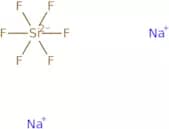
CAS:Controlled Product<p>Sodium fluorosilicate is an inorganic acid that can be prepared by dissolving sodium carbonate and hydrogen fluoride in water. It is used as a sample preparation agent for electrochemical impedance spectroscopy, as well as a reagent for the determination of acidic properties. Sodium fluorosilicate has been shown to inhibit the growth of epidermal cells, which may be due to its ability to cause an increase in the mitochondrial membrane potential. This compound also inhibits the synthesis of proteins from RNA, which may result from its coordination geometry or hydrogen-bonding interactions. Sodium fluorosilicate has been used in analytical methods involving x-ray diffraction data and plasma mass spectrometry.</p>Formula:Na2SiF6Purity:Min. 95%Molecular weight:188.06 g/mol2-Bromo-4,5-difluorobenzaldehyde
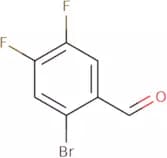
CAS:<p>2-Bromo-4,5-difluorobenzaldehyde is a chemical intermediate and speciality chemical. It is an important building block for the synthesis of organic compounds, such as pharmaceuticals and agrochemicals. This product is a versatile building block, which can be used in a wide range of reactions and is suitable for use as an intermediate or scaffold. It has high quality and complex structure that can be used to synthesize a number of different compounds.</p>Formula:C7H3BrF2OPurity:Min. 97%Color and Shape:PowderMolecular weight:221 g/mol1,1,2,2,9,9,10,10-Octafluoro[2.2]paracyclophane
CAS:<p>1,1,2,2,9,9,10,10-Octafluoro[2.2]paracyclophane is a synthetic chemical compound that can be used in cross-coupling reactions. It is an isomer of the more common 1-fluorocyclopropane and has been shown to have a shorter reaction time than 1-fluorocyclopropane. The compound's spectroscopic properties are similar to those of 1-fluorocyclopropane. The compound was synthesized by reacting nitrobenzene with cyclopentadiene in the presence of boronic acids and aluminum chloride. The mass spectrum of this compound shows peaks corresponding to the molecular ion at m/e=256 and its fragmentation pattern corresponds to a monosubstituted aromatic hydrocarbon.</p>Formula:C16H8F8Purity:Min. 98.5%Color and Shape:White Clear LiquidMolecular weight:352.22 g/mol4-Chloronicotinonitrile
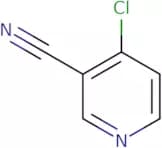
CAS:<p>4-Chloronicotinonitrile is a 4-cyanopyridine compound that is used in the palladium-catalyzed cross-coupling reaction to produce aryl chlorides. The reaction mechanism involves the formation of an organopalladium species through a palladium-catalyzed cross-coupling reaction and subsequent nucleophilic attack by an electrophile, resulting in the formation of an intermediate organopalladium species. The chlorine atom on 4-chloronicotinonitrile can be substituted with other reactive groups such as bromine, iodine, or sulfur. This substitution can lead to isomerization of the product and may affect yields. 4-Chloronicotinonitrile has been shown to cause severe skin burns when exposed to radiation.</p>Formula:C6H3ClN2Purity:Min. 95%Color and Shape:PowderMolecular weight:138.55 g/molDifluoroamine
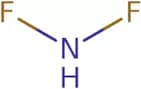
CAS:Controlled Product<p>Difluoroamine is a chemical compound that is used in the production of organic compounds. It has been shown to have high stability and detection sensitivity, which is attributed to its hydrogen bond forming ability. Difluoroamine also reacts with trifluoroacetic acid and hydrogen fluoride, both of which are strong acids. The reaction mechanism of difluoroamine involves the protonation of nitrogen atoms on the molecule followed by a nucleophilic attack on the electrophilic carbon atom that results in the formation of an amine group. This reaction can be carried out in a flow system as well as in a batch process. Difluoramine is an intermediate product during this process and can be converted into glycol ethers or nitrobenzene.</p>Formula:F2HNPurity:Min. 95%Molecular weight:53.01 g/molBis(2,2,2-trichloroethyl)azodicarboxylate
CAS:<p>Bis(2,2,2-trichloroethyl)azodicarboxylate is a nucleophile that can be used as an alkylating agent in the industrial process. It is also used to prepare chiral amines by adding an amine to the enantiomerically pure bis(2,2,2-trichloroethyl)azodicarboxylate. The anticancer activity of Bis(2,2,2-trichloroethyl)azodicarboxylate is due to its ability to inhibit tumor cell proliferation. Bis(2,2,2-trichloroethyl)azodicarboxylate is not effective against cancerous cells that do not have functional groups such as amino acids.</p>Formula:C6H4Cl6N2O4Purity:Min. 95%Color and Shape:Yellow SolidMolecular weight:380.82 g/molRef: 3D-FB01254
Discontinued productCholine chloride - 99%
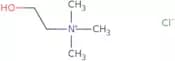
CAS:<p>Choline is an essential nutrient that is involved in the metabolism of fat and protein, as well as in the synthesis of cell membranes. It is also a precursor for neurotransmitters such as acetylcholine and phosphatidylcholine. Choline chloride is an ionic compound that contains choline and chloride ions. It has been shown to have beneficial effects on brain functions, including memory and learning, by providing choline to the brain. Choline chloride also helps regulate energy metabolism by supplying choline to cells throughout the body. In addition, it has been used as a model system for studying atherosclerosis. Choline chloride has been shown to inhibit certain enzymes such as picolinic acid carboxylase, calcium pantothenate kinase, and betaine homocysteine methyltransferase which are important for maintaining normal cell function. This inhibition leads to reduced levels of picolinic acid (a toxic metabolite), calcium pantothenate (a vitamin),</p>Formula:C5H14ClNOPurity:Min. 95%Color and Shape:White PowderMolecular weight:139.62 g/molRef: 3D-FC01179
Discontinued product(3β,22E)-29-Fluorostigmasta-5,22-dien-3-ol
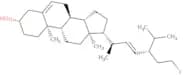
CAS:Controlled Product<p>3β,22E)-29-Fluorostigmasta-5,22-dien-3-ol is a plant growth regulator that belongs to the group of fatty alcohols. It is found in the horticultural and tissue culture industries and is used as an additive in bioassays. 3β,22E)-29-Fluorostigmasta-5,22-dien-3-ol enhances the growth rate of nematodes and has been shown to be a potent inhibitor of benzoate degradation. This compound also has hormone effects that are similar to those of furostanols or steroids.</p>Formula:C29H47FOPurity:Min. 95%Molecular weight:430.68 g/molIsopropyl ethylphosphonochloridate
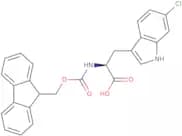
CAS:Controlled Product<p>Please enquire for more information about Isopropyl ethylphosphonochloridate including the price, delivery time and more detailed product information at the technical inquiry form on this page</p>Formula:C5H12FO2PPurity:Min. 95%Fmoc-6-chloro L-tryptophan
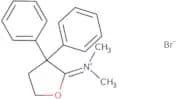
CAS:<p>Fmoc-6-chloro L-tryptophan is a heterocycle with methylene and active methylene groups that can be used as a building block for 1,3-dipolar cycloadditions. It has been shown to react with perchlorates in the presence of catalysts such as dibromodifluoromethane (DBDM) and perchloric acid to form an exocyclic azomethine imine. This reaction generates a proton, which shifts the equilibrium to the right, forming more product. The optimal conditions for this reaction are pH 8, 50% DBDM, and 10% HClO4.</p>Formula:C26H21ClN2O4Purity:Min. 97 Area-%Color and Shape:White PowderMolecular weight:460.91 g/molN,N-Dimethyl-(tetrahydro-3,3 diphenyl-2-furilidine)ammonium bromide
CAS:<p>N,N-Dimethyl-(tetrahydro-3,3 diphenyl-2-furilidine)ammonium bromide is a synthetic opioid analgesic and is used in the treatment of severe pain. It has been shown to cause life-threatening cardiac effects, supratherapeutic concentrations, or fatalities in humans and animals. N,N-Dimethyl-(tetrahydro-3,3 diphenyl-2-furilidine)ammonium bromide has also been shown to cause gastrointestinal inflammation in animal models. This drug acts as an agonist at opioid receptors and can be fatal at high doses.</p>Formula:C18H20BrNOPurity:Min. 95%Color and Shape:White PowderMolecular weight:346.26 g/molRef: 3D-FD38967
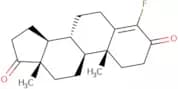
Discontinued product4-Fluoroandrostenedione
CAS:Controlled Product<p>4-Fluoroandrostenedione is a synthetic, nonsteroidal compound that has been shown to be an effective androgen ablation agent. It binds to the androgen receptor, which prevents conversion of testosterone into dihydrotestosterone (DHT). 4-Fluoroandrostenedione has been used in clinical trials for the treatment of prostate cancer. This drug has also been shown to inhibit the production of estrogens by binding to the aromatase enzyme, which converts androgens into estrogens. Substitutions on the a-ring have been shown to increase its activity as an anti-cancer agent. 4-Fluoroandrostenedione can be synthesized from androstenedione by substituting a fluorine atom on one of the carbons in the a-ring.</p>Formula:C19H25FO2Purity:Min. 95%Molecular weight:304.4 g/molTetrafluorohydrazine
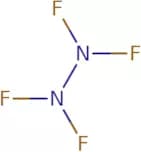
CAS:Controlled Product<p>Tetrafluorohydrazine is a reactive chemical compound that is used as a precursor to other nitrogen-containing compounds. It can be made by reacting hydrochloric acid with hydrogen fluoride and ammonia at high temperatures. The tetrafluorohydrazine molecule is thermodynamically unstable, so it decomposes into the trifluoride anion, dinitrogen gas, and hydrogen fluoride gas. Tetrafluorohydrazine reacts with the difluoride ion to form the difluoramine molecule. This reaction requires a catalyst, such as zinc. Tetrafluorohydrazine has been shown to react with alkenes in the presence of catalysts to produce alcohols or ketones.</p>Formula:F4N2Purity:Min. 95%Molecular weight:104.01 g/mol3-Noradamantaneamine hydrochloride
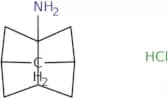
CAS:<p>3-Noradamantaneamine hydrochloride is a thioamide that has inhibitory activities on biological processes, such as the production of tumor necrosis factor-α (TNF-α). 3-Noradamantaneamine hydrochloride also inhibits angiogenesis and the proliferation of endothelial cells. The drug was shown to be neuroprotective in animal models and to have anti-angiogenic properties. The mechanism of action is not yet clear, but may involve nitric oxide synthase inhibition or nitration of the drug.</p>Formula:C9H15N·HClPurity:Min. 95%Color and Shape:White PowderMolecular weight:173.68 g/molRef: 3D-FN67894
Discontinued productmethyl 2-(4,5-dimethoxy-2-(((3-(trifluoromethyl)phenyl)amino)sulfonyl)phenyl)acetate
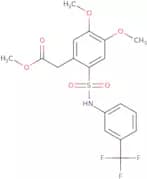
CAS:<p>Please enquire for more information about methyl 2-(4,5-dimethoxy-2-(((3-(trifluoromethyl)phenyl)amino)sulfonyl)phenyl)acetate including the price, delivery time and more detailed product information at the technical inquiry form on this page</p>Purity:Min. 95%Ref: 3D-FM169711
Discontinued product1,1,2,2,3,3,4,4,5,5-Decafluorocyclopentane
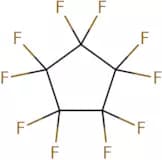
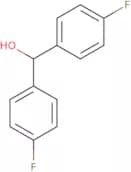
CAS:Controlled Product<p>1,1,2,2,3,3,4,4,5,5-Decafluorocyclopentane is a fluorocarbon liquid with a boiling point of -50°C. It has an average particle diameter of 0.1 nm and a water vapor pressure of 1.6 × 10⁻¹⁰ torr at 20°C. Due to its non-polarity and low viscosity (1 cP), it can be used as a solvent in organic chemistry reactions. 1,1,2,2,3,3,4,4,5,5-Decafluorocyclopentane has been shown to be reactive at the target site due to its acid molecules that provide the reactive sites for this molecule's phase transition temperature (-52°C) and nmr spectra. The reactive sites also allow for x-ray structures to be obtained by imaging techniques such as electron microscopy or atomic force microscopy.</p>Formula:C5F10Purity:Min. 95%Molecular weight:250.04 g/mol4,4'-Difluorobenzhydrol
CAS:<p>4,4'-Difluorobenzhydrol is an inhibitor of the dopamine reuptake transporter. It is a fluorescent derivative of 4-fluorobenzhydrol and has a piperazine group as an analog to 4-fluoropiperazine. The reaction rate of the drug was determined in vitro by measuring fluorescence intensity over time. The analog is more potent than the original molecule and has a longer half-life in the body. Phase liquid chromatography was used to analyze the drugs in vivo studies. Coatings containing this agent are under development for use as anticaries agents.</p>Formula:C13H10F2OPurity:Min. 98%Color and Shape:White To Off-White To Light Brown SolidMolecular weight:220.21 g/molRef: 3D-FD38587
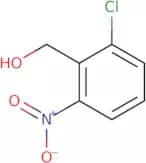
Discontinued product2-Chloro-6-nitrobenzyl alcohol
CAS:<p>2-Chloro-6-nitrobenzyl alcohol is a versatile building block that is used as a reactant in chemical synthesis. It is used to synthesize other compounds, such as pharmaceuticals and pesticides. This compound can also be used as an intermediate or scaffold in the synthesis of more complex compounds. 2-Chloro-6-nitrobenzyl alcohol has been shown to have a high quality and is useful for research purposes. It can be used in the production of fine chemicals, useful building blocks, and reagents.</p>Formula:C7H6ClNO3Purity:Min. 95%Color and Shape:PowderMolecular weight:187.58 g/molMonofluoroamine
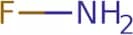
CAS:Controlled Product<p>Monofluoroamine is a chemical substance with the chemical formula NH2F. It is a colorless liquid that is stable to both acidic and basic environments, but reacts with fluorine gas to form hydrofluoric acid. Monofluoroamine is used in the synthesis of pharmaceuticals, pesticides, and other organic compounds. This compound can be prepared by reacting ammonia with hydrogen fluoride at low temperature or by reacting ammonia with hydrogen fluoride at high pressure. The Friedel-Crafts reaction of monofluoroamine with an amide produces the corresponding amine. Monofluoroamine has been used as a conditioning agent in NMR spectroscopy experiments to remove the water signal from complex NMR spectra. In addition, this compound has been shown to have antiviral effects against HIV infection through its ability to inhibit protein synthesis.</p>Formula:FH2NPurity:Min. 95%Molecular weight:35.02 g/mol


![1,1,2,2,9,9,10,10-Octafluoro[2.2]paracyclophane](/_next/image/?url=https%3A%2Fstatic.cymitquimica.com%2Fproducts%2F3D%2Fthumb-webp%2FFO103527.webp&w=3840&q=75)