Organic Halides
In this category, you can find organic molecules containing one or more halogen atoms in their structure. These organic halides include brominated, iodinated, chlorinated, and cyclic halide compounds. Organic halides are widely used in organic synthesis, pharmaceuticals, agrochemicals, and materials science due to their reactivity and ability to undergo a variety of chemical transformations. At CymitQuimica, we offer a comprehensive selection of high-quality organic halides to support your research and industrial applications, ensuring reliable and effective performance in your synthetic and analytical projects.
Subcategories of "Organic Halides"
Found 20437 products of "Organic Halides"
Sort by
Purity (%)
0
100
|
0
|
50
|
90
|
95
|
100
1,12-Dibromododecane
CAS:<p>1,12-Dibromododecane is a chemical substance that appears as an off-white solid. It has a formula weight of 45.1 g/mol and a melting point of -8.5°C. 1,12-Dibromododecane is soluble in water and alcohols and insoluble in ethers. The substance is not flammable, but it does react with strong oxidants such as nitric acid or perchloric acid to form toxic gases like nitrogen dioxide or chlorine gas respectively. 1,12-Dibromododecane is used in the manufacture of sodium carbonate, which is used for signal detection, and also as a fatty acid solvent in the production of optical properties and formula weight measurements. 1,12-Dibromododecane can be used to measure transport properties by gel chromatography and can be used as a metalloeluting agent in 4-hydroxycinnamic acid pur</p>Formula:C12H24Br2Purity:Min. 95%Color and Shape:White PowderMolecular weight:328.13 g/molFluorescent brightener 71, Technical grade
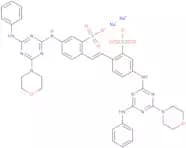
CAS:<p>Fluorescent brightener 71 (F71) is a cationic surfactant that is used as a fluorescent whitening agent in textiles and paper. It can be used to measure the concentration of fatty acids, detergents, and sodium salts in solution. F71 is also used to study transport pathways of lipophilic molecules in polymer films. It has been shown to increase the solubility of sodium salts in water and to be an effective detergent for oily soils.</p>Formula:C40H38N12Na2O8S2Purity:Min. 95%Molecular weight:926.93 g/mol3-Bromo-5-chlorobenzyl alcohol
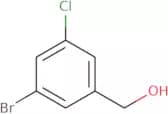
CAS:<p>3-Bromo-5-chlorobenzyl alcohol is a useful building block for the synthesis of complex compounds. It reacts with metal chlorides to form bromochloromethane, which can be used in organic syntheses as a reaction component or reagent. 3-Bromo-5-chlorobenzyl alcohol is a versatile chemical that has been shown to have high quality and is useful in research.</p>Formula:C7H6BrClOPurity:Min. 95%Color and Shape:PowderMolecular weight:221.48 g/mol3-Bromobenzamidine hydrochloride
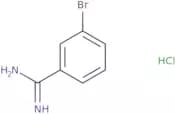
CAS:<p>3-Bromobenzamidine hydrochloride is a pyrimidine that has been used as a medicinal agent. It is synthesized by the dehydration of 3-bromoacetamide and coupling with 2,4-dichlorobenzoyl chloride in the presence of silver nitrate. The reaction proceeds via an enaminone intermediate. This product can be used to treat malaria, which is caused by protozoa. 3-Bromobenzamidine hydrochloride also has anti-inflammatory properties and has been shown to inhibit prostaglandin synthesis.</p>Formula:C7H7BrN2·HClPurity:Min. 95 Area-%Color and Shape:PowderMolecular weight:235.51 g/mol5-Iodo-2,3-dimethoxybenzoic acid
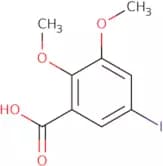
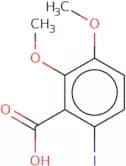
CAS:<p>5-Iodo-2,3-dimethoxybenzoic acid (5IMB) is a synthetic chemical that is used as a radiolabeled substrate for the synthesis of dopamine. The 5IMB is a substrate for the enzyme monoamine oxidase, which converts it to 5-hydroxyindoleacetic acid (5HIAA). The intensity of the signal emitted by 5IMB increases with the increase in concentration of dopamine. It can be used as a positron emission tomography (PET) tracer for dopamine receptors in the brain. The kinetic and uptake properties of 5IMB are different in various regions of the brain, such as striatum and caudate putamen. This difference can be measured using high-performance liquid chromatography (HPLC) and flow rate.<br>5IMB has been shown to have anti-oxidant properties due to its ability to scavenge peroxide radicals.</p>Formula:C9H9IO4Purity:Min. 98 Area-%Color and Shape:PowderMolecular weight:308.07 g/mol2-Iodo-5,6-dimethoxybenzoic acid
CAS:<p>2-Iodo-5,6-dimethoxybenzoic acid is a reagent that is used in the synthesis of complex compounds and fine chemicals. It has a high quality and is useful as an intermediate or building block for the synthesis of versatile compounds. This chemical can be used in research to create new compounds with special properties. 2-Iodo-5,6-dimethoxybenzoic acid can be used in various reactions to make diverse building blocks or scaffolds that are useful in organic chemistry.</p>Formula:C9H9IO4Purity:Min. 95%Molecular weight:308.07 g/mol2-Amino-3-chlorobenzoic acid
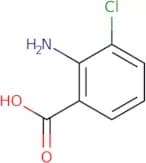
CAS:<p>2-Amino-3-chlorobenzoic acid is a chemical compound that is used as a reagent in the cross-coupling of organic compounds. 2-Amino-3-chlorobenzoic acid has been shown to inhibit the growth of cancer cells in the laboratory and has been used as a pesticide. This compound causes DNA methylation in bacteria, which may be due to its inhibition of methyltetrahydrofolate reductase. 2-Amino-3-chlorobenzoic acid is reactive and should be handled with care because it could cause burns on contact with skin. The carcinogenic potential of this compound has not been determined.</p>Formula:C7H6ClNO2Purity:Min. 95%Color and Shape:PowderMolecular weight:171.58 g/molH-Orn-AMC hydrochloride salt
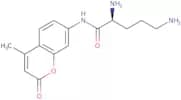
CAS:<p>H-Orn-AMC hydrochloride salt is a white solid with a melting point of about 150°C. It is used as a reactant in the manufacture of pharmaceuticals, research chemicals and other speciality chemicals. H-Orn-AMC hydrochloride salt is also an intermediate for the synthesis of complex compounds, useful as building blocks for chemical synthesis, and can be used as a reagent in analytical chemistry.</p>Formula:C15H20ClN3O3Purity:Min. 98 Area-%Color and Shape:PowderMolecular weight:325.79 g/mol3-Chloro-4-methoxybenzaldehyde
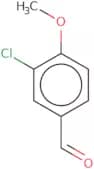
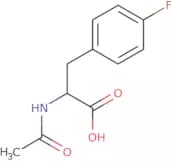
CAS:<p>3-Chloro-4-methoxybenzaldehyde is a chemical compound that belongs to the class of aromatic compounds. It is synthesized by reacting 3-chlorobenzaldehyde with methoxyacetone in a hydroxylation reaction. The asymmetric synthesis of 3-chloro-4-methoxybenzaldehyde was achieved by using a chiral auxiliary, which is an organic molecule that can be used to control the stereochemistry of other reactions. This product has high cytotoxicity and is able to cause melanogenesis (production of melanin) when applied to rat striatal membranes.</p>Formula:C8H7ClO2Purity:Min. 95%Color and Shape:PowderMolecular weight:170.59 g/molN-Acetyl-DL-p-fluorophenylalanine
CAS:<p>N-Acetyl-DL-p-fluorophenylalanine is a chemical compound that can be used as a research chemical, or in the synthesis of other compounds. It is a reactive ingredient and can be used as a reagent. N-Acetyl-DL-p-fluorophenylalanine belongs to the class of speciality chemicals and can be used as an intermediate in the synthesis of other compounds. This compound has been found to be useful for the production of fine chemicals and complex compounds.</p>Formula:C11H12FNO3Purity:Min. 95%Color and Shape:PowderMolecular weight:225.22 g/mol3-Methyl-2-benzothiazolinone hydrazone hydrochloride monohydrate
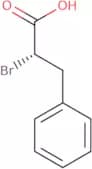
CAS:<p>3-Methyl-2-benzothiazolinone hydrazone hydrochloride monohydrate is a diazonium salt that inhibits the activity of tyrosinase. It is used in pharmaceutical preparations as an inhibitor molecule to treat skin cancer. This compound has been shown to inhibit the production of melanin, which protects cells from damage by ultraviolet (UV) radiation. 3-Methyl-2-benzothiazolinone hydrazone hydrochloride monohydrate binds to tyrosinase and prevents it from forming radicals, which are necessary for the formation of melanin. The inhibition of this enzyme results in skin that is less susceptible to UV radiation and therefore less likely to develop skin cancer.</p>Formula:C8H9N3S·HCl·H2OPurity:Min. 98 Area-%Color and Shape:PowderMolecular weight:233.72 g/mol(L)-2-Bromo-3-phenylpropionic acid
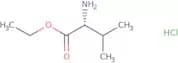
CAS:<p>L-2-Bromo-3-phenylpropionic acid is a synthetic amino acid that is structurally similar to L-phenylalanine. It can be prepared by the reaction of triphosgene with l-(+)-phenylglycine, followed by hydrolysis of the resulting 2-(bromophenyl)acetic acid. L-2-Bromo-3-phenylpropionic acid has been used in peptidomimetics, which are synthesized using strategies derived from the structures and properties of proteins. One of these strategies is based on the conformational change of an amide bond. This synthetic amino acid has been shown to have affinity for certain chiral conformations and may be used as a chiral ligand in asymmetric synthesis.</p>Formula:C9H9BrO2Purity:Min. 95%Color and Shape:Slightly Yellow PowderMolecular weight:229.07 g/molD-Valine ethyl ester hydrochloride
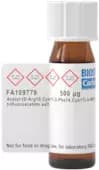
CAS:<p>D-Valine ethyl ester hydrochloride is a reagent that is used in the synthesis of complex compounds. It can be used as an intermediate for fine chemicals and research chemicals, or as a building block for versatile building blocks. D-Valine ethyl ester hydrochloride can also be used in reactions to form other compounds, such as pharmaceuticals.</p>Formula:C7H15NO2·HClPurity:Min. 95%Color and Shape:PowderMolecular weight:181.66 g/molLY2112688 trifluoroacetate
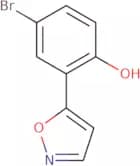
CAS:<p>Please enquire for more information about LY2112688 trifluoroacetate including the price, delivery time and more detailed product information at the technical inquiry form on this page</p>Formula:C51H70N18O11S2•(C2HF3O2)xPurity:Min. 95%Color and Shape:PowderMolecular weight:1,175.35 g/mol4-Bromo-2-(5-isoxazolyl)phenol
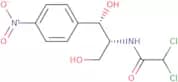
CAS:<p>4-Bromo-2-(5-isoxazolyl)phenol is a fine chemical that is used as a building block in the synthesis of other chemicals. It is also useful as a reagent, speciality chemical, and intermediate to produce complex compounds. This compound has versatile uses as it can be used in reactions involving nucleophilic substitution, electrophilic substitution, and elimination. 4-Bromo-2-(5-isoxazolyl)phenol is also a useful scaffold for the synthesis of new molecules with biological activity.</p>Formula:C9H6BrNO2Purity:Min. 95%Color and Shape:PowderMolecular weight:240.05 g/molD-erythro-Chloramphenicol
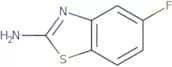
CAS:<p>D-erythro-Chloramphenicol is a chloramphenicol antibiotic that has been shown to inhibit the uptake of nucleic acids by bacteria. It binds to the ribosomal RNA in the bacterial cell and prevents protein synthesis, causing bacterial death. D-erythro-Chloramphenicol is also able to inhibit the uptake of glycine, which is an important amino acid for bacteria. D-erythro-Chloramphenicol has been shown to be active against many different types of bacteria, including those that are resistant to other antibiotics such as penicillin.</p>Formula:C11H12Cl2N2O5Purity:Min. 95%Molecular weight:323.13 g/mol2-Amino-5-fluorobenzothiazole
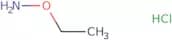
CAS:<p>2-Amino-5-fluorobenzothiazole is a synthetic compound that is used as an agrochemical. It has low efficiency and can be found in tissue culture. The biological properties of this compound are not fully understood. It has been shown to have potential antitumor activity and may be able to inhibit tyrosine kinase. 2-Amino-5-fluorobenzothiazole is also found in the inorganic section of the periodic table. This compound is water soluble, but does not dissolve well in organic solvents such as acetone or chloroform. 2-Amino-5-fluorobenzothiazole also has agricultural applications, being used as a pesticide and for controlling tuberculosis in animals.</p>Formula:C7H5FN2SPurity:Min. 95%Color and Shape:PowderMolecular weight:168.19 g/molEthoxyamine hydrochloride
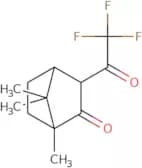
CAS:<p>Ethoxyamine hydrochloride is an organic compound that contains a hydroxyl group and a chlorine atom. It is an amine with properties of an acid. Ethoxyamine hydrochloride can be used in the treatment of metabolic disorders, such as nitro, dehydrogenase deficiency and amino acid transport disorder. The compound also has been shown to have anti-inflammatory effects, which may be due to its ability to inhibit the production of prostaglandin synthesis. This drug has been found to have no significant toxicity in humans and animals, and it has been shown to be safe for use in humans.</p>Formula:C2H7NO·HClPurity:Min. 95%Color and Shape:White PowderMolecular weight:97.54 g/mol3-Trifluoroacetyl-D-Camphor
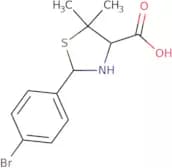
CAS:<p>3-Trifluoroacetyl-D-camphor is a ligand that binds to the quinine site on the mitochondrial membrane potential. It has been shown to have synergistic effects with metal chelates in cancer treatments. 3-Trifluoroacetyl-D-camphor is also a phosphorescent compound that emits photons when excited by light. The emission of light can be used as a probe for determining mitochondrial membrane potential and as a luminophore in devices such as gas sensors. 3-Trifluoroacetyl-D-camphor is found in the mitochondrial membranes of HL60 cells, and its concentration increases when mitochondria are exposed to hydrogen phosphine.</p>Formula:C12H15F3O2Purity:Min. 95%Color and Shape:Clear LiquidMolecular weight:248.24 g/mol2-(4-Bromophenyl)-5,5-dimethyl-1,3-thiazolidine-4-carboxylic acid
CAS:<p>2-(4-Bromophenyl)-5,5-dimethyl-1,3-thiazolidine-4-carboxylic acid is a fine chemical that can be used as a building block for research chemicals. It can also be used as an intermediate in the synthesis of complex compounds. 2-(4-Bromophenyl)-5,5-dimethyl-1,3-thiazolidine-4-carboxylic acid has been shown to react with various groups including hydroxyls and amines, making it a versatile compound. This compound is synthesized by condensation of 4 bromobenzene with 5,5 dimethyllithium and the subsequent reaction with thiourea. The product is purified by recrystallization from ethanol.</p>Formula:C12H14BrNO2SPurity:Min. 95%Color and Shape:PowderMolecular weight:316.21 g/mol