Organic Halides
In this category, you can find organic molecules containing one or more halogen atoms in their structure. These organic halides include brominated, iodinated, chlorinated, and cyclic halide compounds. Organic halides are widely used in organic synthesis, pharmaceuticals, agrochemicals, and materials science due to their reactivity and ability to undergo a variety of chemical transformations. At CymitQuimica, we offer a comprehensive selection of high-quality organic halides to support your research and industrial applications, ensuring reliable and effective performance in your synthetic and analytical projects.
Subcategories of "Organic Halides"
Found 20437 products of "Organic Halides"
Sort by
Purity (%)
0
100
|
0
|
50
|
90
|
95
|
100
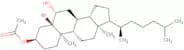
5-Bromo-5a-cholestane-3,6-diol 3-acetate
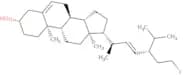
CAS:<p>Please enquire for more information about 5-Bromo-5a-cholestane-3,6-diol 3-acetate including the price, delivery time and more detailed product information at the technical inquiry form on this page</p>Formula:C29H49BrO3Purity:Min. 95%Molecular weight:525.6 g/mol(3β,22E)-29-Fluorostigmasta-5,22-dien-3-ol
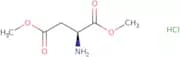
CAS:Controlled Product<p>3β,22E)-29-Fluorostigmasta-5,22-dien-3-ol is a plant growth regulator that belongs to the group of fatty alcohols. It is found in the horticultural and tissue culture industries and is used as an additive in bioassays. 3β,22E)-29-Fluorostigmasta-5,22-dien-3-ol enhances the growth rate of nematodes and has been shown to be a potent inhibitor of benzoate degradation. This compound also has hormone effects that are similar to those of furostanols or steroids.</p>Formula:C29H47FOPurity:Min. 95%Molecular weight:430.68 g/molL-Aspartic acid dimethyl ester hydrochloride
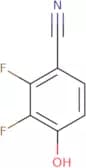
CAS:<p>L-Aspartic acid dimethyl ester hydrochloride (DAA) is an inhibitor of serine proteases, which are enzymes that break down other proteins. DAA inhibits the activity of these enzymes by forming a covalent bond with the serine residue in the active site of the enzyme. This inhibition prevents the breakdown of proteins and leads to inflammation in target tissues. L-Aspartic acid dimethyl ester hydrochloride is used to treat inflammatory bowel disease by inhibiting cathepsin B, a protease that is associated with this condition.</p>Formula:C6H11NO4·HClPurity:Min. 98 Area-%Color and Shape:White Off-White PowderMolecular weight:197.62 g/mol2,3-Difluoro-4-hydroxybenzonitrile
CAS:<p>2,3-Difluoro-4-hydroxybenzonitrile is a versatile compound that has various applications in different fields. It is an enantiomer of podophyllotoxin and can be used as a propionate in research chemicals. This compound exhibits reactivity towards metallic catalysts and can be used as an isothiocyanate for antiviral purposes. Additionally, it has chlorinating properties and can form hydrogen bonds. 2,3-Difluoro-4-hydroxybenzonitrile is also used in the production of microcapsules and can dissolve easily in methanol. Furthermore, this compound has been found to have interactions with ectonucleotidase and cholinergic receptors. Its unique characteristics make it a valuable component in various industries.</p>Formula:C7H3F2NOPurity:Min. 95%Color and Shape:PowderMolecular weight:155.1 g/mol2-Chloro-5-nitroaniline
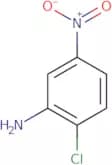
CAS:<p>2-Chloro-5-nitroaniline (2C5N) is a drug substance that belongs to the group of amines. It is an intermediate that is used in the synthesis of caffeine and other amines. 2C5N has been shown to have genotoxic impurities, which may be due to its reaction with hydrochloric acid and acylation. 2C5N has also been shown to be soluble in water, but not chloroform or ethers.</p>Formula:C6H5ClN2O2Purity:Min. 95%Color and Shape:PowderMolecular weight:172.57 g/molMethyl 3-bromopropionate
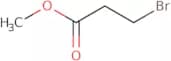
CAS:<p>Methyl 3-bromopropionate is a short-chain halogen ester compound widely used in organometallic chemistry as a building block. Methyl 3-bromopropionate is quite useful in click chemistry for reductive cleavage and as alkylation agent.</p>Formula:C4H7BrO2Purity:Min. 98%Color and Shape:Clear LiquidMolecular weight:167 g/mol1-Phenyl-piperazin-2-one
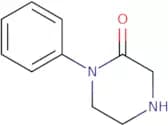
CAS:<p>1-Phenyl-piperazin-2-one is a versatile chemical that can be used as a building block in the synthesis of complex compounds. This compound is also used as a reagent and speciality chemical. It is an important intermediate in organic synthesis and has been used in the preparation of pharmaceuticals, pesticides, and herbicides. 1-Phenyl-piperazin-2-one can be prepared by reacting phenylacetonitrile with nitrous acid to form the nitrile followed by hydrolysis to produce the corresponding carboxylic acid.</p>Formula:C10H12N2OPurity:Min. 95%Color and Shape:PowderMolecular weight:176.22 g/mol2,3,5-Trichloro-N-(3,5-dichloro-2-hydroxyphenyl)-6-hydroxybenzamide
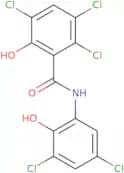
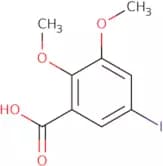
CAS:<p>Oxyclozanide is an antimicrobial agent that inhibits the enzyme activity of chitin synthase in the nematode, which is necessary for the production of chitin. This inhibition leads to disruption of the nematode's cell membrane and death. Oxyclozanide has been shown to be effective against resistant mutants, as well as synergistic with other antimicrobial agents. It is also a specific antidote for oxyclozanide poisoning.</p>Formula:C13H6Cl5NO3Purity:Min. 95%Color and Shape:PowderMolecular weight:401.46 g/mol5-Iodo-2,3-dimethoxybenzoic acid
CAS:<p>5-Iodo-2,3-dimethoxybenzoic acid (5IMB) is a synthetic chemical that is used as a radiolabeled substrate for the synthesis of dopamine. The 5IMB is a substrate for the enzyme monoamine oxidase, which converts it to 5-hydroxyindoleacetic acid (5HIAA). The intensity of the signal emitted by 5IMB increases with the increase in concentration of dopamine. It can be used as a positron emission tomography (PET) tracer for dopamine receptors in the brain. The kinetic and uptake properties of 5IMB are different in various regions of the brain, such as striatum and caudate putamen. This difference can be measured using high-performance liquid chromatography (HPLC) and flow rate.<br>5IMB has been shown to have anti-oxidant properties due to its ability to scavenge peroxide radicals.</p>Formula:C9H9IO4Purity:Min. 98 Area-%Color and Shape:PowderMolecular weight:308.07 g/mol2-Bromo-5-nitrophenetole
CAS:<p>2-Bromo-5-nitrophenetole is a versatile building block that can be used as a reagent in the synthesis of complex compounds and research chemicals. It is a high quality chemical with a CAS number of 423165-33-7. 2-Bromo-5-nitrophenetole is an important intermediate for the synthesis of diverse and valuable compounds such as pharmaceuticals, agrochemicals, and dyes.</p>Formula:C8H8BrNO3Purity:Min. 95%Color and Shape:PowderMolecular weight:246.06 g/mol(Des-Gly10,D-Ser4,D-Trp6,Pro-NHEt 9)-LHRH trifluoroacetate salt
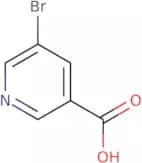
<p>Please enquire for more information about (Des-Gly10,D-Ser4,D-Trp6,Pro-NHEt 9)-LHRH trifluoroacetate salt including the price, delivery time and more detailed product information at the technical inquiry form on this page</p>Formula:C64H83N17O12Purity:Min. 95%Color and Shape:PowderMolecular weight:1,282.45 g/mol5-Bromonicotinic acid
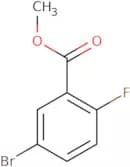
CAS:<p>5-Bromonicotinic acid is a chemical compound that is used in the synthesis of many other compounds. It is a white, crystalline solid that is soluble in water. 5-Bromonicotinic acid has been shown to have antioxidant properties and has been found to have therapeutic effects against degenerative diseases such as Alzheimer's disease. 5-Bromonicotinic acid has been used for the synthesis of carboxylic acids and amides, which are widely used in pharmaceuticals. The Suzuki coupling reaction was developed using 5-bromonicotinic acid as a key intermediate. This chemical compound also reacts with hydrogen peroxide to form reactive intermediates that can initiate chain reactions, which are useful in organic synthesis. <br>The structural analysis of this compound reveals an n-oxide group and two methoxy groups on the ring structure. Magnetic resonance spectroscopy data revealed the presence of a carboxylate group as well as hydrogen bonding interactions with daunorub</p>Formula:C6H4BrNO2Purity:Min. 95%Color and Shape:PowderMolecular weight:202.01 g/mol5-Bromo-2-fluorobenzoic acid methyl ester
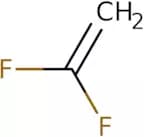
CAS:<p>5-Bromo-2-fluorobenzoic acid methyl ester (5BFME) is a synthetic, non-steroidal compound that is used to treat prostate cancer. 5BFME inhibits the production of prostate specific antigen (PSA) and other androgen levels in prostate cancer cells. 5BFME also has an effect on the cell cycle by inhibiting DNA synthesis, which is likely to have a synergistic effect with other anticancer drugs. 5BFME has shown no selectivity toward any type of cell, which may be due to its ability to modulate cellular biochemical pathways.</p>Formula:C8H6BrFO2Purity:Min. 95%Color and Shape:PowderMolecular weight:233.03 g/molPolyvinylidene fluoride
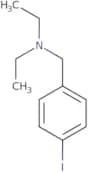
CAS:<p>Polyvinylidene fluoride is a polymer that has been used for water purification in wastewater treatment. It is made from polyvinylidene and hydrogen fluoride, which react to form polyvinylidene fluoride. This polymer has a high dielectric constant, which means it can be used as an insulator, and a low water permeability, which means it does not dissolve in water. Polyvinylidene fluoride is also piezoelectric and has been shown to have the ability to generate kinetic energy.</p>Formula:(C2H2F2)nColor and Shape:White PowderN,N-Diethyl-N-(4-iodobenzyl)amine
CAS:<p>N,N-Diethyl-N-(4-iodobenzyl)amine is a high quality and versatile building block that is used as a reagent, speciality chemical, or intermediate. The compound has been found to be useful in the synthesis of complex compounds. It can also be used as a reaction component for various organic synthesis reactions. N,N-Diethyl-N-(4-iodobenzyl)amine is commercially available from Sigma Aldrich with CAS No. 914636-94-5.</p>Formula:C11H16INPurity:Min. 95%Color and Shape:PowderMolecular weight:289.16 g/molChlorpromazine hydrochloride
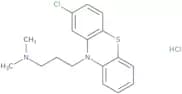
CAS:Controlled Product<p>Chlorpromazine hydrochloride is an amphiphilic drug, derivative of phenothiazine, that blocks post-synaptic dopaminergic receptors (D1-D4) in mesolimbic area (antipsychotic effects). It is an antagonist at histamine (H1), serotonin (5HT1 and 5-HT2) and alpha-1, alpha 2 adrenergic receptors and possess antimuscarinic properties. Chlorpromazine hydrochloride salt is used in the treatment of: agitation and aggression in bipolar disorder and schizophrenia, in behaviour problems and hyperactivity in children, and for the treatment of chronic hiccups. Also, it helps in: tetanus therapy and intermittent porphyria, the treatment of severe migraines, and helps control nausea and vomiting. Chlorpromazine performs clathrin- mediated endocytosis at non-toxic concentrations and it can be used as a potential broad-spectrum inhibitor of viruses.</p>Formula:C17H20Cl2N2SPurity:Min. 95%Color and Shape:White PowderMolecular weight:355.33 g/molDimethyl malonyl chloride
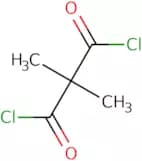
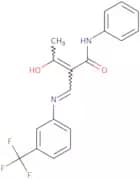
CAS:<p>Dimethyl malonyl chloride is a carboxylic acid that is used as a solid catalyst in the production of polymers and resins. It can also be used to produce ethyl diazoacetate, which is an important component of the manufacturing process for azoxy compounds. Dimethyl malonyl chloride has been shown to react with various metal chlorides to form palladium complexes that are catalysts for hydrogenation reactions. This chemical has been found to function as an absorber in activated carbon film and can be used as a hydroxy group donor or an oxidation catalyst.</p>Formula:C5H6Cl2O2Purity:Min. 95%Molecular weight:169.01 g/mol2-acetyl-N-phenyl-3-((3-(trifluoromethyl)phenyl)amino)prop-2-enamide
CAS:<p>Please enquire for more information about 2-acetyl-N-phenyl-3-((3-(trifluoromethyl)phenyl)amino)prop-2-enamide including the price, delivery time and more detailed product information at the technical inquiry form on this page</p>Formula:C18H15F3N2O2Purity:Min. 95%Color and Shape:PowderMolecular weight:348.32 g/mol2-Amino-3-methoxybenzoic acid hydrochloride
CAS:<p>2-Amino-3-methoxybenzoic acid hydrochloride is a synthetic monosubstituted hydroxy analog of the natural alkaloids, which are substituted with an amino group. It is produced by the demethylation of 2-amino-3-hydroxypyridine and reacts with caprolactam to form 2,6-dihydroxybenzaldehyde. It has been used in the synthesis of methoxyanthranilic acid, which is a synthetic analogue of anthranilic acid. Hydrochloric acid can be added to 2-amino-3-methoxybenzoic acid hydrochloride to produce 2,6-dihydroxybenzoyl chloride. This compound also undergoes condensation reactions with methoxyanthranilic acid to form 2,6-dimethoxybenzaldehyde.</p>Formula:C8H9NO3•HClPurity:Min. 95%Color and Shape:PowderMolecular weight:203.62 g/mol4-Chloro-3-nitrophenylacetamide
CAS:<p>4-Chloro-3-nitrophenylacetamide is a chemical compound that can be used as a reagent, useful scaffold for research, and a high quality research chemical. CAS No. 5540-60-3, this versatile building block is useful for the synthesis of complex compounds and fine chemicals.</p>Formula:C8H7ClN2O3Purity:Min. 98 Area-%Color and Shape:PowderMolecular weight:214.61 g/mol