


Organic Halides
Subcategories of "Organic Halides"
Found 20442 products of "Organic Halides"
4-Fluoro-3-methylphenol
CAS:4-Fluoro-3-methylphenol is a low molecular weight compound that has been shown to have antibacterial activity. It inhibits the growth of Mycobacterium tuberculosis, and this inhibition may be due to a transfer mechanism. 4-Fluoro-3-methylphenol also inhibits the enzyme activities of esterases and glutathione reductase, which may contribute to its antitubercular activity. This molecule has been shown to have vibrational and optical properties. It has been used in microscopy experiments for the detection of mineralization in bone tissue.Formula:C7H7FOPurity:Min. 95%Molecular weight:126.13 g/molMethyl 3-(bromomethyl)benzoate
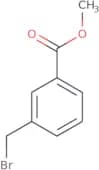
CAS:Methyl 3-(bromomethyl)benzoate is a hydroxamic acid that has been shown to have potent inhibitory activity against DPP-4, an enzyme that regulates the production of the incretin hormones, GLP-1 and GIP. The compound was also found to have a strong ability to form coordination complexes with palladium and metal ions. Methyl 3-(bromomethyl)benzoate is structurally similar to other hydroxamic acids such as Covid-19 pandemic, which is a drug used for the treatment of HIV infections.
Formula:C9H9BrO2Purity:Min. 95%Color and Shape:PowderMolecular weight:229.07 g/mol1-Hexyl-3-methylimidazolium hexafluorophosphate
CAS:1-Hexyl-3-methylimidazolium hexafluorophosphate is a cationic surfactant that is soluble in water. It has been shown to be effective for the removal of heavy metals, organic pollutants, and radioactive substances from wastewater by anion exchange resin. This compound also interacts with potassium hexafluorophosphate (KFP) to form a highly efficient ion pair. The transport properties of 1-hexyl-3-methylimidazolium hexafluorophosphate are due to its concentration dependent interactions with water molecules, which are affected by the temperature and pressure. The Langmuir adsorption isotherm has been used to describe the equilibrium between 1-hexyl-3-methylimidazolium hexafluorophosphate and KFP.Formula:C10H19F6N2PPurity:Min. 95%Color and Shape:Colourless To Yellow LiquidMolecular weight:312.24 g/mol(+/-)-Synephrine hydrochloride
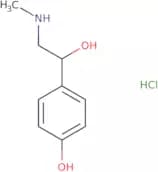
CAS:Synephrine is a naturally occurring compound that is found in various plants and foods, such as oranges, tomatoes, and bananas. It is also produced endogenously by the adrenal gland and is a metabolite of ephedrine. Synephrine hydrochloride (SH) has been shown to increase metabolic rate and promote weight loss in humans. SH binds to the beta-2 adrenergic receptor, which causes an increase in body temperature, heart rate, blood pressure, and respiratory rate. Synephrine can also cause eye disorders such as myopia or glaucoma. SH may be effective against tumors because it acts as an agonist for the alpha-1 adrenergic receptor and stimulates the production of tumor necrosis factor-α (TNF-α).Formula:C9H14ClNO2Purity:Min. 95%Color and Shape:White PowderMolecular weight:203.67 g/molD-Glutamic acid di-tert-butyl ester hydrochloride
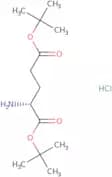
CAS:D-Glutamic acid di-tert-butyl ester hydrochloride is an organic acid that is used as a medicine. It is a covalently conjugated psychotropic drug, which means it contains two molecules of the same type. D-Glutamic acid di-tert-butyl ester hydrochloride has been shown to be effective in the treatment of depression and other mood disorders. This drug has also been shown to inhibit the reuptake of neurotransmitters such as serotonin and norepinephrine, which may account for its efficacy in treating depression. The drug was also found to be effective in the treatment of obsessive compulsive disorder (OCD) by inhibiting serotonin reuptake.Formula:C13H25NO4·HClPurity:Min. 95%Color and Shape:White PowderMolecular weight:295.8 g/molPentaerythrityl tetrachloride
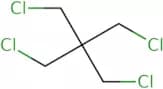
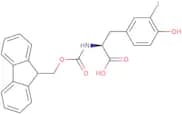
CAS:Pentaerythrityl tetrachloride is a chemical compound that has been shown to inhibit the activity of a number of enzymes. It is used as an industrial chemical for wastewater treatment, for the production of carbon tetrachloride, glycol ethers and phosphates, as well as in the manufacture of polymers and adhesives. Pentaerythrityl tetrachloride has also been shown to have anti-inflammatory properties by inhibiting growth factor-β1. This compound is also used in research to study nuclear DNA and silicon-zirconium oxide nanocomposite materials.Formula:C5H8Cl4Purity:Min. 95%Color and Shape:PowderMolecular weight:209.93 g/molFmoc-3-iodo-L-tyrosine
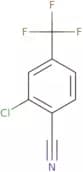
CAS:Fmoc-3-iodo-L-tyrosine is a fine chemical that belongs to the category of versatile building blocks. It can be used as a reagent, speciality chemical, and useful scaffold in the synthesis of complex compounds. Fmoc-3-iodo-L-tyrosine is a high quality material with a purity of 98%. It has been used as an intermediate for research chemicals and useful building blocks.Formula:C24H20NO5IPurity:Min. 97.5 Area-%Color and Shape:PowderMolecular weight:529.32 g/mol2-Chloro-4-trifluoromethylbenzonitrile
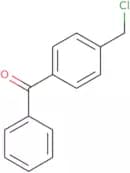
CAS:2-Chloro-4-trifluoromethylbenzonitrile is a fine chemical that belongs to the category of research chemicals, reagents and speciality chemicals. It is a versatile building block which can be used as a reaction component or useful intermediate in the synthesis of complex compounds. This compound also has many different uses, including as a useful scaffold for organic molecules.Formula:C8H3ClF3NPurity:Min. 95%Color and Shape:LiquidMolecular weight:205.57 g/mol4-Chloromethylbenzophenone
CAS:4-Chloromethylbenzophenone is a chemical compound that can be used as an efficacious pesticide. It is reactive and photodegrades in the environment. The compound has been shown to have a high toxicity to animals and humans, leading to dermatitis or phoma. 4-Chloromethylbenzophenone is also known as a chlorinated hydrocarbon and has been shown to cause bioaccumulation in the environment.
Formula:C14H11ClOPurity:Min. 95%Color and Shape:White to off-white solid.Molecular weight:230.69 g/mol4-[2-(3,4-Dimethoxyphenyl)-1,2-dibromoethyl]-1,2-dimethoxybenzene
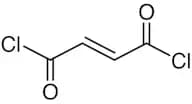
CAS:4-[2-(3,4-Dimethoxyphenyl)-1,2-dibromoethyl]-1,2-dimethoxybenzene is a high quality chemical that is an intermediate for the synthesis of other compounds. It has been used as a reagent in the synthesis of complex compounds and has been shown to be useful for the production of fine chemicals. This compound can also be used as a scaffold or building block in organic chemistry. The versatility of 4-[2-(3,4-Dimethoxyphenyl)-1,2-dibromoethyl]-1,2-dimethoxybenzene makes it an important reaction component in organic chemistry and research chemicals.Formula:C18H20Br2O4Purity:Min. 95%Molecular weight:460.16 g/molFumaryl Chloride
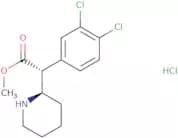
CAS:Formula:C4H2Cl2O2Purity:>95.0%(GC)(T)Color and Shape:Colorless to Light orange to Yellow clear liquidMolecular weight:152.963,4-Dichloromethylphenidate HCl
CAS:Controlled Product3,4-Dichloromethylphenidate HCl is a versatile building block that can be used in the synthesis of many complex compounds. It has been shown to be useful as a reagent and as an intermediate in the synthesis of pharmaceuticals. This compound may also have potential for use as a reaction component and scaffold in organic chemistry. 3,4-Dichloromethylphenidate HCl is available at high quality and is a useful building block for research purposes.Formula:C14H17Cl2NO2·HClPurity:Min. 95%Color and Shape:PowderMolecular weight:338.66 g/mol4-Fluoro-L-histidine
CAS:4-Fluoro-L-histidine is a fluorinated analog of L-histidine that functions as an inhibitor of protein synthesis by the virus. 4-Fluoro-L-histidine was found to be more potent than L-histidine in inhibiting murine sarcoma virus (MSV) replication and cytopathogenicity in vitro. This molecule has been shown to be a pentadecapeptide, which is comprised of five amino acids. The conformational properties of 4FLH are similar to those of histidine, and it can act as a substrate for enzymes involved in protein synthesis. 4FLH is also available with a deuterium isotope effect, which may affect its biological activity.Purity:Min. 95%2-Chloro-5-propyl-1,3,4-thiadiazole
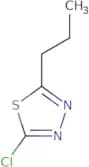
CAS:2-Chloro-5-propyl-1,3,4-thiadiazole is a reagent that is useful in the synthesis of complex compounds. It has CAS No. 116035-47-3 and can be used as a fine chemical or speciality chemical for research purposes. It is also an intermediate for the production of other chemicals and can be used as a versatile building block in organic synthesis.
Formula:C5H7ClN2SPurity:Min. 95%Color and Shape:Colorless PowderMolecular weight:162.64 g/mol4-Bromoisatin
CAS:4-Bromoisatin is a synthetic compound that reversibly inhibits the activity of telomerase and has been shown to be effective against a broad range of bacterial species. It binds to the catalytic site on telomerase and prevents the synthesis of ribonucleotides, which are necessary for DNA replication. 4-Bromoisatin is synthesized by humans, but can also be found in plants such as coffee beans and black tea leaves. The antibacterial properties of 4-bromoisatin may be due to its ability to inhibit the biosynthesis of purine, an essential component in bacterial DNA synthesis.Formula:C8H4BrNO2Purity:Min. 95%Color and Shape:Orange PowderMolecular weight:226.03 g/mol2,2',3,3',5,5',6,6'-Octafluorobiphenyl
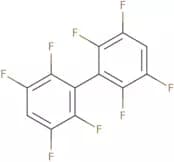
CAS:2,2',3,3',5,5',6,6'-Octafluorobiphenyl is a monomer that can be used for cross-coupling reactions. It can be synthesized by reacting a terminal alkyne with an organolithium compound such as cocl2. This monomer has been shown to undergo elimination reactions at lower temperatures than most other monomers and is commercially available in large quantities. 2,2',3,3',5,5',6,6'-Octafluorobiphenyl is also used as a dopant in semiconductors. The use of this compound in solar cells has been demonstrated with the addition of metal halides such as copper chloride or silver chloride. This compound has been shown to be able to efficiently absorb the light and convert it into electricity.
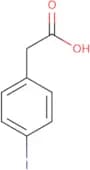
Formula:C12H2F8Purity:Min. 95%Color and Shape:PowderMolecular weight:298.13 g/mol(4-Iodophenyl)acetic acid
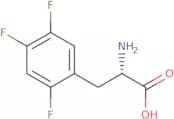
CAS:(4-Iodophenyl)acetic acid is a chemical compound that is used as an analog in the synthesis of other compounds. This compound has been shown to be effective against solid tumours, such as prostate and bladder cancer. The asymmetric synthesis of (4-iodophenyl)acetic acid has been achieved by using a constant of 2,2'-dichloro-1,1'-binaphthyl and the corresponding 1-bromoalkene. The uptake of this chemical compound in cells has been shown to be rapid and concentration dependent. It binds to two subunits of the prostacyclin receptor and blocks its activation by prostaglandins. (4-Iodophenyl)acetic acid also interacts with the membrane surface through hydrogen bonding with phosphatidylethanolamine and phosphatidylcholine lipids.Formula:C8H7IO2Purity:Min. 95%Color and Shape:Red PowderMolecular weight:262.04 g/molL-2,4,5-Trifluorophenylalanine
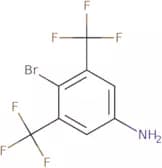
CAS:L-2,4,5-Trifluorophenylalanine is a fluorinated amino acid that can be used as a diagnostic probe for the detection of magnetic resonance imaging. L-2,4,5-Trifluorophenylalanine has been shown to have an orientation sensitive fluorescence emission in the presence of an external magnetic field. This compound can also be used as a ligand for site-specific labeling and has been studied by multidimensional spectroscopic methods. The conformational study of L-2,4,5-Trifluorophenylalanine has revealed that it has a site for binding fluorotryptophan.Formula:C9H8F3NO2Purity:Min. 95%Color and Shape:White Off-White PowderMolecular weight:219.050714-Bromo-3,5-bis(trifluoromethyl)aniline
CAS:4-Bromo-3,5-bis(trifluoromethyl)aniline is a chemical compound that belongs to the group of brominated compounds. It has high adsorption capacity for potassium and can be used as an adsorbent for gasification. 4-Bromo-3,5-bis(trifluoromethyl)aniline has been activated by carbons and catalysed with potassium to form an ionic complex with the carboxylic acid site on the surface of activated carbon. This process is used for purifying water or air from pollutants.
Formula:C8H4BrF6NPurity:Min. 95%Color and Shape:PowderMolecular weight:308.02 g/mol[3-Methyl-4-(2,2,2-trifluoro-ethoxy)-pyridin-2-yl]-methanol
CAS:[3-Methyl-4-(2,2,2-trifluoro-ethoxy)-pyridin-2-yl]-methanol is a synthetic organic compound that is used in the synthesis of other organic compounds. It can be purified by filtration or gasification and recrystallization.Purity:Min. 95%Color and Shape:Powder



![4-[2-(3,4-Dimethoxyphenyl)-1,2-dibromoethyl]-1,2-dimethoxybenzene](/_next/image/?url=https%3A%2Fstatic.cymitquimica.com%2Fproducts%2F3D%2Fthumb-webp%2FFD66282.webp&w=3840&q=75)


![[3-Methyl-4-(2,2,2-trifluoro-ethoxy)-pyridin-2-yl]-methanol](/_next/image/?url=https%3A%2Fstatic.cymitquimica.com%2Fproducts%2F3D%2Fthumb-webp%2FFM38829.webp&w=3840&q=75)