Organic Halides
Subcategories of "Organic Halides"
Found 20442 products of "Organic Halides"
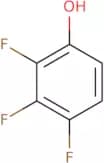
2,3,4-Trifluorophenol
CAS:2,3,4-Trifluorophenol is a chemical control agent that is used as an intermediate in the synthesis of organic compounds. It reacts with hydroxyl groups to form 2,3,4-trifluoroacetophenone from a proton. The compound has low light and x-ray absorption properties and is typically used in liquid crystal compositions. Chemical ionization experiments have shown that 2,3,4-trifluorophenol binds to copper oxide and forms copper trifluoride. This compound also has been found to be conjugated with neutral ph phenols and chlorinated with chlorine atom.
Formula:C6H3F3OPurity:Min. 95%Color and Shape:PowderMolecular weight:148.08 g/mol2-(Trifluoroacetamido)Ethylamine Hydrochloride
CAS:Please enquire for more information about 2-(Trifluoroacetamido)Ethylamine Hydrochloride including the price, delivery time and more detailed product information at the technical inquiry form on this page
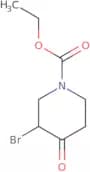
Formula:C4H7F3N2OPurity:Min. 95%Molecular weight:156.11 g/mol3-Bromo-4-oxo-piperidine-1-carboxylic acid ethyl ester
CAS:3-Bromo-4-oxo-piperidine-1-carboxylic acid ethyl ester is a monoclinic crystal of the salt of 3-bromo-4-oxo-piperidine and 1,2-ethanediol. It is used as an intermediate in the synthesis of cisapride, a medication that regulates gastrointestinal motility. 3BOCEP has been shown to hydrolyze in the stomach with a rate constant of 2 x 10 M s. The bromination product is cisapride, which has been shown to regulate gastrointestinal motility by stimulating GI smooth muscle contractions.Formula:C8H12BrNO3Purity:Min. 95%Molecular weight:250.09 g/mol10-Chloro-9-anthraldehyde
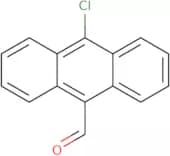
CAS:10-Chloro-9-anthraldehyde is an antibacterial agent that exhibits activity against a wide variety of bacteria. It is the product of the photomodification of anthracene, which is activated by ultraviolet light to produce 10-chloro-9-anthraldehyde. The preliminary functional studies of this compound indicate that it may be used in coatings for polymers and textiles as well as in innovative applications such as fluorescence labeling and immunoassays. 10-Chloro-9-anthraldehyde also has a protonation site at the 9 position, making it useful for conjugation with biomolecules.
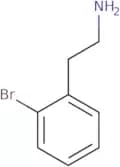
Formula:C15H9ClOPurity:Min. 95%Molecular weight:240.68 g/mol2-(2-Bromophenyl)ethanamine
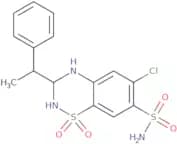
CAS:Controlled Product2-(2-Bromophenyl)ethanamine is a new and efficient method for the amination of imines with methyl groups. This process involves the use of catalytic amounts of N-bromosuccinimide (NBS) in the presence of 2,6-lutidine to form a cyclic imine intermediate. The reaction is carried out at room temperature and the yield can be as high as 99%. The reaction shown here is an example of an asymmetric amination reaction.Formula:C8H10BrNPurity:Min. 95%Color and Shape:Colorless Clear LiquidMolecular weight:200.08 g/mol6-Chloro-3,4-dihydro-3-(a-methylbenzyl)-2H-1,2,4-benzothiadiazine-7-sulfonamide 1,1-dioxide
CAS:6-Chloro-3,4-dihydro-3-(a-methylbenzyl)-2H-1,2,4-benzothiadiazine-7-sulfonamide 1,1-dioxide is an active metabolite of the drug benzbromarone. It is primarily administered as a diuretic to treat high blood pressure and congestive heart failure. The pharmacodynamics of this drug are related to its ability to inhibit the activity of sodium channels in vascular smooth muscle cells and thereby reduce the force of contraction and relax the vessel wall. 6CBDMTD has shown an increase in glomerular filtration rate in patients with congestive heart failure. This drug also decreases the plasma concentration of fatty acids by inhibiting the formation of lipoprotein particles. 6CBDMTD has been shown to be effective at lowering diastolic and systolic blood pressure levels in patients with hypertension.Formula:C15H16ClN3O4S2Purity:Min. 95%Molecular weight:401.89 g/mol4'-Chloroacetophenone
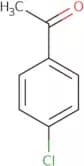
CAS:4'-Chloroacetophenone is a chemical substance that is used in the synthesis of other substances. It has been shown to be an effective tool for cell-specific reactions, such as methyl ketones and benzaldehyde. 4'-Chloroacetophenone reacts with hydrochloric acid and palladium complexes to produce electron reduction, which leads to the activation of methyl ketones. This reaction provides a method for synthesizing molecules with a carbonyl group. The isolated yield of this reaction is dependent on the reaction solution temperature and concentration. The mechanism of this reaction appears to be Suzuki coupling reaction.Formula:C8H7ClOPurity:Min. 95%Color and Shape:Clear Colourless To Pale Yellow LiquidMolecular weight:154.59 g/molbeta-Alaninol 2-chlorotrityl resin
Please enquire for more information about beta-Alaninol 2-chlorotrityl resin including the price, delivery time and more detailed product information at the technical inquiry form on this pagePurity:Min. 95%5-Iodo-2-aminoindane
CAS:Controlled Product5-Iodo-2-aminoindane is a chemical pesticide that belongs to the group of diallyl trisulfide. It is used for the control of fruit pests such as Drosophila, Ceratitis capitata, and Rhagoletis pomonella. 5-Iodo-2-aminoindane has been shown to inhibit the growth of these pests through in vitro assay. The synthetic cannabinoid activity of 5-iodo-2-aminoindane may be due to its ability to inhibit fatty acid uptake by binding to the fatty acid transporter protein at the cell membrane.Formula:C9H10INPurity:Min. 95%Molecular weight:259.09 g/mol4-Iodobenzotrifluoride
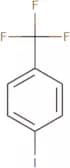
CAS:4-Iodobenzotrifluoride is a ligand that reacts with aluminium to form a cross-coupling reaction. 4-Iodobenzotrifluoride is used as a reagent in the synthesis of functional groups. The reaction mechanism for this process includes nucleophilic attack of the electrophilic aluminum, followed by protonation and reductive elimination. This process also occurs in nature when dimethyl fumarate is oxidized by molecular oxygen to produce 4-iodobenzotrifluoride.Formula:C7H4F3IPurity:Min. 95%Molecular weight:272.01 g/molMethylbenzenethonium chloride
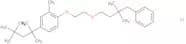
CAS:Methylbenzenethonium chloride is an antimicrobial agent that has been shown to inhibit the growth of leishmania and other parasitic protozoa. It has a high affinity for acidic surfaces, such as those found in the human body. Methylbenzenethonium chloride adsorbs strongly to the surface of bacteria, thereby inhibiting the attachment of these organisms to mucosal surfaces and preventing their adhesion to host cells. This compound also inhibits bacterial surface-associated enzymes, including DNA gyrase and DNA topoisomerase IV. Methylbenzenethonium chloride has been shown to be active against both gram-positive and gram-negative bacteria and is considered safe for use in humans with acute toxicities below 1%.
Formula:C28H44CINO2Purity:Min. 95%Molecular weight:565.57 g/molSodium N-(6-chloropyridazin-3-yl)sulphanilamidate
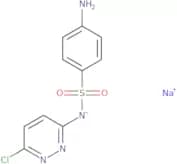
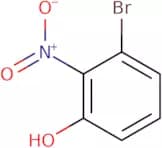
CAS:Sodium N-(6-chloropyridazin-3-yl)sulphanilamidate (NPS) is a sulfa drug that has been shown to have an effect on the enzyme activities of some endoparasites, such as Giardia lamblia and Entamoeba histolytica. The active form of NPS is metabolized through a number of metabolic transformations, including hydrolysis by esterases or glucuronidases, oxidation by cytochrome P450 enzymes, reduction by glutathione reductase, or conjugation with glucuronic acid. It also specifically binds to markers expressed at high levels in Mycobacterium tuberculosis strains (e.g., ESX-1 secretion system protein) and inhibits cell growth in culture.Formula:C10H8ClN4O2SNaPurity:Min. 95%Molecular weight:306.7 g/mol3-Bromo-2-nitrophenol
CAS:3-Bromo-2-nitrophenol (3-BNP) is a brominating agent that can be used in the synthesis of a variety of compounds. It is prepared by the refluxing of 3-bromo-2-nitrobenzene with lithium chloride, followed by treatment with trifluoromethanesulfonic anhydride to yield 3-bromo-2-(trifluoromethyl)phenoxyacetic acid. The product can also be obtained from 2,4,6-trinitrophenol and NBS. 3-BNP has shown chemoselectivity for chlorides relative to iodides or fluorides. The yields are higher when it is used in coupling reactions and permutations with lithium or magnesium.Formula:C6H4BrNO3Purity:Min. 95%Molecular weight:218 g/mol1-Benzyl-2-(chloromethyl)-1H-imidazole hydrochloride
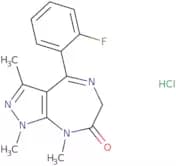
CAS:Controlled ProductPlease enquire for more information about 1-Benzyl-2-(chloromethyl)-1H-imidazole hydrochloride including the price, delivery time and more detailed product information at the technical inquiry form on this pageFormula:C11H11ClN2Purity:Min. 95%Molecular weight:206.67 g/molZolazepam hydrochloride
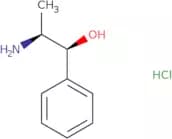
CAS:Controlled ProductZolazepam is a benzodiazepine that has antinociceptive properties and is used as an anesthetic. The effective dose of zolazepam in humans is 5-10 mg intravenously, with a maximum dose of 25 mg. Zolazepam has been found to have no effect on systolic blood pressure or heart rate, but does cause significant reduction in terminal half-life. Zolazepam's antinociceptive effects are mediated through the inhibition of calcium ion channels, which results in decreased neuronal activity in the spinal cord and brainstem. Zolazepam causes sedation and immobilization by suppressing the function of neurons that control skeletal muscles. Zolazepam also has been shown to inhibit osteoclast formation, which may be beneficial for patients with metabolic bone diseases such as Paget's disease or osteoporosis.Purity:Min. 95%Norpseudoephedrine hydrochloride
CAS:Controlled ProductNorpseudoephedrine hydrochloride is a natural drug that has been used for many years as a decongestant. It is an active metabolite of ephedrine, which is found in the natural drug ephedra. Norpseudoephedrine hydrochloride is used to treat nasal and sinus congestion, but also has a number of other uses. The matrix effect of this drug has been shown with locomotor activity in mice. The enzyme activities have been shown using an analytical method on human urine samples. This drug can cause dopamine to be released into the synapse and may increase the release of other monoamine neurotransmitters such as serotonin and norepinephrine if taken in high doses. Norpseudoephedrine hydrochloride can also have negative effects on fetal development when taken by pregnant women, so should be avoided during pregnancy or breastfeeding.Formula:C9H13NO•HClPurity:Min. 95%Molecular weight:187.67 g/mol(2-{2-[2-(2-Aminoethyl)-4,5-dimethoxybenzyl]-4,5-dimethoxyphenyl}ethyl)amine dihydrochloride
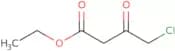
CAS:Controlled ProductPlease enquire for more information about (2-{2-[2-(2-Aminoethyl)-4,5-dimethoxybenzyl]-4,5-dimethoxyphenyl}ethyl)amine dihydrochloride including the price, delivery time and more detailed product information at the technical inquiry form on this pageFormula:C21H30N2O4Purity:Min. 95%Molecular weight:374.47 g/molEthyl 4-chloroacetoacetate
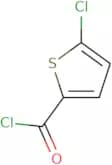
CAS:Ethyl 4-chloroacetoacetate is a chiral organic compound that is synthesized by the asymmetric synthesis of ethyl chloroacetate. This reaction is performed in an organic solution, using sodium salts as the solvent. The expression plasmid and logarithmic growth phase are needed for the enzyme catalysis and stereoselective reactions. The reaction solution is recombined with hydrochloric acid and chiral compound to produce high yields of ethyl 4-chloroacetoacetate.Formula:C6H9ClO3Purity:Min. 95%Color and Shape:Colorless Clear LiquidMolecular weight:164.59 g/mol5-Chlorothiophene-2-carbonyl chloride
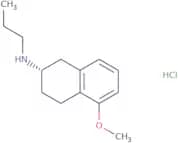
CAS:Intermediate in the synthesis of rivaroxabanFormula:C5H2Cl2OSPurity:Min. 95%Color and Shape:Clear LiquidMolecular weight:181.04 g/mol(S)-1,2,3,4-Tetrahydro-5-methoxy-N-propyl-2-naphthalenamine hydrochloride
CAS:Controlled ProductPlease enquire for more information about (S)-1,2,3,4-Tetrahydro-5-methoxy-N-propyl-2-naphthalenamine hydrochloride including the price, delivery time and more detailed product information at the technical inquiry form on this page
Formula:C14H22ClNOPurity:Min. 95%Molecular weight:255.78 g/mol





![(2-{2-[2-(2-Aminoethyl)-4,5-dimethoxybenzyl]-4,5-dimethoxyphenyl}ethyl)amine dihydrochloride](/_next/image/?url=https%3A%2Fstatic.cymitquimica.com%2Fproducts%2F3D%2Fthumb-webp%2FFA135464.webp&w=3840&q=75)