Organic Halides
Subcategories of "Organic Halides"
Found 20442 products of "Organic Halides"
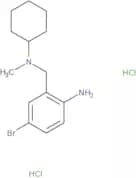
2-Amino-5-bromo-N-cyclohexyl-N-methylbenzylamine dihydrochloride
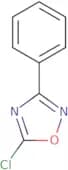
CAS:Please enquire for more information about 2-Amino-5-bromo-N-cyclohexyl-N-methylbenzylamine dihydrochloride including the price, delivery time and more detailed product information at the technical inquiry form on this pageFormula:C14H23BrCl2N2Purity:Min. 95%Color and Shape:PowderMolecular weight:370.16 g/mol5-Chloro-3-phenyl-1,2,4-oxadiazole
CAS:5-Chloro-3-phenyl-1,2,4-oxadiazole is a potent and selective inhibitor of fatty acid amide hydrolase (FAAH). It is also an inhibitor of the permeability glycoprotein PGP. 5-Chloro-3-phenyl-1,2,4-oxadiazole has a potent inhibitory activity against FAAH and PGP at low concentrations. This inhibition can be improved by optimization of the lead compound. 5-Chloro-3-phenyl-1,2,4-oxadiazole is orally active in rats and in humans. In animal studies it has been shown to produce dose dependent effects on blood pressure and heart rate when administered intravenously or orally.Formula:C8H5ClN2OPurity:Min. 95%Molecular weight:180.59 g/molPalmitoyl chloride
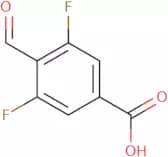
CAS:Palmitoyl chloride is a chemical compound that has the chemical formula CH3(CH2)16COCl. It is an ester of palmitic acid and chloroform. Palmitoyl chloride has a phase transition temperature of 39°C, giving it high resistance to heat. It can be used as a model system for studying the interactions between hydroxyl groups and chloride ions in water. This compound also has high water permeability and water vapor permeability, making it useful in the treatment of infectious diseases such as malaria. Palmitoyl chloride can be synthesized by reacting sodium carbonate with trifluoroacetic acid, which generates sodium trifluoroacetate. The sodium trifluoroacetate can react with 4-chlorobutyl alcohol to form 4-chlorobutylchloroformate, which reacts with palmitic acid to form palmitoyl chloride.Formula:C16H31ClOPurity:Min. 95%Molecular weight:274.87 g/mol3,5-difluoro-4-formylbenzoic Acid
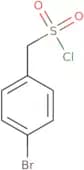
CAS:3,5-Difluoro-4-formylbenzoic acid is a sulfamic acid derivative that is used as a catalyst in the synthesis of aldehydes. The catalytic activity of 3,5-difluoro-4-formylbenzoic acid is due to its ability to be oxidized by air and light to give an active form. It also has other uses in the synthesis of dihydropyrans and regioselectivity studies.Formula:C8H4F2O3Purity:Min. 95%Molecular weight:186.11 g/mol(4-Bromophenyl)methanesulfonyl chloride
CAS:Please enquire for more information about (4-Bromophenyl)methanesulfonyl chloride including the price, delivery time and more detailed product information at the technical inquiry form on this page
Formula:C7H6BrClO2SPurity:Min. 95%Molecular weight:269.54 g/molL-Alaninol-2-chlorotrityl resin
Please enquire for more information about L-Alaninol-2-chlorotrityl resin including the price, delivery time and more detailed product information at the technical inquiry form on this page
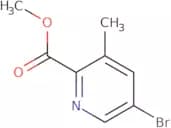
Purity:Min. 95%Methyl 5-bromo-3-methylpicolinate
CAS:Please enquire for more information about Methyl 5-bromo-3-methylpicolinate including the price, delivery time and more detailed product information at the technical inquiry form on this page
Formula:C8H8BrNO2Purity:Min. 95%Molecular weight:230.06 g/molChloromethylated polystyrene - 0.8-1.5meq/g, 100-200Mesh
CAS:Chloromethylated polystyrene is a polymer that contains a hydroxyl group and a disulfide bond. It can be used to synthesize an asymmetric synthesis of the borane-tetrahydrofuran complex, which is an important reagent in organic synthesis. In this reaction, trifluoroacetic acid reacts with hydrogen fluoride to produce chloromethylated polystyrene. This product has been shown to be effective in preventing cancerous tissue growth and inhibiting infectious diseases by binding to nucleophilic sites on the cell surface.Purity:Min. 95%Triarylsulfonium hexafluoroantimonate salts mixed - 50 wt. % in propylene carbonate
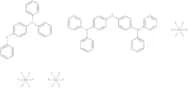
CAS:Triarylsulfonium hexafluoroantimonate salts mixed - 50 wt. % in propylene carbonate, also known as TAS-50, is a coating that is used in analytical chemistry and polymerization reactions. TAS-50 has been shown to be biocompatible and non-irritating to skin, eyes, or mucous membranes. It is a fluorescent compound that can be used for the detection of analytes in liquid samples. TAS-50 has been shown to have optical properties that are similar to those of glass. The coating has also been shown to have efficient methods for fabricating optical fibers with improved temperature resistance and radiation resistance.Formula:C60H47F18S5Sb3Purity:Min. 95%Color and Shape:Clear LiquidMolecular weight:1,635.6 g/mol3-Iodobenzyl bromide
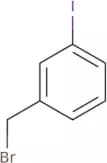
CAS:3-Iodobenzyl bromide is a potent, selective antagonist of the adenosine A3 receptor. It has been shown to be effective in treating cervical cancer and cancer by inhibiting the growth of cancer cells. 3-Iodobenzyl bromide binds to the adenosine A3 receptor and blocks the binding of adenosine, thereby inhibiting its effects on other tissues. This drug has been shown to have little effect on other cellular receptors, making it a promising candidate for treating cancer without many side effects.
Formula:C7H6BrIPurity:Min. 95%Color and Shape:PowderMolecular weight:296.93 g/mol1-Chlorobutane
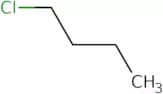
CAS:1-Chlorobutane is an antimicrobial agent that inhibits the growth of bacteria, fungi, and viruses. It binds to the receptor activity and prevents the binding of a ligand to its receptor. This can lead to autoimmune diseases such as hepatic steatosis or HIV infection. 1-Chlorobutane has been shown to inhibit the replication of HIV by preventing the expression of reverse transcriptase and protease enzymes in human serum. The mechanism of 1-chlorobutane is not well understood, but it may be due to its ability to react with chloride ions in water to form hypochlorous acid (HOCl). HOCl reacts with other molecules in solution, including ryanodine receptors and transfer reactions, which may lead to cell death.Formula:C4H9ClPurity:Min. 95%Molecular weight:92.57 g/mol1,5-Bis(4-allyldimethylammoniumphenyl)pentan-3-one, dibromide
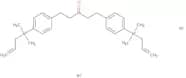
CAS:1,5-Bis(4-allyldimethylammoniumphenyl)pentan-3-one, dibromide is a reversible inhibitor of acetylcholinesterase. It has been shown to inhibit the enzyme activity in vitro and in vivo. 1,5-Bis(4-allyldimethylammoniumphenyl)pentan-3-one, dibromide has been shown to be an effective inhibitor of nicotinic acetylcholine receptors in model organisms such as Xenopus oocytes and Acetylcholine esterase activated rat pheochromocytoma cells. The molecule also inhibits the phosphorylation of pnitrophenyl phosphate by choline kinase. This inhibiting effect on choline kinase leads to a decrease in the concentration of choline available for neurotransmitter synthesis. Monoclonal antibodies against acetylcholinesterase are used to detect thisFormula:C27H38Br2N2OPurity:Min. 95%Molecular weight:566.41 g/mol3-Bromo-4-pyridinecarboxylic acid
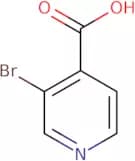
CAS:3-Bromo-4-pyridinecarboxylic acid is a naphthyridine derivative that is used in drug development. It is a crystalline solid that can be dissolved in organic solvents. 3-Bromo-4-pyridinecarboxylic acid has been shown to have antiinflammatory properties and can be used as an oxidant. 3-Bromo-4-pyridinecarboxylic acid is being investigated as a receptor subtype for inflammatory diseases, and it has also been used to study the mechanism of chronic inflammatory diseases.Formula:C6H4BrNO2Purity:Min. 95%Molecular weight:202.01 g/mol2-Chloro-4-(tributylstannyl)pyrimidine
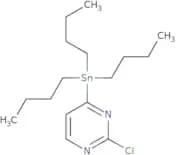
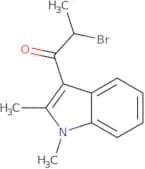
CAS:Controlled Product2-Chloro-4-(tributylstannyl)pyrimidine is a potent inhibitor of activin, an important regulator of bone morphogenetic protein. This drug has been shown to inhibit the production of phosphatase and morphogenetic protein in mouse fibroblasts, as well as inhibiting the growth of cells from patients with fibrodysplasia. 2-Chloro-4-(tributylstannyl)pyrimidine also inhibits metabolic stability and enzyme inhibitory activities.Formula:C16H29ClN2SnPurity:Min. 95%Molecular weight:403.58 g/mol2-Bromo-1-(1,2-dimethyl-1H-indol-3-yl)propan-1-one
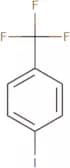
CAS:Controlled ProductPlease enquire for more information about 2-Bromo-1-(1,2-dimethyl-1H-indol-3-yl)propan-1-one including the price, delivery time and more detailed product information at the technical inquiry form on this pageFormula:C13H14BrNOPurity:Min. 95%Molecular weight:280.16 g/mol4-Iodobenzotrifluoride
CAS:4-Iodobenzotrifluoride is a ligand that reacts with aluminium to form a cross-coupling reaction. 4-Iodobenzotrifluoride is used as a reagent in the synthesis of functional groups. The reaction mechanism for this process includes nucleophilic attack of the electrophilic aluminum, followed by protonation and reductive elimination. This process also occurs in nature when dimethyl fumarate is oxidized by molecular oxygen to produce 4-iodobenzotrifluoride.Formula:C7H4F3IPurity:Min. 95%Molecular weight:272.01 g/molCyclopropanecarboxylic acid chloride
CAS:Cyclopropanecarboxylic acid chloride is an organic compound with a molecular formula of C3H6Cl2O. It belongs to the group of carboxylic acids and has a pyrazole ring, which is a potential drug target. Cyclopropanecarboxylic acid chloride has been found to be active against infectious diseases such as herpes, influenza, and Ebola. The mechanism of action for this compound is not yet fully understood but it has been shown to have an effect on growth factors and kinetic data.
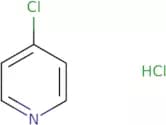
Formula:C4H5ClOPurity:Min. 95%Molecular weight:104.53 g/mol4-Chloropyridine HCL
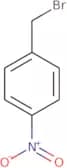
CAS:4-Chloropyridine HCL is a regulatory chemical that can be used to inhibit the population growth of microbes. It functions as a biotransforming agent and is typically used in the production of other substances, such as pharmaceuticals and plastics. 4-Chloropyridine HCL is not readily biodegradable and has been shown to be toxic to ciliates, but it may still have some use in the treatment of certain bacterial infections. The compound's molecular descriptors include a constant value of -0.8, an isomer count of 1, and a molecular weight range between 112 and 142.Formula:C5H4ClN·HClPurity:Min. 95%Molecular weight:150.01 g/mol4-Nitrobenzyl bromide
CAS:4-Nitrobenzyl bromide is a reactive compound that reacts with the hydroxyl group of phenols to form 4-nitrophenols. It has been shown to react with congestive heart failure (CHF) patients' sera and bind to receptors on the surface of red blood cells, thereby inhibiting their ability to carry oxygen. The reaction mechanism for this process is unclear, but it is thought that it may involve a nucleophilic attack on the double bond in the phenol by a hydroxyl radical. This chemical can also be used as an analytical method for determining organic acids in natural compounds. Monoclonal antibodies are used for this purpose because they are specific for certain organic acids and thus will only react with them.Formula:C7H6BrNO2Purity:Min. 95%Color and Shape:PowderMolecular weight:216.03 g/molMebeverine Hydrochloride
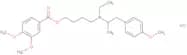
CAS:Controlled ProductMebeverine hydrochloride is a drug that is used to treat bowel disease. It inhibits the contractions of the intestinal tract, which can help relieve symptoms of constipation, diarrhea, and bloating. Mebeverine hydrochloride may also be used in combination with other drugs to treat chronic inflammatory bowel disease. The drug interacts with protocatechuic acid and crystalline cellulose in an adsorption isotherm study. This interaction has been shown to have a significant effect on the polymerase chain reaction (PCR) control analysis of bacterial DNA samples. Mebeverine hydrochloride can cause side effects such as nausea, vomiting, headache, dizziness, or dry mouth. These side effects are more likely when taken with methyl ethyl alcohol or mebeverine. These side effects are also more likely in patients who have liver dysfunction or have a history of an allergic reaction to this drug.Formula:C25H36ClNO5Purity:Min. 95%Color and Shape:White PowderMolecular weight:466.01 g/mol