Organic Halides
Subcategories of "Organic Halides"
Found 20442 products of "Organic Halides"
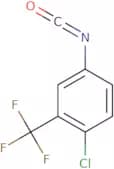
4-Chloro-3-(trifluoromethyl)phenyl isocyanate
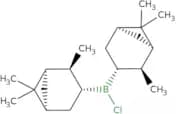
CAS:4-Chloro-3-(trifluoromethyl)phenyl isocyanate (4CTFPI) is a phenoxy that has significant antiproliferative activity and can be used to treat cancer. It can inhibit the growth of tumor cells by suppressing the production of growth factors and binding to the receptor for these factors, which leads to inhibition of cell division. 4CTFPI also inhibits tumor growth through its ability to induce apoptosis in cancer cells. 4CTFPI has been shown to have antitumor effects on sarcoma cells in vitro and in vivo with a low toxicity profile. This compound is not active against bacterial infections or fungi, but it does not show any carcinogenic effects.Formula:C8H3ClF3NOPurity:Min. 95%Color and Shape:PowderMolecular weight:221.56 g/mol(-)-B-Chlorodiisopinocampheylborane, 60% in Hexane, ca. 1.7mol/L
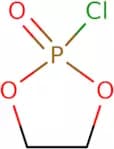
CAS:(-)-B-Chlorodiisopinocampheylborane is a carbonyl group that can be used for asymmetric synthesis. It was synthesized from the reaction of chlorodiisopinocampheylborane with butyllithium and allyl bromide, followed by aqueous workup. The enantiomers were separated through thin layer chromatography on silica gel plates with hexane as the eluent. The resolution of racemic latanoprost lactol was achieved in the same manner. (-)-B-Chlorodiisopinocampheylborane is also a diketone that can be prepared from para-chloroacetophenone and sodium hydroxide in ethanol. This diketone undergoes an intramolecular cyclization to produce noradrenaline (norepinephrine) and hydrochloric acid, which can then be converted into dioxolanes or other products.Formula:C20H34BClPurity:Min. 95%Color and Shape:Clear LiquidMolecular weight:320.75 g/mol2-Chloro-1,3,2-dioxaphospholane-2-oxide
CAS:2-Chloro-1,3,2-dioxaphospholane-2-oxide is a reactive compound that has inhibitory properties. It is used in the synthesis of biocompatible polymers and can be used as a phase transition temperature regulator. This molecule has been studied using FTIR spectroscopy and in vitro assays. It has also been shown to react with fatty acids to form a molecule with low energy. 2-Chloro-1,3,2-dioxaphospholane-2-oxide reacts with hydrogen chloride to form benzyl groups, which may be due to its nucleophilic attack on the chlorine atom. 2CPDO is an organic compound that is part of the molecule class known as phospholanes.Formula:C2H4ClO3PPurity:Min. 95%Molecular weight:142.48 g/mol2,5-Dichloro-4-methoxybenzoic acid
CAS:2,5-Dichloro-4-methoxybenzoic acid is a synthetic herbicide that inhibits the enzyme 5-enolpyruvylshikimate-3-phosphate synthase (EPSPS). This enzyme is necessary for the synthesis of aromatic amino acids. 2,5-Dichloro-4-methoxybenzoic acid is used as a selective herbicide in plants grown in vitro to eliminate weeds. It is also used to control populations of wild plants and grasses. 2,5-Dichloro-4-methoxybenzoic acid has been shown to inhibit the growth of glyphosate resistant weed species by inhibiting EPSPS activity.Purity:Min. 95%3-Methyl-2-phenylmorpholine hydrochloride
CAS:Controlled Product3-Methyl-2-phenylmorpholine hydrochloride (3MPH) is a phenmetrazine derivative that has been used in animal studies to study the effects of plant metabolism on sensor and analytical methods. 3MPH has shown toxicity in rats, as well as some physiological effects such as increased heart rate, ataxia, and sedation. This compound is also a pharmacological agent that can be used for chromatographic analysis. 3MPH is metabolized by the liver into dopamine which can cause renal cell cancer in mice. A biological sample is required for this compound.Formula:C11H15NOPurity:Min. 95%Molecular weight:177.24 g/mol4-Chlorobutyric acid
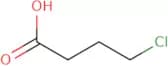
CAS:4-Chlorobutyric acid is a fatty acid with the chemical formula CH3ClC(O)CH2CO2H. It can be found in animal fats, vegetable oils, and butter. 4-Chlorobutyric acid has been shown to inhibit the growth of PC12 cells by hydrogen bonding to the cell membrane. This inhibition results in an increase in sodium hydroxide solution activity, which leads to increased production of gamma-aminobutyric acid. The butyrolactone that is produced inhibits nerve function and has been shown to have biological treatment potential for hydrochloric acid and cell culture models.
Formula:C4H7ClO2Purity:Min. 95%Color and Shape:Clear LiquidMolecular weight:122.55 g/molDichloro(1,5-cyclooctadiene)palladium(II)
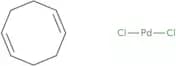
CAS:Controlled ProductDichloro(1,5-cyclooctadiene)palladium(II) is a stable metal complex in which the chlorine atom is coordinated to two benzyl groups and one palladium atom. The chloride ion is coordinated to the palladium atom through a strong coordinate bond. The chloride ion is also coordinated to the two benzyl groups by weaker coordinate bonds. In the presence of sodium carbonate, hydrogen chloride and nitrogen gas, dichloro(1,5-cyclooctadiene)palladium(II) reacts with hydrogen chloride to form stable complexes that are soluble in water. These complexes can be used as catalysts for organic reactions because they are able to transfer hydrogen atoms between molecules without breaking covalent bonds. Dichloro(1,5-cyclooctadiene)palladium(II) has been shown to have antibacterial activity against Staphylococcus aureus and Pseudomonas aeruginosaFormula:C8H12Cl2PdPurity:Min. 98%Molecular weight:285.51 g/molDichloroacetyl chloride
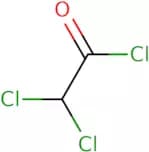
CAS:Dichloroacetyl chloride is a reactive chlorine compound that is used in the synthesis of pharmaceuticals, dyes, and pesticides. It reacts with hydrochloric acid to produce hydrochloric acid and dichloroacetic acid. Dichloroacetyl chloride can react with zirconium oxide to produce chlorides and zirconates. This reaction can be conducted at room temperature. The reaction mechanism for this reaction is not well understood; however, it has been shown that the hydroxyl group on the dichloroacetyl chloride molecule plays a significant role in this process. The phase transition temperature of dichloroacetyl chloride is -60°C. This compound has physiological activities such as reducing inflammation and fighting autoimmune diseases.Formula:C2HCl3OPurity:Min. 95%Molecular weight:147.39 g/molR-(-)-Methamphetamine hydrochloride
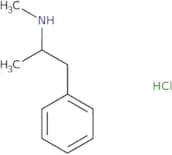
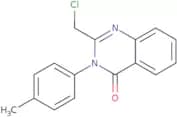
CAS:Controlled ProductPlease enquire for more information about R-(-)-Methamphetamine hydrochloride including the price, delivery time and more detailed product information at the technical inquiry form on this pageFormula:C10H15N•HClPurity:Min. 95%Color and Shape:PowderMolecular weight:185.69 g/mol2-(Chloromethyl)-3-(4-methylphenyl)quinazolin-4(3H)-one
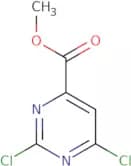
CAS:Controlled ProductPlease enquire for more information about 2-(Chloromethyl)-3-(4-methylphenyl)quinazolin-4(3H)-one including the price, delivery time and more detailed product information at the technical inquiry form on this pageFormula:C16H13ClN2OPurity:Min. 95%Molecular weight:284.74 g/molMethyl 2,4-dichloropyrimidine-6-carboxylate
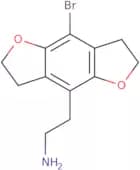
CAS:Please enquire for more information about Methyl 2,4-dichloropyrimidine-6-carboxylate including the price, delivery time and more detailed product information at the technical inquiry form on this pageFormula:C6H4Cl2N2O2Purity:Min. 95%Color and Shape:Off-White To Yellow SolidMolecular weight:207.01 g/molDesmethyl-8-bromo dragonfly hydrochloride
CAS:Controlled ProductDesmethyl-8-bromo dragonfly hydrochloride is a recreational drug that is a benzofuran derivative. It acts as a serotonin receptor agonist, with high potency for 5HT1A receptors and with an affinity for histamine H1 receptors. Desmethyl-8-bromo dragonfly hydrochloride has been shown to be addictive in humans, and the behavioral effects of this drug include increased motor activity and decreased anxiety.Formula:C12H15BrClNO2Purity:Min. 95%Molecular weight:320.61 g/mol8-Chloro-6-(2-fluorophenyl)-1-methyl-4H-imidazo[1,5-a][1,4]benzodiazepine 2,5-dioxidemidazolam 2,5-dioxide
CAS:Controlled ProductPlease enquire for more information about 8-Chloro-6-(2-fluorophenyl)-1-methyl-4H-imidazo[1,5-a][1,4]benzodiazepine 2,5-dioxidemidazolam 2,5-dioxide including the price, delivery time and more detailed product information at the technical inquiry form on this pageFormula:C18H13ClFN3O2Purity:Min. 95%Molecular weight:357.77 g/mol4-Bromoaniline
CAS:4-Bromoaniline is a chemical compound that contains two nitrogen atoms, four carbon atoms, and one bromine atom. 4-Bromoaniline is used in the preparation of pharmaceuticals and has been shown to inhibit the activities of enzymes such as urease and aminopeptidase. The compound has also been shown to be effective against cervical cancer cells. 4-Bromoaniline can be synthesized by reacting anhydrous sodium with diazonium salt in the presence of hydrogen gas, followed by hydrolysis with hydrochloric acid. This process yields isolated yields of 4-bromoaniline.
Formula:C6H6BrNPurity:Min. 95%Molecular weight:172.02 g/molNonafluoro-1-butanesulfonic Acid
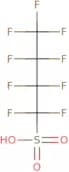
CAS:Nonafluoro-1-butanesulfonic acid (NBS) is a sulfonic acid that is used in the synthesis of sodium salts. NBS has been shown to be toxic to cultured human immunoglobulin cells, with an IC50 of 0.5 mM. It also inhibits the growth of 3T3-L1 preadipocytes and can cause weight gain in animal models. However, NBS has been found to be non-toxic to mice, rats and monkeys after 28 days of continuous dosing with up to 1 g/kg/day. This compound also has been found to have no significant interactions with drugs or other chemicals at concentrations up to 10 times higher than therapeutic doses. A validated analytical method for determining the concentration of NBS in water samples has been developed using liquid chromatography coupled with tandem mass spectrometry (LC/MS/MS).Formula:C4HF9O3SPurity:Min. 95%Color and Shape:Colourless To Pale Yellow LiquidMolecular weight:300.1 g/mol1,3-Distearoyl-2-chloropropanediol-d5
CAS:Please enquire for more information about 1,3-Distearoyl-2-chloropropanediol-d5 including the price, delivery time and more detailed product information at the technical inquiry form on this pageFormula:C39H70D5CIO4Purity:Min. 95%Molecular weight:751.95 g/mol4-Trifluoromethylbenzene sulfonyl chloride
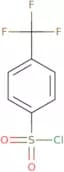
CAS:4-Trifluoromethylbenzene sulfonyl chloride (TFB) is a functional group that is used as a ligand in some chemical reactions. TFB has been shown to be fluorescent, and can be used as a cancer cell marker. It also inhibits the growth of cancer cells by binding to their surface and inhibiting protein synthesis. 4-Trifluoromethylbenzene sulfonyl chloride can be synthesized by reacting ethylene with salicylic acid, followed by the reaction of the resulting ester with chloroform. This process yields TFB and chloride ions, which are then neutralized with sodium hydroxide to yield TFB sulfonate salt.Formula:C7H4ClF3O2SPurity:Min. 95%Color and Shape:Colourless Or White To Light (Or Pale) Yellow To Brown SolidMolecular weight:244.62 g/mol1-Bromo-3-ethylbenzene
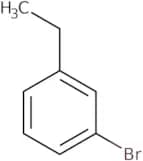
CAS:1-Bromo-3-ethylbenzene (1BEB) is a trifluoroacetic acid that is used as a reagent in the analysis of urine samples. It reacts with glutathione to form a fluorescent product, which can be detected by fluorescence spectroscopy. 1BEB reacts with methyl groups in the sample to produce an intermediate compound that can be measured by liquid chromatography-mass spectrometry (LC/MS). The reaction time for this process depends on the temperature and other conditions such as pH. LC/MS has been shown to be more accurate than kinetic measurements for the determination of 1BEB concentrations in urine because it takes into account the chemical reactions that take place during the analysis. In addition, methylbenzenes are also formed during this process, which can be analysed using gas chromatography-mass spectrometry (GC/MS). GC/MS has been shown to be more accurate than LC/MS methods for evaluating
Formula:C8H9BrPurity:Min. 95%Molecular weight:185.06 g/molBis(perfluorohexyl)phosphinic acid sodium salt
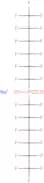
CAS:Please enquire for more information about Bis(perfluorohexyl)phosphinic acid sodium salt including the price, delivery time and more detailed product information at the technical inquiry form on this pageFormula:C12F26NaO2PPurity:Min. 95%Molecular weight:724.05 g/mol2-Bromo-6-chloropyridine
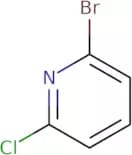
CAS:2-Bromo-6-chloropyridine is a synthetic, nucleophilic bidentate ligand that is used in the synthesis of vismodegib. It inhibits the growth of cancer cells by inhibiting a pathway that regulates cell division and differentiation. 2-Bromo-6-chloropyridine can be used as a cross-coupling agent for the synthesis of other chemicals. This chemical has pharmacokinetic properties and pharmacokinetic properties and can inhibit chloride channels, which may have an inhibitory effect on cancer cells. 2-Bromo-6-chloropyridine is also an effective inhibitor of nucleophilic substitutions, which are involved in many biological processes, such as DNA replication and protein synthesis.Formula:C5H3BrClNPurity:Min. 95%Molecular weight:192.44 g/mol



![8-Chloro-6-(2-fluorophenyl)-1-methyl-4H-imidazo[1,5-a][1,4]benzodiazepine 2,5-dioxidemidazolam 2,5…](/_next/image/?url=https%3A%2Fstatic.cymitquimica.com%2Fproducts%2F3D%2Fthumb-webp%2FFC20137.webp&w=3840&q=75)