Organic Halides
Subcategories of "Organic Halides"
Found 20442 products of "Organic Halides"
2-Bromopropionyl chloride
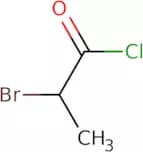
CAS:2-Bromopropionyl chloride is an organic compound that contains a hydroxyl group and a bromine atom, which are attached to the same carbon atom. It is used as a synthetic intermediate in the ring-opening polymerization of ethylene oxide. 2-Bromopropionyl chloride has been shown to be active against tumour cell lines, but not normal cells. The mechanism of action is thought to be due to its ability to coordinate with amines, which may lead to inhibition of amino acid synthesis. 2-Bromopropionyl chloride can also be used as a fluorescence probe for fatty acids, which may be useful for biological studies or clinical response.Formula:C3H4BrClOPurity:Min. 95%Color and Shape:Clear LiquidMolecular weight:171.42 g/mol2,2-Difluoroethyl methyl ether
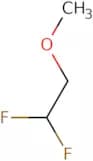
CAS:2,2-Difluoroethyl methyl ether (DEFME) is a nonpolar, hydrophobic compound that can be used as an alternative to isopentane. Radiative data show that DEFME has a higher thermal stability than isopentane, which makes it more suitable for use in high-temperature applications. DEFME has been shown to have synergistic effects with chlorine and amines in the presence of radiation. Furthermore, DEFME can be used to remove chlorinated organic compounds from contaminated water and soil. The chemical properties of DEFME are also ideal for use in polyolefin production and other polymerization processes. The chemical structure of DEFME is similar to that of methylamine and amines, which make it useful as an actuation gas in aerosol cans and other pressurized containers. The atmospheric lifetime of DEFME is long enough that it does not accumulate in the environment or cause environmental pollution when released into the atmosphere.Formula:C3H6F2OPurity:Min. 95%Molecular weight:96.08 g/mol7-Fluoro-imidazo[1,2-a]pyridine
CAS:Please enquire for more information about 7-Fluoro-imidazo[1,2-a]pyridine including the price, delivery time and more detailed product information at the technical inquiry form on this page
Formula:C7H5FN2Purity:95%NmrColor and Shape:SolidMolecular weight:136.13 g/molMART-1 (26-35) (human) trifluoroacetate salt
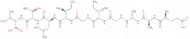
CAS:Native Melan-A (26-35) decapeptide derives from the melanocyte lineage-specific protein Melan-A/MART-1, which is expressed in almost 75-100% of primary and metastatic melanomas. The region 26-35 of Melan-A protein acts as an antigenic peptide that is recognized by CD8+ tumor-reactive cytolytic T lymphocytes (CTLs) for designing antigen-specific cancer vaccines1. It has been shown that CD8+ Melan-A-specific CTLs isolated from melanoma patients efficiently lyse the Melan-A-expressing HLA-A*0201+ melanoma cell line. However, CTLs preferentially recognize the Melan-A (26-35) peptide as compared with the Melan-A (27-35) peptide. Moreover, the Melan-A (26-35) A27L analog (ELAGIGILTV) has a higher binding affinity to HLA-A*0201 than the native Melan-A (26-35) peptide (EAAGIGILTV), and consequently displays more potent antigenicity and immunogenicity. It has been reported that the concentration of Melan-A (26-35) A27L analog required to obtain 50% of maximal antigenic activity (EC50) is 0.01nM, whereas that of the native Melan-A (26-35) peptide is 0.25nM1. Therefore, the relative activity of Melan-A (26-35) A27L analog is 25 fold higher than that of the native Melan-A (26-35) peptide. Furthermore, functional competition assay has shown that the concentration of Melan-A (26-35) A27L analog required to achieve 50% inhibition (IC50) of tumor lysis is 2nM, which is 10 fold lower than that of the native Melan-A (26-35) peptide. Regarding peptide stability in human serum, the half-lifes (t1/2) of the native Melan-A (26-35) peptide and the A27L analog are quite similar (45 and 40min, respectively) as measured by HPLC-ESI-MS, but much higher than that of the Melan-A (27-35) nonapeptide (5min).Formula:C42H74N10O14Purity:Min. 95%Molecular weight:943.1 g/mol4,5-Dichloro-2-nitroaniline
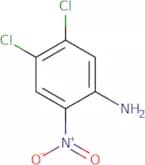
CAS:4,5-Dichloro-2-nitroaniline is a chemical compound that has been shown to be an uncoupler of oxidative phosphorylation in ciliates. It is experimentally shown that the reaction yield for 4,5-Dichloro-2-nitroaniline is much higher than that of the corresponding methylbenzene. The two isomers are not detected in the gaseous phase, but only as products of thermal decomposition at high temperatures. Linear regression analysis and predictive models were used to evaluate the transfer and population growth rates at different temperatures. Narcosis was observed in rats exposed to 4,5-Dichloro-2-nitroaniline at concentrations greater than 0.1 ppm (0.1 mg/L).
Formula:C6H4Cl2N2O2Purity:Min. 95%Molecular weight:207.01 g/molD-2,4-Dichlorophenylalanine
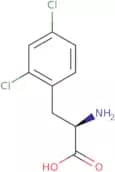
CAS:Please enquire for more information about D-2,4-Dichlorophenylalanine including the price, delivery time and more detailed product information at the technical inquiry form on this pageFormula:C9H9NO2Cl2Purity:95%NmrMolecular weight:234.08 g/mol(S)-1-N-Boc-Propane-1,2-diamine hydrochloride
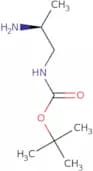
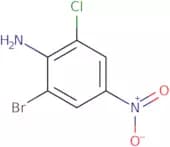
CAS:Please enquire for more information about (S)-1-N-Boc-Propane-1,2-diamine hydrochloride including the price, delivery time and more detailed product information at the technical inquiry form on this pageFormula:C8H19ClN2O2Purity:Min. 95%Molecular weight:210.7 g/mol2-Chloro-4-nitro-6-bromoaniline
CAS:2-Chloro-4-nitro-6-bromoaniline is a dispersive, linear range, ammonolysis and chloride free oxidant for wastewater treatment. This compound is effective at removing organic pollutants from wastewater and has been shown to be both environmentally safe and cost effective. 2-Chloro-4-nitro-6-bromoaniline is also used as a polymerization initiator in the production of polyester resins. It can be manufactured by recycling anilines by reacting them with bromine in the presence of an acid catalyst. 2CNBBA is used as a hydrogen bond acceptor in microextraction of chlorinated compounds from water samples.Formula:C6H4BrClN2O2Purity:Min. 95%Molecular weight:251.46 g/molO-tert-Butyl-D-serine methyl ester hydrochloride
CAS:Please enquire for more information about O-tert-Butyl-D-serine methyl ester hydrochloride including the price, delivery time and more detailed product information at the technical inquiry form on this pageFormula:C8H17NO3·HClPurity:Min. 95%Molecular weight:211.69 g/mol3,4-Diaminobenzotrifluoride
CAS:3,4-Diaminobenzotrifluoride is a photophysical agent that emits light of a specific wavelength when irradiated with ultraviolet light. It has been shown to inhibit the growth of human cervical carcinoma cells in vitro and to cause apoptosis in these cells. 3,4-Diaminobenzotrifluoride also inhibits the proliferation of human liver and lung cancer cells in vitro. The mechanism by which this agent causes cell death is unknown. 3,4-Diaminobenzotrifluoride is an acid catalyst and stabilizes the chloride ion. This agent may inhibit DNA synthesis or affect proteins that are involved in signal transduction pathways for cell proliferation.Formula:C7H7F3N2Purity:Min. 95%Color and Shape:PowderMolecular weight:176.14 g/molDichloro(1,1-bis(diphenylphosphino)ferrocene)palladium(II)acetoneadduct
CAS:Controlled ProductPlease enquire for more information about Dichloro(1,1-bis(diphenylphosphino)ferrocene)palladium(II)acetoneadduct including the price, delivery time and more detailed product information at the technical inquiry form on this page
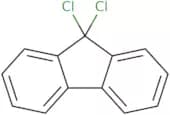
Formula:C37H34Cl2FeOP2PdPurity:Min. 95%Molecular weight:789.78 g/mol9,9-Dichlorofluorene
CAS:9,9-Dichlorofluorene is a bifluorenylidene that reacts with hydrochloric acid to form the trifluoroacetate anion. It is nucleophilic and can be used in organic synthesis to form carbon-fluorine bonds or chloroformates. 9,9-Dichlorofluorene also reacts with chloride ions to form the chloride anion. This reaction yields a high yield and has been used to synthesize other chemicals, including thioacetals and dimethylformamide. 9,9-Dichlorofluorene reacts with protonated nucleophiles in DMF and forms thioacetals following deprotection by hydrochloric acid. The reaction yield of this process is high and it has been extensively studied by NMR spectroscopy.Formula:C13H8Cl2Purity:Min. 95%Color and Shape:PowderMolecular weight:235.11 g/mol2-Chloro-1-[4-(4-Fluorophenyl)-1-Piperazinyl]Ethanone
CAS:Controlled ProductPlease enquire for more information about 2-Chloro-1-[4-(4-Fluorophenyl)-1-Piperazinyl]Ethanone including the price, delivery time and more detailed product information at the technical inquiry form on this page
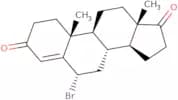
Formula:C12H14ClFN2OPurity:Min. 95%Molecular weight:256.7 g/mol6a-Bromo androstenedione
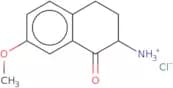
CAS:Controlled Product6a-Bromo androstenedione is a nonsteroidal, non-aromatizable, competitive inhibitor of aromatase. It binds to the active site of the enzyme and blocks the conversion of testosterone to estradiol. 6a-Bromo androstenedione has been shown to inhibit aromatase activity in vitro at an IC50 of about 5 nM. The affinity for the enzyme is about 10 times higher than that for aminoglutethimide, which is another competitive inhibitor of aromatase. 6a-Bromo androstenedione has also been shown to have inhibitory activity against estrogen synthetase in rats.Formula:C19H25BrO2Purity:Min. 95%Molecular weight:365.3 g/mol2-Amino-3,4-dihydro-7-methoxy-2H-1-naphthalenone, hydrochloride
CAS:Controlled ProductPlease enquire for more information about 2-Amino-3,4-dihydro-7-methoxy-2H-1-naphthalenone, hydrochloride including the price, delivery time and more detailed product information at the technical inquiry form on this pageFormula:C11H14ClNO2Purity:Min. 95%Molecular weight:227.69 g/molMethyl 6-chloro-2-pyridinecarboxylate
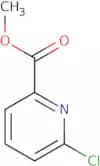
CAS:Methyl 6-chloro-2-pyridinecarboxylate is a reactive, organic compound that belongs to the class of monomers. It is a white crystalline solid with a melting point of approximately 130 degrees Celsius. This chemical can be synthesized by reacting 2-chlorobenzothiazole with sodium carbonate in water at temperatures between 100 and 140 degrees Celsius. The reaction yields methyl 6-chloro-2-pyridinecarboxylate as well as chloride and picolinic acid as side products. This compound has been shown to have neurotoxic effects when administered to rats at high doses.Formula:C7H6ClNO2Purity:Min. 95%Molecular weight:171.58 g/mol[2-(1-Isobutyl-1H-benzimidazol-2-yl)ethyl]amine dihydrochloride
CAS:Controlled ProductPlease enquire for more information about [2-(1-Isobutyl-1H-benzimidazol-2-yl)ethyl]amine dihydrochloride including the price, delivery time and more detailed product information at the technical inquiry form on this pageFormula:C13H19N3Purity:Min. 95%Molecular weight:217.31 g/mol(2S,6S)-2-Amino-2-(2-chlorophenyl)-6-hydroxycyclohexan-1-one HCl
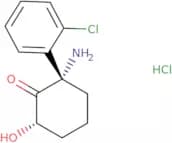
CAS:Controlled ProductPlease enquire for more information about (2S,6S)-2-Amino-2-(2-chlorophenyl)-6-hydroxycyclohexan-1-one HCl including the price, delivery time and more detailed product information at the technical inquiry form on this pageFormula:C12H15CI2NO2Purity:Min. 95%Color and Shape:PowderMolecular weight:471.07 g/molFluorescent Brightener 251
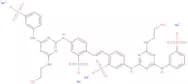
CAS:Fluorescent Brightener 251 is a quaternary ammonium salt that is used as a fluorescent whitening agent. It has been shown to be safe for use with human keratin and can be identified by its ultraviolet-visible spectra. This compound is a polybasic, anionic compound that is neutralized with a diluent and then chloride. The radiation emitted by the compound triggers the emission of visible light, which is what makes it fluorescent. Fluorescent Brightener 251 emits radiation in three wavelengths: 280 nm, 350 nm, and 420 nm. The evaporation rate of this compound depends on the counterions present in the solution. Fluorescent Brightener 251 undergoes a stepwise reaction with reactive compounds.Formula:C36H36N12O14S4•Na4Purity:Min. 95%Color and Shape:PowderMolecular weight:1,080.97 g/mol3,5-Dichloroaniline
CAS:3,5-Dichloroaniline is an organic compound that exists in two forms. The form that is of most interest to chemists is the para form, which is also called 3,5-dichloro-4-nitroaniline. It has been shown to be an inhibitor of the P450 enzyme system and can be used as a probe for this enzyme activity. 3,5-Dichloroaniline inhibits the activity of bacterial enzymes such as urease, nitroreductase, and cytochrome C reductase. This compound also inhibits the reaction between hydrochloric acid and ammonia to produce ammonium chloride and water. Solubility data for this compound have been obtained by a variety of methods including in vitro studies and experiments on Sprague-Dawley rats.Formula:C6H5Cl2NPurity:Min. 95%Molecular weight:162.02 g/mol

![7-Fluoro-imidazo[1,2-a]pyridine](/_next/image/?url=https%3A%2Fstatic.cymitquimica.com%2Fproducts%2F3D%2Fthumb-webp%2FFF165964.webp&w=3840&q=75)


![2-Chloro-1-[4-(4-Fluorophenyl)-1-Piperazinyl]Ethanone](/_next/image/?url=https%3A%2Fstatic.cymitquimica.com%2Fproducts%2F3D%2Fthumb-webp%2FFC93551.webp&w=3840&q=75)
![[2-(1-Isobutyl-1H-benzimidazol-2-yl)ethyl]amine dihydrochloride](/_next/image/?url=https%3A%2Fstatic.cymitquimica.com%2Fproducts%2F3D%2Fthumb-webp%2FFI135795.webp&w=3840&q=75)