Organic Halides
Subcategories of "Organic Halides"
Found 20442 products of "Organic Halides"
9,9-Dichlorofluorene
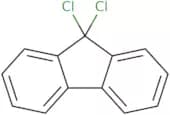
CAS:9,9-Dichlorofluorene is a bifluorenylidene that reacts with hydrochloric acid to form the trifluoroacetate anion. It is nucleophilic and can be used in organic synthesis to form carbon-fluorine bonds or chloroformates. 9,9-Dichlorofluorene also reacts with chloride ions to form the chloride anion. This reaction yields a high yield and has been used to synthesize other chemicals, including thioacetals and dimethylformamide. 9,9-Dichlorofluorene reacts with protonated nucleophiles in DMF and forms thioacetals following deprotection by hydrochloric acid. The reaction yield of this process is high and it has been extensively studied by NMR spectroscopy.Formula:C13H8Cl2Purity:Min. 95%Color and Shape:PowderMolecular weight:235.11 g/molDesmethyl-8-bromo dragonfly hydrochloride
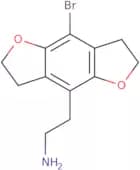
CAS:Controlled ProductDesmethyl-8-bromo dragonfly hydrochloride is a recreational drug that is a benzofuran derivative. It acts as a serotonin receptor agonist, with high potency for 5HT1A receptors and with an affinity for histamine H1 receptors. Desmethyl-8-bromo dragonfly hydrochloride has been shown to be addictive in humans, and the behavioral effects of this drug include increased motor activity and decreased anxiety.Formula:C12H15BrClNO2Purity:Min. 95%Molecular weight:320.61 g/mol2-Iodo-5-methylpyrimidine
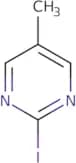
CAS:Please enquire for more information about 2-Iodo-5-methylpyrimidine including the price, delivery time and more detailed product information at the technical inquiry form on this pageFormula:C5H5IN2Purity:Min. 95%Molecular weight:220.01 g/molCyclohexamine hydrochloride
CAS:Controlled ProductCyclohexamine hydrochloride is a potent non-selective muscarinic antagonist that has been used as an anesthetic for rodents for the past three decades. It binds to the muscarinic acetylcholine receptors and blocks the effects of acetylcholine, which are involved in regulating heart rate, blood pressure, and other cardiovascular functions. It is also used to treat Alzheimer's disease by blocking acetylcholine from binding to its receptor. Cyclohexamine hydrochloride can cause psychotic symptoms such as hallucinations and delusions when taken in high doses. It may also be toxic to the cerebral cortex when administered at high doses.Formula:C14H22ClNPurity:Min. 95%Molecular weight:239.78 g/mol4-(Trifluoromethylsulfonyl)Benzonitrile
CAS:4-(Trifluoromethylsulfonyl)benzonitrile is a coupling agent that is used to catalyze cross-coupling reactions between organoboranes and organic electrophiles. It is compatible with a wide range of functional groups, including phosphine and phosphite. 4-(Trifluoromethylsulfonyl)benzonitrile has been shown to be an excellent catalyst for the Suzuki and Miyaura reactions, as well as for arylation reactions. 4-(Trifluoromethylsulfonyl)benzonitrile is not active in the presence of water or oxygen and should be stored in a dry place at room temperature.Formula:C8H4F3NO2SPurity:Min. 95%Molecular weight:235.18 g/mola,a-Diphenyl-2-pyridinemethanol hydrochloride
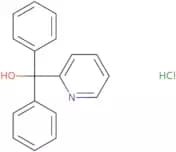
CAS:Controlled ProductPlease enquire for more information about a,a-Diphenyl-2-pyridinemethanol hydrochloride including the price, delivery time and more detailed product information at the technical inquiry form on this pageFormula:C18H16ClNOPurity:Min. 95%Molecular weight:297.78 g/mol(S)-Albuterol hydrochloride
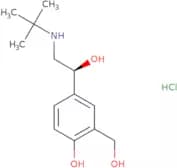
CAS:Controlled ProductPlease enquire for more information about (S)-Albuterol hydrochloride including the price, delivery time and more detailed product information at the technical inquiry form on this page
Formula:C13H22ClNO3Purity:Min. 95%Color and Shape:White PowderMolecular weight:275.77 g/molBenzo[k]fluoranthene
CAS:Controlled ProductBenzo[k]fluoranthene is a polycyclic aromatic hydrocarbon that is used as an optical sensor for transcriptional regulation. It has been shown to activate the transcription factor NF-κB, which induces expression of inflammatory genes in cells. Benzo[k]fluoranthene can be used to measure changes in gene expression and protein levels. The antibody response to benzo[k]fluoranthene was studied using a kinetic data analysis method. Benzo[k]fluoranthene has also been shown to induce genotoxic effects in liver cells and human hepatoma cell line HepG2. This compound also causes light emission when it is excited with light, which can be measured with synchronous fluorescence.Formula:C20H12Purity:Min. 95%Color and Shape:SolidMolecular weight:252.31 g/molO-tert-Butyl-D-serine methyl ester hydrochloride
CAS:Please enquire for more information about O-tert-Butyl-D-serine methyl ester hydrochloride including the price, delivery time and more detailed product information at the technical inquiry form on this pageFormula:C8H17NO3·HClPurity:Min. 95%Molecular weight:211.69 g/mol2-Bromo-5-methylbenzoic acid
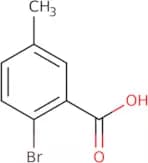
CAS:2-Bromo-5-methylbenzoic acid is an organic compound that can be synthesized in the laboratory. It is used as a starting material for synthesis of various quinazolinones, which are ionic liquid catalysts. 2-Bromo-5-methylbenzoic acid has also been shown to inhibit ethylene production from glycols and to act as a potential catalyst for the conversion of trifluoromethane into ionic liquids. The synthesis of 2-bromo-5-methylbenzoic acid is not well documented, but it can be made by reacting methyl bromide with benzaldehyde or acetone in the presence of sodium hydroxide or potassium hydroxide. This reaction produces bromobenzene, which reacts with phosphorus pentachloride to produce 2-bromo-5-methylbenzoic acid.
Formula:C8H7BrO2Purity:Min. 95%Color and Shape:PowderMolecular weight:215.04 g/mol(S)-1-N-Boc-Propane-1,2-diamine hydrochloride
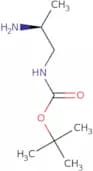
CAS:Please enquire for more information about (S)-1-N-Boc-Propane-1,2-diamine hydrochloride including the price, delivery time and more detailed product information at the technical inquiry form on this pageFormula:C8H19ClN2O2Purity:Min. 95%Molecular weight:210.7 g/molN-Methyl-1-(3,4,5-trimethoxyphenyl)methanamine hydrochloride
CAS:Controlled ProductPlease enquire for more information about N-Methyl-1-(3,4,5-trimethoxyphenyl)methanamine hydrochloride including the price, delivery time and more detailed product information at the technical inquiry form on this pageFormula:C11H17NO3Purity:Min. 95%Molecular weight:211.26 g/mol2-Chloro-4,6-dimethoxypyrimidine
CAS:2-Chloro-4,6-dimethoxypyrimidine is a synthetic compound that is a triazolopyrimidine derivative. It has been shown to have significant antifungal activity against cryptococcus neoformans in toxicity studies. 2-Chloro-4,6-dimethoxypyrimidine is an amine that can be used as a fungicide or pesticide due to its toxicity and effectiveness against fungi. 2-Chloro-4,6-dimethoxypyrimidine has a molecular weight of 196 and contains three functional groups: chlorine, hydrogen chloride, and pyridinium. This compound also has the ability to form covalent bonds with organic molecules such as chloromethyl groups on proteins.
Formula:C6H7ClN2O2Purity:Min. 95%Color and Shape:Off-White To Yellow SolidMolecular weight:174.58 g/mol2-(3,4-Dichlorophenyl)-2-oxoethylamineHydrochloride
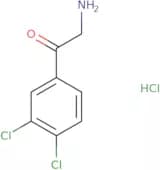
CAS:Controlled ProductPlease enquire for more information about 2-(3,4-Dichlorophenyl)-2-oxoethylamineHydrochloride including the price, delivery time and more detailed product information at the technical inquiry form on this pageFormula:C8H8Cl3NOPurity:Min. 95%Molecular weight:240.51 g/molAllylpalladium(II) chloride dimer
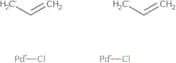
CAS:Allylpalladium(II) chloride dimer is a homogeneous catalyst that can be used for the asymmetric synthesis of organosilicon compounds. It is an allylation agent and has been shown to react with certain nitrogen-containing compounds to form a palladium nitride complex. This compound is also a good transport agent, due to its high solubility in organic solvents. Allylpalladium(II) chloride dimer has been shown to be effective in the production of cancer chemotherapeutic agents, including chlorambucil, as well as anti-inflammatory drugs such as ibuprofen. This catalyst has also been used for cross-coupling reactions with alkyl bromides and iodides. A major drawback of this catalyst is that it often leads to an isolated yield of the product, which can be improved by using a solvent or by adding water or alcohols.
Formula:C6H10Cl2Pd2Purity:95%NmrMolecular weight:365.89 g/mol1-Butyl-3-methylimidazolium bis(trifluoromethanesulfonyl)imide
CAS:1-Butyl-3-methylimidazolium bis(trifluoromethanesulfonyl)imide (BMIMTFSI) is a cationic electrolyte that is used in a variety of electrochemical applications. BMIMTFSI has been shown to be able to form hydrogen bonds with water and other hydroxyl groups. Hydrogen bonding interactions are important for the ionic conductivity of BMIMTFSI. These interactions allow the formation of an ionic solution in which the ions can conduct electricity. This property of BMIMTFSI makes it useful in electrochemical detectors, such as gas sensors and pH monitors, where it can be used to measure changes in pH or detect gases such as carbon dioxide or ammonia. The frequency shift of this material is due to its ability to undergo an acylation reaction, which is the addition of an acyl group onto a molecule. The activation energies for this process are determined by the chemical interactions betweenFormula:C10H15F6N3O4S2Purity:Min. 98 Area-%Color and Shape:Clear LiquidMolecular weight:419.37 g/mol1-(3-Fluorobenzyl)piperazine
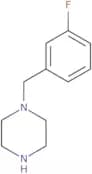
CAS:Controlled Product1-(3-Fluorobenzyl)piperazine is a potent inhibitor of annexin A1. It has been shown to inhibit the proliferation of pancreatic cancer cells and induce apoptosis in these cells by inhibiting cholinesterase activity. 1-(3-Fluorobenzyl)piperazine also inhibits tumor growth in vivo and induces apoptosis, which may be due to its ability to inhibit the mitochondrial membrane potential. The compound has also been shown to have antitumor effects in other types of cancer cells. This drug is an amine that emits acidic compounds as a result of hydrolysis.Formula:C11H15FN2Purity:Min. 95%Molecular weight:194.25 g/mol(6a,11b,16a)-21-(Acetyloxy)-9-bromo-6-fluoro-11-hydroxy-16-methyl-pregna-1,4-diene-3,20-dione
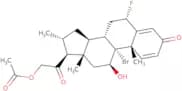
CAS:Controlled ProductPlease enquire for more information about (6a,11b,16a)-21-(Acetyloxy)-9-bromo-6-fluoro-11-hydroxy-16-methyl-pregna-1,4-diene-3,20-dione including the price, delivery time and more detailed product information at the technical inquiry form on this pageFormula:C24H30BrFO5Purity:Min. 95%Molecular weight:497.39 g/mol2,2-(Bromoethyl)thiophene
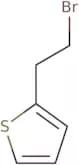
CAS:Oripavine is a naturally occurring alkaloid that can be synthesized from 2,2-bromoethane and potassium carbonate. It has been used for the treatment of Parkinson's disease. Oripavine is an intermediate in the synthesis of rotigotine, a dopamine agonist used to treat Parkinson's disease. The reaction mechanism involves the addition of bromine to 2,2-bromoethane followed by hydrochloric acid treatment to form oripavine. The reaction proceeds with the formation of hydrogen chloride and potassium bromide. The product can then be reacted with a Grignard reagent or allyl group to produce rotigotine.Formula:C6H7BrSPurity:Min. 95%Molecular weight:191.09 g/mol1,3-Thiazol-5-ylmethylamineHydrochloride
CAS:Please enquire for more information about 1,3-Thiazol-5-ylmethylamineHydrochloride including the price, delivery time and more detailed product information at the technical inquiry form on this pageFormula:C4H7ClN2SPurity:Min. 95%Molecular weight:150.63 g/mol



![Benzo[k]fluoranthene](/_next/image/?url=https%3A%2Fstatic.cymitquimica.com%2Fproducts%2F3D%2Fthumb-webp%2FFB157375.webp&w=3840&q=75)