


Organic Halides
Subcategories of "Organic Halides"
Found 20442 products of "Organic Halides"
Z-Asp(OMe)-Gln-Met-DL-Asp(OMe)-fluoromethylketone
CAS:Z-Asp(OMe)-Gln-Met-DL-Asp(OMe)-fluoromethylketone is a mitochondria-targeting compound that has been shown to have neuroprotective and anti-inflammatory properties. It binds to the ATP synthase in the mitochondrial membrane, inhibiting ATP production and causing cell death by apoptosis. ZAFMK also inhibits kinases such as protein kinase 3β (PK3β) and caspase 9, which are involved in inflammation and apoptosis. ZAFMK has been shown to be effective against various diseases such as multiple sclerosis, Alzheimer's disease, Parkinson's disease, amyotrophic lateral sclerosis, Huntington's disease, and stroke.
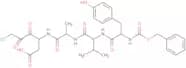
Formula:C29H40FN5O11SPurity:Min. 95%Molecular weight:685.72 g/molZ-Tyr-Val-Ala-Asp-chloromethylketone
CAS:Z-Tyr-Val-Ala-Asp-chloromethylketone is a fluorescent probe that can be used for the detection of phosphatidic acid. It is also an apoptosis inducer, which means that it promotes cell death. Z-Tyr-Val-Ala-Asp-chloromethylketone induces apoptosis by binding to the kinases and causing their activation, leading to phosphatidic acid production. This process is activated by the presence of ethylene, which binds to Z-Tyr-Val-Ala-Asp chloromethylketone and stabilizes its structure.Formula:C30H37ClN4O9Purity:Min. 95%Molecular weight:633.09 g/molAmyloid beta/A4 Protein Precursor770 (586-595) (human, mouse, rat) trifluoroacetate salt
CAS:Please enquire for more information about Amyloid beta/A4 Protein Precursor770 (586-595) (human, mouse, rat) trifluoroacetate salt including the price, delivery time and more detailed product information at the technical inquiry form on this pageFormula:C47H73N11O16SPurity:Min. 95%Molecular weight:1,080.21 g/molNeuropeptide Y (2-36) (porcine) trifluoroacetate salt
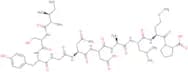
CAS:Please enquire for more information about Neuropeptide Y (2-36) (porcine) trifluoroacetate salt including the price, delivery time and more detailed product information at the technical inquiry form on this pageFormula:C181H278N54O55Purity:Min. 95%Molecular weight:4,090.47 g/molDermcidin-1L (human) trifluoroacetate salt
CAS:Please enquire for more information about Dermcidin-1L (human) trifluoroacetate salt including the price, delivery time and more detailed product information at the technical inquiry form on this pageFormula:C210H359N57O71Purity:Min. 95%Molecular weight:4,818.44 g/mol2-(Chloromethyl)-4-methoxy-3,5-dimethylpyridine hydrochloride
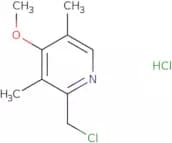
CAS:2-(Chloromethyl)-4-methoxy-3,5-dimethylpyridine hydrochloride is a benzimidazole derivative. It has a chemical stability and can be used for wastewater treatment. It is also a pump inhibitor and can be used for anhydrous sodium magnesium salts. This product is synthesized from the reaction of protonated 2-bromo-4-methoxyphenol with 2,6-dimethylpyridine in the presence of hydrochloric acid. The reaction was carried out in an asymmetric synthesis using a proton transport system. 2-(Chloromethyl)-4-methoxy-3,5-dimethylpyridine hydrochloride is soluble in water and has a pH of 1 to 3. It has been shown that this product can be used as an antioxidant and as a metal chelation agent.
Formula:C9H13Cl2NOPurity:Min. 95%Color and Shape:PowderMolecular weight:222.11 g/mol1-Dodecylpyridinium chloride
CAS:1-Dodecylpyridinium Chloride is a quaternary ammonium salt that is used as an antimicrobial agent in a variety of products, such as pharmaceuticals, cosmetics, and household products. It has been shown to be toxic to humans at doses above 0.5 mg/kg. At sublethal doses, 1-dodecylpyridinium chloride inhibits the growth of bacteria by binding to the cationic sites on their cell surfaces and preventing them from attaching to other cells or molecules in their environment. 1-Dodecylpyridinium chloride also binds to the enzyme p-nitrophenyl phosphate reductase, which is required for bacterial growth. This inhibition leads to cell death by preventing ATP production and protein synthesis.Formula:C17H30N•ClPurity:Min. 95%Molecular weight:283.88 g/molOsteostatin (human) trifluoroacetate salt
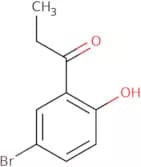
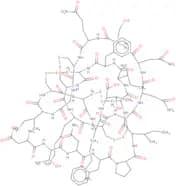
CAS:Osteostatin is a recombinant human protein that inhibits bone growth by binding to and neutralizing the effect of forskolin. Osteostatin also has an inhibitory effect on cancer cells, as it inhibits mitochondrial pathways and prevents the activation of factor receptors. Osteostatin blocks the synthesis of cAMP, which is necessary for cell proliferation in cancer cells. The inhibition of cAMP levels leads to a decrease in the production of proteins that stimulate bone growth, such as runx2.Formula:C142H228N42O58Purity:Min. 95%Molecular weight:3,451.58 g/mol5'-Bromo-2'-hydroxypropiophenone
CAS:5'-Bromo-2'-hydroxypropiophenone is a synthetic compound that inhibits the dimerization of survivin, which is a protein involved in cancer pathways. This compound has been shown to inhibit the growth of cells in culture and can be used as an inhibitor for assays. 5'-Bromo-2'-hydroxypropiophenone has also been shown to integrate into DNA, which may lead to chromosomal rearrangements and mutations. It also binds with high affinity to the family of modifications borealin, which are implicated in cellular processes such as cell differentiation and proliferation.
Formula:C9H9BrO2Purity:Min. 95%Color and Shape:SolidMolecular weight:229.07 g/mol(Des-Lys38)-M65 trifluoroacetate salt
CAS:Please enquire for more information about (Des-Lys38)-M65 trifluoroacetate salt including the price, delivery time and more detailed product information at the technical inquiry form on this pageFormula:C199H314N62O60S5Purity:Min. 95%Molecular weight:4,695.33 g/molHepcidin-1 (mouse) trifluoroacetate salt
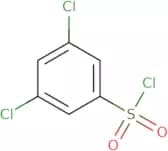
CAS:Please enquire for more information about Hepcidin-1 (mouse) trifluoroacetate salt including the price, delivery time and more detailed product information at the technical inquiry form on this pageFormula:C111H169N31O35S8Purity:Min. 95%Molecular weight:2,754.25 g/mol3,5-Dichlorobenzenesulphonyl chloride
CAS:3,5-Dichlorobenzenesulphonyl chloride (3,5-DCBS) is a halogenated aromatic compound that can be synthesized by the debromination of 3,5-dichlorobenzene with hydrobromic acid. This compound has been shown to have anticancer activity against cell lines derived from human breast cancer, prostate cancer, and other cancers. It also has potent anticancer activity against tumor cells in animals. The anticancer activity of 3,5-DCBS is due to its ability to inhibit DNA synthesis and to induce apoptosis. 3,5-DCBS may act as an anti-inflammatory agent through inhibition of prostaglandin synthesis.Formula:C6H3Cl3O2SPurity:Min. 95%Color and Shape:PowderMolecular weight:245.51 g/molProadrenomedullin (1-20) (rat) trifluoroacetate salt
CAS:Please enquire for more information about Proadrenomedullin (1-20) (rat) trifluoroacetate salt including the price, delivery time and more detailed product information at the technical inquiry form on this pageFormula:C111H177N37O28Purity:Min. 95%Molecular weight:2,477.83 g/molH-Trp(Boc)-2-chlorotrityl resin (100-200 mesh)
Please enquire for more information about H-Trp(Boc)-2-chlorotrityl resin (100-200 mesh) including the price, delivery time and more detailed product information at the technical inquiry form on this pagePurity:Min. 95%2,4-Dibromobenzyl alcohol
CAS:2,4-Dibromobenzyl alcohol is a selective inhibitor of sglt2, which is an enzyme that inactivates the incretin hormones glucagon-like peptide-1 (GLP-1) and glucose-dependent insulinotropic polypeptide (GIP). It has been shown to have a strong inhibitory effect on the activity of sglt2 in vitro. This inhibition leads to increased levels of GLP-1 and GIP, which may help improve glycemic control. 2,4-Dibromobenzyl alcohol has been shown to reduce blood glucose levels in diabetic mice to the same degree as tofogliflozin, which is marketed for diabetes treatment.
Formula:C7H6Br2OPurity:Min. 95%Molecular weight:265.93 g/mol2-Aminoindole hydrochloride
CAS:2-Aminoindole hydrochloride is a heterocyclic amine that is formed by the reaction of benzene and an aminoindole. It is a difunctional compound that can react with alcohols to form amides, carbonyl groups to form ketones, or carbamate groups to form ureas. This compound has been shown to act as an activated aromatic amine that reacts with oxygen in the atmosphere to form a variety of products, including chlorinated aromatic amines. 2-Aminoindole hydrochloride has been shown to have carcinogenic effects in rats when administered orally at high doses.
Formula:C8H9ClN2Purity:Min. 95%Color and Shape:Slightly Yellow PowderMolecular weight:168.62 g/molMet-RANTES (human) trifluoroacetate salt
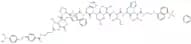
Please enquire for more information about Met-RANTES (human) trifluoroacetate salt including the price, delivery time and more detailed product information at the technical inquiry form on this pageFormula:C355H543N97O101S6Purity:Min. 95%Molecular weight:7,978.1 g/molDABCYL-gamma-Abu-Ile-His-Pro-Phe-His-Leu-Val-Ile-His-Thr-EDANS trifluoroacetate salt
CAS:Controlled ProductDABCYL-gamma-Abu-Ile-His-Pro-Phe-His-Leu-Val-Ile-His-Thr (DABCYL) is a fluorescent substrate that has been used to study the kinetics of peptide hydrolysis by proteases. It is an amino acid sequence that is present in angiotensinogen, which is a blood protein involved in regulating blood pressure. The DABCYL group on the terminal amino acid of the peptide provides a highly fluorescent molecule that can be excited at wavelengths longer than 400 nm. This fluorophore can also be used as a donor for fluorescence resonance energy transfer (FRET) with other fluorophores, such as EDANS, which has been shown to have high affinity for DABCYL. DABCYL can be used to measure enzyme activity or inhibition and has been found to be sensitive enough to detect changes due to dilutions at concentrations as low as 10 nM.Formula:C90H120N22O16SPurity:Min. 95%Molecular weight:1,798.12 g/mol[4,4'-Di-t-butyl-2,2'-bipyridine][bis[5-(t-butyl)-2-[4-(t-butyl)-2-pyridinyl-kN]phenyl-kC]iridium(III) hexafluorophosphate
CAS:Please enquire for more information about [4,4'-Di-t-butyl-2,2'-bipyridine][bis[5-(t-butyl)-2-[4-(t-butyl)-2-pyridinyl-kN]phenyl-kC]iridium(III) hexafluorophosphate including the price, delivery time and more detailed product information at the technical inquiry form on this pageFormula:C56H72F6IrN4PPurity:Min. 95%Molecular weight:1,138.38 g/mol3-Chloropropiononitrile
CAS:3-Chloropropiononitrile is an antimicrobial agent that inhibits bacterial growth by reacting with the hydroxyl group in the cytoplasmic membrane. This reaction produces hydrogen chloride and hydrochloric acid, which kills bacteria. 3-Chloropropiononitrile has been shown to be effective against a wide range of bacteria including Mycobacterium tuberculosis. It is also used as a preservative for food, cosmetics and pharmaceuticals. The mechanism of action for this drug is similar to that of other antibacterial agents such as chlorine, chloramine T, and sodium dichloroisocyanurate. 3-Chloropropiononitrile has been shown to inhibit population growth in vitro when used in concentrations between 0.1% and 1%.
Formula:C3H4ClNPurity:Min. 95%Molecular weight:89.52 g/mol









![[4,4'-Di-t-butyl-2,2'-bipyridine][bis[5-(t-butyl)-2-[4-(t-butyl)-2-pyridinyl-kN]phenyl-kC]iridium(…](/_next/image/?url=https%3A%2Fstatic.cymitquimica.com%2Fproducts%2F3D%2Fthumb-webp%2FFD159336.webp&w=3840&q=75)
