Organic Halides
Subcategories of "Organic Halides"
Found 20442 products of "Organic Halides"
2-Bromobenzo[d]thiazol-6-amine
CAS:Please enquire for more information about 2-Bromobenzo[d]thiazol-6-amine including the price, delivery time and more detailed product information at the technical inquiry form on this pageFormula:C7H5BrN2SPurity:Min. 95%Molecular weight:229.1 g/molLys-(Des-Arg9,Leu8)-Bradykinin trifluoroacetate salt
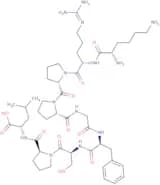
CAS:Bradykinin is a peptide that is released in response to injury and inflammation. It has two receptors, B1 and B2. Bradykinin binds to the B2 receptor which leads to vasodilation, increased vascular permeability, and bronchoconstriction. Lys-(Des-Arg9,Leu8)-Bradykinin trifluoroacetate salt H-Lys-Arg-Pro-Pro-Gly-Phe-Ser-Pro-Leu (LBP) is a synthetic analogue of bradykinin that competes with bradykinin for binding sites on the bradykinin b2 receptor. LBP also inhibits lipoxygenase activity in vitro and in animals. This drug can be used as an antagonist against bradykinin b2 receptor or as an antiplatelet agent.Formula:C47H75N13O11Purity:Min. 95%Molecular weight:998.18 g/mol2-Bromo-2'-chlorophenyl acetic acid methyl ester
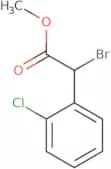
CAS:2-Bromo-2'-chlorophenyl acetic acid methyl ester is a synthetic chemical that can be used as a pharmaceutical intermediate. It is prepared by the reaction of bromine with 2-chloroacetic acid and magnesium, which yields the desired product. The catalytic effect of this chemical is due to its ability to act as a catalyst for many reactions, such as the synthesis of clopidogrel. This chemical also has an industrial application in the production of other medicines, such as aspirin.Formula:C9H8BrClO2Purity:Min. 95%Molecular weight:263.52 g/molRANTES (human) trifluoroacetate salt
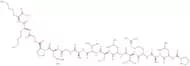
Please enquire for more information about RANTES (human) trifluoroacetate salt including the price, delivery time and more detailed product information at the technical inquiry form on this pageFormula:C350H534N96O100S5Purity:Min. 95%Molecular weight:7,846.9 g/mol1,1'-(2,2,2-Trichloroethylidene)Bis(4-Fluorobenzene)
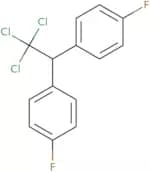
CAS:1,1'-(2,2,2-Trichloroethylidene)Bis(4-fluorobenzene) is a fluorine-containing compound that is used in analytical chemistry. It is a synthetic nucleophile that reacts with electron deficient molecules to form covalent bonds. This substance has been shown to denature proteins and inhibit the activity of enzymes such as DNA polymerase, RNA polymerase, and phosphodiesterases. 1,1'-(2,2,2-Trichloroethylidene)Bis(4-fluorobenzene) also inhibits the signal transduction pathway in Drosophila melanogaster (fruit fly). The effects of this substance on blood flow velocity were studied in an animal model system.
Formula:C14H9Cl3F2Purity:Min. 95%Molecular weight:321.58 g/molAmyloid beta/A4 Protein Precursor770 (586-595) (human, mouse, rat) trifluoroacetate salt
CAS:Please enquire for more information about Amyloid beta/A4 Protein Precursor770 (586-595) (human, mouse, rat) trifluoroacetate salt including the price, delivery time and more detailed product information at the technical inquiry form on this pageFormula:C47H73N11O16SPurity:Min. 95%Molecular weight:1,080.21 g/molNeuronostatin-19 (human, canine, porcine) trifluoroacetate salt
Please enquire for more information about Neuronostatin-19 (human, canine, porcine) trifluoroacetate salt including the price, delivery time and more detailed product information at the technical inquiry form on this page
Formula:C90H151N29O25Purity:Min. 95%Molecular weight:2,039.34 g/molPAR-1 (1-6) (mouse, rat) trifluoroacetate salt
CAS:Please enquire for more information about PAR-1 (1-6) (mouse, rat) trifluoroacetate salt including the price, delivery time and more detailed product information at the technical inquiry form on this pageFormula:C37H54N10O9Purity:Min. 95%Molecular weight:782.89 g/molPrifiniumbromide
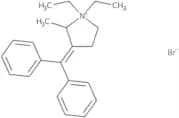
CAS:Prifiniumbromide is an analog of GABA, which is a neurotransmitter found in the brain. It has been shown to be effective in patients with diabetic neuropathy and geriatric patients with constipation. Prifiniumbromide has also been used to treat inflammatory bowel disease and bladder disorders, such as detrusor muscle dysfunction. In addition, it has been shown to increase urinary output in patients with metabolic disorders.Formula:C22H28BrNPurity:Min. 95%Molecular weight:386.37 g/molH-Ala-Ala-Pro-Val-chloromethylketone
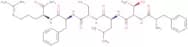
CAS:H-Ala-Ala-Pro-Val-chloromethylketone is a hydrogen peroxide prodrug that is activated by the enzyme chloromethyl ketone. This drug has been shown to be active against schistosoma and pancreatic cancer cells, as well as in activating peroxide. HAPV may also have an effect on immunity and leukocytes, which could be due to its ability to sensitize these cells to damage caused by other agents, or through the hydrolytic enzymes it generates.Formula:C17H29ClN4O4Purity:Min. 95%Molecular weight:388.89 g/mol(3S)-3-(tert-Butoxycarbonyl)amino-1-chloro-4-phenyl-2-butanone
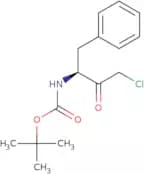
CAS:(3S)-3-(tert-Butoxycarbonyl)amino-1-chloro-4-phenyl-2-butanone is an organic compound that belongs to the class of carbonyl reductase. It is used as a catalyst for the transformation of secondary alcohols to ketones or aldehydes, including isopropyl alcohol. The reaction proceeds via an intermediate carboxylic acid. The enzyme has been found in various microorganisms, and can be purified from Bacillus megaterium and Streptomyces lividans. The enzyme’s activity can be inhibited by steric effects, metal ions, or other compounds. (3S)-3-(tert-Butoxycarbonyl)amino-1-chloro-4-phenyl-2-butanone crystallizes in two forms: one with the chiral center at the 3 position and one with it at the 4 position.Purity:Min. 95%Amyloid P Component (33-38) amide trifluoroacetate salt
CAS:Please enquire for more information about Amyloid P Component (33-38) amide trifluoroacetate salt including the price, delivery time and more detailed product information at the technical inquiry form on this pageFormula:C37H56N10O7SPurity:Min. 95%Molecular weight:784.97 g/mol4,6-Dichloro-pyridin-3-ylamine
CAS:Please enquire for more information about 4,6-Dichloro-pyridin-3-ylamine including the price, delivery time and more detailed product information at the technical inquiry form on this pageFormula:C5H4Cl2N2Purity:Min. 95%Color and Shape:PowderMolecular weight:163 g/molH-Cys-psi(CH2NH)Val-psi(CH2NH)Phe-Met-OH trifluoroacetate salt
CAS:FTI-277 is a peptidomimetic compound that inhibits HIV-1 protease. FTI-277 is an orally active, potent, and selective inhibitor of HIV-1 protease. The drug has been shown to be effective in the treatment of HIV infection in various clinical trials. FTI-277 inhibited HIV replication in activated cells and disrupted virion production by binding to the target enzyme. FTI-277 also has potential for use as a diagnostic tool for detecting the presence of HIV in body fluids.Formula:C22H38N4O3S2Purity:Min. 95%Molecular weight:470.69 g/molH-Arg-4MbetaNA hydrochloride salt
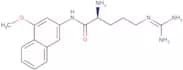
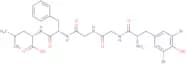
CAS:Please enquire for more information about H-Arg-4MbetaNA hydrochloride salt including the price, delivery time and more detailed product information at the technical inquiry form on this pageFormula:C17H23N5O2·xHClPurity:Min. 95%Molecular weight:365.86 g/mol(3,5-Dibromo-Tyr1)-Leu-Enkephalin
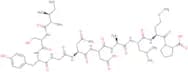
CAS:Please enquire for more information about (3,5-Dibromo-Tyr1)-Leu-Enkephalin including the price, delivery time and more detailed product information at the technical inquiry form on this pageFormula:C28H35Br2N5O7Purity:Min. 95%Molecular weight:713.42 g/mol4-Chloro-6-methoxyquinoline
CAS:4-Chloro-6-methoxyquinoline is an inhibitor of bacterial DNA gyrase. It has antibacterial activity against Gram-positive and Gram-negative bacteria, including Staphylococcus aureus, Enterococcus faecalis, and Pseudomonas aeruginosa. 4-Chloro-6-methoxyquinoline is a synthetic compound that was reinvestigated for its antibacterial activity. It has been shown to be effective in the treatment of Staphylococcal infections. The mechanism of action may involve inhibition of topoisomerase II or interference with the synthesis of DNA by binding to the enzyme bacterial DNA gyrase. Quinidine and cinchonidine are quinine derivatives that have been found to inhibit bacterial DNA gyrase. These compounds are found in the bark of Cinchona species, which includes Cinchona ledgeriana, Cinchona officinalis, and Cinchona succirubFormula:C10H8ClNOPurity:Min. 95%Molecular weight:193.63 g/molSyntide 2 trifluoroacetate salt
CAS:Syntide 2 is a diacylglycerol, which has been found to have a number of biochemical properties. It is an activator of protein kinase C and has been shown to be reactive in vitro assays. Syntide 2 has also been found to activate the light chain kinase in plant physiology. This compound has also been shown to promote neuronal death and may have a role in transcriptional regulation. Syntide 2 is used as a model system for studying the physiological function of α subunit-containing proteins.Formula:C68H122N20O18Purity:Min. 95%Molecular weight:1,507.82 g/molBenzyltributylammonium chloride
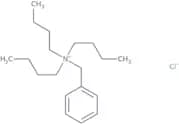
CAS:Benzyltributylammonium chloride is a quaternary ammonium salt that is used as a surfactant. It is commercially available in the form of its sodium salt, which is prepared by the reaction of benzyltriethylamine with trifluoroacetic acid and sodium carbonate. The surface methodology used to characterize the adsorption properties of this compound was Langmuir adsorption isotherms. The optimum concentration for this compound was found to be 0.05 M at 25°C, where it exhibits surface adsorption kinetics at a rate of 1.1 x 10⁻⁴ mol/cm2/s. Benzyltributylammonium chloride has strong hydroxyl groups, which gives it an affinity for water molecules and makes it an excellent surfactant for use in detergent formulations. It also chelates metal ions such as chloride and metal ions (e.g., zinc) that are present in hardFormula:C19H34ClNPurity:Min. 95%Color and Shape:PowderMolecular weight:311.93 g/mol3,3'-Dichlorobenzidine dihydrochloride
CAS:3,3'-Dichlorobenzidine dihydrochloride is a chemical compound that is used in the manufacture of industrial chemicals. 3,3'-Dichlorobenzidine dihydrochloride is also used as a biochemical to detect copper and chloride ions in urine samples. This chemical has shown binding activities with receptor α, which is responsible for the transmission of nerve impulses. 3,3'-Dichlorobenzidine dihydrochloride has been shown to have a high affinity for receptor α and can be used as an antagonist for this receptor in binding studies.
Formula:C12H12Cl4N2Purity:Min. 95%Molecular weight:326.05 g/mol
![2-Bromobenzo[d]thiazol-6-amine](/_next/image/?url=https%3A%2Fstatic.cymitquimica.com%2Fproducts%2F3D%2Fthumb-webp%2FFB144124.webp&w=3840&q=75)