Organic Halides
In this category, you can find organic molecules containing one or more halogen atoms in their structure. These organic halides include brominated, iodinated, chlorinated, and cyclic halide compounds. Organic halides are widely used in organic synthesis, pharmaceuticals, agrochemicals, and materials science due to their reactivity and ability to undergo a variety of chemical transformations. At CymitQuimica, we offer a comprehensive selection of high-quality organic halides to support your research and industrial applications, ensuring reliable and effective performance in your synthetic and analytical projects.
Subcategories of "Organic Halides"
Found 20442 products of "Organic Halides"
Sort by
Purity (%)
0
100
|
0
|
50
|
90
|
95
|
100
Gamma3-MSH trifluoroacetate salt
CAS:Please enquire for more information about Gamma3-MSH trifluoroacetate salt including the price, delivery time and more detailed product information at the technical inquiry form on this pageFormula:C126H188N44O37SPurity:Min. 95%Molecular weight:2,943.18 g/molH-Cys-psi(CH2NH)Val-psi(CH2NH)Phe-Met-OH trifluoroacetate salt
CAS:FTI-277 is a peptidomimetic compound that inhibits HIV-1 protease. FTI-277 is an orally active, potent, and selective inhibitor of HIV-1 protease. The drug has been shown to be effective in the treatment of HIV infection in various clinical trials. FTI-277 inhibited HIV replication in activated cells and disrupted virion production by binding to the target enzyme. FTI-277 also has potential for use as a diagnostic tool for detecting the presence of HIV in body fluids.Formula:C22H38N4O3S2Purity:Min. 95%Molecular weight:470.69 g/molH-Tyr(tBu)-2-chlorotrityl resin (200-400 mesh) (Low Substitution)
Please enquire for more information about H-Tyr(tBu)-2-chlorotrityl resin (200-400 mesh) (Low Substitution) including the price, delivery time and more detailed product information at the technical inquiry form on this pagePurity:Min. 95%Homo-L-tyrosine hydrobromide
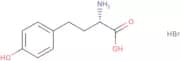
CAS:Homo-L-tyrosine hydrobromide (HLTB) is a prodrug that is converted to L-3,4-dihydroxyphenylalanine (L-dopa) in vivo. It is used as an immunomodulator by stimulating the immune system and reducing inflammation. HLTB has been shown to have anti-inflammatory effects on the production of cytokines and chemokines, which are important for tumor growth and metastasis. HLTB is also known to inhibit tyrosine kinase, which plays a role in the development of some cancers.Formula:C10H14BrNO3Purity:Min. 95%Molecular weight:276.13 g/molTGF alpha (1-50) (rat) trifluoroacetate salt
CAS:Please enquire for more information about TGF alpha (1-50) (rat) trifluoroacetate salt including the price, delivery time and more detailed product information at the technical inquiry form on this pageFormula:C244H361N71O71S6Purity:Min. 95%Molecular weight:5,617.31 g/molCyclobutanesulfonyl chloride
CAS:Cyclobutanesulfonyl chloride is a reagent that is used for the synthesis of 1-6-alkylcyclobutanes. It can be used to synthesize heterocyclic compounds, including those with high optical purity. Cyclobutanesulfonyl chloride has been shown to have antiviral and antiproliferative properties. It has also been shown to exhibit anticancer activity in vitro and in vivo. The mechanism of action for this compound is unclear, but it may inhibit protein synthesis by attacking the amino acid methionine in proteins or by inhibiting DNA replication.Formula:C4H7ClO2SPurity:Min. 95%Color and Shape:Clear LiquidMolecular weight:154.62 g/molAminoguanidine hydrochloride
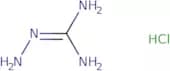
CAS:Aminoguanidine hydrochloride is a basic compound that can be used as an anti-inflammatory drug. It has been shown to have a hypoglycemic effect, which may be due to its ability to increase the activity of glutathione peroxidase and glutathione reductase in experimental models. Aminoguanidine hydrochloride also inhibits the production of inflammatory cytokines such as TNF-α, IL-1β and IL-6. Experiments with transfected cells have shown that aminoguanidine hydrochloride induces neuronal death, which may be due to its ability to inhibit protein synthesis by interfering with ribosomal function.Formula:CH6N4·HClPurity:Min. 95%Color and Shape:White PowderMolecular weight:110.55 g/molTris(1-chloro-2-propyl) phosphate - mixture of isomers
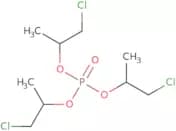
CAS:Tris(1-chloro-2-propyl) phosphate is a synthetic compound that belongs to the class of diphenyl ethers. It is used as an intermediate in the production of other chemicals, such as plastics and pesticides. Tris(1-chloro-2-propyl) phosphate has been shown to be toxic to cells by inhibiting mitochondrial membrane potential and interfering with cellular metabolism. This chemical can cause severe health effects, such as liver damage and death, at high doses. Tris(1-chloro-2-propyl) phosphate can also be detected in human serum and urine samples with high sensitivity.Formula:C9H18Cl3O4PPurity:Min. 95%Molecular weight:327.57 g/mol1-Fluoro-3-phenylpropan-2-amine
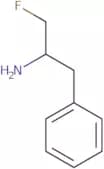
CAS:Controlled ProductPlease enquire for more information about 1-Fluoro-3-phenylpropan-2-amine including the price, delivery time and more detailed product information at the technical inquiry form on this pageFormula:C9H12FNPurity:Min. 95%Color and Shape:Clear LiquidMolecular weight:153.2 g/molAmyloid b-Protein (1-40) amide trifluoroacetate salt
CAS:Please enquire for more information about Amyloid b-Protein (1-40) amide trifluoroacetate salt including the price, delivery time and more detailed product information at the technical inquiry form on this pageFormula:C194H296N54O57SPurity:Min. 95%Molecular weight:4,328.82 g/mol4-Isopropylphenylhydrazine hydrochloride
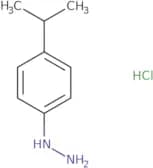
CAS:4-Isopropylphenylhydrazine, hydrochloride (IPH) is a chemical compound that has been shown to induce rearrangements in the indolenines. IPH can also be used as a nucleophile. IPH is regioselective and stereoselective for the indole ring system. It has shown to react with nucleophiles such as alcohols, amines, and thiols.Formula:C9H14N2•HClPurity:Min. 95%Color and Shape:PowderMolecular weight:186.68 g/molPAR-3 (1-6) amide (mouse) trifluoroacetate salt
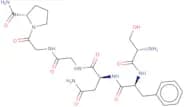
CAS:Please enquire for more information about PAR-3 (1-6) amide (mouse) trifluoroacetate salt including the price, delivery time and more detailed product information at the technical inquiry form on this pageFormula:C25H36N8O8Purity:Min. 95%Molecular weight:576.6 g/molSarafotoxin B trifluoroacetate salt
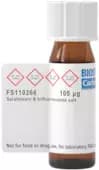
CAS:Component of snake venom; part of a family of vasoconstrictor isopeptidesFormula:C110H159N27O34S5Purity:Min. 95%Molecular weight:2,563.93 g/molMca-Pro-Leu-Gly-Leu-Glu-Glu-Ala-Dap (Dnp)-NH2 trifluoroacetate salt
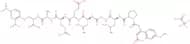
CAS:Please enquire for more information about Mca-Pro-Leu-Gly-Leu-Glu-Glu-Ala-Dap (Dnp)-NH2 trifluoroacetate salt including the price, delivery time and more detailed product information at the technical inquiry form on this pageFormula:C53H70N12O20Purity:Min. 95%Molecular weight:1,195.19 g/mol4-Chloro-6,7-dimethoxyquinoline
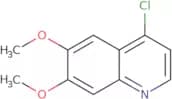
CAS:4-Chloro-6,7-dimethoxyquinoline (4C6DMQ) is a potent inhibitor of the growth of prostate cancer cells. 4C6DMQ is an analog of chloropropyl chloride, which inhibits the growth of epidermal growth factor receptor (EGFR). The binding site for 4C6DMQ on EGFR is the same as that for chloropropyl chloride. 4C6DMQ inhibits EGFR by preventing the activation of downstream signaling cascades, leading to a decrease in cell proliferation and tumor size. The IC50 values for 4C6DMQ are approximately 10 times higher than those for chloropropyl chloride. This drug has been shown to be more potent than other inhibitors of EGFR such as erlotinib and gefitinib.Formula:C11H10ClNO2Purity:Min. 95%Color and Shape:White PowderMolecular weight:223.66 g/mol3-Trifluoromethyl phenylhydrazine hydrochloride
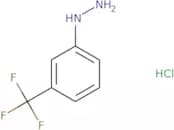
CAS:3-Trifluoromethyl phenylhydrazine HCl is a fine chemical that can be used as a versatile building block in the synthesis of complex compounds. It has been shown to be a useful intermediate for the preparation of research chemicals, reaction components and speciality chemicals. 3-Trifluoromethyl phenylhydrazine HCl belongs to CAS No. 3107-33-3 and can be used as a reagent in organic synthesis. The compound is high quality with a purity of over 99%.Formula:C7H8ClF3N2Purity:Min. 95%Color and Shape:PowderMolecular weight:212.6 g/molAlarin (human) trifluoroacetate salt
CAS:Alarin is a human protein that was originally developed as an antiserum to seal wounds. It is used in the manufacture of pharmaceuticals, such as vaccines and serums. Alarin has also been used in immunoassays for the detection of antibodies in blood, serum, and other body fluids. Alarin is a protein that can be biotinylated and used as a substrate for peroxidase-conjugated streptavidin. This allows it to be utilized in enzyme-linked immunosorbent assay (ELISA) tests.Formula:C127H205N43O35Purity:Min. 95%Molecular weight:2,894.26 g/molLuteinizing Hormone-Releasing Hormone Antagonist trifluoroacetate salt
CAS:Luteinizing Hormone-Releasing Hormone Antagonist trifluoroacetate salt is a potent antagonist of the luteinizing hormone-releasing hormone (LHRH) receptor. It is used specifically to treat platinum-resistant ovarian cancer, where it has been shown to be effective in reducing tumor size and volume. This drug has minimal toxicity and can be administered by injection or as a microcapsule. LHRH Antagonist trifluoroacetate salt is an analog of LHRH that has been modified so that it cannot cross the blood-brain barrier. It also binds to epidermal growth factor receptors, which are involved in cell proliferation, differentiation, and survival. Symptoms of overdose may include nausea, vomiting, headache, dizziness, seizures, and coma.Formula:C48H59ClN12O8Purity:Min. 95%Molecular weight:967.51 g/mol(Lys18)-Pseudin-2 trifluoroacetate salt
CAS:Please enquire for more information about (Lys18)-Pseudin-2 trifluoroacetate salt including the price, delivery time and more detailed product information at the technical inquiry form on this pageFormula:C122H203N37O32Purity:Min. 95%Molecular weight:2,700.15 g/molGRP (14-27) (human, porcine, canine) trifluoroacetate salt
CAS:GRP (14-27) is a synthetic peptide that has an inhibitory effect on the growth of pancreatic cancer cells. It also inhibits the development of primary tumors in hamsters and inhibits tumor metastasis. GRP (14-27) binds to the cell surface receptor on T cells, which is responsible for mediating immune responses against tumors. GRP (14-27) has been shown to suppress tumor growth through immunoreactivity and has been found to be effective against a variety of cancers when used as an adjuvant therapy.Formula:C75H110N24O16S2Purity:Min. 95%Molecular weight:1,667.96 g/mol