Organic Halides
Subcategories of "Organic Halides"
Found 20442 products of "Organic Halides"
2,4,6-Trifluorobenzoic acid
CAS:2,4,6-Trifluorobenzoic acid is a chemical compound that is an intermediate in the synthesis of stilbazole. It is prepared by chlorinating the 2,4,6-trichlorobenzoic acid with hydrogen peroxide and hydrochloric acid. The 2,4,6-trifluorobenzoic acid is then reduced to the desired product with sodium borohydride. This chemical has been detected in nature as a racemic mixture and can be used as a precursor in analytical methods for detecting other compounds. It is also used in dechlorination reactions to remove chlorine from organic molecules. This process can be monitored using UV detectors.Formula:C7H3F3O2Purity:Min. 95%Molecular weight:176.09 g/molH-D-His(1-Me)-OH hydrochloride salt
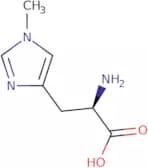
CAS:Please enquire for more information about H-D-His(1-Me)-OH hydrochloride salt including the price, delivery time and more detailed product information at the technical inquiry form on this pageFormula:C7H11N3O2Purity:Min. 95%Molecular weight:169.18 g/molPACAP-38 (28-38) (human, chicken, mouse, ovine, porcine, rat) trifluoroacetate salt
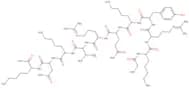
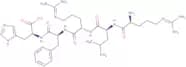
CAS:PACAP-38 (28-38) is a peptide hormone that is produced in the brain and regulates various physiological processes. It has been shown to have effects on intestinal, pancreatic, and lung cells. PACAP-38 (28-38) is a potent antagonist of vasoactive intestinal polypeptide (VIP), which has been implicated in the regulation of gastrointestinal motility and fluid secretion. The peptide also inhibits cancer cell proliferation by activating cell death pathways.
Formula:C61H110N24O14Purity:Min. 95%Molecular weight:1,403.68 g/molPropiverine hydrochloride
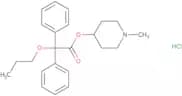
CAS:Muscarinic antagonist; spasmolyticFormula:C23H30ClNO3Purity:Min. 95%Color and Shape:PowderMolecular weight:403.94 g/molCART (62-76) (human, rat) trifluoroacetate salt
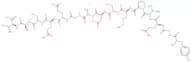
CAS:Please enquire for more information about CART (62-76) (human, rat) trifluoroacetate salt including the price, delivery time and more detailed product information at the technical inquiry form on this pageFormula:C64H99N17O23S3Purity:Min. 95%Molecular weight:1,570.77 g/molNeurokinin A trifluoroacetate salt
CAS:Neurokinin A trifluoroacetate salt H-His-Lys-Thr-Asp-Ser-Phe-Val-Gly-Leu-Met-NH2 trifluoroacetate salt is a potent inducer of the basic protein. It has been shown to have cytotoxic effects on pluripotent cells in vitro. Neurokinin A is also a potent inducer of substance P, which is a neurotransmitter that mediates inflammatory lesions and cardiac effects. Neurokinin A has also been shown to have an effect on locomotor activity and polymerase chain reaction (PCR) amplification in vitro.Formula:C50H80N14O14SPurity:Min. 95%Molecular weight:1,133.32 g/molBeta-Bag Cell Peptide (Aplysia californica) trifluoroacetate salt
CAS:Aplysia californica is a species of sea slug that produces a peptide, beta-Bag Cell Peptide (BACP), which has been shown to have depolarizing effects on neurons. BACP can be synthesized from the amino acid sequence of the Aplysia californica cell membrane protein, and this synthetic peptide has been shown to have maximal depolarizing effects at high concentrations. The depolarizing effect of BACP can be seen in populations of neurons as well as individual neurons. This peptide also desensitizes autoreceptors for acetylcholine and serotonin, which may play a role in its electrophysiological effects.Formula:C33H53N13O6Purity:Min. 95%Molecular weight:727.86 g/mol6-(Bromomethyl)-1,1,4,4-tetramethyl-1,2,3,4-tetrahydronaphthalene
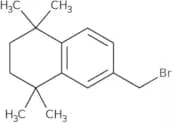
CAS:Please enquire for more information about 6-(Bromomethyl)-1,1,4,4-tetramethyl-1,2,3,4-tetrahydronaphthalene including the price, delivery time and more detailed product information at the technical inquiry form on this pageFormula:C15H21BrPurity:Min. 80 Area-%Color and Shape:Clear LiquidMolecular weight:281.23 g/mol3,6-Dichloro trimellitic anhydride
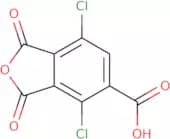
CAS:3,6-Dichloro trimellitic anhydride is a reactive compound that is used in the synthesis of fluorescent probes. It is also used as a reagent to introduce chlorine substituents onto organic molecules. Fluorescence measurements can be used to determine the purity of 3,6-dichloro trimellitic anhydride. This compound reacts with nucleic acids, causing them to fluoresce and making them detectable by spectroscopy. 3,6-Dichloro trimellitic anhydride has been used in research involving the study of nucleic acids and their role in DNA replication and repair.Formula:C9H2Cl2O5Purity:Min. 95%Molecular weight:261.01 g/molChloromethyl isopropyl carbonate
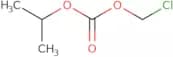
CAS:Chloromethyl isopropyl carbonate (CIC) is a prodrug that is converted to disoproxil in the body. It has significant cytotoxicity and antiviral activity against HIV and other viruses, but has not been used clinically due to its chemical instability. CIC can be administered orally as a prodrug, with the active form of CIC being tenofovir disoproxil. Tenofovir disoproxil is metabolized by proximal tubules and has shown efficacy for treating hepatitis B and C. Tenofovir has also been shown to decrease the incidence of renal disease in HIV patients.
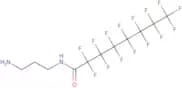
Formula:C5H9ClO3Purity:Min. 95%Color and Shape:Colorless PowderMolecular weight:152.58 g/molN-(3-Aminopropyl)-2,2,3,3,4,4,5,5,6,6,7,7,8,8,8-pentadecafluorooctanamide
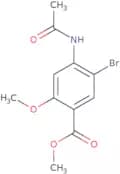
CAS:Controlled ProductPlease enquire for more information about N-(3-Aminopropyl)-2,2,3,3,4,4,5,5,6,6,7,7,8,8,8-pentadecafluorooctanamide including the price, delivery time and more detailed product information at the technical inquiry form on this pageFormula:C11H9F15N2OPurity:Min. 95%Molecular weight:470.18 g/mol4-Acetylamino-5-bromo-2-methoxy-benzoic acid methylester
CAS:Please enquire for more information about 4-Acetylamino-5-bromo-2-methoxy-benzoic acid methylester including the price, delivery time and more detailed product information at the technical inquiry form on this page
Formula:C11H12BrNO4Purity:Min. 95%Color and Shape:PowderMolecular weight:302.12 g/mol12-Fluorododecan-1-ol
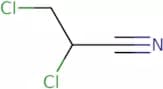
CAS:12-Fluorododecan-1-ol is a volatile chemical compound that is found in the exoskeleton of termites. It has been shown to be a major component of the termiticide, FluoroCitrate. 12-fluorododecan-1-ol can be used to control the growth of insect populations by interfering with their ability to synthesize fatty acids and alcohols. It also has an effect on protein synthesis and inhibits the activity of citrate synthase, which is an enzyme involved in glycolate metabolism. This compound is also toxic to some species of insects such as Rhinotermitidae. 12-fluorododecan-1-ol can be used as a marker for Reticulitermes flavipes (a type of wood eating cockroach) and it can be used to distinguish between different species or strains of termites.Formula:C12H25FOPurity:Min. 95%Color and Shape:Clear LiquidMolecular weight:204.32 g/mol2,3-Dichloropropionitrile
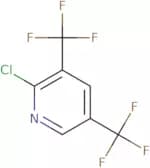
CAS:2,3-Dichloropropionitrile is a synthetic chemical that is used for the chlorination of calcium carbonate. It is also used in the production of ester hydrochloride and acrylonitrile. The reaction vessel contains calcium carbonate and malonic acid, which are heated with hydrochloric acid. 2,3-Dichloropropionitrile is added to the reaction products to produce ester hydrochloride and acrylonitrile. The product can be isolated by adding hydrogen chloride to the reaction mixture.Formula:C3H3Cl2NPurity:Min. 95%Molecular weight:123.97 g/mol2-Chloro-3,5-bis(trifluoromethyl)pyridine
CAS:Please enquire for more information about 2-Chloro-3,5-bis(trifluoromethyl)pyridine including the price, delivery time and more detailed product information at the technical inquiry form on this pageFormula:C7H2ClF6NPurity:Min. 95%Molecular weight:249.54 g/mol5-Fluorohistidine
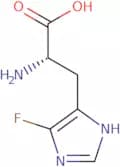
CAS:5-Fluorohistidine is an organic compound with the formula CHFNO. It is a fluorinated derivative of histidine, and a precursor to histamine. 5-Fluorohistidine has been shown to be a potent thyrotropin-releasing hormone (TRH) analog, and is used in the synthesis of histamine. This compound has also been used as a tool for investigating the mechanism of TRH action by studying its stereoselective binding to protrusions from rat brain capillary endothelial cells. 5-Fluorohistidine has also been used as a microbial probe for detecting microbial protrusions from bacterial cells.Formula:C6H8FN3O2Purity:Min. 95%Molecular weight:173.15 g/molGermaniumtetrachloride
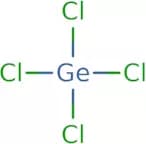
CAS:Germaniumtetrachloride (GeCl4) is a thermal expansion agent that is used in the production of boron nitride and zirconium oxide. It is also used as a catalyst for hydrochloric acid and hydroxyl group reactions. GeCl4 has carcinogenic potential, but this has not been confirmed in animal studies. GeCl4 is an effective solid catalyst for the reaction of hydrogen chloride with ethylene oxide to form polyethylene glycols. The mechanism of this reaction involves a substitution reaction between the chlorine ion and the hydroxyl group on the catalyst surface, forming chlorohydrocarbonate ions, which react with ethylene oxide to form polymer chains. This process can be carried out at room temperature or below, without using any solvents or catalysis promoters such as mercury or sulfur dioxide.Formula:Cl4GePurity:Min. 95%Molecular weight:214.44 g/mol3'-O-Benzyl-2'-Deoxy-5-Trifluoromethyluridine
CAS:3'-O-Benzyl-2'-Deoxy-5-Trifluoromethyluridine (BDBMU) is a pyrimidine derivative that can be used as an antiviral drug. It inhibits the synthesis of DNA and RNA by inhibiting viral polymerase. BDBMU is a prodrug of uracil, which is converted to the active compound in tissues. The benzoylation reaction produces a fluorine atom at C5, which increases its potency. This drug has been shown to have minimal toxicity in tumor cells and has been used for the treatment of leukemia and other cancers.Formula:C17H17F3N2O5Purity:Min. 95%Molecular weight:386.32 g/molalpha-Chloro-2-nitrobenzaldoxime
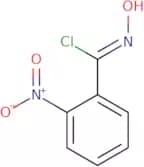
CAS:The heterocycle alpha-chloro-2-nitrobenzaldoxime is a functional group that can be oriented in two different ways. The diversity of the product arises from the fact that it is possible to create new functional groups by substitution on the benzene ring and on the nitrogen. Heterocyclization of alpha-chloro-2-nitrobenzaldoxime can be achieved by using other heterocycles such as isoxazoles, which are readily available in large quantities, as building blocks. This reaction can be catalyzed by reductive means with sodium borohydride and methanol.Formula:C7H5ClN2O3Purity:Min. 95%Molecular weight:200.58 g/mol(S)-(-)-6,7-Dimethoxy-1,2,3,4-tetrahydroisoquinoline-3-carboxylic acid hydrochloride
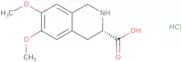
CAS:(S)-(-)-6,7-Dimethoxy-1,2,3,4-tetrahydroisoquinoline-3-carboxylic acid hydrochloride is a synthetic chiral compound that is used to study the role of glyoxylate in biochemical reactions. This drug is an enolate and alkylating agent that can react with nucleophiles such as amines and thiols. It has been shown to be effective against perchlorates by hydrolyzing them into chlorine and oxygen gas. This drug has also been shown to inhibit the growth of Rhodobacter sphaeroides by inhibiting glyoxylate metabolism.Formula:C12H15NO4·HClPurity:Min. 95%Color and Shape:White PowderMolecular weight:273.71 g/mol