Organic Halides
Subcategories of "Organic Halides"
Found 20442 products of "Organic Halides"
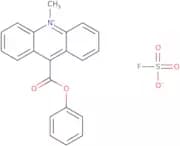
10-Methyl-9-(phenoxycarbonyl)acridinium fluorosulfonate
CAS:Please enquire for more information about 10-Methyl-9-(phenoxycarbonyl)acridinium fluorosulfonate including the price, delivery time and more detailed product information at the technical inquiry form on this page
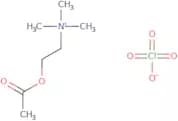
Formula:C21H16FNO5SPurity:Min. 95%Molecular weight:413.42 g/molAcetylcholine perchlorate
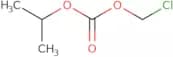
CAS:Acetylcholine perchlorate is a pharmacological agent that is used to induce acetylcholine release by the brain. It can be used to study cholinergic mechanisms in the brain and bowel disease. Acetylcholine perchlorate has been shown to have physiological effects, such as increasing heart rate and blood pressure, which may be due to its ability to activate nicotinic acetylcholine receptors. Acetylcholine perchlorate has also been shown to cause chemiluminescence reactions that are similar to those seen in biological studies of acetylcholine receptors.Formula:C7H16ClNO6Purity:Min. 95%Color and Shape:PowderMolecular weight:245.66 g/molChloromethyl isopropyl carbonate
CAS:Chloromethyl isopropyl carbonate (CIC) is a prodrug that is converted to disoproxil in the body. It has significant cytotoxicity and antiviral activity against HIV and other viruses, but has not been used clinically due to its chemical instability. CIC can be administered orally as a prodrug, with the active form of CIC being tenofovir disoproxil. Tenofovir disoproxil is metabolized by proximal tubules and has shown efficacy for treating hepatitis B and C. Tenofovir has also been shown to decrease the incidence of renal disease in HIV patients.
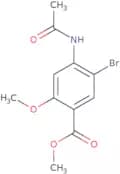
Formula:C5H9ClO3Purity:Min. 95%Color and Shape:Colorless PowderMolecular weight:152.58 g/mol4-Acetylamino-5-bromo-2-methoxy-benzoic acid methylester
CAS:Please enquire for more information about 4-Acetylamino-5-bromo-2-methoxy-benzoic acid methylester including the price, delivery time and more detailed product information at the technical inquiry form on this page
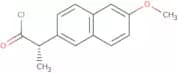
Formula:C11H12BrNO4Purity:Min. 95%Color and Shape:PowderMolecular weight:302.12 g/mol(S)-(+)-Naproxen chloride
CAS:COX1/2 inhibitor; nonsteroidal anti-inflammatory drug
Formula:C14H14Cl2O3Purity:Min. 95%Molecular weight:301.16 g/mol12-Fluorododecan-1-ol
CAS:12-Fluorododecan-1-ol is a volatile chemical compound that is found in the exoskeleton of termites. It has been shown to be a major component of the termiticide, FluoroCitrate. 12-fluorododecan-1-ol can be used to control the growth of insect populations by interfering with their ability to synthesize fatty acids and alcohols. It also has an effect on protein synthesis and inhibits the activity of citrate synthase, which is an enzyme involved in glycolate metabolism. This compound is also toxic to some species of insects such as Rhinotermitidae. 12-fluorododecan-1-ol can be used as a marker for Reticulitermes flavipes (a type of wood eating cockroach) and it can be used to distinguish between different species or strains of termites.Formula:C12H25FOPurity:Min. 95%Color and Shape:Clear LiquidMolecular weight:204.32 g/mol4-tert-Butyl-2,6-dimethylphenylsulfur trifluoride
CAS:4-tert-Butyl-2,6-dimethylphenylsulfur Trifluoride is a chemical compound that is used as an intermediate in the synthesis of pharmaceuticals. It has been shown to be effective against 5-HT2C receptors and is used in the treatment of obesity. The mechanism of action for 4-tert-Butyl-2,6-dimethylphenylsulfur Trifluoride is not yet known but it may involve cleavage of amide bonds or stereoisomerism. 4-tert-Butyl-2,6-dimethylphenylsulfur Trifluoride has been synthesized by reacting hydrogen fluoride with sulfur trifluoride in the presence of a base.Formula:C12H17F3SPurity:90%MinColor and Shape:PowderMolecular weight:250.32 g/mol3'-O-Benzyl-2'-Deoxy-5-Trifluoromethyluridine
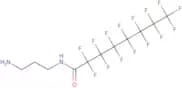
CAS:3'-O-Benzyl-2'-Deoxy-5-Trifluoromethyluridine (BDBMU) is a pyrimidine derivative that can be used as an antiviral drug. It inhibits the synthesis of DNA and RNA by inhibiting viral polymerase. BDBMU is a prodrug of uracil, which is converted to the active compound in tissues. The benzoylation reaction produces a fluorine atom at C5, which increases its potency. This drug has been shown to have minimal toxicity in tumor cells and has been used for the treatment of leukemia and other cancers.Formula:C17H17F3N2O5Purity:Min. 95%Molecular weight:386.32 g/molN-(3-Aminopropyl)-2,2,3,3,4,4,5,5,6,6,7,7,8,8,8-pentadecafluorooctanamide
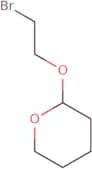
CAS:Controlled ProductPlease enquire for more information about N-(3-Aminopropyl)-2,2,3,3,4,4,5,5,6,6,7,7,8,8,8-pentadecafluorooctanamide including the price, delivery time and more detailed product information at the technical inquiry form on this pageFormula:C11H9F15N2OPurity:Min. 95%Molecular weight:470.18 g/mol2-(2-Bromoethoxy)tetrahydro-2H-pyran
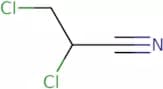
CAS:2-(2-Bromoethoxy)tetrahydro-2H-pyran is a synthetic molecule that has been shown to act as an estrogen receptor modulator, which has the potential to be used for the treatment of hormone-sensitive diseases such as breast cancer. This compound is chemically very similar to other compounds that have been shown to be effective in treating breast cancer. 2-(2-Bromoethoxy)tetrahydro-2H-pyran has a cavity and 6 hydroxyl groups that can form hydrogen bonds with water molecules, leading to its gelling properties. In addition, this compound is thermoreversible and can reversibly gel when heated or cooled. The gelation property of 2-(2-Bromoethoxy)tetrahydro-2H-pyran makes it a promising candidate for use in vaginal tablets, which could potentially lead to treatments for vaginal dryness and atrophy.Formula:C7H13BrO2Purity:Min. 95%Color and Shape:Clear LiquidMolecular weight:209.08 g/mol2,3-Dichloropropionitrile
CAS:2,3-Dichloropropionitrile is a synthetic chemical that is used for the chlorination of calcium carbonate. It is also used in the production of ester hydrochloride and acrylonitrile. The reaction vessel contains calcium carbonate and malonic acid, which are heated with hydrochloric acid. 2,3-Dichloropropionitrile is added to the reaction products to produce ester hydrochloride and acrylonitrile. The product can be isolated by adding hydrogen chloride to the reaction mixture.Formula:C3H3Cl2NPurity:Min. 95%Molecular weight:123.97 g/molDi-tert-butyldichlorosilane
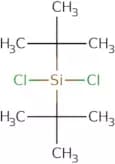
CAS:Di-tert-butyldichlorosilane is a silicon compound that has been used to silylate amines and primary alcohols. It is a sterically hindered molecule with two chloro groups at the same position on one of the silicon atoms, which prevents or limits steric interactions with other molecules. Covid-19 Pandemic is the name given to a new strain of influenza virus that was discovered in 2009. The new strain contains some genetic material from bird flu, which makes it resistant to oseltamivir and zanamivir, drugs commonly used to fight against influenza infection.
Formula:C8H18Cl2SiPurity:Min. 95%Color and Shape:Clear LiquidMolecular weight:213.22 g/mol(3R,5S)-5-(Hydroxymethyl)pyrrolidin-3-ol hydrochloride
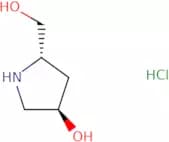
CAS:Please enquire for more information about (3R,5S)-5-(Hydroxymethyl)pyrrolidin-3-ol hydrochloride including the price, delivery time and more detailed product information at the technical inquiry form on this pagePurity:Min. 95%8-Fluoro-6-methoxy moxifloxacin
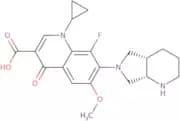
CAS:Please enquire for more information about 8-Fluoro-6-methoxy moxifloxacin including the price, delivery time and more detailed product information at the technical inquiry form on this pageFormula:C21H24FN3O4Purity:Min. 95%Molecular weight:401.43 g/molMethyl 2,5-dibromobenzoate
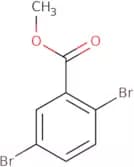
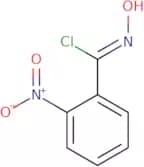
CAS:Methyl 2,5-dibromobenzoate is a cross-coupling reagent that is used to stabilize proteins. It is a hydrophobic compound that binds to the surface of proteins and prevents denaturation. Methyl 2,5-dibromobenzoate has been shown to be an effective binder for protein stabilization in a model system, where it was found to increase the reaction rate of Suzuki coupling reactions. This reagent can be used as a substitute for fluoroaromatic solvents in cross-coupling reactions.Formula:C8H6Br2O2Purity:Min. 95%Color and Shape:Off-White PowderMolecular weight:293.94 g/molalpha-Chloro-2-nitrobenzaldoxime
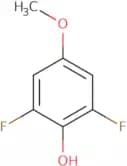
CAS:The heterocycle alpha-chloro-2-nitrobenzaldoxime is a functional group that can be oriented in two different ways. The diversity of the product arises from the fact that it is possible to create new functional groups by substitution on the benzene ring and on the nitrogen. Heterocyclization of alpha-chloro-2-nitrobenzaldoxime can be achieved by using other heterocycles such as isoxazoles, which are readily available in large quantities, as building blocks. This reaction can be catalyzed by reductive means with sodium borohydride and methanol.Formula:C7H5ClN2O3Purity:Min. 95%Molecular weight:200.58 g/mol2,6-Difluoro-4-methoxyphenol
CAS:Please enquire for more information about 2,6-Difluoro-4-methoxyphenol including the price, delivery time and more detailed product information at the technical inquiry form on this page
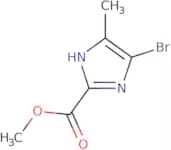
Formula:C7H6F2O2Purity:Min. 95%Color and Shape:PowderMolecular weight:160.12 g/molMethyl 4- bromo- 5- methyl- 1H- imidazole- 2- carboxylate
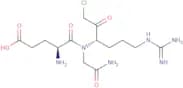
CAS:Please enquire for more information about Methyl 4- bromo- 5- methyl- 1H- imidazole- 2- carboxylate including the price, delivery time and more detailed product information at the technical inquiry form on this pagePurity:Min. 95%H-Glu-Gly-Arg-chloromethylketone trifluoroacetate salt
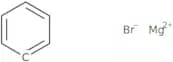
CAS:H-Glu-Gly-Arg-chloromethylketone trifluoroacetate salt is an anticoagulant drug that prevents the formation of blood clots by inhibiting the enzyme thrombin. This drug is effective in enhancing blood flow and oxygen supply to the heart and other organs. H-Glu-Gly-Arg-chloromethylketone trifluoroacetate salt has been shown to have a positive effect on patients with congestive heart failure. It has also been used as an adjuvant therapy in bypassing procedures, where clotting occurs at the site of an artificial conduit placed in the body to allow blood flow between two points. In vitro studies have demonstrated that this drug inhibits protease activity, which may be due to its ability to inhibit fibrinogen and serine protease activity.Formula:C14H25ClN6O5Purity:Min. 95%Molecular weight:392.84 g/molPhenyl-magnesium bromide solution - 1.0 M in THF
CAS:Phenyl-magnesium bromide solution is a chemical compound that can be used as a pesticide. It has been shown to have carcinoid syndrome-inducing properties in animal studies. Phenyl-magnesium bromide solution has also been found to have biological properties that are beneficial for bowel disease, organometallic reactivity, and congestive heart failure. This chemical compound reacts with ester hydrochloride in the presence of an organic base to form a reactive intermediate that undergoes transfer reactions with other organic compounds. Phenyl-magnesium bromide solution is reactive and can cause metabolic disorders such as palladium-catalyzed coupling.
Formula:C6H5BrMgPurity:Min. 95%Molecular weight:181.31 g/mol