Organic Halides
Subcategories of "Organic Halides"
Found 20442 products of "Organic Halides"
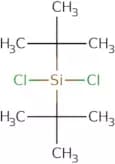
Di-tert-butyldichlorosilane
CAS:Di-tert-butyldichlorosilane is a silicon compound that has been used to silylate amines and primary alcohols. It is a sterically hindered molecule with two chloro groups at the same position on one of the silicon atoms, which prevents or limits steric interactions with other molecules. Covid-19 Pandemic is the name given to a new strain of influenza virus that was discovered in 2009. The new strain contains some genetic material from bird flu, which makes it resistant to oseltamivir and zanamivir, drugs commonly used to fight against influenza infection.
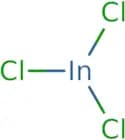
Formula:C8H18Cl2SiPurity:Min. 95%Color and Shape:Clear LiquidMolecular weight:213.22 g/molIndium (III) chloride
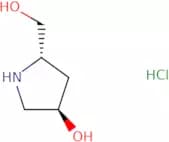
CAS:Indium (III) chloride is a reactive metal with a high oxidation state that has been shown to have significant cytotoxic effects in vitro. It is also genotoxic, which may be due to the generation of hydroxyl radicals and other reactive oxygen species. Indium (III) chloride has been used for the treatment of various infectious diseases, including HIV, Epstein-Barr virus, herpes simplex virus type 1, and influenza A virus. The toxicity of this metal is dependent on the concentration and duration of exposure. Indium (III) chloride is metabolized by plasma mass spectrometry as a substrate molecule for cytochrome P450 enzymes. This reaction results in the formation of an active metabolite that can bind to DNA and affect mitochondrial membrane potential. Indium (III) chloride has also been used as a contrast agent in fluorescein angiography or particle imaging techniques to visualize the presence of biological materials such as tissue necrosis or inflammation.Formula:Cl3InPurity:Min. 95%Color and Shape:Clear LiquidMolecular weight:221.18 g/mol(3R,5S)-5-(Hydroxymethyl)pyrrolidin-3-ol hydrochloride
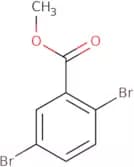
CAS:Please enquire for more information about (3R,5S)-5-(Hydroxymethyl)pyrrolidin-3-ol hydrochloride including the price, delivery time and more detailed product information at the technical inquiry form on this pagePurity:Min. 95%Methyl 2,5-dibromobenzoate
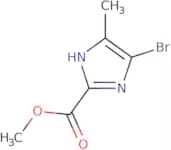
CAS:Methyl 2,5-dibromobenzoate is a cross-coupling reagent that is used to stabilize proteins. It is a hydrophobic compound that binds to the surface of proteins and prevents denaturation. Methyl 2,5-dibromobenzoate has been shown to be an effective binder for protein stabilization in a model system, where it was found to increase the reaction rate of Suzuki coupling reactions. This reagent can be used as a substitute for fluoroaromatic solvents in cross-coupling reactions.Formula:C8H6Br2O2Purity:Min. 95%Color and Shape:Off-White PowderMolecular weight:293.94 g/molMethyl 4- bromo- 5- methyl- 1H- imidazole- 2- carboxylate
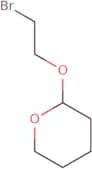
CAS:Please enquire for more information about Methyl 4- bromo- 5- methyl- 1H- imidazole- 2- carboxylate including the price, delivery time and more detailed product information at the technical inquiry form on this pagePurity:Min. 95%2-(2-Bromoethoxy)tetrahydro-2H-pyran
CAS:2-(2-Bromoethoxy)tetrahydro-2H-pyran is a synthetic molecule that has been shown to act as an estrogen receptor modulator, which has the potential to be used for the treatment of hormone-sensitive diseases such as breast cancer. This compound is chemically very similar to other compounds that have been shown to be effective in treating breast cancer. 2-(2-Bromoethoxy)tetrahydro-2H-pyran has a cavity and 6 hydroxyl groups that can form hydrogen bonds with water molecules, leading to its gelling properties. In addition, this compound is thermoreversible and can reversibly gel when heated or cooled. The gelation property of 2-(2-Bromoethoxy)tetrahydro-2H-pyran makes it a promising candidate for use in vaginal tablets, which could potentially lead to treatments for vaginal dryness and atrophy.Formula:C7H13BrO2Purity:Min. 95%Color and Shape:Clear LiquidMolecular weight:209.08 g/mol2,6-Difluoro-4-methoxyphenol
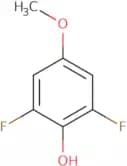
CAS:Please enquire for more information about 2,6-Difluoro-4-methoxyphenol including the price, delivery time and more detailed product information at the technical inquiry form on this page
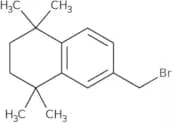
Formula:C7H6F2O2Purity:Min. 95%Color and Shape:PowderMolecular weight:160.12 g/mol6-(Bromomethyl)-1,1,4,4-tetramethyl-1,2,3,4-tetrahydronaphthalene
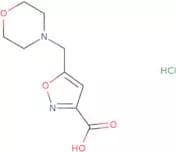
CAS:Please enquire for more information about 6-(Bromomethyl)-1,1,4,4-tetramethyl-1,2,3,4-tetrahydronaphthalene including the price, delivery time and more detailed product information at the technical inquiry form on this pageFormula:C15H21BrPurity:Min. 80 Area-%Color and Shape:Clear LiquidMolecular weight:281.23 g/mol5-(Morpholin-4-ylmethyl)isoxazole-3-carboxylic acid hydrochloride
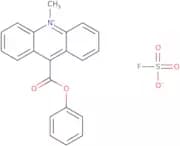
CAS:Please enquire for more information about 5-(Morpholin-4-ylmethyl)isoxazole-3-carboxylic acid hydrochloride including the price, delivery time and more detailed product information at the technical inquiry form on this pageFormula:C9H12N2O4•HClPurity:Min. 95%Molecular weight:248.66 g/mol10-Methyl-9-(phenoxycarbonyl)acridinium fluorosulfonate
CAS:Please enquire for more information about 10-Methyl-9-(phenoxycarbonyl)acridinium fluorosulfonate including the price, delivery time and more detailed product information at the technical inquiry form on this page
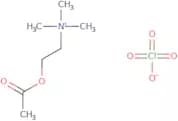
Formula:C21H16FNO5SPurity:Min. 95%Molecular weight:413.42 g/molAcetylcholine perchlorate
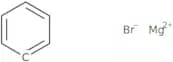
CAS:Acetylcholine perchlorate is a pharmacological agent that is used to induce acetylcholine release by the brain. It can be used to study cholinergic mechanisms in the brain and bowel disease. Acetylcholine perchlorate has been shown to have physiological effects, such as increasing heart rate and blood pressure, which may be due to its ability to activate nicotinic acetylcholine receptors. Acetylcholine perchlorate has also been shown to cause chemiluminescence reactions that are similar to those seen in biological studies of acetylcholine receptors.Formula:C7H16ClNO6Purity:Min. 95%Color and Shape:PowderMolecular weight:245.66 g/molPhenyl-magnesium bromide solution - 1.0 M in THF
CAS:Phenyl-magnesium bromide solution is a chemical compound that can be used as a pesticide. It has been shown to have carcinoid syndrome-inducing properties in animal studies. Phenyl-magnesium bromide solution has also been found to have biological properties that are beneficial for bowel disease, organometallic reactivity, and congestive heart failure. This chemical compound reacts with ester hydrochloride in the presence of an organic base to form a reactive intermediate that undergoes transfer reactions with other organic compounds. Phenyl-magnesium bromide solution is reactive and can cause metabolic disorders such as palladium-catalyzed coupling.
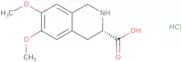
Formula:C6H5BrMgPurity:Min. 95%Molecular weight:181.31 g/mol(S)-(-)-6,7-Dimethoxy-1,2,3,4-tetrahydroisoquinoline-3-carboxylic acid hydrochloride
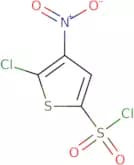
CAS:(S)-(-)-6,7-Dimethoxy-1,2,3,4-tetrahydroisoquinoline-3-carboxylic acid hydrochloride is a synthetic chiral compound that is used to study the role of glyoxylate in biochemical reactions. This drug is an enolate and alkylating agent that can react with nucleophiles such as amines and thiols. It has been shown to be effective against perchlorates by hydrolyzing them into chlorine and oxygen gas. This drug has also been shown to inhibit the growth of Rhodobacter sphaeroides by inhibiting glyoxylate metabolism.Formula:C12H15NO4·HClPurity:Min. 95%Color and Shape:White PowderMolecular weight:273.71 g/mol5-Chloro-4-nitrothiophene-2-sulfonylchloride
CAS:Please enquire for more information about 5-Chloro-4-nitrothiophene-2-sulfonylchloride including the price, delivery time and more detailed product information at the technical inquiry form on this pageFormula:C4HCl2NO4S2Purity:Min. 95%Molecular weight:262.09 g/mol7-[(2S,3R)-3-Amino-2-methyl-azetidin-1-yl]-1-(2,4-difluorophenyl)-6-fluoro-4-oxo-quinoline-3-carboxylic acid
CAS:7-[(2S,3R)-3-Amino-2-methyl-azetidin-1-yl]-1-(2,4-difluorophenyl)-6-fluoro-4-oxo-quinoline-3-carboxylic acid (ABT) is a drug that binds to bacterial enzymes and inhibits their ability to synthesize proteins. ABT is a conjugate of fluoroquinolone and an amino acid. As the drug is degradable by hydrolysis, it has been shown to be less toxic in Sprague Dawley rats than other fluoroquinolones. This drug has been used in diagnostic tests as a ligand for affinity ligands, but has not been approved for human use. The drug also possesses functional groups that are important for binding to reconstituted enzymes.br>br>ABT's ester linkages are degradable by hydrolysis and can beFormula:C20H16F3N3O3Purity:Min. 95%Molecular weight:403.35 g/mol4-Fluorophenyl isocyanate
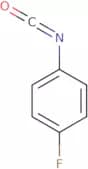
CAS:4-Fluorophenyl isocyanate is a hydroxylated derivative of phenyl isocyanate. It has been shown to have anticancer activity, with an IC50 value of about 50 μM. 4-Fluorophenyl isocyanate can be synthesized by reacting 3-bromopropylamine hydrobromide with hydrogen fluoride in the presence of a carbodiimide. The reaction can be optimized by adding epoxides or carbodiimides, and the best conditions are found to be at pH 10 and room temperature. 4-Fluorophenyl isocyanate binds to the MT2 receptor which leads to activation of G proteins, resulting in increased intracellular cAMP levels.Formula:C7H4FNOPurity:Min. 95%Molecular weight:137.11 g/mol10-Fluorodecan-1-Ol
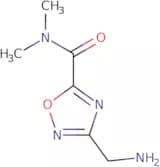
CAS:Please enquire for more information about 10-Fluorodecan-1-Ol including the price, delivery time and more detailed product information at the technical inquiry form on this pageFormula:C10H21FOPurity:Min. 95%Molecular weight:176.27 g/mol3-(Aminomethyl)-N,N-dimethyl-1,2,4-oxadiazole-5-carboxamide
CAS:Please enquire for more information about 3-(Aminomethyl)-N,N-dimethyl-1,2,4-oxadiazole-5-carboxamide including the price, delivery time and more detailed product information at the technical inquiry form on this pageFormula:C6H10N4O2Purity:Min. 95%Molecular weight:170.17 g/molMorpheridine dihydrochloride
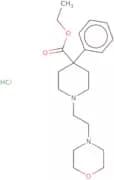
CAS:Controlled ProductPlease enquire for more information about Morpheridine dihydrochloride including the price, delivery time and more detailed product information at the technical inquiry form on this page
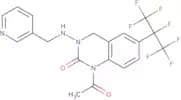
Formula:C20H32Cl2N2O3Purity:Min. 95%Molecular weight:419.39 g/mol1-Acetyl-6-(perfluoropropan-2-yl)-3-((pyridin-3-ylmethyl)amino)-3,4-dihydroquinazolin-2(1H)-one
CAS:1-Acetyl-6-(perfluoropropan-2-yl)-3-((pyridin-3-ylmethyl)amino)-3,4-dihydroquinazolin-2(1H)-one (PAFQ) is a mitochondrial cytochrome P450 inhibitor that inhibits the function of the ryanodine receptor and interacts with the piperonyl butoxide synergistically. PAFQ has been shown to be effective against animal pests such as termites, ants, and cockroaches. It also inhibits population growth in these populations by interfering with their ability to synthesize proteins. The effective dose for PAFQ varies depending on whether it is applied topically or orally.Formula:C19H15F7N4O2Purity:Min. 95%Molecular weight:464.34 g/mol

![7-[(2S,3R)-3-Amino-2-methyl-azetidin-1-yl]-1-(2,4-difluorophenyl)-6-fluoro-4-oxo-quinoline-3-carbo…](/_next/image/?url=https%3A%2Fstatic.cymitquimica.com%2Fproducts%2F3D%2Fthumb-webp%2FFA30404.webp&w=3840&q=75)