Organic Halides
In this category, you can find organic molecules containing one or more halogen atoms in their structure. These organic halides include brominated, iodinated, chlorinated, and cyclic halide compounds. Organic halides are widely used in organic synthesis, pharmaceuticals, agrochemicals, and materials science due to their reactivity and ability to undergo a variety of chemical transformations. At CymitQuimica, we offer a comprehensive selection of high-quality organic halides to support your research and industrial applications, ensuring reliable and effective performance in your synthetic and analytical projects.
Subcategories of "Organic Halides"
Found 20437 products of "Organic Halides"
Sort by
Purity (%)
0
100
|
0
|
50
|
90
|
95
|
100
6-Chloro-pyridazine hydrochloride
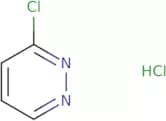
CAS:<p>Please enquire for more information about 6-Chloro-pyridazine hydrochloride including the price, delivery time and more detailed product information at the technical inquiry form on this page</p>Formula:C4H3ClN2·HClPurity:Min. 95%Molecular weight:150.99 g/mol4-Bromo-6-methyl-2-pyridinamine
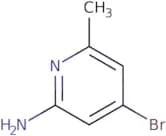
CAS:<p>4-Bromo-6-methyl-2-pyridinamine is a small molecule that binds to the bromodomain of the human protein BRD4. This binding inhibits the interaction between BRD4 and acetylated lysine residues on histones, thereby inhibiting transcriptional activation. 4-Bromo-6-methyl-2-pyridinamine has been shown to be a potent inhibitor of the activity of BRD4, which may be due to its chemical stability and ability to inhibit protein synthesis. The compound's potency in inhibition assays and its lack of biochemical toxicity make it an attractive lead compound for further study.</p>Formula:C6H7BrN2Purity:Min. 95%Molecular weight:187.04 g/mol(3,5-Diiodo-Tyr1,D-Ala2,N-Me-Phe4,glycinol5)-Enkephalin acetate salt
CAS:Controlled Product<p>Please enquire for more information about (3,5-Diiodo-Tyr1,D-Ala2,N-Me-Phe4,glycinol5)-Enkephalin acetate salt including the price, delivery time and more detailed product information at the technical inquiry form on this page</p>Formula:C26H33I2N5O6Purity:Min. 95%Molecular weight:765.38 g/mol3,5-Bis(trifluoromethyl)benzaldehyde
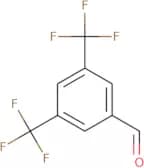
CAS:<p>3,5-Bis(trifluoromethyl)benzaldehyde is a synthetic compound that has been shown to inhibit cancer cell growth. It is a chromatographic reagent and an intermediate in the production of pharmaceuticals. 3,5-Bis(trifluoromethyl)benzaldehyde was shown to bind to the amino group of proteins and inhibit the synthesis of protein inhibitors. This compound also binds to cholesterol esters and causes lipid peroxidation, leading to cell death in cancer cells.</p>Formula:C9H4F6OPurity:Min. 95%Color and Shape:PowderMolecular weight:242.12 g/mol(DL-Isoser 1)-TRAP-6 trifluoroacetate salt
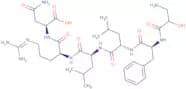
CAS:<p>Please enquire for more information about (DL-Isoser 1)-TRAP-6 trifluoroacetate salt including the price, delivery time and more detailed product information at the technical inquiry form on this page</p>Formula:C34H56N10O9Purity:Min. 95%Molecular weight:748.87 g/molZinc trifluoromethanesulfonate
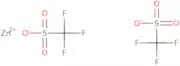
CAS:<p>Zinc trifluoromethanesulfonate is a catalyst that catalyses the reaction of amines with coumarin derivatives, producing an electrochemical impedance spectroscopy. It has been shown to have a redox potential that is higher than ferrocenecarboxylic acid. Zinc trifluoromethanesulfonate has been used in asymmetric synthesis, which involves substituting a hydrogen atom with another atom or group, and in salt metathesis, which is the process of forming new chemical compounds from reactants without using any energy. The zinc trifluoromethanesulfonate can also be activated by light or heat. This makes it possible for this compound to release the corrosive sulfur dioxide gas when heated to high temperatures, producing a synergic effect with other substances such as potassium permanganate (KMnO4).</p>Formula:C2F6O6S2ZnPurity:Min. 95%Color and Shape:White PowderMolecular weight:363.52 g/molSarafotoxin C trifluoroacetate salt
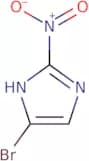
CAS:<p>Sarafotoxin C is a peptide from the venom of the spider Phoneutria nigriventer that has been shown to have potent inhibitory properties on endothelin-1. Sarafotoxin C is able to block intracellular Ca2+ levels and signal pathways, leading to decreased levels of endothelin-1 as well as other inflammatory mediators. Sarafotoxin C has also been shown to have an anti-inflammatory effect in bowel disease, which may be due to its ability to inhibit the production of cytokines and prostaglandins. The biological properties of sarafotoxin C are related to its inhibition of polymerase chain reaction (PCR) amplification of DNA. This inhibition is due to the binding of sarafotoxin C with endothelin receptors on DNA, which prevents DNA polymerase from attaching. Endothelin-a receptor activity can also be inhibited by sarafotoxin C through enzymatic inactivation. Sarafot</p>Formula:C103H147N27O37S5Purity:Min. 95%Molecular weight:2,515.76 g/mol4-Bromo-2-nitro-1H-imidazole
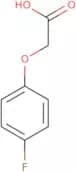
CAS:<p>4-Bromo-2-nitro-1H-imidazole (4BNI) is a synthetic drug that is used in the treatment of cancer. 4BNI inhibits the synthesis of DNA, which leads to cell death by preventing the production of proteins vital for cell division. When 4BNI is taken up by cells it becomes activated and binds to DNA, inhibiting the synthesis of RNA and protein. This process eventually leads to apoptosis (cell death). 4BNI has been shown to be effective against tumors in mice, but has not yet been tested on humans. The uptake of 4BNI in tumor tissue can be visualized using hypoxia imaging techniques such as positron emission tomography or magnetic resonance imaging.</p>Formula:C3H2BrN3O2Purity:Min. 95%Color and Shape:PowderMolecular weight:191.97 g/mol4-Fluorophenoxyacetic acid
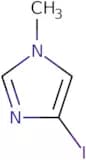
CAS:<p>4-Fluorophenoxyacetic acid is a chemical compound that is used as an insecticide. It has been shown to be effective against the planthopper and ipomoea, two agricultural pests. 4-Fluorophenoxyacetic acid binds to the active site of a specific protein in the insect's cells, inhibiting its function and causing cell death. 4-Fluorophenoxyacetic acid also inhibits the growth of human breast cancer cells in culture. The molecular weight of this compound is 180.2 g/mol and has a melting point of 185°C with a boiling point of 232°C at atmospheric pressure. 4-Fluorophenoxyacetic acid can be synthesized by reacting phenol with acetic anhydride in the presence of palladium complexes and nitrogen atoms. The reaction mechanism for this synthesis is nucleophilic addition to form a covalent bond between the nitrogen atom and sulfur atom on one side of the</p>Formula:C8H7FO3Purity:Min. 95%Color and Shape:PowderMolecular weight:170.14 g/mol4-Iodo-1-methyl-1H-imidazole
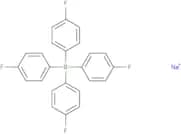
CAS:<p>4-Iodo-1-methyl-1H-imidazole is a trifluoroethylamine that inhibits the activity of tyrosine kinases. It binds to the active site of tyrosine kinase and prevents the binding of ATP, preventing phosphorylation and activation of downstream substrates. 4-Iodo-1-methyl-1H-imidazole has been shown to inhibit the proliferation of tumor xenografts in mice, as well as inhibiting headgroup binding and cellular proliferation in vitro. This agent also has a nanomolar range and high selectivity for protein kinases, which may make it suitable for therapeutic purposes.</p>Formula:C4H5IN2Purity:Min. 95%Molecular weight:208 g/molTetrakis(4-Fluorophenyl)-Borate Sodium (1:1)
CAS:<p>Tetrakis(4-fluorophenyl)borate sodium (1:1) is a solid that is soluble in organic solvents. It has been used as an adsorbent for nuclear waste and organic molecules. Tetrakis(4-fluorophenyl)borate sodium (1:1) has been shown to adsorb hydrophobic molecules such as polycyclic aromatic hydrocarbons, which are difficult to remove from the environment. Tetrakis(4-fluorophenyl)borate sodium (1:1) can be prepared by reacting tetraphenylborate with 4-fluoroboric acid. This reaction produces a mixture of products, of which tetrakis(4-fluorophenyl)borate sodium (1:1) is the most common. Tetrakis(4-fluorophenyl)borate sodium (1:1), like other borate salts, is used in zeolites to</p>Formula:C24H16BF4NaPurity:Min. 95%Molecular weight:414.18 g/molAminoguanidine hydrochloride
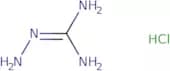
CAS:<p>Aminoguanidine hydrochloride is a basic compound that can be used as an anti-inflammatory drug. It has been shown to have a hypoglycemic effect, which may be due to its ability to increase the activity of glutathione peroxidase and glutathione reductase in experimental models. Aminoguanidine hydrochloride also inhibits the production of inflammatory cytokines such as TNF-α, IL-1β and IL-6. Experiments with transfected cells have shown that aminoguanidine hydrochloride induces neuronal death, which may be due to its ability to inhibit protein synthesis by interfering with ribosomal function.</p>Formula:CH6N4·HClPurity:Min. 95%Color and Shape:White PowderMolecular weight:110.55 g/mol5'-Bromo-2'-hydroxypropiophenone
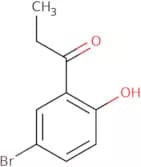
CAS:<p>5'-Bromo-2'-hydroxypropiophenone is a synthetic compound that inhibits the dimerization of survivin, which is a protein involved in cancer pathways. This compound has been shown to inhibit the growth of cells in culture and can be used as an inhibitor for assays. 5'-Bromo-2'-hydroxypropiophenone has also been shown to integrate into DNA, which may lead to chromosomal rearrangements and mutations. It also binds with high affinity to the family of modifications borealin, which are implicated in cellular processes such as cell differentiation and proliferation.</p>Formula:C9H9BrO2Purity:Min. 95%Color and Shape:SolidMolecular weight:229.07 g/molMethyl 3-amino-5-(trifluoromethyl)benzoate
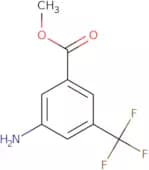
CAS:<p>Please enquire for more information about Methyl 3-amino-5-(trifluoromethyl)benzoate including the price, delivery time and more detailed product information at the technical inquiry form on this page</p>Formula:C9H8F3NO2Purity:Min. 95%Molecular weight:219.16 g/molCortistatin-17 (human) trifluoroacetate salt
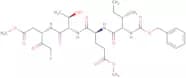
CAS:<p>Please enquire for more information about Cortistatin-17 (human) trifluoroacetate salt including the price, delivery time and more detailed product information at the technical inquiry form on this page</p>Formula:C96H139N27O24S3Purity:Min. 95%Molecular weight:2,151.5 g/molZ-Ile-Glu(OMe)-Thr-DL-Asp(OMe)-fluoromethylketone
CAS:<p>Z-Ile-Glu(OMe)-Thr-DL-Asp(OMe)-fluoromethylketone is an apoptosis inducer that belongs to the category of small molecules. It has been shown to induce apoptosis in cells by binding to DNA and inhibiting transcription, leading to DNA fragmentation and the activation of caspase-8. Z-Ile-Glu(OMe)-Thr-DL-Asp(OMe)-fluoromethylketone has also been shown to have a synergistic effect on cells when combined with other potent inducers of apoptosis. This drug binds to toll receptors (TLR) and IL2 receptors, which are important for cell signaling pathways.</p>Formula:C30H43FN4O11Purity:Min. 95%Molecular weight:654.68 g/mol(1S,4S)-2-Oxa-5-azabicyclo[2.2.1]heptane hydrochloride
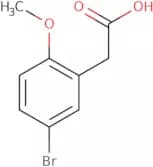
CAS:<p>Please enquire for more information about (1S,4S)-2-Oxa-5-azabicyclo[2.2.1]heptane hydrochloride including the price, delivery time and more detailed product information at the technical inquiry form on this page</p>Formula:C5H10ClNOPurity:Min. 95%Molecular weight:135.59 g/mol(5-Bromo-2-methoxyphenyl)acetic acid
CAS:<p>5-Bromo-2-methoxyphenyl)acetic acid (BMPEA) is a hydroxylated derivative of aspartic acid. It has been shown to induce apoptotic cell death in various cell lines, including human lung cells and rat hippocampal cells. BMPEA is synthesized by the solid-phase method and is characterized by a constant structure. It can be used to treat degenerative diseases and other conditions where apoptosis is desirable, such as Alzheimer's disease, Parkinson's disease, amyotrophic lateral sclerosis, retinitis pigmentosa, and Duchenne muscular dystrophy.</p>Formula:C9H9BrO3Purity:Min. 95%Color and Shape:PowderMolecular weight:245.07 g/mol6-Hydroxy-6-defluoro Ciprofloxacin hydrochloride
CAS:<p>Hydrochloride salt</p>Formula:ClC17H20N3O4Purity:Min. 95%Molecular weight:365.81 g/mol4-Bromo-3,5-dimethylbenzyl alcohol
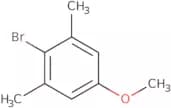
CAS:<p>4-Bromo-3,5-dimethylbenzyl alcohol is a potent anticancer agent that is synthesized from bromoarenes. It has been shown to be effective against cancer cells in the presence of activated carbon, aluminum chloride, and organotellurium. 4-Bromo-3,5-dimethylbenzyl alcohol reacts with peptide hormones and other hormones at the cellular level by inhibiting DNA synthesis. This inhibition prevents the production of proteins that are vital for cell division. The reaction rate is rapid in solvents such as acetonitrile.>>END>></p>Formula:C9H11BrOPurity:Min. 95%Color and Shape:PowderMolecular weight:215.09 g/mol


![(1S,4S)-2-Oxa-5-azabicyclo[2.2.1]heptane hydrochloride](/_next/image/?url=https%3A%2Fstatic.cymitquimica.com%2Fproducts%2F3D%2Fthumb-webp%2FFO07849.webp&w=3840&q=75)