Organic Halides
In this category, you can find organic molecules containing one or more halogen atoms in their structure. These organic halides include brominated, iodinated, chlorinated, and cyclic halide compounds. Organic halides are widely used in organic synthesis, pharmaceuticals, agrochemicals, and materials science due to their reactivity and ability to undergo a variety of chemical transformations. At CymitQuimica, we offer a comprehensive selection of high-quality organic halides to support your research and industrial applications, ensuring reliable and effective performance in your synthetic and analytical projects.
Subcategories of "Organic Halides"
Found 20437 products of "Organic Halides"
Sort by
Purity (%)
0
100
|
0
|
50
|
90
|
95
|
100
(R)-3-Amino-4-(2,4,5-trifluorophenyl)butyric acid
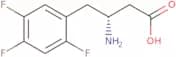
CAS:<p>(R)-3-Amino-4-(2,4,5-trifluorophenyl)butyric acid is an antibacterial agent that inhibits the enzyme acetylcholine esterase. This inhibition prevents the breakdown of acetylcholine, leading to increased levels of this neurotransmitter in the brain and an enhancement of cholinergic transmission. (R)-3-Amino-4-(2,4,5-trifluorophenyl)butyric acid has been shown to be effective against bacterial strains resistant to β-lactam antibiotics. The synthesis of taxol as well as other β-amino acids has been demonstrated using a variety of enzymatic methods. A reaction scheme for the synthesis of nicotinic acetylcholine has also been proposed. (R)-3-Amino-4-(2,4,5-trifluorophenyl)butyric acid is a dipept</p>Formula:C10H10F3NO2Purity:Min. 95%Color and Shape:PowderMolecular weight:233.19 g/mol4-Fluorobenzoic acid
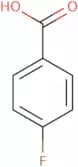
CAS:<p>4-Fluorobenzoic acid is a chemical compound with the molecular formula C6H4FO2 and is a member of the group of chemicals known as carboxylic acids. It has been shown to have high levels of antibacterial activity against Gram-positive bacteria, including methicillin-resistant Staphylococcus aureus (MRSA). 4-Fluorobenzoic acid can be used for wastewater treatment and also has the potential to be used in other applications such as an antimicrobial agent or an additive in food packaging. The mechanism of its antibacterial activity is not well understood but may be related to its ability to inhibit the enzyme diphenolase, which catalyzes the conversion of phenols into quinones.</p>Formula:C7H5FO2Purity:Min. 95%Color and Shape:White To Yellow SolidMolecular weight:140.11 g/molH-His-His-OH trifluoroacetate salt
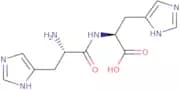
CAS:<p>H-His-His-OH trifluoroacetate salt is a compound that has been extensively studied for its potential use in antimicrobial peptides. It is a small molecule that inhibits the activity of enzymes by binding to a specific region on the enzyme's surface, thereby preventing the progression of an essential chemical reaction. H-His-His-OH trifluoroacetate salt has been shown to inhibit protein synthesis in bacteria and yeast cells, as well as in model systems. The inhibition of protein synthesis may be due to hydrogen bonding between the hydroxyl group on His and the amino groups on His. H-His-His-OH trifluoroacetate salt also has an inhibitory effect on enzymes catalysis and can enhance their activity when used with another substrate.</p>Formula:C12H16N6O3Purity:Min. 95%Molecular weight:292.29 g/mol2-Bromooxazole
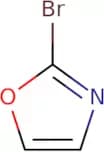
CAS:<p>2-Bromooxazole is a synthetic compound that inhibits the translation of mRNA in pancreatic cancer cells by binding to the interleukin-1 receptor. It also inhibits diacylglycerol synthesis, which causes a reduction in the production of amide and fatty acid. 2-Bromooxazole has been shown to have an immunosuppressive effect on lymphocytic leukemia cells and chronic lymphocytic leukemia cells. This drug is currently being studied for its potential use as an anticancer agent.</p>Formula:C3H2BrNOPurity:Min. 95%Molecular weight:147.96 g/mol4-Chlorophenyl-2-pyridinylmethanol
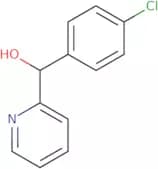
CAS:<p>Please enquire for more information about 4-Chlorophenyl-2-pyridinylmethanol including the price, delivery time and more detailed product information at the technical inquiry form on this page</p>Formula:C12H10ClNOPurity:Min. 95%Molecular weight:219.67 g/molFuraltadone hydrochloride
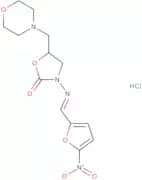
CAS:<p>Furaltadone hydrochloride is a drug that belongs to the class of quinolones. It is used as an antibiotic for the treatment of microbial infections and may be used in combination with other antibiotics. Furaltadone hydrochloride binds to bacterial DNA, inhibiting protein synthesis, leading to cell death. The mechanism of action has not been fully elucidated, but it is thought that furaltadone hydrochloride binds to the sodium ion in the hydroxyl group of DNA. This binding prevents the formation of an antibiotic-inhibitor complex with the enzyme cell wall synthesis that is required for cell wall biosynthesis, inhibiting protein synthesis and cell division. Furaltadone hydrochloride has been shown to have a low systemic effect and high adsorption rate in animals; therefore it may be used as an oral antibiotic or as an injectable drug.</p>Formula:C13H17ClN4O6Purity:Min. 95%Color and Shape:Yellow SolidMolecular weight:360.75 g/mol(Gly22)-Amyloid b-Protein (1-40) trifluoroacetate salt
CAS:<p>Please enquire for more information about (Gly22)-Amyloid b-Protein (1-40) trifluoroacetate salt including the price, delivery time and more detailed product information at the technical inquiry form on this page</p>Formula:C191H291N53O56SPurity:Min. 95%Molecular weight:4,257.74 g/molNeurotensin (1-6) trifluoroacetate salt Pyr-Leu-Tyr-Glu-Asn-Lys-OH trifluoroacetate salt
CAS:<p>Please enquire for more information about Neurotensin (1-6) trifluoroacetate salt Pyr-Leu-Tyr-Glu-Asn-Lys-OH trifluoroacetate salt including the price, delivery time and more detailed product information at the technical inquiry form on this page</p>Formula:C35H52N8O12Purity:Min. 95%Molecular weight:776.83 g/mol2-Bromopropionitrile
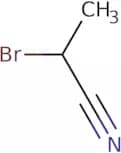
CAS:<p>2-Bromopropionitrile is a chemical compound that is used in the production of nylon. The structure of 2-bromopropionitrile consists of a 6-carbon chain with two bromine atoms attached at either end. It has an n-dimethyl formamide group, which is an organic molecule containing nitrogen and carbon atoms. The 4-methoxybenzenesulfonyl chloride reacts with the 2-bromopropionitrile to give a diene, which has the formula CH=CHCHBr. This diene reacts with hydrochloric acid to produce hydrogen bromide gas and 2-bromopropionic acid. The activation energy for this reaction is 14 kilojoules per mole of reactants, which indicates that it should be carried out at high temperatures and pressures. Halides are able to act as nucleophiles in coordination chemistry because they have lone pairs on their outermost electron shell. Cation</p>Formula:C3H4BrNPurity:Min. 95%Color and Shape:Clear LiquidMolecular weight:133.97 g/mol(Leu116)-Prepro-Neuromedin U (104-136) (human) trifluoroacetate salt
<p>Please enquire for more information about (Leu116)-Prepro-Neuromedin U (104-136) (human) trifluoroacetate salt including the price, delivery time and more detailed product information at the technical inquiry form on this page</p>Formula:C177H276N46O45Purity:Min. 95%Molecular weight:3,768.37 g/moltrans-4-Hydroxy-D-proline hydrochloride
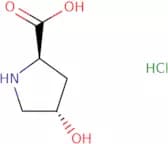
CAS:<p>Please enquire for more information about trans-4-Hydroxy-D-proline hydrochloride including the price, delivery time and more detailed product information at the technical inquiry form on this page</p>Formula:C5H10ClNO3Purity:Min. 95%Molecular weight:167.59 g/mol(Des-Gly10,tBu-D-Gly6,Pro-NHEt 9)-LHRH trifluoroacetate
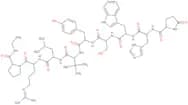
CAS:<p>(Des-Gly10, tBu-D-Gly6,Pro-NHEt 9)-LHRH trifluoroacetate salt Pyr-His-Trp-Ser-Tyr-tBu-D-Gly-Leu-Arg-Pro-NHEt trifluoroacetate salt is a synthetic hormone that is the active form of luteinizing hormone releasing hormone (LHRH), a gonadotropin releasing hormone (GnRH). It has been used in the diagnosis and treatment of prostate cancer. The drug is also used to treat endometriosis and other conditions. It can be administered by injection or as an intranasal spray. The drug inhibits follicular growth and fertility by downregulating estradiol benzoate production.</p>Formula:C59H84N16O12•(C2HF3O2)xPurity:Min. 95%Color and Shape:PowderMolecular weight:1,209.4 g/molH-p-Chloro-Phe-D-Cys-b-(3-pyridyl)-Ala-D-Trp-Lys-Val-Cys-p-chloro-Phe-NH2 trifluoroacetate salt (Disulfide bond)
CAS:<p>Please enquire for more information about H-p-Chloro-Phe-D-Cys-b-(3-pyridyl)-Ala-D-Trp-Lys-Val-Cys-p-chloro-Phe-NH2 trifluoroacetate salt (Disulfide bond) including the price, delivery time and more detailed product information at the technical inquiry form on this page</p>Formula:C54H66Cl2N12O8S2Purity:Min. 95%Molecular weight:1,146.22 g/molAtrial Natriuretic Factor (1-28) (human) hydrochloride salt
CAS:Controlled Product<p>Please enquire for more information about Atrial Natriuretic Factor (1-28) (human) hydrochloride salt including the price, delivery time and more detailed product information at the technical inquiry form on this page</p>Formula:C127H203N45O39S3Purity:Min. 95%Molecular weight:3,080.45 g/mol1-Bromo-3,3-dimethylbutane
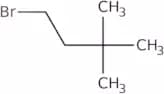
CAS:<p>1-Bromo-3,3-dimethylbutane is an alkali metal compound that can be used as a substitute for ethylene. It is expressed in the liquid phase and reacts with halogens to form reactive intermediates. These reactive intermediates react with other molecules to cause bond cleavage. The reaction time is dependent on the temperature of the system. 1-Bromo-3,3-dimethylbutane has three isomers that are formed during the reaction: 2-, 3-, and 4-bromohexane. The mechanism for this reaction involves a single electron transfer from one molecule to another, which causes a series of reactions that leads to the formation of 1-bromo-3,3-dimethylbutane. This process occurs spontaneously due to irradiation by ultraviolet light or electron beams.</p>Formula:C6H13BrPurity:Min. 95%Molecular weight:165.07 g/molAcetyl-(D-Phe2)-GRF (1-29) amide (human) trifluoroacetate salt
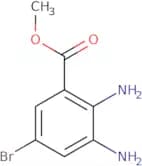
CAS:<p>Please enquire for more information about Acetyl-(D-Phe2)-GRF (1-29) amide (human) trifluoroacetate salt including the price, delivery time and more detailed product information at the technical inquiry form on this page</p>Formula:C157H252N44O43SPurity:Min. 95%Molecular weight:3,476.02 g/molMethyl 2,3-diamino-5-bromobenzoate
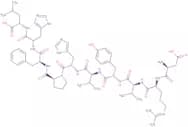
CAS:<p>Please enquire for more information about Methyl 2,3-diamino-5-bromobenzoate including the price, delivery time and more detailed product information at the technical inquiry form on this page</p>Formula:C8H9BrN2O2Purity:Min. 95%Molecular weight:245.07 g/mol(Val5)-Angiotensin I trifluoroacetate salt
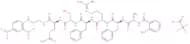
CAS:<p>Angiotensin I is a peptide that belongs to the class of substances called angiotensins. This substance is found in many tissues and organs, including the brain, adrenal gland, and lung. Angiotensin I has been shown to be a pressor agent and also has biochemical effects on amino acid composition. The c-terminal sequence of this substance has been determined by incubating the molecule with pepsin at different pH values. The molecular weight of this substance is 938 Da and it has an amino acid composition of Asp-Arg-Val-Tyr-Val-His-Pro-Phe-His-Leu.</p>Formula:C61H87N17O14Purity:Min. 95%Molecular weight:1,282.45 g/molAbz-Ala-Phe-Arg-Phe-Ser-Gln-EDDnp trifluoroacetate salt
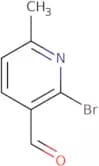
CAS:<p>Please enquire for more information about Abz-Ala-Phe-Arg-Phe-Ser-Gln-EDDnp trifluoroacetate salt including the price, delivery time and more detailed product information at the technical inquiry form on this page</p>Formula:C50H63N15O13Purity:Min. 95%Molecular weight:1,082.13 g/mol2-Bromo-6-methylpyridine-3-carboxaldehyde
CAS:<p>2-Bromo-6-methylpyridine-3-carboxaldehyde (BMPCA) is a pharmacological agent that belongs to the group of antagonists. It has been shown to be a potent antagonist at the NMDA receptor and may be used for treating neuropathic pain. BMPCA also has been shown to have competitive inhibition at the naphthyridine receptor, which may allow it to act as an antagonist or an agonist depending on its binding site. The regioisomeric analogs of BMPCA are 2-(2,5-dichloropyridyl)-6-methylpyridine-3-carboxaldehyde and 2-(2,5-dimethylpyridyl)-6-methylpyridine-3-carboxaldehyde. These analogs have been shown to inhibit the growth of tumor cells in vitro and in vivo.</p>Formula:C7H6BrNOPurity:Min. 95%Molecular weight:200.03 g/mol