Organic Halides
In this category, you can find organic molecules containing one or more halogen atoms in their structure. These organic halides include brominated, iodinated, chlorinated, and cyclic halide compounds. Organic halides are widely used in organic synthesis, pharmaceuticals, agrochemicals, and materials science due to their reactivity and ability to undergo a variety of chemical transformations. At CymitQuimica, we offer a comprehensive selection of high-quality organic halides to support your research and industrial applications, ensuring reliable and effective performance in your synthetic and analytical projects.
Subcategories of "Organic Halides"
Found 20437 products of "Organic Halides"
Sort by
Purity (%)
0
100
|
0
|
50
|
90
|
95
|
100
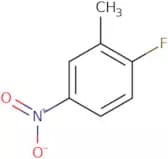
4-Fluoro-3-methylnitrobenzene
CAS:<p>4-Fluoro-3-methylnitrobenzene is a carbazole that is used as a pesticide. It has been shown to be effective against typhimurium and other bacteria. The mechanism of action of this compound may involve nitrenium ion formation, which is an intermediate in the reaction of ammonium nitrate with calcium carbonate. 4-Fluoro-3-methylnitrobenzene has two isomers: 4-fluoro-3-methylnitrobenzoic acid and 4-fluoronitrobenzoic acid, but only the former reacts with ammonium nitrate. The reaction time for this compound to form carcinogenic nitrosamines can vary from about one day to several months. Chemical shift data for this compound reveal its radical mechanism, which explains its low efficiency. This compound also has optical properties that can cause fluorescence or phosphorescence when exposed to ultraviolet light or laser beams, respectively.</p>Formula:C7H6FNO2Purity:Min. 95%Molecular weight:155.13 g/molThrombin Receptor Antagonist trifluoroacetate salt
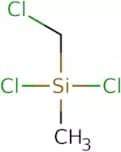
CAS:<p>Please enquire for more information about Thrombin Receptor Antagonist trifluoroacetate salt including the price, delivery time and more detailed product information at the technical inquiry form on this page</p>Formula:C58H91N17O20S2Purity:Min. 95%Molecular weight:1,410.58 g/molChloromethyl(dichloro)methylsilane
CAS:<p>Chloromethyl(dichloro)methylsilane is a diphenyl ether that can be generated by the reaction of chloromethylchlorosilane with sodium in liquid ammonia. Chloromethyl(dichloro)methylsilane is used to prepare Grignard reagents and coatings. It reacts with benzyl groups in the presence of base to form phenyldichlorosilanes, which are used as thermally stable coatings. Chloromethyl(dichloro)methylsilane has been shown to undergo bond cleavage under thermal conditions, forming a molecule with a hydroxyl group and chloride functional group. Gel permeation chromatography has revealed that this substance contains no reactive functional groups other than the chloromethoxy group.</p>Formula:C2H5Cl3SiPurity:Min. 95%Color and Shape:Clear LiquidMolecular weight:163.5 g/mol7-Methoxy-4-(trifluoromethyl)coumarin
CAS:<p>7-Methoxy-4-(trifluoromethyl)coumarin is a potent and selective aromatase inhibitor. It inhibits the activity of the enzyme, which converts testosterone to estradiol. The inhibition of this enzyme may be beneficial in the treatment of breast cancer. This compound has also been shown to inhibit the activity of P450 enzymes and coumarin derivatives, which are involved in drug metabolism and detoxification.</p>Formula:C11H7F3O3Purity:Min. 95%Molecular weight:244.17 g/molN-Allyl-n-(2-chloro-5-cyanophenyl)acetamide
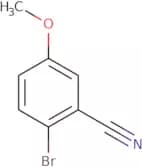
CAS:<p>N-Allyl-n-(2-chloro-5-cyanophenyl)acetamide is a fine chemical that is used as a building block in the synthesis of other compounds. It is also used in research and as a reagent or speciality chemical. N-Allyl-n-(2-chloro-5-cyanophenyl)acetamide has been shown to be an excellent intermediate for complex organic reactions, such as coupling reactions with amines, alcohols, and thiols. In addition, this compound can be used to form new scaffolds for biological studies.</p>Formula:C12H11ClN2OPurity:Min. 95%Color and Shape:PowderMolecular weight:234.68 g/mol4-Bromo-3-cyanoanisole
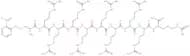
CAS:<p>4-Bromo-3-cyanoanisole is a potent inhibitor of the tyrosine kinase receptor. The functional theory behind this drug's mechanism of action is that it binds to the ATP binding site of the receptor and blocks ATP from binding, preventing downstream signaling. 4-Bromo-3-cyanoanisole has been shown to be an effective inhibitor of cancer cell proliferation. This drug has also been shown to inhibit microtubule assembly and disrupt cellular function by inhibiting protein synthesis.</p>Formula:C8H6BrNOPurity:Min. 95%Color and Shape:PowderMolecular weight:212.04 g/molH-Cys(NPys)-Arg-Arg-Arg-Arg-Arg-Arg-Arg-Arg-Arg-NH2 trifluoroacetate salt
CAS:<p>Please enquire for more information about H-Cys(NPys)-Arg-Arg-Arg-Arg-Arg-Arg-Arg-Arg-Arg-NH2 trifluoroacetate salt including the price, delivery time and more detailed product information at the technical inquiry form on this page</p>Formula:C62H118N40O12S2Purity:Min. 95%Molecular weight:1,679.99 g/molBiotinyl-Pancreatic Polypeptide (human) trifluoroacetate salt
CAS:<p>Please enquire for more information about Biotinyl-Pancreatic Polypeptide (human) trifluoroacetate salt including the price, delivery time and more detailed product information at the technical inquiry form on this page</p>Formula:C195H301N55O56S3Purity:Min. 95%Molecular weight:4,408.01 g/molPhenylacetyl-(D-Arg2·28,p-chloro-Phe6, Homoarg 9·29,Tyr(Me)10, Abu 15, Nle 27)-GRF (1-29) amide (human)
CAS:<p>Please enquire for more information about Phenylacetyl-(D-Arg2·28,p-chloro-Phe6, Homoarg 9·29,Tyr(Me)10, Abu 15, Nle 27)-GRF (1-29) amide (human) including the price, delivery time and more detailed product information at the technical inquiry form on this page</p>Formula:C172H284ClN53O41Purity:Min. 95%Molecular weight:3,785.88 g/mol3,5-Dichloropyrazine-2-carboxylicacid
CAS:<p>Please enquire for more information about 3,5-Dichloropyrazine-2-carboxylicacid including the price, delivery time and more detailed product information at the technical inquiry form on this page</p>Formula:C5H2Cl2N2O2Purity:Min. 95%Molecular weight:192.99 g/mol6-Bromo-pyrazolo[1,5-a]pyrimidine
CAS:<p>6-Bromo-pyrazolo[1,5-a]pyrimidine is a bone morphogenetic protein (BMP) inhibitor. It has been shown to be a potent inhibitor of the tyrosine kinase activity of BMP receptors and may be useful for the development of new strategies for the treatment of osteoporosis. 6-Bromo-pyrazolo[1,5-a]pyrimidine is also an effective inhibitor of the proliferation and survival of cancer cells. It inhibits cell growth by interfering with cellular signaling pathways that regulate these processes. 6-Bromo-pyrazolo[1,5-a]pyrimidine was also found to inhibit the production of bone morphogenetic protein 2 (BMP2) in mouse calvaria cells without affecting other bone metabolism markers such as alkaline phosphatase or osteocalcin.</p>Formula:C6H4BrN3Purity:Min. 95%Color and Shape:PowderMolecular weight:198.02 g/mol4-[(4-chlorophenyl)-2-pyridinylmethoxy]-1-piperidinecarboxylic acid ethylester
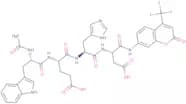
CAS:<p>Please enquire for more information about 4-[(4-chlorophenyl)-2-pyridinylmethoxy]-1-piperidinecarboxylic acid ethylester including the price, delivery time and more detailed product information at the technical inquiry form on this page</p>Formula:C20H23ClN2O3Purity:Min. 95%Molecular weight:374.86 g/molAc-Trp-Glu-His-Asp-AFC trifluoroacetate salt
CAS:<p>Please enquire for more information about Ac-Trp-Glu-His-Asp-AFC trifluoroacetate salt including the price, delivery time and more detailed product information at the technical inquiry form on this page</p>Formula:C38H37F3N8O11Purity:Min. 95%Molecular weight:838.74 g/mol2-(Chloromethyl)-5-(trifluromethyl)-1,3,4-oxadiazole
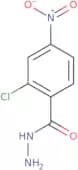
CAS:<p>Please enquire for more information about 2-(Chloromethyl)-5-(trifluromethyl)-1,3,4-oxadiazole including the price, delivery time and more detailed product information at the technical inquiry form on this page</p>Formula:C4H2ClF3N2OPurity:Min. 95%Color and Shape:Colorless PowderMolecular weight:186.52 g/mol2-Chloro-4-nitrobenzhydrazide
CAS:<p>2-Chloro-4-nitrobenzhydrazide is a fine chemical that can be used as a versatile building block, useful intermediate, and reaction component. CAS No. 67345-78-2 is a speciality chemical that is useful in research chemicals and complex compounds. It has high quality and can be used to make reagents.</p>Formula:C7H6ClN3O3Purity:Min. 95%Molecular weight:215.59 g/molAmyloid Bri Protein (1-34) trifluoroacetate salt
CAS:<p>Please enquire for more information about Amyloid Bri Protein (1-34) trifluoroacetate salt including the price, delivery time and more detailed product information at the technical inquiry form on this page</p>Formula:C173H273N49O52S2Purity:Min. 95%Molecular weight:3,935.45 g/mol3-(2,6-Dichlorophenyl)-5-methylisoxazole-4-carbonyl chloride
CAS:<p>3-(2,6-Dichlorophenyl)-5-methylisoxazole-4-carbonyl chloride is a chlorinated, thermosetting emulsifier that is used in the production of pressure sensitive adhesives. This compound has a high viscosity and is used as a retardant and an emulsifier. It is also used as a trichloride to produce vinyl chloride monomer. 3-(2,6-Dichlorophenyl)-5-methylisoxazole-4-carbonyl chloride inhibits the growth of bacteria by acting as an antimicrobial agent. The mechanism of action for this compound is not fully understood but it has been shown to inhibit protein synthesis in bacteria.</p>Formula:C11H6Cl3NO2Purity:Min. 95%Molecular weight:290.53 g/molH-Phe-2-chlorotrityl resin (200-400 mesh) (Low Substitution)
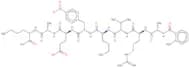
<p>Please enquire for more information about H-Phe-2-chlorotrityl resin (200-400 mesh) (Low Substitution) including the price, delivery time and more detailed product information at the technical inquiry form on this page</p>Purity:Min. 95%H-Glu-Glu-Lys-Leu-Ile-Val-Val-Ala-Phe-OH trifluoroacetate salt
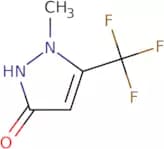
CAS:<p>Please enquire for more information about H-Glu-Glu-Lys-Leu-Ile-Val-Val-Ala-Phe-OH trifluoroacetate salt including the price, delivery time and more detailed product information at the technical inquiry form on this page</p>Formula:C50H82N10O14Purity:Min. 95%Molecular weight:1,047.25 g/mol1,2-Dihydro-1-Methyl-5-(Trifluoromethyl)-3H-Pyrazol-3-One
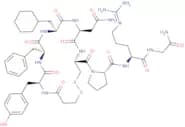
CAS:<p>Please enquire for more information about 1,2-Dihydro-1-Methyl-5-(Trifluoromethyl)-3H-Pyrazol-3-One including the price, delivery time and more detailed product information at the technical inquiry form on this page</p>Formula:C5H5F3N2OPurity:Min. 95%Molecular weight:166.1 g/mol(Deamino-Cys1,b-cyclohexyl-Ala4,Arg8)-Vasopressin trifluoroacetate salt
CAS:<p>Desmopressin is a synthetic analogue of vasopressin, which is used to treat disorders associated with insufficient secretion of vasopressin. It has been shown that desmopressin binds to the vasopressin V2 receptor subtype and stimulates the release of arginine-vasopressin in corticotropin-releasing hormone (CRH)-treated rat pituitary cells. This stimulation was mediated by a residue on the Cys1,b-cyclohexyl residue. The binding of desmopressin to this site was demonstrated in vitro using binding experiments on rat brain synaptosomes. Desmopressin has also been shown to stimulate ovulation in rats and humans, and it has been shown to be effective for treating nocturnal enuresis in children.</p>Formula:C50H71N13O11S2Purity:Min. 95%Molecular weight:1,094.31 g/mol2-Iodo-5-methoxybenzoic acid
CAS:<p>2-Iodo-5-methoxybenzoic acid is a macrocyclic compound that has been synthesized in the Wittig reaction. It was first prepared by catalyzed intramolecular aryl demethylation of 2-iodo-5-nitrobenzoic acid, followed by coupling with methyl vinyl ketone. The cytotoxic activity of this compound is due to its ability to inhibit the synthesis of protein and DNA and induce apoptosis. This molecule has been shown to be effective against liverworts and ethers.</p>Formula:C8H7IO3Purity:Min. 95%Color and Shape:PowderMolecular weight:278.04 g/molDefensin HNP-1 (human) trifluoroacetate salt
CAS:<p>Defensin HNP-1 is a trifluoroacetate salt of human defensin HNP-1. It has antimicrobial activity against Gram-negative and Gram-positive bacteria, including Mycobacterium tuberculosis, Staphylococcus aureus, Mycoplasma pneumoniae, Streptococcus pneumoniae, Haemophilus influenzae and Enterococcus faecalis. The purified protein also has broad-spectrum activity against cancer cells. Defensin HNP-1 is most active in neutrophils from humans with active cystic fibrosis. The protein binds to the bacterial cell membrane and causes the release of lysosomal enzymes that kill the bacteria. Defensin HNP-1 is also able to inhibit the growth of tumor cells as it can be internalized into these cells by endocytosis.</p>Formula:C150H222N44O38S6Purity:Min. 95%Molecular weight:3,442.04 g/molAnthranilyl-HIV Protease Substrate V trifluoroacetate salt
CAS:<p>Please enquire for more information about Anthranilyl-HIV Protease Substrate V trifluoroacetate salt including the price, delivery time and more detailed product information at the technical inquiry form on this page</p>Formula:C50H76N14O13Purity:Min. 95%Molecular weight:1,081.23 g/molAdropin (34-76) (human, mouse, rat) trifluoroacetate salt
CAS:<p>Please enquire for more information about Adropin (34-76) (human, mouse, rat) trifluoroacetate salt including the price, delivery time and more detailed product information at the technical inquiry form on this page</p>Formula:C190H293N55O68S2Purity:Min. 95%Molecular weight:4,499.82 g/mol(Arg13)-Amyloid b-Protein (1-40) trifluoroacetate salt
CAS:<p>Please enquire for more information about (Arg13)-Amyloid b-Protein (1-40) trifluoroacetate salt including the price, delivery time and more detailed product information at the technical inquiry form on this page</p>Formula:C194H300N54O58SPurity:Min. 95%Molecular weight:4,348.85 g/mol5,6-Dichloronicotinic acid
CAS:<p>5,6-Dichloronicotinic acid is a compound that can be synthesized by reacting methyl ketones with chloroacetic acid. It is used in the synthesis of maleic anhydride and has been shown to inhibit the catalysis of acetylcholine chloride. 5,6-Dichloronicotinic acid has also been shown to have an inhibitory effect on Alzheimer's disease. The kinetic mechanism for this inhibition occurs through the hydrolysis step of 5,6-Dichloronicotinic acid by magnesium chloride in hexane solution. The reactive acylation reaction proceeds when 5,6-Dichloronicotinic acid reacts with acetic anhydride in the presence of pyridine.</p>Formula:C6H3Cl2NO2Color and Shape:PowderMolecular weight:192 g/molH-Lys(Mtt)-2-chlorotrityl resin (200-400 mesh)
<p>Please enquire for more information about H-Lys(Mtt)-2-chlorotrityl resin (200-400 mesh) including the price, delivery time and more detailed product information at the technical inquiry form on this page</p>Purity:Min. 95%(Val671)-Amyloid b/A4 Protein Precursor770 (667-676) trifluoroacetate salt
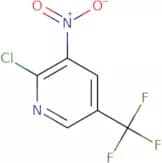
CAS:<p>Please enquire for more information about (Val671)-Amyloid b/A4 Protein Precursor770 (667-676) trifluoroacetate salt including the price, delivery time and more detailed product information at the technical inquiry form on this page</p>Formula:C51H82N14O18Purity:Min. 95%Molecular weight:1,179.28 g/mol2-chloro-3-nitro-5-(trifluoromethyl)pyridine
CAS:<p>Please enquire for more information about 2-chloro-3-nitro-5-(trifluoromethyl)pyridine including the price, delivery time and more detailed product information at the technical inquiry form on this page</p>Formula:C6H2ClF3N2O2Purity:Min. 95%Molecular weight:226.54 g/molOxyntomodulin (bovine, dog, porcine) trifluoroacetate salt
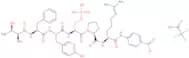
CAS:<p>Please enquire for more information about Oxyntomodulin (bovine, dog, porcine) trifluoroacetate salt including the price, delivery time and more detailed product information at the technical inquiry form on this page</p>Formula:C192H295N59O60SPurity:Min. 95%Molecular weight:4,421.82 g/molH-Trp-Phe-Tyr-Ser(PO3H2)-Pro-Arg-pNA trifluoroacetate salt
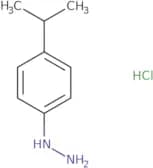
CAS:<p>Please enquire for more information about H-Trp-Phe-Tyr-Ser(PO3H2)-Pro-Arg-pNA trifluoroacetate salt including the price, delivery time and more detailed product information at the technical inquiry form on this page</p>Formula:C49H59N12O13PPurity:Min. 95%Molecular weight:1,055.04 g/mol4-Isopropylphenylhydrazine hydrochloride
CAS:<p>4-Isopropylphenylhydrazine, hydrochloride (IPH) is a chemical compound that has been shown to induce rearrangements in the indolenines. IPH can also be used as a nucleophile. IPH is regioselective and stereoselective for the indole ring system. It has shown to react with nucleophiles such as alcohols, amines, and thiols.</p>Formula:C9H14N2•HClPurity:Min. 95%Color and Shape:PowderMolecular weight:186.68 g/molHCV NS4A Protein (21-34) (JT strain) trifluoroacetate salt
CAS:<p>Please enquire for more information about HCV NS4A Protein (21-34) (JT strain) trifluoroacetate salt including the price, delivery time and more detailed product information at the technical inquiry form on this page</p>Formula:C63H116N20O17Purity:Min. 95%Molecular weight:1,425.72 g/molSarafotoxin B trifluoroacetate salt
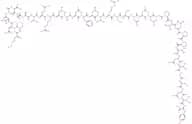
CAS:<p>Component of snake venom; part of a family of vasoconstrictor isopeptides</p>Formula:C110H159N27O34S5Purity:Min. 95%Molecular weight:2,563.93 g/mol2-(4-Chlorophenyl-acetyl)benzoic acid
CAS:<p>2-(4-Chlorophenyl-acetyl)benzoic acid is a fine chemical that is a versatile building block and useful intermediate. 2-(4-Chlorophenyl-acetyl)benzoic acid is used in the manufacture of other chemicals, such as pharmaceuticals, pesticides, dyes, or perfumes. It is also used for research purposes and as a reagent. It has a CAS number of 53242-76-5.</p>Formula:C15H11ClO3Purity:Min. 95%Color and Shape:PowderMolecular weight:274.7 g/molAmylin (mouse, rat) trifluoroacetate salt
CAS:<p>Trifluoroacetate salt</p>Formula:C167H272N52O53S2Purity:Min. 95%Molecular weight:3,920.4 g/molAc-Glu-Asp(EDANS)-Lys-Pro-Ile-Leu-Phe-Phe-Arg-Leu-Gly-Lys(DABCYL)-Glu-NH2 trifluoroacetate salt
CAS:<p>Please enquire for more information about Ac-Glu-Asp(EDANS)-Lys-Pro-Ile-Leu-Phe-Phe-Arg-Leu-Gly-Lys(DABCYL)-Glu-NH2 trifluoroacetate salt including the price, delivery time and more detailed product information at the technical inquiry form on this page</p>Formula:C104H146N24O23SPurity:Min. 95%Molecular weight:2,132.49 g/mol6,8-Dichlorochromone-2-carboxylic acid
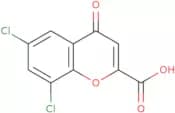
CAS:<p>6,8-Dichlorochromone-2-carboxylic acid is a fine chemical that is used as a building block in the synthesis of complex compounds. It is also a versatile building block that can be used in many reactions, such as nucleophilic substitution, electrophilic addition, and condensation reactions. This compound has CAS number 16722-38-6 and is a reagent for research purposes.</p>Formula:C10H4Cl2O4Purity:Min. 95%Color and Shape:PowderMolecular weight:259.04 g/mol(Trp11,D-Phe15·16)-SDF-1 (7-16) (Dimer) (human, cat, mouse) trifluoroacetate salt
<p>Please enquire for more information about (Trp11,D-Phe15·16)-SDF-1 (7-16) (Dimer) (human, cat, mouse) trifluoroacetate salt including the price, delivery time and more detailed product information at the technical inquiry form on this page</p>Formula:C134H180N34O26S2Purity:Min. 95%Molecular weight:2,747.21 g/molRF9 trifluoroacetate salt
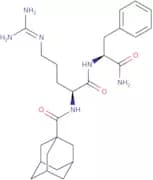
CAS:<p>RF9 is a dipeptide that is structurally similar to the endogenous neuropeptides kisspeptin and arginine-vasopressin. RF9 binds to the GPR54 receptor, which is a G protein-coupled receptor that regulates secretion of luteinizing hormone in the anterior pituitary gland, as well as sexual desire and function. RF9 has been shown to be an antagonist of the GPR54 receptor and has been shown to inhibit the secretion of luteinizing hormone in primates.</p>Formula:C26H38N6O3Purity:Min. 95%Molecular weight:482.62 g/mol(S)-3,3'-Dibromo-5,5',6,6',7,7',8,8'-octahydro-1,1'-binaphthalene-2,2'-diol
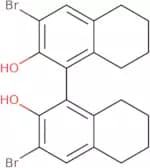
CAS:<p>(S)-3,3'-Dibromo-5,5',6,6',7,7',8,8'-octahydro-1,1'-binaphthalene-2,2'-diol is a synthetic compound that has been prepared by a Diels-Alder reaction. It is used as an asymmetric synthesis catalyst for the production of optically active compounds. The ligands are catalysts for the reaction and can be easily replaced with different ligands to produce different products. This compound has been researched for its potential use in the production of pharmaceuticals and other chemicals.</p>Formula:C20H20Br2O2Purity:Min. 95%Color and Shape:White To Yellow SolidMolecular weight:452.18 g/mol2-Chloro-5-pyridylcarbinol
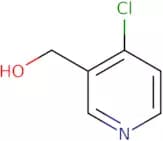
CAS:<p>2-Chloro-5-pyridylcarbinol is an alkene that features a five-membered ring. It is a conformationally rigid molecule, which means it has no rotational or vibrational barriers. The molecule can be classified as a tricyclic heterocycle because the carbon atoms are arranged in three rings. The analogues of this compound feature six-membered carbocycles and intramolecular cycloadditions. 2-Chloro-5-pyridylcarbinol also constitutes one of the azomethine adducts of nicotine, which is a type of tricyclic heterocycle.</p>Formula:C6H6ClNOPurity:Min. 95%Molecular weight:143.57 g/mol(Ser8)-GLP-1 (7-36) amide (human, bovine, guinea pig, mouse, rat) trifluoroacetate salt
CAS:<p>Please enquire for more information about (Ser8)-GLP-1 (7-36) amide (human, bovine, guinea pig, mouse, rat) trifluoroacetate salt including the price, delivery time and more detailed product information at the technical inquiry form on this page</p>Formula:C149H226N40O46Purity:Min. 95%Molecular weight:3,313.63 g/molGalanin Message Associated Peptide (1-41) amide trifluoroacetate salt
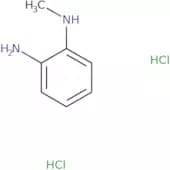
CAS:<p>Please enquire for more information about Galanin Message Associated Peptide (1-41) amide trifluoroacetate salt including the price, delivery time and more detailed product information at the technical inquiry form on this page</p>Formula:C206H326N56O64SPurity:Min. 95%Molecular weight:4,643.2 g/molN-Methyl-1,2-phenylenediamine dihydrochloride
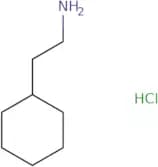
CAS:<p>N-Methyl-1,2-phenylenediamine dihydrochloride (NMP) is a synthetic compound that is used as the precursor to various pharmaceuticals, such as the antihypertensive drug clonidine. NMP can be synthesized from benzene and ammonia or phenylmagnesium bromide. It is carcinogenic in animals and humans, and has been shown to cause DNA damage and cell apoptosis. The chemical has a high potential for nitrosation reactions when exposed to nitrites. This reaction produces nitric oxide, which is cytotoxic and can lead to liver cancer in rats.<br>The synthesis of NMP generates impurities such as methanol solvent, sodium sulfide, and hydrogen chloride gas. These impurities are often found in recycled NMP due to incomplete removal during processing.</p>Formula:C7H12Cl2N2Purity:Min. 95%Color and Shape:PowderMolecular weight:195.09 g/mol2-Cyclohexylethanamine hydrochloride
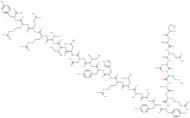
CAS:<p>Please enquire for more information about 2-Cyclohexylethanamine hydrochloride including the price, delivery time and more detailed product information at the technical inquiry form on this page</p>Formula:C8H18ClNPurity:Min. 95%Color and Shape:PowderMolecular weight:163.69 g/molNeuropeptide Y (13-36) (human, rat) trifluoroacetate salt
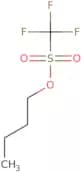
CAS:<p>Trifluoroacetate salt</p>Formula:C134H207N41O36SPurity:Min. 95%Molecular weight:3,000.4 g/molButyl Trifluoromethanesulfonate
CAS:<p>Butyl trifluoromethanesulfonate is an immunoregulatory agent that has been shown to have insulin-sensitizing and anti-inflammatory properties. It has been reported to cause a significant reduction in the concentration of glucose in the blood, which may be due to its ability to inhibit the synthesis of cholesterol esters. Butyl trifluoromethanesulfonate is also used as a solvent in detergent compositions, and as a reagent for synthesizing quinoline derivatives. This compound has been shown to increase the viscosity of oils and other organic solvents, making it useful for a wide range of industrial applications.</p>Formula:C5H9F3O3SPurity:Min. 95%Color and Shape:Clear LiquidMolecular weight:206.18 g/mol4-Bromo-2-pyrrolecarboxaldehyde
CAS:<p>4-Bromo-2-pyrrolecarboxaldehyde is a synthetic chemical that is used as an antifungal agent. It inhibits the growth of filamentous fungi by binding to their pyrrole rings and inhibiting the synthesis of proteins. 4-Bromo-2-pyrrolecarboxaldehyde has shown in vitro antifungal activity against isolates of Candida albicans, Aspergillus niger, and Fusarium oxysporum. This compound also has substitutions at positions 1 and 2 of the pyrrole ring, which are thought to be responsible for its inhibitory properties. 4-Bromo-2-pyrrolecarboxaldehyde is soluble in organic solvents such as acetone and chloroform.</p>Formula:C5H4BrNOPurity:Min. 95%Color and Shape:PowderMolecular weight:174 g/mol





![6-Bromo-pyrazolo[1,5-a]pyrimidine](/_next/image/?url=https%3A%2Fstatic.cymitquimica.com%2Fproducts%2F3D%2Fthumb-webp%2FFB140359.webp&w=3840&q=75)
![4-[(4-chlorophenyl)-2-pyridinylmethoxy]-1-piperidinecarboxylic acid ethylester](/_next/image/?url=https%3A%2Fstatic.cymitquimica.com%2Fproducts%2F3D%2Fthumb-webp%2FFP152183.webp&w=3840&q=75)