Organic Halides
Subcategories of "Organic Halides"
Found 20442 products of "Organic Halides"
4,5-Dibromo-1,2,6,7-tertahydro-8H-indeno[5,4-b]furan-8-one
CAS:4,5-Dibromo-1,2,6,7-tertahydro-8H-indeno[5,4-b]furan-8-one is a chemical reagent that is used for the debromination of ethyl cyanoacetate. The nucleophilic nature of the hydroxyl group in the target compound makes it an efficient substrate for this reaction. This reagent can be used to synthesize ramelteon which is a drug approved by the U.S. Food and Drug Administration (FDA) for insomnia treatment. This high yield synthesis highlights 4,5-dibromo-1,2,6,7-tertahydro-8H-indeno[5,4b]furan-8one's usefulness as a debrominating agent.
Formula:C11H8Br2O2Purity:Min. 95%Molecular weight:331.99 g/molRef: 3D-FD21568
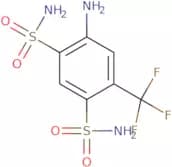
Discontinued product4-Amino-6-(trifluoromethyl)benzene-1,3-disulfonamide
CAS:4-Amino-6-(trifluoromethyl)benzene-1,3-disulfonamide (4AFBDS) is a chemical compound that can be used for the treatment of wastewater. It has shown to be effective against anhydrase, which is an enzyme that catalyzes the conversion of water to hydrogen peroxide and hydroxide ion. 4AFBDS also attenuates oxidative stress in cardiac cells and inhibits the production of active oxygen species by inhibiting the activity of carbonic anhydrase. The chromatographic method used to detect 4AFBDS was found to be more sensitive than a standard colorimetric assay, making it a better tool for detecting this compound in wastewater samples. br> br> br> br> br> This compound has been shown to have inhibitory effects on e3 ubiquitin ligase, which plays a role in protein degradation via aut
Formula:C7H8F3N3O4S2Purity:Min. 95%Molecular weight:319.28 g/molRef: 3D-FA29652
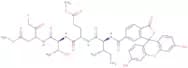
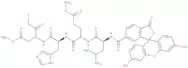
Discontinued productFluorescein-6-carbonyl-Ile-Glu(OMe)-Thr-DL-Asp(OMe)-fluoromethylketone
CAS:Please enquire for more information about Fluorescein-6-carbonyl-Ile-Glu(OMe)-Thr-DL-Asp(OMe)-fluoromethylketone including the price, delivery time and more detailed product information at the technical inquiry form on this page
Formula:C43H47FN4O15Purity:Min. 95%Molecular weight:878.85 g/molRef: 3D-FF111109
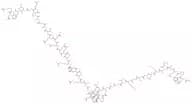
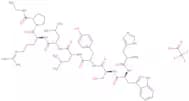
Discontinued productPancreastatin (dephosphorylated) (porcine) trifluoroacetate salt
CAS:Pancreastatin is a cytosolic protein that inhibits the production of peptide hormones such as glucagon, insulin, and gastrin. It is used to treat bowel disease, including carcinoid syndrome and inflammatory bowel disease. Pancreastatin has been shown to inhibit the activity of cyclase enzymes that are responsible for the production of these hormones. Pancreatic beta-cells produce pancreatic polypeptide (PP), which is converted by pancreastatin into inactive PP2. Pancreatic alpha-cells produce somatostatin (SS), which is converted by pancreastatin into inactive SS2. Pancreatic delta cells produce pancreatic polypeptide (PP), which is not affected by pancreastatin. Pancreatic somatostatinomas secrete SS, which is not affected by pancreastatin.
Formula:C214H330N68O76SPurity:Min. 95%Molecular weight:5,103.39 g/molRef: 3D-FP109742
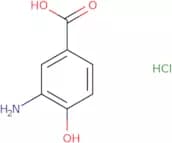
Discontinued product3-Amino-4-hydroxybenzoic acid hydrochloride
CAS:3-Amino-4-hydroxybenzoic acid hydrochloride (3ABA) is a crystalline compound with a molecular formula of C6H5NO2. It is an acidic compound that is soluble in water and alcohol, but not in ether. 3ABA has been used as the starting material for the synthesis of many other organic compounds. It can be obtained by reacting phenol with chlorobenzoyl chloride to form the chlorobenzoate salt, which on hydrolysis yields 3ABA. This compound has also been used as a reagent for synthesizing carbon nanotubes. The crystal structure of 3ABA was determined using X-ray diffraction data from crystallographic studies, and it was found to have three independent molecules per unit cell. Diffraction indicated that each molecule is composed of two benzene rings joined by a single bond between carbon atoms 1 and 2 and another bond between carbon atoms 2 and 3.
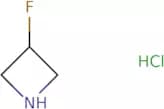
Formula:C7H8ClNO3Purity:Min. 95%Molecular weight:189.6 g/mol3-fluoroazetidine hydrochloride
CAS:3-fluoroazetidine hydrochloride is a chemical compound that can be used as a building block, intermediate or reagent in the synthesis of other compounds. It has been shown to be an effective substitute for 3-fluoropyridine in the synthesis of 1,2,4-triazoles. 3-fluoroazetidine hydrochloride is also used as a reaction component in the manufacture of pharmaceuticals, dyes and pesticides.
Formula:C3H7ClFNPurity:Min. 95%Color and Shape:White/Off-White SolidMolecular weight:111.55 g/molRef: 3D-FF104364
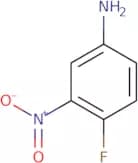
Discontinued product4-Fluoro-3-nitroaniline
CAS:4-Fluoro-3-nitroaniline is a chemical that can be used for industrial preparation. It is an efficient method for the production of 4-fluoroaniline, which is used in the manufacture of dyes and pharmaceuticals. The chemical ionization technique has been shown to be a good way to determine the presence of 4-fluoro-3 nitroaniline in animals. It has also been found to be active against infections caused by bacteria such as Salmonella enterica, Escherichia coli, and Klebsiella pneumoniae. This chemical may have adverse effects on testicular function and hematocrit levels in animals.
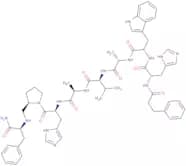
Formula:C6H5FN2O2Purity:Min. 95%Molecular weight:156.11 g/mol(Deamino-Phe19,D-Ala24,D-Pro26-psi(CH2NH)Phe27)-GRP (19-27) (human, porcine, canine) trifluoroacetate salt
CAS:Please enquire for more information about (Deamino-Phe19,D-Ala24,D-Pro26-psi(CH2NH)Phe27)-GRP (19-27) (human, porcine, canine) trifluoroacetate salt including the price, delivery time and more detailed product information at the technical inquiry form on this page
Formula:C57H72N14O8Purity:Min. 95%Molecular weight:1,081.27 g/molRef: 3D-FD108769
Discontinued productPHM-27 (human) trifluoroacetate salt
CAS:PHM-27 is a human protein that contains a c-terminal histidine and n-terminal lysine. It contains an amino acid composition of histidine, valine, alanine, aspartic acid, glycine, serine, threonine, arginine, and methionine. PHM-27 is present in the cardiovascular system, nervous system, gastrointestinal system, and respiratory system. It has been shown to be involved in the synthesis of peptides important for blood clotting.
Formula:C135H214N34O40SPurity:Min. 95%Molecular weight:2,985.41 g/molRef: 3D-FP109808
Discontinued productAmyloid beta-Protein (33-42) trifluoroacetate salt
CAS:Please enquire for more information about Amyloid beta-Protein (33-42) trifluoroacetate salt including the price, delivery time and more detailed product information at the technical inquiry form on this pageFormula:C41H74N10O11SPurity:Min. 95%Molecular weight:915.15 g/molRef: 3D-FA109546
Discontinued productH-Pro-2-chlorotrityl resin (200-400 mesh) (Low Substitution)
Please enquire for more information about H-Pro-2-chlorotrityl resin (200-400 mesh) (Low Substitution) including the price, delivery time and more detailed product information at the technical inquiry form on this pagePurity:Min. 95%Ref: 3D-FP111788
Discontinued productAtrial Natriuretic Factor (3-28) (rat) trifluoroacetate salt
CAS:Natriuretic factor is a peptide hormone that regulates blood pressure. This peptide is encoded by a gene located on chromosome 10 and is made up of 28 amino acids. Natriuretic factor binds to the membrane of mitochondria and zymogen granules, causing them to release their contents into the cytosol. The resulting increase in cytosolic volume causes an increased diastolic pressure, as well as an increased glomerular filtration rate and cardiac output. Natriuretic factors have also been shown to stimulate the production of natriuretic peptides, which are involved in water balance and electrolyte homeostasis.
Formula:C119H189N43O36S2Purity:Min. 95%Molecular weight:2,862.17 g/molRef: 3D-FA108542
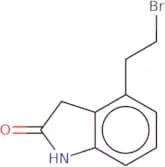
Discontinued product4-(2-Bromoethyl)-1,3-dihydro-2H-indolin-2-one
CAS:Please enquire for more information about 4-(2-Bromoethyl)-1,3-dihydro-2H-indolin-2-one including the price, delivery time and more detailed product information at the technical inquiry form on this page
Formula:C10H10BrNOPurity:Min. 95%Color and Shape:PowderMolecular weight:240.1 g/molRef: 3D-FB19228
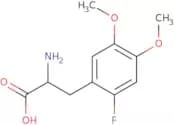
Discontinued product6-Fluoro DL-DOPA hydrobromide salt
CAS:Please enquire for more information about 6-Fluoro DL-DOPA hydrobromide salt including the price, delivery time and more detailed product information at the technical inquiry form on this page
Formula:C9H11BrFNO4Purity:Min. 95%Color and Shape:Off-White PowderMolecular weight:296.09 g/molRef: 3D-FF23355
Discontinued productNeuropeptide Y (18-36) trifluoroacetate salt
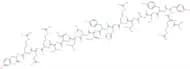
CAS:Neuropeptide Y (18-36) trifluoroacetate salt H-Ala-Arg-Tyr-Tyr-Ser-Ala-Leu-Arg-His-Tyr-Ile-Asn-Leu-Ile-Thr-Arg -Gln is a peptide belonging to the family of neuropeptides. It has been shown to have potent vasoconstricting activity in rat and guinea pig hearts, as well as contractile activity in rat aortic rings. Neuropeptide Y (18 - 36) trifluoroacetate salt H -Ala -Arg Tyr Tyr Ser Ala Leu Arg His Tyr Ile Asn Leu Ile Thr Arg Gln Arg Tyr NH2 trifl uoroacetate salt also inhibits the cyclase activity of adenylate cyclase, which is responsible for generating the second messenger cAMP. This compound may be used to treat congestFormula:C112H174N36O27Purity:Min. 95%Molecular weight:2,456.81 g/molRef: 3D-FN108958
Discontinued productAdrenomedullin 5 (primate) trifluoroacetate salt
CAS:Please enquire for more information about Adrenomedullin 5 (primate) trifluoroacetate salt including the price, delivery time and more detailed product information at the technical inquiry form on this page
Formula:C253H394N82O71S2Purity:Min. 95%Molecular weight:5,784.48 g/molRef: 3D-FA109901
Discontinued productNeuroendocrine Regulatory Peptide-4 (human, mouse, rat) trifluoroacetate salt
CAS:Please enquire for more information about Neuroendocrine Regulatory Peptide-4 (human, mouse, rat) trifluoroacetate salt including the price, delivery time and more detailed product information at the technical inquiry form on this pageFormula:C87H135N25O24Purity:Min. 95%Molecular weight:1,915.16 g/molRef: 3D-FN110030
Discontinued productChlorotoxin trifluoroacetate salt
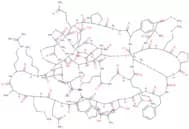
CAS:Chlorotoxin trifluoroacetate salt is a chlorotoxin derivative that has been modified to be more soluble in aqueous solutions. It is used to identify skin cancer and other forms of cancer, as well as for the study of cellular function and structure. The molecule can be injected into tissue or cells, where it binds to nuclei and causes cell death. Chlorotoxin trifluoroacetate salt has minimal toxicity in humans and can be used on histological specimens with little disruption to the tissue. This reagent may also be used to target intracellular targets such as glioma cells.
Formula:C158H249N53O47S11Purity:Min. 95%Molecular weight:3,995.72 g/molRef: 3D-FC109715
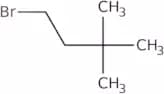
Discontinued product1-Bromo-3,3-dimethylbutane
CAS:1-Bromo-3,3-dimethylbutane is an alkali metal compound that can be used as a substitute for ethylene. It is expressed in the liquid phase and reacts with halogens to form reactive intermediates. These reactive intermediates react with other molecules to cause bond cleavage. The reaction time is dependent on the temperature of the system. 1-Bromo-3,3-dimethylbutane has three isomers that are formed during the reaction: 2-, 3-, and 4-bromohexane. The mechanism for this reaction involves a single electron transfer from one molecule to another, which causes a series of reactions that leads to the formation of 1-bromo-3,3-dimethylbutane. This process occurs spontaneously due to irradiation by ultraviolet light or electron beams.
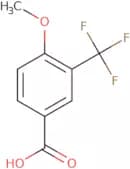
Formula:C6H13BrPurity:Min. 95%Molecular weight:165.07 g/mol4-Methoxy-3-(trifluoromethyl)benzoic acid
CAS:4-Methoxy-3-(trifluoromethyl)benzoic acid is a useful scaffold that can be used as a building block for the synthesis of complex compounds. It has been shown to react with various reagents and is a versatile building block that can be used in organic synthesis. 4-Methoxy-3-(trifluoromethyl)benzoic acid is a high quality chemical and has been classified as speciality chemicals. This product is also known by the CAS number 213598-09-5.
Formula:C9H7F3O3Purity:Min. 98 Area-%Color and Shape:PowderMolecular weight:220.15 g/molTrichloroethanol
CAS:Trichloroethanol is an alkanoic acid that is used as a solvent and a laboratory reagent. It is also a potential bioactive compound. Trichloroethanol has been shown to have neurotoxic effects in rats, causing histological changes in the trigeminal nerve, which may be due to its inhibition of mitochondrial energy metabolism. Trichloroethanol has been shown to inhibit the activity of matrix metalloproteinase-9 (MMP-9) in human serum and the α1 subunit of Toll-like receptor (TLR) 4 in human monocytes. This compound has also been shown to be toxic to rat liver microsomes at high concentrations.
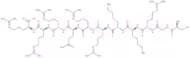
Formula:C2H3Cl3OPurity:Min. 98.5%Color and Shape:Clear LiquidMolecular weight:149.4 g/mol(Cys47)-HIV-1 tat Protein (47-57) trifluoroacetate salt
CAS:Please enquire for more information about (Cys47)-HIV-1 tat Protein (47-57) trifluoroacetate salt including the price, delivery time and more detailed product information at the technical inquiry form on this page
Formula:C58H114N32O13SPurity:Min. 95%Molecular weight:1,499.8 g/molRef: 3D-FC110136
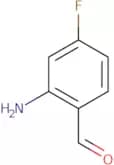
Discontinued product2-Amino-4-fluorobenzaldehyde
CAS:2-Amino-4-fluorobenzaldehyde is a plant growth regulator that has been shown to be effective at increasing the yield of flowers and fruit crops. It is used as an intermediate in the synthesis of agrochemicals, such as 2-aminobenzaldehyde and anthranilic acid. The biosynthesis of 2-amino-4-fluorobenzaldehyde starts from methanol and intermediates such as anthranilic acid, aminoaldehydes, or alcohols. It can also be produced by oxidative coupling of 2-aminobenzaldehyde with phenylacetone in the presence of sodium hydroxide. 2-Amino-4-fluorobenzaldehyde has been shown to be more efficient than other plant growth regulators such as robinia or aminocyclopentane carboxylic acid (ACC).
Formula:C7H6FNOPurity:Min. 95%Color and Shape:SolidMolecular weight:139.13 g/molRef: 3D-FA67377
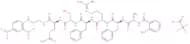
Discontinued productAbz-Ala-Phe-Arg-Phe-Ser-Gln-EDDnp trifluoroacetate salt
CAS:Please enquire for more information about Abz-Ala-Phe-Arg-Phe-Ser-Gln-EDDnp trifluoroacetate salt including the price, delivery time and more detailed product information at the technical inquiry form on this pageFormula:C50H63N15O13Purity:Min. 95%Molecular weight:1,082.13 g/molRef: 3D-FA110993
Discontinued productH-Ser(tBu)-2-chlorotrityl resin (200-400 mesh)
Please enquire for more information about H-Ser(tBu)-2-chlorotrityl resin (200-400 mesh) including the price, delivery time and more detailed product information at the technical inquiry form on this page
Purity:Min. 95%Ref: 3D-FS111766
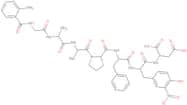
Discontinued productAbz-Gly-Ala-Ala-Pro-Phe-3-nitro-Tyr-Asp-OH trifluoroacetate salt
CAS:Please enquire for more information about Abz-Gly-Ala-Ala-Pro-Phe-3-nitro-Tyr-Asp-OH trifluoroacetate salt including the price, delivery time and more detailed product information at the technical inquiry form on this pageFormula:C42H49N9O14Purity:Min. 95%Molecular weight:903.89 g/molRef: 3D-FA110962
Discontinued product1-Chlorobenzotriazole
CAS:1-Chlorobenzotriazole is a nucleophilic reagent that can be used in analytical chemistry, such as the determination of propranolol hydrochloride. It reacts with phospholipid membranes by transferring a chlorine atom to the hydroxyl group on the lipid molecule. The reaction mechanism is not well understood, but it has been shown that the deuterium isotope effect is not involved in this reaction. 1-Chlorobenzotriazole is unsymmetrical and can react with both acidic and alkaline solutions. Hydrochloric acid is often used to activate this compound, which will then react with an amine group to form an iminium ion. Kinetics data for this compound show that activation energies are required for reactions involving nucleophiles, such as ketones, alcohols, or amines.
Formula:C6H4ClN3Purity:Min. 95%Molecular weight:153.57 g/molRef: 3D-FC20195
Discontinued productH-Trp-Lys-Tyr-Met-Val-D-Met-NH2 trifluoroacetate salt
CAS:Please enquire for more information about H-Trp-Lys-Tyr-Met-Val-D-Met-NH2 trifluoroacetate salt including the price, delivery time and more detailed product information at the technical inquiry form on this pageFormula:C41H61N9O7S2·C2HF3O2Purity:Min. 95%Molecular weight:970.13 g/molZ-Arg-p-nitrobenzyl ester mixture of hydrochloride and hydrobromide salt
CAS:Please enquire for more information about Z-Arg-p-nitrobenzyl ester mixture of hydrochloride and hydrobromide salt including the price, delivery time and more detailed product information at the technical inquiry form on this pageFormula:C21H25N5O6Purity:Min. 95%Molecular weight:443.45 g/molRef: 3D-FA111451
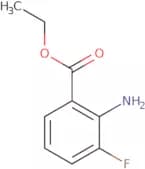
Discontinued product2-Amino-3-fluorobenzoic acid ethyl ester
CAS:Please enquire for more information about 2-Amino-3-fluorobenzoic acid ethyl ester including the price, delivery time and more detailed product information at the technical inquiry form on this pageFormula:C9H10FNO2Purity:Min. 95%Color and Shape:PowderMolecular weight:183.18 g/mol9-Fluorenone hydrazone
CAS:9-Fluorenone hydrazone is a compound that belongs to the group of chemical compounds known as heterocycles. It can be synthesized by reacting 9-fluorenone with hydrazine. The synthesis proceeds via an intramolecular hydrogen transfer reaction, which forms an unsymmetrical aldehyde. This aldehyde is oxidized to form the corresponding hydrazone through protonation and subsequent attack of a nitrogen nucleophile. Hydrazones are important for their antimicrobial properties and are used in the treatment of bacterial infections such as tuberculosis and leprosy. They are also used in the production of dyes and pharmaceuticals. The mechanism for this reaction involves the formation of an intermediate carbocation, followed by deprotonation to form the final product.
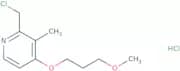
Formula:C13H10N2Purity:Min. 95%Color and Shape:Yellow PowderMolecular weight:194.23 g/mol2-Chloromethyl-4-(3-methoxypropoxy)-3-methylpyridine hydrochloride
CAS:Please enquire for more information about 2-Chloromethyl-4-(3-methoxypropoxy)-3-methylpyridine hydrochloride including the price, delivery time and more detailed product information at the technical inquiry form on this page
Formula:C11H17Cl2NO2Purity:Min. 95%Molecular weight:266.16 g/molH-Tyr-Ile-Gly-Ser-Arg-OH trifluoroacetate salt
CAS:The H-Tyr-Ile-Gly-Ser-Arg-OH trifluoroacetate salt is a synthetic peptide that has been shown to promote neuronal growth and axonal regeneration. This compound has been synthesized using a biocompatible polymer, collagen gel, and neurotrophic factors. The peptide is also able to stimulate the synthesis of collagen in mesenchymal cells cultured in tissue culture. The peptide can be used for treatment of subcutaneous tumors and neural injury.
Formula:C26H42N8O8Purity:Min. 95%Molecular weight:594.66 g/molRef: 3D-FT109978
Discontinued productNeuropeptide VF (56-92) (human) trifluoroacetate salt
Please enquire for more information about Neuropeptide VF (56-92) (human) trifluoroacetate salt including the price, delivery time and more detailed product information at the technical inquiry form on this page
Formula:C195H304N52O51S2Purity:Min. 95%Molecular weight:4,256.95 g/molRef: 3D-FN109557
Discontinued productNeuroendocrine Regulatory Peptide-1 (human) trifluoroacetate salt
CAS:Please enquire for more information about Neuroendocrine Regulatory Peptide-1 (human) trifluoroacetate salt including the price, delivery time and more detailed product information at the technical inquiry form on this pageFormula:C113H192N36O39Purity:Min. 95%Molecular weight:2,678.95 g/molRef: 3D-FN109905
Discontinued productAmyloid beta-Protein (1-42) (scrambled) trifluoroacetate salt
CAS:Please enquire for more information about Amyloid beta-Protein (1-42) (scrambled) trifluoroacetate salt including the price, delivery time and more detailed product information at the technical inquiry form on this page
Formula:C203H311N55O60SPurity:Min. 95%Molecular weight:4,514.04 g/molRef: 3D-FA110090
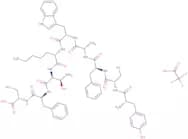
Discontinued productH-Tyr-Cys-Phe-Ala-Trp-Lys-Thr-Phe-Cys-OH trifluoroacetate salt (Disulfide bond)
CAS:Please enquire for more information about H-Tyr-Cys-Phe-Ala-Trp-Lys-Thr-Phe-Cys-OH trifluoroacetate salt (Disulfide bond) including the price, delivery time and more detailed product information at the technical inquiry form on this page
Formula:C57H71N11O12S2Purity:Min. 95%Molecular weight:1,166.37 g/molRef: 3D-FT109717
Discontinued productFluorescein-6-carbonyl-Leu-Glu(OMe)-His-DL-Asp(OMe)-fluoromethylketone
CAS:Please enquire for more information about Fluorescein-6-carbonyl-Leu-Glu(OMe)-His-DL-Asp(OMe)-fluoromethylketone including the price, delivery time and more detailed product information at the technical inquiry form on this page
Formula:C45H47FN6O14Purity:Min. 95%Molecular weight:914.89 g/mol(Des-Pyr 1,Des-Gly10,D-Leu6,Pro-NHEt 9)-LHRH trifluoroacetate salt
CAS:Please enquire for more information about (Des-Pyr 1,Des-Gly10,D-Leu6,Pro-NHEt 9)-LHRH trifluoroacetate salt including the price, delivery time and more detailed product information at the technical inquiry form on this page
Formula:C54H79N15O10Purity:Min. 95%Molecular weight:1,098.3 g/molRef: 3D-FD109743
Discontinued product(Beta-Asp5)-delta-Sleep Inducing Peptide trifluoroacetate salt
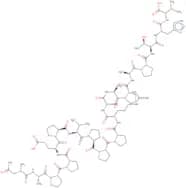
CAS:(Beta-Asp5)-delta-Sleep Inducing Peptide is a synthetic molecule that has been shown to be an atypical compound. It is a fragment of the natural sleep-inducing peptide, which is also called clostridium sporogenes. The fragment was synthesized and found to have similar properties and structures as the natural form. The fragment is labile in neutral or acidic solution, but stable in basic conditions. (Beta-Asp5)-delta-Sleep Inducing Peptide can be used for the detection of methyltransferase activity, by using it as a substrate for methylation reactions and measuring the rate of spontaneous desorption from a matrix. This compound can also be used for proteomic studies by using matrix-assisted laser desorption ionization time-of-flight mass spectrometry (MALDI TOF MS) techniques.
Formula:C35H48N10O15Purity:Min. 95%Molecular weight:848.81 g/molRef: 3D-FA108705
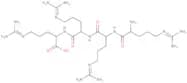
Discontinued productH-Arg-Arg-Arg-Arg-OH trifluoroacetate salt
CAS:Trifluoroacetate salt
Formula:C24H50N16O5Purity:Min. 95%Molecular weight:642.76 g/molRef: 3D-FA109279
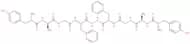
Discontinued productBiphalin trifluoroacetate salt (
CAS:Biphalin trifluoroacetate salt (H-Tyr-D-Ala-Gly-Phe-NH)2 trifluoroacetate salt is a peptide hormone. It has been shown to be an opioid that binds to the μ and δ opioid receptors and inhibits the production of inflammatory mediators. Biphalin trifluoroacetate salt (H-Tyr-D-Ala-Gly-Phe-NH)2 trifluoroacetate salt has also been shown to have neuroprotective effects. This drug has low potency and can only be used in vivo models. Biphalin trifluoroacetate salt (H-Tyr-D-Ala-Gly-Phe-NH)2 trifluoroacetate salt is not active against skin cancer cells, but does show activity against other types of cancer cells.Formula:C46H56N10O10Purity:Min. 95%Molecular weight:909 g/molRef: 3D-FB110181
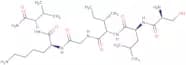
Discontinued productPAR-2 (1-6) amide (human) trifluoroacetate salt
CAS:PAR-2 (1-6) amide (human) trifluoroacetate salt H-Ser-Leu-Ile-Gly-Lys-Val-NH2 trifluoroacetate salt is a protease inhibitor that inhibits the activity of PAR2, a protein receptor. PAR2 is implicated in cancer and inflammation. It has been shown to inhibit growth factor signaling, as well as activate toll-like receptor 4 and other inflammatory pathways. PAR2 inhibition has also been studied in vivo and found to be effective in treating wild type mice with melanoma cells. In vitro studies have shown that PAR2 inhibition by PAR 2 (1-6) amide (human) trifluoroacetate salt H-Ser-Leu-Ile-Gly-Lys-Val NH2 trifluoroacetate salt blocks the production of tumour necrosis factor alpha and interleukin 6.Formula:C28H54N8O7Purity:Min. 95%Molecular weight:614.78 g/molRef: 3D-FP109317
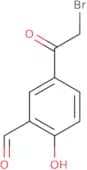
Discontinued product5-(2-Bromo-acetyl)-2-hydroxy-benzaldehyde
CAS:5-Bromo-2-hydroxybenzaldehyde is an organic compound with a chemical formula of CHBrO. It is a white solid that is soluble in water, ethanol, and acetone. The synthesis of 5-bromo-2-hydroxybenzaldehyde has been achieved by the acylation reaction of benzaldehyde with bromide ion. The selectivity for this reaction can be increased by using sodium borohydride as a reducing agent instead of lithium aluminum hydride. This method can be applied to the synthesis of salmeterol, which is used as a medicine in the treatment of asthma.
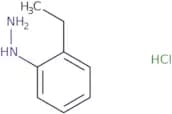
Formula:C9H7BrO3Purity:Min. 95%Molecular weight:243.05 g/mol2-Ethylphenylhydrazine hydrochloride
CAS:2-Ethylphenylhydrazine hydrochloride is a diazonium salt that catalyzes the reaction of nitrite with acetonitrile to produce an organic solvent. This organic solvent can be used in the production of various products, such as anti-inflammatory drugs, which are generally made from organic solvents. 2-Ethylphenylhydrazine hydrochloride is not a non-steroidal drug, but it does have anti-inflammatory properties. The impurities in this product are mainly hydrochloric acid and 2-ethylphenol.
Formula:C8H12N2•HClPurity:Min. 95%Molecular weight:172.66 g/molAmyloid b-Protein (6-20) trifluoroacetate salt
CAS:Please enquire for more information about Amyloid b-Protein (6-20) trifluoroacetate salt including the price, delivery time and more detailed product information at the technical inquiry form on this page
Formula:C86H119N23O23Purity:Min. 95%Molecular weight:1,843.01 g/molRef: 3D-FA109813
Discontinued product1-Bromo-4-chlorobutane
CAS:1-Bromo-4-chlorobutane, also known as 4-bromo-1-chlorobutane, is a chemical compound with the molecular formula C6H5BrCl. It is a member of the group p2 of the periodic table and has been shown to be carcinogenic in animal studies. The compound is also used as an intermediate in the synthesis of other chemicals such as p-hydroxybenzoic acid. 1-Bromo-4-chlorobutane is used for treating infectious diseases such as malaria by interfering with purine metabolism. It can be administered orally or intravenously and has low bioavailability due to its rapid hydrolysis in the gastrointestinal tract.
Formula:C4H8BrClPurity:Min. 95%Molecular weight:171.46 g/molRef: 3D-FB00908
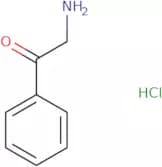
Discontinued product2-Aminoacetophenone hydrochloride
CAS:Controlled Product2-Aminoacetophenone hydrochloride is a chemical compound that is used in analytical chemistry as a reagent for the determination of protein and amino acid concentrations. This reagent can be prepared in various forms, depending on the type of analysis being performed. 2-Aminoacetophenone hydrochloride is used to determine the concentration of free amino acids in a sample by binding to it. It can also be used for determining the concentration of bound amino acids by reacting with them with hydrochloric acid. 2-Aminoacetophenone hydrochloride is an excellent substrate for matrix effect, which may cause errors in measurement due to interference from other substances present in the sample. The use of light exposure reduces this problem by removing interfering substances from the sample.
Formula:C8H9NO·HClPurity:Min. 95%Color and Shape:PowderMolecular weight:171.62 g/molRef: 3D-FA158319
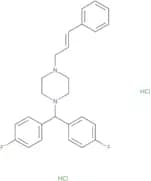
Discontinued productFlunarizine dihydrochloride
CAS:T-type calcium channel inhibitor
Formula:C26H28Cl2F2N2Purity:Min. 95%Color and Shape:PowderMolecular weight:477.42 g/molRef: 3D-FF23332
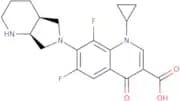
Discontinued product8-Desmethoxy-8-fluoro moxifloxacin
CAS:8-Desmethoxy-8-fluoro moxifloxacin is a photolytic drug that is used to treat bacterial infections. It has a high degree of antibacterial activity against methicillin-resistant staphylococcus aureus, including methicillin resistant strains of Staphylococcus epidermidis. 8-Desmethoxy-8-fluoro moxifloxacin hydrochloride is produced by the addition of hydrochloric acid to moxifloxacin, which is then purified by ion chromatography. The compound has been shown to have good stability in human plasma and urine. It also shows excellent recoveries in acetonitrile and quantification results in flow rates.
Formula:C20H21F2N3O3Purity:Min. 95%Molecular weight:389.4 g/molRef: 3D-FD21225
Discontinued product
![4,5-Dibromo-1,2,6,7-tertahydro-8H-indeno[5,4-b]furan-8-one](/_next/image/?url=https%3A%2Fstatic.cymitquimica.com%2Fproducts%2F3D%2Fthumb-webp%2FFD21568.webp&w=3840&q=75)