Organic Halides
Subcategories of "Organic Halides"
Found 20442 products of "Organic Halides"
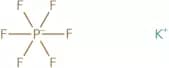
Potassium hexafluorophosphate
CAS:Potassium hexafluorophosphate is a chemical compound that is used as an antimicrobial agent in the laboratory. It reacts with hydroxyl groups on various surfaces to form potassium hexafluorophosphate and water. The reaction solution can be used to disinfect equipment and surfaces, and is stable at room temperature. Potassium hexafluorophosphate has been shown to have biological properties such as inhibiting the growth of bacteria and fungi, but not viruses. This chemical compound has been shown to be effective against E. coli, Klebsiella pneumoniae, Staphylococcus aureus, Proteus vulgaris, Bacillus subtilis, Pseudomonas aeruginosa, Aspergillus niger, Candida albicans, or Saccharomyces cerevisiae.
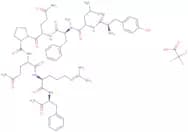
Formula:KPF6Purity:Min. 95%Color and Shape:PowderMolecular weight:184.06 g/molAmyloid beta-Protein (1-11) trifluoroacetate salt
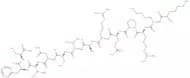
CAS:Please enquire for more information about Amyloid beta-Protein (1-11) trifluoroacetate salt including the price, delivery time and more detailed product information at the technical inquiry form on this page
Formula:C56H76N16O22Purity:Min. 95%Molecular weight:1,325.3 g/molRef: 3D-FA108822
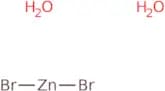
Discontinued productZinc bromide dihydrate
CAS:Zinc bromide dihydrate is a crystalline compound that is used as a catalyst for the conversion of metalloporphyrins to hydroporphyrins. This process is used in the production of vitamin B12. Zinc bromide dihydrate can also be used to inhibit the function of ion pumps, which are proteins that pump ions across membranes. The inhibition of these pumps may lead to a decrease in intracellular calcium levels and an increase in free radicals.
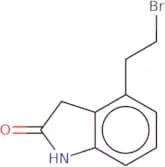
Zinc bromide dihydrate has been shown to react with chlorophylls, vinylated heterostructures, and polyvinyl nonmetals. These reactions produce morphology changes in zinc bromide dihydrate crystalsFormula:ZnBr2•2H2OPurity:Min. 95%Color and Shape:PowderMolecular weight:261.22 g/mol4-(2-Bromoethyl)-1,3-dihydro-2H-indolin-2-one
CAS:Please enquire for more information about 4-(2-Bromoethyl)-1,3-dihydro-2H-indolin-2-one including the price, delivery time and more detailed product information at the technical inquiry form on this page
Formula:C10H10BrNOPurity:Min. 95%Color and Shape:PowderMolecular weight:240.1 g/molRef: 3D-FB19228
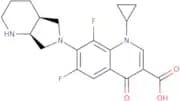
Discontinued product8-Desmethoxy-8-fluoro moxifloxacin
CAS:8-Desmethoxy-8-fluoro moxifloxacin is a photolytic drug that is used to treat bacterial infections. It has a high degree of antibacterial activity against methicillin-resistant staphylococcus aureus, including methicillin resistant strains of Staphylococcus epidermidis. 8-Desmethoxy-8-fluoro moxifloxacin hydrochloride is produced by the addition of hydrochloric acid to moxifloxacin, which is then purified by ion chromatography. The compound has been shown to have good stability in human plasma and urine. It also shows excellent recoveries in acetonitrile and quantification results in flow rates.
Formula:C20H21F2N3O3Purity:Min. 95%Molecular weight:389.4 g/molRef: 3D-FD21225
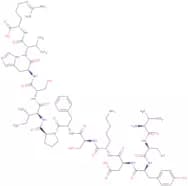
Discontinued product(D-Tyr1,N-Me-Phe3)-Neuropeptide FF trifluoroacetate salt
CAS:Please enquire for more information about (D-Tyr1,N-Me-Phe3)-Neuropeptide FF trifluoroacetate salt including the price, delivery time and more detailed product information at the technical inquiry form on this pageFormula:C55H78N14O11Purity:Min. 95%Molecular weight:1,111.3 g/molRef: 3D-FT109351
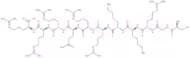
Discontinued product(Cys47)-HIV-1 tat Protein (47-57) trifluoroacetate salt
CAS:Please enquire for more information about (Cys47)-HIV-1 tat Protein (47-57) trifluoroacetate salt including the price, delivery time and more detailed product information at the technical inquiry form on this page
Formula:C58H114N32O13SPurity:Min. 95%Molecular weight:1,499.8 g/molRef: 3D-FC110136
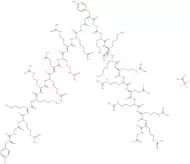
Discontinued productLIP2 (human) trifluoroacetate salt
Please enquire for more information about LIP2 (human) trifluoroacetate salt including the price, delivery time and more detailed product information at the technical inquiry form on this pageFormula:C184H288N58O58Purity:Min. 95%Molecular weight:4,240.61 g/molRef: 3D-FL109896
Discontinued productTrichloroethanol
CAS:Trichloroethanol is an alkanoic acid that is used as a solvent and a laboratory reagent. It is also a potential bioactive compound. Trichloroethanol has been shown to have neurotoxic effects in rats, causing histological changes in the trigeminal nerve, which may be due to its inhibition of mitochondrial energy metabolism. Trichloroethanol has been shown to inhibit the activity of matrix metalloproteinase-9 (MMP-9) in human serum and the α1 subunit of Toll-like receptor (TLR) 4 in human monocytes. This compound has also been shown to be toxic to rat liver microsomes at high concentrations.
Formula:C2H3Cl3OPurity:Min. 98.5%Color and Shape:Clear LiquidMolecular weight:149.4 g/molTAT 2-4 trifluoroacetate salt
CAS:Trifluoroacetate saltFormula:C132H240N66O29Purity:Min. 95%Molecular weight:3,215.75 g/molRef: 3D-FT110195
Discontinued productBuccalin trifluoroacetate salt
CAS:Buccalin is a cholinergic pharmaceutical drug that has been shown to have metabolic, growth factor, and chemotactic activities. It has been used in the treatment of various autoimmune diseases and infectious diseases. The mechanism of action for buccalin is unknown. Buccalin has been shown to have receptor activity in a variety of diagnostic agents such as monoclonal antibodies and fatty acids. It binds to acetylcholine receptors at the neuromuscular junction, leading to activation of muscle fibers by acetylcholine release from nerve endings.Formula:C45H72N12O15SPurity:Min. 95%Molecular weight:1,053.19 g/molRef: 3D-FB110404
Discontinued productDnp-(Leu421)-Collagen Type VIII a1 Chain (419-426) amide (human, mouse) trifluoroacetate salt
Please enquire for more information about Dnp-(Leu421)-Collagen Type VIII a1 Chain (419-426) amide (human, mouse) trifluoroacetate salt including the price, delivery time and more detailed product information at the technical inquiry form on this page
Formula:C40H64N14O12SPurity:Min. 95%Molecular weight:965.09 g/molRef: 3D-FD110972
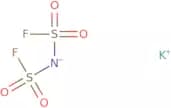
Discontinued productPotassium bis(fluorosulfonyl)imide
CAS:Potassium bis(fluorosulfonyl)imide (K2FSI) is a reactive chemical that can be used to remove sulfur from petroleum products. It is also used in the manufacturing of ethylene and perovskite solar cells. K2FSI reacts with potassium ions to form potassium hexafluorophosphate (KHF2). This reaction reduces the vapor pressure of KHF2 and increases its solubility in water. The use of K2FSI can reduce the amount of energy needed for desulfurization, as it does not require heating. The following are some uses for potassium bis(fluorosulfonyl)imide: - As a catalyst for production of ethylene - In organic solvent to produce perovskite solar cells - To remove sulfur from petroleum products - To make hydrogen fluoride - For desulfurization
Formula:F2NO4S2•KPurity:Min. 95%Color and Shape:White PowderMolecular weight:219.23 g/molXenopsin-Related Peptide 1 (XP-1) trifluoroacetate salt
CAS:Xenopsin-related peptide 1 (XP-1) is a synthetic peptide that has been shown to bind to the neurotensin receptor. XP-1 is expressed in gastrointestinal tissues and has been found to modulate intestinal motility, as well as glucose homeostasis. It also has immunohistochemical staining for pancreatic tissues and vasoactive intestinal polypeptide, which are both involved in glucose control. XP-1 can reduce high plasma concentrations of glucose by stimulating the pancreas and lowering the release of glucagon from the α cells of the pancreas. The function of XP-1 is not yet fully understood, but it may have potential therapeutic effects on diabetes mellitus type 2.Formula:C51H79N15O9Purity:Min. 95%Molecular weight:1,046.27 g/molRef: 3D-FX110420
Discontinued productPeptide YY (3-36) (human) trifluoroacetate salt
CAS:Peptide YY (3-36) (human) trifluoroacetate salt H-Ile-Lys-Pro-Glu-Ala-Pro-Gly-Glu-Asp-Ala-Ser-Pro-Glu-Glu-Leu-Asn -Arg -Tyr -Tyr -Ala -Ser -Leu -Arg
Peptide YY (3.36) is a peptide hormone that is secreted by L cells in the small intestine and colon. It has been shown to be an effective treatment for obesity, type 2 diabetes, and other metabolic disorders. Peptide YY (3.36) has been shown to increase insulin sensitivity, reduce food intake and body weight, increase metabolic rate, and improve glucose homeostasis in animal studies. In humans, it has been found to have similar effects on postprandial plasma levels of peptide YY (3.Formula:C180H279N53O54Purity:Min. 95%Molecular weight:4,049.47 g/molRef: 3D-FP110326
Discontinued productKemptamide trifluoroacetate salt
CAS:Kemptamide is a peptide that has been shown to have cytotoxic and anti-proliferative effects on renal cancer cells. It is a synthetic analogue of an endogenous peptide, Lys-Lys-Arg-Pro-Gln-Arg-Ala-Thr-Ser-Asn-Val-Phe, that is found in porcine kidney. Kemptamide’s cytotoxic activity may be due to its ability to inhibit the activity of phosphatases. Kemptamide also has regulatory properties and can modulate the expression of genes that are involved in cell growth and apoptosis. This peptide has been shown to be reactive with kidney cells, which may lead to its therapeutic effect on renal cancer.
Formula:C65H112N24O18Purity:Min. 95%Molecular weight:1,517.74 g/molRef: 3D-FK110967
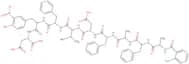
Discontinued productAbz-Ala-Phe-Ala-Phe-Asp-Val-Phe-3-nitro-Tyr-Asp-OH trifluoroacetate salt
CAS:Please enquire for more information about Abz-Ala-Phe-Ala-Phe-Asp-Val-Phe-3-nitro-Tyr-Asp-OH trifluoroacetate salt including the price, delivery time and more detailed product information at the technical inquiry form on this pageFormula:C62H71N11O18Purity:Min. 95%Molecular weight:1,258.29 g/molRef: 3D-FA110961
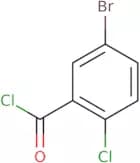
Discontinued product5-Bromo-2-chlorobenzoyl chloride
CAS:5-Bromo-2-chlorobenzoyl chloride is a chemical compound that is used as an intermediate for the production of compounds. It can be produced by the reaction of benzene with thionyl chloride in the presence of phenetole. The chemical reaction proceeds with high yield and utilizes a high concentration of benzene, which is a pollutant. The reaction yields a mixture of 5-bromo-2-chlorobenzoyl chloride and 2,4,6-trichlorobenzoyl chloride and utilizes an organic solvent such as formic acid or acetic acid to form 5-bromo-2,4,6-trichlorobenzoic acid in situ. 5-Bromo-2,4,6-trichlorobenzoic acid is then reacted with ammonia to produce 2-(5'-bromo)benzothiazole. This chemical compound has been used as a reagent
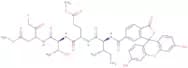
Formula:C7H3BrCl2OPurity:Min. 95%Color and Shape:PowderMolecular weight:253.91 g/molFluorescein-6-carbonyl-Ile-Glu(OMe)-Thr-DL-Asp(OMe)-fluoromethylketone
CAS:Please enquire for more information about Fluorescein-6-carbonyl-Ile-Glu(OMe)-Thr-DL-Asp(OMe)-fluoromethylketone including the price, delivery time and more detailed product information at the technical inquiry form on this page
Formula:C43H47FN4O15Purity:Min. 95%Molecular weight:878.85 g/molRef: 3D-FF111109
Discontinued productH-Arg(Pmc)-2-chlorotrityl resin (200-400 mesh)
Please enquire for more information about H-Arg(Pmc)-2-chlorotrityl resin (200-400 mesh) including the price, delivery time and more detailed product information at the technical inquiry form on this page
Purity:Min. 95%Ref: 3D-FA111748
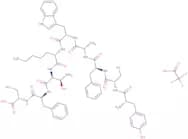
Discontinued productH-Tyr-Cys-Phe-Ala-Trp-Lys-Thr-Phe-Cys-OH trifluoroacetate salt (Disulfide bond)
CAS:Please enquire for more information about H-Tyr-Cys-Phe-Ala-Trp-Lys-Thr-Phe-Cys-OH trifluoroacetate salt (Disulfide bond) including the price, delivery time and more detailed product information at the technical inquiry form on this page
Formula:C57H71N11O12S2Purity:Min. 95%Molecular weight:1,166.37 g/molRef: 3D-FT109717
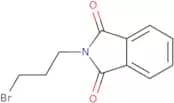
Discontinued productN-(3-Bromopropyl)phthalimide
CAS:N-(3-Bromopropyl)phthalimide is a chiral compound that can be used as a linker in the synthesis of ornithine. It is also an antibacterial agent. N-(3-Bromopropyl)phthalimide binds to the N-terminal amino group of ornithine and reacts with nucleophilic attack on the carbonyl carbon, forming the corresponding amide. The second-order rate constant for this reaction was measured to be 0.037 M-1s-1 at 25°C and pH 7. Photosensitizers such as silver nitrate are added to react with N-(3-bromopropyl)phthalimide and generate reactive oxygen species (ROS), which leads to surface-enhanced Raman scattering (SERS). SERS has been shown to be a useful technique for detecting N-(3-bromopropyl)phthalimide in food products.
Formula:C11H10BrNO2Color and Shape:PowderMolecular weight:268.11 g/molRef: 3D-FB53575
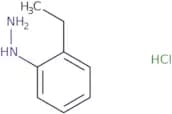
Discontinued product2-Ethylphenylhydrazine hydrochloride
CAS:2-Ethylphenylhydrazine hydrochloride is a diazonium salt that catalyzes the reaction of nitrite with acetonitrile to produce an organic solvent. This organic solvent can be used in the production of various products, such as anti-inflammatory drugs, which are generally made from organic solvents. 2-Ethylphenylhydrazine hydrochloride is not a non-steroidal drug, but it does have anti-inflammatory properties. The impurities in this product are mainly hydrochloric acid and 2-ethylphenol.
Formula:C8H12N2•HClPurity:Min. 95%Molecular weight:172.66 g/mola-(Trichloromethyl)benzyl acetate
CAS:a-(Trichloromethyl)benzyl acetate is an organic compound with the formula CHClCOCH. It is a colorless liquid which is soluble in organic solvents. This compound exhibits oxidative carbonylation activity, and has been shown to be used for the coating of particles, detergent compositions, and analytical methods. The microcapsules are prepared by encapsulating a fatty acid in a glycol ether. The health effects of this compound are not well understood but it is believed that it may have some carcinogenic properties.
Formula:C10H9Cl3O2Purity:Min. 95%Molecular weight:267.54 g/molRef: 3D-FR30859
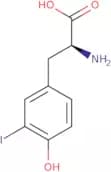
Discontinued product3-Iodo-L-tyrosine
CAS:Please enquire for more information about 3-Iodo-L-tyrosine including the price, delivery time and more detailed product information at the technical inquiry form on this page
Formula:C9H10INO3Purity:Min. 96.0 Area-%Color and Shape:PowderMolecular weight:307.09 g/molRef: 3D-FI12110
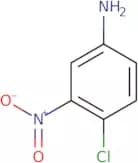
Discontinued product4-Chloro-3-nitroaniline
CAS:4-Chloro-3-nitroaniline is an antibacterial agent that inhibits bacterial growth by binding to the enzyme topoisomerase II, which is essential for DNA replication. It has been shown to have a statistically significant inhibitory effect on the growth of Staphylococcus aureus. 4-Chloro-3-nitroaniline may also disrupt hemosiderosis and reduce iron levels in plasma samples from patients with hemosiderosis. The biological effects of this drug are not well understood.
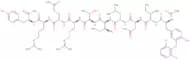
Formula:C6H5ClN2O2Purity:Min. 95%Color and Shape:PowderMolecular weight:172.57 g/molPYX-1 trifluoroacetate salt
CAS:Please enquire for more information about PYX-1 trifluoroacetate salt including the price, delivery time and more detailed product information at the technical inquiry form on this page
Formula:C70H105Cl2N19O16Purity:Min. 95%Molecular weight:1,539.61 g/molRef: 3D-FP109614
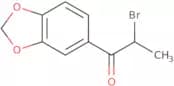
Discontinued product2-Bromo-3',4'-(methylenedioxy)propiophenone
CAS:Controlled ProductPlease enquire for more information about 2-Bromo-3',4'-(methylenedioxy)propiophenone including the price, delivery time and more detailed product information at the technical inquiry form on this page
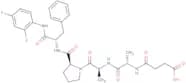
Formula:C10H9BrO3Purity:Min. 95%Color and Shape:PowderMolecular weight:257.08 g/molSuc-Ala-Ala-Pro-Phe-2,4-difluoroanilide
CAS:Please enquire for more information about Suc-Ala-Ala-Pro-Phe-2,4-difluoroanilide including the price, delivery time and more detailed product information at the technical inquiry form on this page
Formula:C30H35F2N5O7Purity:Min. 95%Molecular weight:615.63 g/molRef: 3D-FS110944
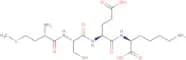
Discontinued productH-Met-Cys-Glu-Lys-OH trifluoroacetate salt
CAS:Please enquire for more information about H-Met-Cys-Glu-Lys-OH trifluoroacetate salt including the price, delivery time and more detailed product information at the technical inquiry form on this page
Formula:C19H35N5O7S2Purity:Min. 95%Molecular weight:509.64 g/molRef: 3D-FM109242
Discontinued productH-Trp-Lys-Tyr-Met-Val-D-Met-NH2 trifluoroacetate salt
CAS:Please enquire for more information about H-Trp-Lys-Tyr-Met-Val-D-Met-NH2 trifluoroacetate salt including the price, delivery time and more detailed product information at the technical inquiry form on this pageFormula:C41H61N9O7S2·C2HF3O2Purity:Min. 95%Molecular weight:970.13 g/molH-Tyr-Ile-Gly-Ser-Arg-OH trifluoroacetate salt
CAS:The H-Tyr-Ile-Gly-Ser-Arg-OH trifluoroacetate salt is a synthetic peptide that has been shown to promote neuronal growth and axonal regeneration. This compound has been synthesized using a biocompatible polymer, collagen gel, and neurotrophic factors. The peptide is also able to stimulate the synthesis of collagen in mesenchymal cells cultured in tissue culture. The peptide can be used for treatment of subcutaneous tumors and neural injury.
Formula:C26H42N8O8Purity:Min. 95%Molecular weight:594.66 g/molRef: 3D-FT109978
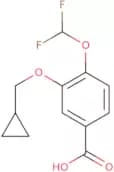
Discontinued product3-Cyclopropylmethoxy-4-difluoromethoxy-benzoic acid
CAS:3-Cyclopropylmethoxy-4-difluoromethoxy-benzoic acid is an industrial chemical that is used as a binding agent in the production of dyes, rubber, and pharmaceuticals. The compound is produced by the acylation of 3-chloromethoxybenzoic acid with cyclopropylmethanol. This reaction requires an inorganic base such as potassium carbonate or sodium bicarbonate to activate the chloride. 3-Cyclopropylmethoxy-4-difluoromethoxybenzoic acid can be used as a reactive alkylating agent for the production of amides and other organic compounds, which increases its versatility.
Formula:C12H12O4F2Purity:Min. 95%Color and Shape:White/Off-White SolidMolecular weight:258.22 g/molNeuropeptide VF (56-92) (human) trifluoroacetate salt
Please enquire for more information about Neuropeptide VF (56-92) (human) trifluoroacetate salt including the price, delivery time and more detailed product information at the technical inquiry form on this page
Formula:C195H304N52O51S2Purity:Min. 95%Molecular weight:4,256.95 g/molRef: 3D-FN109557
Discontinued productAmyloid beta-Protein (1-40) (scrambled) trifluoroacetate salt
CAS:Please enquire for more information about Amyloid beta-Protein (1-40) (scrambled) trifluoroacetate salt including the price, delivery time and more detailed product information at the technical inquiry form on this pageFormula:C194H295N53O58SPurity:Min. 95%Molecular weight:4,329.81 g/molRef: 3D-FA110091
Discontinued productGAP 26 trifluoroacetate salt
CAS:13-mer connexin mimetic peptide, composed of residue numbers 63-75 of the first extracellular loop of connexin 43 (gap junction blocker), containing the SHVR amino acid motif.Formula:C70H107N19O19SPurity:Min. 95%Molecular weight:1,550.78 g/molRef: 3D-FG110169
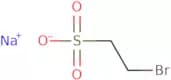
Discontinued product2-Bromoethanesulfonic acid sodium
CAS:2-Bromoethanesulfonic acid sodium (2BESA) is a chemical inhibitor that is used to control methanogenic activity. It has been shown to be effective in the treatment of wastewater, although it is not very soluble in water. 2BESA inhibits methanogenesis by binding to the enzyme methane monooxygenase, which blocks electron transfer from methane to oxygen. This prevents the formation of hydrogen and carbon dioxide, which are products of fermentation. 2BESA also has electrochemical properties that make it a good candidate for use as an electrode material in fuel cells. In vitro assays have demonstrated that 2BESA inhibits bacterial growth by inhibiting DNA synthesis and protein synthesis.
Formula:C2H4BrNaO3SPurity:Min. 95%Molecular weight:211.01 g/molRef: 3D-FB19225
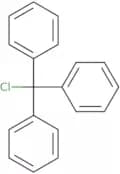
Discontinued productTrityl chloride resin
CAS:Trityl chloride resin is a chemical compound that is used as a model system for the study of trifluoroacetic acid and its reactions. Trityl chloride resin is insoluble in water and has been used as a reaction solution for transfer reactions. It has been shown to be an effective ligand for many types of receptors, with binding constants ranging from 10 M-1 to 10 M-10. Trityl chloride resin can also be chiral, which means that it may exist in two forms that are mirror images of each other. The physiological effects of this compound are not well understood, but it has been shown to have an effect on coordination geometry.
Color and Shape:PowderRef: 3D-FT29918
Discontinued product2,3,5-Trichlorobenzaldehyde
CAS:2,3,5-Trichlorobenzaldehyde is a chemical compound that has been shown to have anticancer and apoptotic effects. It inhibits the growth of bacteria by chelating iron ions and inhibiting bacterial dna synthesis. 2,3,5-Trichlorobenzaldehyde has also been shown to inhibit the growth of cancer cells in culture in an experimental study. This chemical has been used as a substrate for nmr spectroscopy to study its functional groups and radical scavenging activities. 2,3,5-Trichlorobenzaldehyde can be synthesized from phenacyl chloride and benzaldehyde in the presence of hydrogen chloride gas. The carbonyl group in 2,3,5-trichlorobenzaldehyde may cause metabolic disorders such as diabetes mellitus or hyperglycemia.
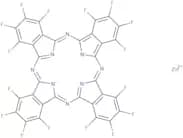
Formula:C7H3Cl3OPurity:Min. 95%Color and Shape:PowderMolecular weight:209.46 g/molZinc 1,2,3,4,8,9,10,11,15,16,17,18,22,23,24,25-hexadecafluoro-29H,31H-phthalocyanine
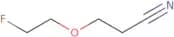
CAS:Please enquire for more information about Zinc 1,2,3,4,8,9,10,11,15,16,17,18,22,23,24,25-hexadecafluoro-29H,31H-phthalocyanine including the price, delivery time and more detailed product information at the technical inquiry form on this pageFormula:C32F16N8ZnPurity:Min. 95%Molecular weight:865.75 g/mol3-(2-Fluoroethoxy)Propanenitrile
CAS:3-(2-Fluoroethoxy)Propanenitrile is a chemical with toxic properties. It is classified as a fluoroacetic acid and has been used in the production of other chemicals. Fluoroacetic acid is toxic to humans, showing signs of skin irritation, respiratory tract irritation, and kidney damage. 3-(2-Fluoroethoxy)Propanenitrile is not found naturally and has been sponsored by many companies.
Formula:C5H8FNOPurity:Min. 95%Molecular weight:117.12 g/molRef: 3D-FF80270
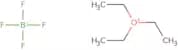
Discontinued productTriethyloxonium tetrafluoroborate
CAS:Triethyloxonium tetrafluoroborate is an antimicrobial agent that inhibits the transfer of electrons from one molecule to another. It has been shown to be effective against methicillin-resistant Staphylococcus aureus and Mycobacterium tuberculosis. Triethyloxonium tetrafluoroborate binds to the bacterial enzyme, Jak1, which is involved in the formation of cytokines and interleukins. This binding inhibits the production of these molecules, leading to cell death by apoptosis. The use of triethyloxonium tetrafluoroborate as a research tool has facilitated its discovery as a potential anti-inflammatory drug for autoimmune diseases such as type 1 diabetes mellitus and rheumatoid arthritis. Triethyloxonium tetrafluoroborate can be used to inhibit amide synthesis, which may have applications in the study of carbohydrate chemistry and nitrogen atoms in biological systems. This compound has also been used
Formula:C6H15BF4OPurity:Min. 95%Color and Shape:PowderMolecular weight:189.99 g/mol