Organic Halides
In this category, you can find organic molecules containing one or more halogen atoms in their structure. These organic halides include brominated, iodinated, chlorinated, and cyclic halide compounds. Organic halides are widely used in organic synthesis, pharmaceuticals, agrochemicals, and materials science due to their reactivity and ability to undergo a variety of chemical transformations. At CymitQuimica, we offer a comprehensive selection of high-quality organic halides to support your research and industrial applications, ensuring reliable and effective performance in your synthetic and analytical projects.
Subcategories of "Organic Halides"
Found 20440 products of "Organic Halides"
Sort by
Purity (%)
0
100
|
0
|
50
|
90
|
95
|
100
Dnp-Pro-TNF-alpha (71-82) amide (human) trifluoroacetate salt
CAS:<p>Please enquire for more information about Dnp-Pro-TNF-alpha (71-82) amide (human) trifluoroacetate salt including the price, delivery time and more detailed product information at the technical inquiry form on this page</p>Formula:C57H94N22O21Purity:Min. 95%Molecular weight:1,423.49 g/mol4-Fluorophenoxyacetic acid
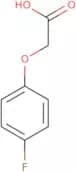
CAS:<p>4-Fluorophenoxyacetic acid is a chemical compound that is used as an insecticide. It has been shown to be effective against the planthopper and ipomoea, two agricultural pests. 4-Fluorophenoxyacetic acid binds to the active site of a specific protein in the insect's cells, inhibiting its function and causing cell death. 4-Fluorophenoxyacetic acid also inhibits the growth of human breast cancer cells in culture. The molecular weight of this compound is 180.2 g/mol and has a melting point of 185°C with a boiling point of 232°C at atmospheric pressure. 4-Fluorophenoxyacetic acid can be synthesized by reacting phenol with acetic anhydride in the presence of palladium complexes and nitrogen atoms. The reaction mechanism for this synthesis is nucleophilic addition to form a covalent bond between the nitrogen atom and sulfur atom on one side of the</p>Formula:C8H7FO3Purity:Min. 95%Color and Shape:PowderMolecular weight:170.14 g/mol4-Iodo-1-methyl-1H-imidazole
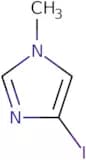
CAS:<p>4-Iodo-1-methyl-1H-imidazole is a trifluoroethylamine that inhibits the activity of tyrosine kinases. It binds to the active site of tyrosine kinase and prevents the binding of ATP, preventing phosphorylation and activation of downstream substrates. 4-Iodo-1-methyl-1H-imidazole has been shown to inhibit the proliferation of tumor xenografts in mice, as well as inhibiting headgroup binding and cellular proliferation in vitro. This agent also has a nanomolar range and high selectivity for protein kinases, which may make it suitable for therapeutic purposes.</p>Formula:C4H5IN2Purity:Min. 95%Molecular weight:208 g/mol(D-Pro7)-Angiotensin I/II (1-7) trifluoroacetate salt
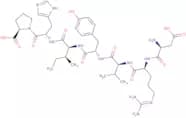
CAS:<p>Please enquire for more information about (D-Pro7)-Angiotensin I/II (1-7) trifluoroacetate salt including the price, delivery time and more detailed product information at the technical inquiry form on this page</p>Formula:C41H62N12O11Purity:Min. 95%Molecular weight:899.01 g/mol5-(H-Gly-Pro-Gly-Pro-amido)-9-[di-(3-sulfonylpropyl)amino]-benzo[a]phenoxazonium perchlorate
CAS:<p>Please enquire for more information about 5-(H-Gly-Pro-Gly-Pro-amido)-9-[di-(3-sulfonylpropyl)amino]-benzo[a]phenoxazonium perchlorate including the price, delivery time and more detailed product information at the technical inquiry form on this page</p>Formula:C36H42N7O11S2Purity:Min. 95%Molecular weight:812.89 g/mol3-Cyclopropylmethoxy-4-difluoromethoxy-benzoic acid
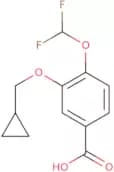
CAS:<p>3-Cyclopropylmethoxy-4-difluoromethoxy-benzoic acid is an industrial chemical that is used as a binding agent in the production of dyes, rubber, and pharmaceuticals. The compound is produced by the acylation of 3-chloromethoxybenzoic acid with cyclopropylmethanol. This reaction requires an inorganic base such as potassium carbonate or sodium bicarbonate to activate the chloride. 3-Cyclopropylmethoxy-4-difluoromethoxybenzoic acid can be used as a reactive alkylating agent for the production of amides and other organic compounds, which increases its versatility.</p>Formula:C12H12O4F2Purity:Min. 95%Color and Shape:White/Off-White SolidMolecular weight:258.22 g/mol3-Chloro-N,N-dimethylpropan-1-amine
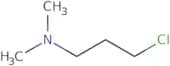
CAS:3-Chloro-N,N-dimethylpropan-1-amine (3CMP) is a chemical that belongs to the group of organic solvents. It is soluble in water and has a low toxicity for mammals. 3CMP has been shown to have antimicrobial properties against typhimurium and other bacteria. 3CMP binds to the hydroxyl group of biomembranes and interferes with bacterial replication by inhibiting RNA synthesis. The mechanism of this inhibition may be due to the chloride ions that are released from the membrane or may be due to an increase in cell size, which can lead to hypertrophy. 3CMP binds to the chloride ion on bacterial membranes, which inhibits the synthesis of RNA by blocking its ability to bind with the ribosome. This leads to cell death by inhibiting protein synthesis and cell division.Formula:C5H12ClNPurity:Min. 95%Molecular weight:121.61 g/mol(Ala11·22·28)-VIP (human, mouse, rat) trifluoroacetate salt
CAS:<p>(Ala11·22·28)-VIP is an endogenous peptide which is involved in the regulation of inflammation. It is a specific agonist for the vasoactive intestinal peptide receptor (VIP-R) and has been shown to exacerbate inflammatory responses such as those seen in tissues, intestines, and phagocytes. VIP also has effects on other cells types that are mediated by its ability to activate the VIP-R. These include increased vascular permeability and vasodilation, as well as increases in reactive oxygen species and cytokine production.</p>Formula:C139H231N43O39SPurity:Min. 95%Molecular weight:3,160.65 g/mol2-Bromo-5-chlorobenzaldehyde
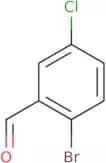
CAS:<p>2-Bromo-5-chlorobenzaldehyde is an industrial chemical that is used as a precursor for the production of other chemicals. It can be synthesized by reacting 3-chlorobenzaldehyde with sodium bromide in the presence of a catalyst. 2-Bromo-5-chlorobenzaldehyde has been shown to have high reactivity, and can be used as a catalyst to produce large amounts of organic compounds. This chemical can also be produced in large quantities by neutralizing alkalis with acid, which is an effective way to dispose of these hazardous substances.</p>Formula:C7H4BrClOPurity:Min. 95%Molecular weight:219.46 g/molH-D-Arg(Pbf)-2-chlorotrityl resin (200-400 mesh)
<p>Please enquire for more information about H-D-Arg(Pbf)-2-chlorotrityl resin (200-400 mesh) including the price, delivery time and more detailed product information at the technical inquiry form on this page</p>Purity:Min. 95%Presenilin-1 (331-349)-Cys (human, mouse) trifluoroacetate salt
CAS:<p>Please enquire for more information about Presenilin-1 (331-349)-Cys (human, mouse) trifluoroacetate salt including the price, delivery time and more detailed product information at the technical inquiry form on this page</p>Formula:C92H130N28O37SPurity:Min. 95%Molecular weight:2,252.25 g/mol1,1,2,3,3,3-Hexafluoro-1-propene oxidized polymd.
CAS:<p>1,1,2,3,3,3-Hexafluoro-1-propene oxidized polymd. is a cosmetically active organic solvent that is used as an ingredient in cosmetic products. It is also used as a raw material for the production of polymer films. 1,1,2,3,3,3-Hexafluoro-1-propene oxidized polymd. has been shown to be effective in preventing calcium carbonate from agglomerating and provides a constant viscosity in water. This product can also be used as a film-forming polymer with anti-fogging properties. The product also has nutritional supplement properties and can be found in dietary supplements such as fish oil capsules or vitamin E pills.</p>Purity:Min. 95%Color and Shape:Clear Liquid(Des-Gly10,D-Trp3,D-Leu6,Pro-NHEt 9)-LHRH trifluoroacetate salt
Please enquire for more information about (Des-Gly10,D-Trp3,D-Leu6,Pro-NHEt 9)-LHRH trifluoroacetate salt including the price, delivery time and more detailed product information at the technical inquiry form on this pageFormula:C59H84N16O12Purity:Min. 95%Molecular weight:1,209.4 g/mol(Ala11,D-Leu15)-Orexin B (human) trifluoroacetate salt
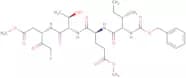
CAS:<p>Please enquire for more information about (Ala11,D-Leu15)-Orexin B (human) trifluoroacetate salt including the price, delivery time and more detailed product information at the technical inquiry form on this page</p>Formula:C120H206N44O35SPurity:Min. 95%Molecular weight:2,857.26 g/molZ-Ile-Glu(OMe)-Thr-DL-Asp(OMe)-fluoromethylketone
CAS:<p>Z-Ile-Glu(OMe)-Thr-DL-Asp(OMe)-fluoromethylketone is an apoptosis inducer that belongs to the category of small molecules. It has been shown to induce apoptosis in cells by binding to DNA and inhibiting transcription, leading to DNA fragmentation and the activation of caspase-8. Z-Ile-Glu(OMe)-Thr-DL-Asp(OMe)-fluoromethylketone has also been shown to have a synergistic effect on cells when combined with other potent inducers of apoptosis. This drug binds to toll receptors (TLR) and IL2 receptors, which are important for cell signaling pathways.</p>Formula:C30H43FN4O11Purity:Min. 95%Molecular weight:654.68 g/molAc-Leu-Glu-His-Asp-chloromethylketone
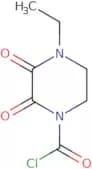
CAS:<p>Ac-Leu-Glu-His-Asp-chloromethylketone is a creatine kinase inhibitor that prevents the conversion of ATP to ADP. It inhibits mitochondrial pathways, leading to apoptotic and proapoptotic effects. Ac-Leu-Glu-His-Asp-chloromethylketone also has a kinetic effect on cells, where it causes necrotic cell death. This compound can cause proteolytic activity, which leads to the activation of caspase 9 and matrix metalloproteinases. Ac-Leu-Glu-His-Asp chloromethylketone has been shown to have antiinflammatory properties in cellular assays, as well as an ability to inhibit the synthesis of cellular proteins.</p>Formula:C24H35ClN6O9Purity:Min. 95%Molecular weight:587.02 g/molc4-Ethyl-2,3-dioxo-piperazine carbonyl chloride
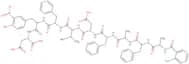
CAS:<p>c4-Ethyl-2,3-dioxo-piperazine carbonyl chloride is a chloroformate that is used in the synthesis of carbamates. It is used in the production of triphosgene, which is an intermediate for the production of herbicides and pesticides. The impurities found in this substance are n-hexane, flow rate, chloride, chloroformate and solvents. This product can be synthesized by reacting c4-ethyl-2,3-dioxopiperazine with carbon tetrachloride. The reaction time required to produce this product is 2 hours at a temperature between 100°C and 150°C. The optimum pH range for the reaction is 8 - 10.</p>Formula:C7H9ClN2O3Purity:Min. 95%Color and Shape:PowderMolecular weight:204.61 g/molAbz-Ala-Phe-Ala-Phe-Asp-Val-Phe-3-nitro-Tyr-Asp-OH trifluoroacetate salt
CAS:<p>Please enquire for more information about Abz-Ala-Phe-Ala-Phe-Asp-Val-Phe-3-nitro-Tyr-Asp-OH trifluoroacetate salt including the price, delivery time and more detailed product information at the technical inquiry form on this page</p>Formula:C62H71N11O18Purity:Min. 95%Molecular weight:1,258.29 g/molAminoguanidine hydrochloride
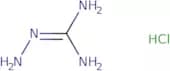
CAS:<p>Aminoguanidine hydrochloride is a basic compound that can be used as an anti-inflammatory drug. It has been shown to have a hypoglycemic effect, which may be due to its ability to increase the activity of glutathione peroxidase and glutathione reductase in experimental models. Aminoguanidine hydrochloride also inhibits the production of inflammatory cytokines such as TNF-α, IL-1β and IL-6. Experiments with transfected cells have shown that aminoguanidine hydrochloride induces neuronal death, which may be due to its ability to inhibit protein synthesis by interfering with ribosomal function.</p>Formula:CH6N4·HClPurity:Min. 95%Color and Shape:White PowderMolecular weight:110.55 g/molH-p-Chloro-Phe-D-Cys-b-(3-pyridyl)-Ala-D-Trp-N-Me-Lys-Thr-Cys-2-Nal-NH2 trifluoroacetate salt (Disulfide bond)
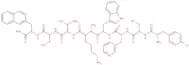
CAS:Please enquire for more information about H-p-Chloro-Phe-D-Cys-b-(3-pyridyl)-Ala-D-Trp-N-Me-Lys-Thr-Cys-2-Nal-NH2 trifluoroacetate salt (Disulfide bond) including the price, delivery time and more detailed product information at the technical inquiry form on this pageFormula:C58H69ClN12O9S2Purity:Min. 95%Molecular weight:1,177.83 g/mol

![5-(H-Gly-Pro-Gly-Pro-amido)-9-[di-(3-sulfonylpropyl)amino]-benzo[a]phenoxazonium perchlorate](/_next/image/?url=https%3A%2Fstatic.cymitquimica.com%2Fproducts%2F3D%2Fthumb-webp%2FFG110995.webp&w=3840&q=75)