Organic Halides
In this category, you can find organic molecules containing one or more halogen atoms in their structure. These organic halides include brominated, iodinated, chlorinated, and cyclic halide compounds. Organic halides are widely used in organic synthesis, pharmaceuticals, agrochemicals, and materials science due to their reactivity and ability to undergo a variety of chemical transformations. At CymitQuimica, we offer a comprehensive selection of high-quality organic halides to support your research and industrial applications, ensuring reliable and effective performance in your synthetic and analytical projects.
Subcategories of "Organic Halides"
Found 20437 products of "Organic Halides"
Sort by
Purity (%)
0
100
|
0
|
50
|
90
|
95
|
100
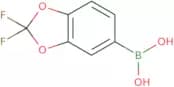
2,2-Difluoro-1,3-Benzodioxol-5-Ylboronic Acid
CAS:<p>Please enquire for more information about 2,2-Difluoro-1,3-Benzodioxol-5-Ylboronic Acid including the price, delivery time and more detailed product information at the technical inquiry form on this page</p>Formula:C7H5BF2O4Purity:Min. 95%Molecular weight:201.92 g/mol2-Bromobenzo[d]thiazol-6-amine
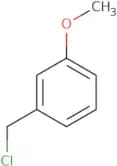
CAS:<p>Please enquire for more information about 2-Bromobenzo[d]thiazol-6-amine including the price, delivery time and more detailed product information at the technical inquiry form on this page</p>Formula:C7H5BrN2SPurity:Min. 95%Molecular weight:229.1 g/mol3-Methoxybenzyl chloride
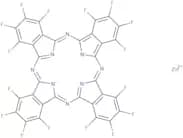
CAS:<p>3-Methoxybenzyl chloride is a polymer conjugate that has the chemical formula C6H5CH2ClO. It reacts with hydroxy groups to form ester bonds. The compound was synthesized by reacting 3-methoxybenzyl chloride with hydrochloric acid in vitro, and the resulting product was found to have antimicrobial properties. In vivo studies have shown that this compound binds to receptors in rat striatal tissue. 3-Methoxybenzyl chloride also showed fluorescence properties when exposed to ultraviolet light and can be used for molecular modeling. Titration calorimetry has been used to study the thermal stability of this polymer conjugate.</p>Formula:C8H9ClOPurity:Min. 95%Molecular weight:156.61 g/molZinc 1,2,3,4,8,9,10,11,15,16,17,18,22,23,24,25-hexadecafluoro-29H,31H-phthalocyanine
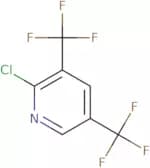
CAS:<p>Please enquire for more information about Zinc 1,2,3,4,8,9,10,11,15,16,17,18,22,23,24,25-hexadecafluoro-29H,31H-phthalocyanine including the price, delivery time and more detailed product information at the technical inquiry form on this page</p>Formula:C32F16N8ZnPurity:Min. 95%Molecular weight:865.75 g/mol2-Chloro-3,5-bis(trifluoromethyl)pyridine
CAS:<p>Please enquire for more information about 2-Chloro-3,5-bis(trifluoromethyl)pyridine including the price, delivery time and more detailed product information at the technical inquiry form on this page</p>Formula:C7H2ClF6NPurity:Min. 95%Molecular weight:249.54 g/mol12-Fluorododecan-1-ol
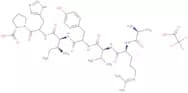
CAS:<p>12-Fluorododecan-1-ol is a volatile chemical compound that is found in the exoskeleton of termites. It has been shown to be a major component of the termiticide, FluoroCitrate. 12-fluorododecan-1-ol can be used to control the growth of insect populations by interfering with their ability to synthesize fatty acids and alcohols. It also has an effect on protein synthesis and inhibits the activity of citrate synthase, which is an enzyme involved in glycolate metabolism. This compound is also toxic to some species of insects such as Rhinotermitidae. 12-fluorododecan-1-ol can be used as a marker for Reticulitermes flavipes (a type of wood eating cockroach) and it can be used to distinguish between different species or strains of termites.</p>Formula:C12H25FOPurity:Min. 95%Color and Shape:Clear LiquidMolecular weight:204.32 g/molAngiotensin A (1-7) trifluoroacetate
CAS:<p>Endogenous heptapetide which causes vasodilation and has anti-hypertensive properties.</p>Formula:C40H62N12O9•(C2HF3O2)xPurity:Min. 95%Color and Shape:PowderMolecular weight:855 g/molIndium (III) chloride
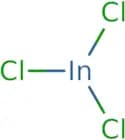
CAS:<p>Indium (III) chloride is a reactive metal with a high oxidation state that has been shown to have significant cytotoxic effects in vitro. It is also genotoxic, which may be due to the generation of hydroxyl radicals and other reactive oxygen species. Indium (III) chloride has been used for the treatment of various infectious diseases, including HIV, Epstein-Barr virus, herpes simplex virus type 1, and influenza A virus. The toxicity of this metal is dependent on the concentration and duration of exposure. Indium (III) chloride is metabolized by plasma mass spectrometry as a substrate molecule for cytochrome P450 enzymes. This reaction results in the formation of an active metabolite that can bind to DNA and affect mitochondrial membrane potential. Indium (III) chloride has also been used as a contrast agent in fluorescein angiography or particle imaging techniques to visualize the presence of biological materials such as tissue necrosis or inflammation.</p>Formula:Cl3InPurity:Min. 95%Color and Shape:Clear LiquidMolecular weight:221.18 g/molChloromethyl isopropyl carbonate
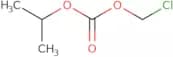
CAS:<p>Chloromethyl isopropyl carbonate (CIC) is a prodrug that is converted to disoproxil in the body. It has significant cytotoxicity and antiviral activity against HIV and other viruses, but has not been used clinically due to its chemical instability. CIC can be administered orally as a prodrug, with the active form of CIC being tenofovir disoproxil. Tenofovir disoproxil is metabolized by proximal tubules and has shown efficacy for treating hepatitis B and C. Tenofovir has also been shown to decrease the incidence of renal disease in HIV patients.</p>Formula:C5H9ClO3Purity:Min. 95%Color and Shape:Colorless PowderMolecular weight:152.58 g/mol3,6-Dichloro trimellitic anhydride
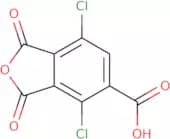
CAS:<p>3,6-Dichloro trimellitic anhydride is a reactive compound that is used in the synthesis of fluorescent probes. It is also used as a reagent to introduce chlorine substituents onto organic molecules. Fluorescence measurements can be used to determine the purity of 3,6-dichloro trimellitic anhydride. This compound reacts with nucleic acids, causing them to fluoresce and making them detectable by spectroscopy. 3,6-Dichloro trimellitic anhydride has been used in research involving the study of nucleic acids and their role in DNA replication and repair.</p>Formula:C9H2Cl2O5Purity:Min. 95%Molecular weight:261.01 g/mol(S)-(-)-6,7-Dimethoxy-1,2,3,4-tetrahydroisoquinoline-3-carboxylic acid hydrochloride
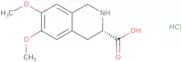
CAS:<p>(S)-(-)-6,7-Dimethoxy-1,2,3,4-tetrahydroisoquinoline-3-carboxylic acid hydrochloride is a synthetic chiral compound that is used to study the role of glyoxylate in biochemical reactions. This drug is an enolate and alkylating agent that can react with nucleophiles such as amines and thiols. It has been shown to be effective against perchlorates by hydrolyzing them into chlorine and oxygen gas. This drug has also been shown to inhibit the growth of Rhodobacter sphaeroides by inhibiting glyoxylate metabolism.</p>Formula:C12H15NO4·HClPurity:Min. 95%Color and Shape:White PowderMolecular weight:273.71 g/molH-Glu-Gly-Arg-chloromethylketone trifluoroacetate salt
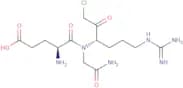
CAS:<p>H-Glu-Gly-Arg-chloromethylketone trifluoroacetate salt is an anticoagulant drug that prevents the formation of blood clots by inhibiting the enzyme thrombin. This drug is effective in enhancing blood flow and oxygen supply to the heart and other organs. H-Glu-Gly-Arg-chloromethylketone trifluoroacetate salt has been shown to have a positive effect on patients with congestive heart failure. It has also been used as an adjuvant therapy in bypassing procedures, where clotting occurs at the site of an artificial conduit placed in the body to allow blood flow between two points. In vitro studies have demonstrated that this drug inhibits protease activity, which may be due to its ability to inhibit fibrinogen and serine protease activity.</p>Formula:C14H25ClN6O5Purity:Min. 95%Molecular weight:392.84 g/molLHRH (1-5) (free acid) trifluoroacetate salt
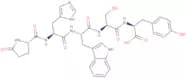
CAS:<p>LHRH (1-5) (free acid) trifluoroacetate salt is a synthetic hormone that is used in the treatment of prostate cancer. It inhibits the release of luteinizing hormone and follicle-stimulating hormone from the anterior pituitary gland, which suppresses testosterone production by the testes. LHRH (1-5) (free acid) trifluoroacetate salt is synthesized industrially using a liquid phase synthesis. The product may be recycled by returning it to the manufacturing process or using it as an additive for plastics or other industrial products. LHRH (1-5) (free acid) trifluoroacetate salt was shown to be active against tumor cells in culture and inhibited cell growth in culture. This drug has been shown to inhibit the production of nitric oxide, which may contribute to its anti-tumor activity. LHRH (1-5) (free acid)</p>Formula:C34H38N8O9Purity:Min. 95%Color and Shape:PowderMolecular weight:702.71 g/mol6-(Bromomethyl)-1,1,4,4-tetramethyl-1,2,3,4-tetrahydronaphthalene
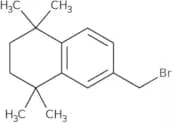
CAS:<p>Please enquire for more information about 6-(Bromomethyl)-1,1,4,4-tetramethyl-1,2,3,4-tetrahydronaphthalene including the price, delivery time and more detailed product information at the technical inquiry form on this page</p>Formula:C15H21BrPurity:Min. 80 Area-%Color and Shape:Clear LiquidMolecular weight:281.23 g/mol7-Fluoro-2-methylquinoline
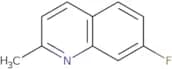
CAS:<p>7-Fluoro-2-methylquinoline is a multistep synthetic compound that belongs to the family of quinoxalines. It has been shown to have potent antibacterial activity against a wide range of bacteria, including methicillin-resistant Staphylococcus aureus (MRSA) and Mycobacterium tuberculosis. 7-Fluoro-2-methylquinoline was developed as an analog of the natural product quinoxaline. The key step in its synthesis is the reaction between an aldehyde and hydroxyalkylating reagent in the presence of iron catalyst. This process results in the formation of functional groups such as hydroxyls, alkoxy, or halogens.</p>Formula:C10H8FNPurity:Min. 95%Color and Shape:White PowderMolecular weight:161.18 g/mol2-(2-Bromoethoxy)tetrahydro-2H-pyran
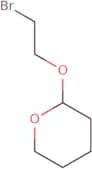
CAS:<p>2-(2-Bromoethoxy)tetrahydro-2H-pyran is a synthetic molecule that has been shown to act as an estrogen receptor modulator, which has the potential to be used for the treatment of hormone-sensitive diseases such as breast cancer. This compound is chemically very similar to other compounds that have been shown to be effective in treating breast cancer. 2-(2-Bromoethoxy)tetrahydro-2H-pyran has a cavity and 6 hydroxyl groups that can form hydrogen bonds with water molecules, leading to its gelling properties. In addition, this compound is thermoreversible and can reversibly gel when heated or cooled. The gelation property of 2-(2-Bromoethoxy)tetrahydro-2H-pyran makes it a promising candidate for use in vaginal tablets, which could potentially lead to treatments for vaginal dryness and atrophy.</p>Formula:C7H13BrO2Purity:Min. 95%Color and Shape:Clear LiquidMolecular weight:209.08 g/mol(S)-(+)-Naproxen chloride
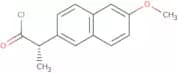
CAS:<p>COX1/2 inhibitor; nonsteroidal anti-inflammatory drug</p>Formula:C14H14Cl2O3Purity:Min. 95%Molecular weight:301.16 g/molPhenyl-magnesium bromide solution - 1.0 M in THF
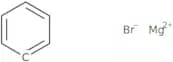
CAS:<p>Phenyl-magnesium bromide solution is a chemical compound that can be used as a pesticide. It has been shown to have carcinoid syndrome-inducing properties in animal studies. Phenyl-magnesium bromide solution has also been found to have biological properties that are beneficial for bowel disease, organometallic reactivity, and congestive heart failure. This chemical compound reacts with ester hydrochloride in the presence of an organic base to form a reactive intermediate that undergoes transfer reactions with other organic compounds. Phenyl-magnesium bromide solution is reactive and can cause metabolic disorders such as palladium-catalyzed coupling.</p>Formula:C6H5BrMgPurity:Min. 95%Molecular weight:181.31 g/molDesmethylene paroxetine hydrochloride salt
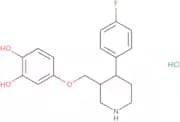
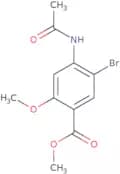
CAS:<p>Please enquire for more information about Desmethylene paroxetine hydrochloride salt including the price, delivery time and more detailed product information at the technical inquiry form on this page</p>Formula:C18H21ClFNO3Purity:Min. 95%Molecular weight:353.82 g/mol4-Acetylamino-5-bromo-2-methoxy-benzoic acid methylester
CAS:<p>Please enquire for more information about 4-Acetylamino-5-bromo-2-methoxy-benzoic acid methylester including the price, delivery time and more detailed product information at the technical inquiry form on this page</p>Formula:C11H12BrNO4Purity:Min. 95%Color and Shape:PowderMolecular weight:302.12 g/mol

![2-Bromobenzo[d]thiazol-6-amine](/_next/image/?url=https%3A%2Fstatic.cymitquimica.com%2Fproducts%2F3D%2Fthumb-webp%2FFB144124.webp&w=3840&q=75)