Organic Halides
In this category, you can find organic molecules containing one or more halogen atoms in their structure. These organic halides include brominated, iodinated, chlorinated, and cyclic halide compounds. Organic halides are widely used in organic synthesis, pharmaceuticals, agrochemicals, and materials science due to their reactivity and ability to undergo a variety of chemical transformations. At CymitQuimica, we offer a comprehensive selection of high-quality organic halides to support your research and industrial applications, ensuring reliable and effective performance in your synthetic and analytical projects.
Subcategories of "Organic Halides"
Found 20437 products of "Organic Halides"
Sort by
Purity (%)
0
100
|
0
|
50
|
90
|
95
|
100
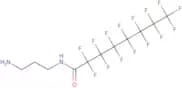
N-(3-Aminopropyl)-2,2,3,3,4,4,5,5,6,6,7,7,8,8,8-pentadecafluorooctanamide
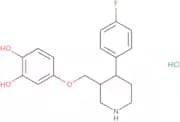
CAS:Controlled Product<p>Please enquire for more information about N-(3-Aminopropyl)-2,2,3,3,4,4,5,5,6,6,7,7,8,8,8-pentadecafluorooctanamide including the price, delivery time and more detailed product information at the technical inquiry form on this page</p>Formula:C11H9F15N2OPurity:Min. 95%Molecular weight:470.18 g/molDesmethylene paroxetine hydrochloride salt
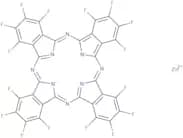
CAS:<p>Please enquire for more information about Desmethylene paroxetine hydrochloride salt including the price, delivery time and more detailed product information at the technical inquiry form on this page</p>Formula:C18H21ClFNO3Purity:Min. 95%Molecular weight:353.82 g/molZinc 1,2,3,4,8,9,10,11,15,16,17,18,22,23,24,25-hexadecafluoro-29H,31H-phthalocyanine
CAS:<p>Please enquire for more information about Zinc 1,2,3,4,8,9,10,11,15,16,17,18,22,23,24,25-hexadecafluoro-29H,31H-phthalocyanine including the price, delivery time and more detailed product information at the technical inquiry form on this page</p>Formula:C32F16N8ZnPurity:Min. 95%Molecular weight:865.75 g/mol(S)-(+)-Naproxen chloride
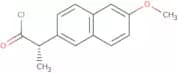
CAS:<p>COX1/2 inhibitor; nonsteroidal anti-inflammatory drug</p>Formula:C14H14Cl2O3Purity:Min. 95%Molecular weight:301.16 g/mol7-Fluoro-2-methylquinoline
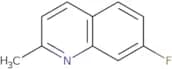
CAS:<p>7-Fluoro-2-methylquinoline is a multistep synthetic compound that belongs to the family of quinoxalines. It has been shown to have potent antibacterial activity against a wide range of bacteria, including methicillin-resistant Staphylococcus aureus (MRSA) and Mycobacterium tuberculosis. 7-Fluoro-2-methylquinoline was developed as an analog of the natural product quinoxaline. The key step in its synthesis is the reaction between an aldehyde and hydroxyalkylating reagent in the presence of iron catalyst. This process results in the formation of functional groups such as hydroxyls, alkoxy, or halogens.</p>Formula:C10H8FNPurity:Min. 95%Color and Shape:White PowderMolecular weight:161.18 g/molH-Glu-Gly-Arg-chloromethylketone trifluoroacetate salt
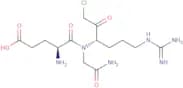
CAS:<p>H-Glu-Gly-Arg-chloromethylketone trifluoroacetate salt is an anticoagulant drug that prevents the formation of blood clots by inhibiting the enzyme thrombin. This drug is effective in enhancing blood flow and oxygen supply to the heart and other organs. H-Glu-Gly-Arg-chloromethylketone trifluoroacetate salt has been shown to have a positive effect on patients with congestive heart failure. It has also been used as an adjuvant therapy in bypassing procedures, where clotting occurs at the site of an artificial conduit placed in the body to allow blood flow between two points. In vitro studies have demonstrated that this drug inhibits protease activity, which may be due to its ability to inhibit fibrinogen and serine protease activity.</p>Formula:C14H25ClN6O5Purity:Min. 95%Molecular weight:392.84 g/mol4-Acetylamino-5-bromo-2-methoxy-benzoic acid methylester
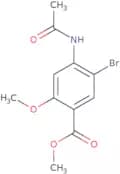
CAS:<p>Please enquire for more information about 4-Acetylamino-5-bromo-2-methoxy-benzoic acid methylester including the price, delivery time and more detailed product information at the technical inquiry form on this page</p>Formula:C11H12BrNO4Purity:Min. 95%Color and Shape:PowderMolecular weight:302.12 g/mol12-Fluorododecan-1-ol
CAS:<p>12-Fluorododecan-1-ol is a volatile chemical compound that is found in the exoskeleton of termites. It has been shown to be a major component of the termiticide, FluoroCitrate. 12-fluorododecan-1-ol can be used to control the growth of insect populations by interfering with their ability to synthesize fatty acids and alcohols. It also has an effect on protein synthesis and inhibits the activity of citrate synthase, which is an enzyme involved in glycolate metabolism. This compound is also toxic to some species of insects such as Rhinotermitidae. 12-fluorododecan-1-ol can be used as a marker for Reticulitermes flavipes (a type of wood eating cockroach) and it can be used to distinguish between different species or strains of termites.</p>Formula:C12H25FOPurity:Min. 95%Color and Shape:Clear LiquidMolecular weight:204.32 g/mol3,6-Dichloro trimellitic anhydride
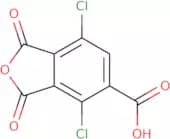
CAS:<p>3,6-Dichloro trimellitic anhydride is a reactive compound that is used in the synthesis of fluorescent probes. It is also used as a reagent to introduce chlorine substituents onto organic molecules. Fluorescence measurements can be used to determine the purity of 3,6-dichloro trimellitic anhydride. This compound reacts with nucleic acids, causing them to fluoresce and making them detectable by spectroscopy. 3,6-Dichloro trimellitic anhydride has been used in research involving the study of nucleic acids and their role in DNA replication and repair.</p>Formula:C9H2Cl2O5Purity:Min. 95%Molecular weight:261.01 g/molAmmonium Undecafluorohexanoate
CAS:<p>Undecafluorohexanoic acid is a perfluoroalkyl carboxylic acid that has been shown to disrupt steroidogenesis in vitro. It may be able to inhibit the transport of cholesterol, fats, and other lipids in cells, which causes disruption in steroidogenesis. This compound also has anti-cancer properties due to its ability to induce apoptosis and arrest cancer cell proliferation. Undecafluorohexanoic acid may also have developmental effects on animals because it can bind to estrogen receptors and disrupt the normal process of estrogen-mediated signaling pathways.</p>Formula:C6H4F11NO2Purity:Min. 95%Molecular weight:331.08 g/mol(3R,5S)-5-(Hydroxymethyl)pyrrolidin-3-ol hydrochloride
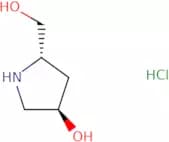
CAS:<p>Please enquire for more information about (3R,5S)-5-(Hydroxymethyl)pyrrolidin-3-ol hydrochloride including the price, delivery time and more detailed product information at the technical inquiry form on this page</p>Purity:Min. 95%(S)-(-)-6,7-Dimethoxy-1,2,3,4-tetrahydroisoquinoline-3-carboxylic acid hydrochloride
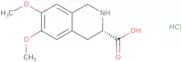
CAS:<p>(S)-(-)-6,7-Dimethoxy-1,2,3,4-tetrahydroisoquinoline-3-carboxylic acid hydrochloride is a synthetic chiral compound that is used to study the role of glyoxylate in biochemical reactions. This drug is an enolate and alkylating agent that can react with nucleophiles such as amines and thiols. It has been shown to be effective against perchlorates by hydrolyzing them into chlorine and oxygen gas. This drug has also been shown to inhibit the growth of Rhodobacter sphaeroides by inhibiting glyoxylate metabolism.</p>Formula:C12H15NO4·HClPurity:Min. 95%Color and Shape:White PowderMolecular weight:273.71 g/molChlorophyllide A
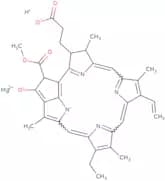
CAS:<p>Chlorophyllide A is a chlorophyll molecule that has been synthesized by the enzymatic conversion of an existing chlorophyll molecule. It can be used as a model system for studying the physiological function of chlorophyll and its role in photosynthesis. The synthesis of Chlorophyllide A has been shown to be biocompatible with cells and tissues, making it an excellent candidate for drug delivery systems. The synthesis of this molecule is achieved through a reaction mechanism involving glutamate dehydrogenase, which adds a hydroxyl group to the cysteine residue on the chlorophyll molecule. This reaction takes place in low light conditions, which prevents photodegradation of this molecule. Chlorophyllide A also has a pH optimum at around pH 7-8 and does not react with proteins or nucleic acids.</p>Formula:C35H34MgN4O5Purity:90%MinColor and Shape:PowderMolecular weight:614.97 g/mol10-Fluorodecan-1-Ol
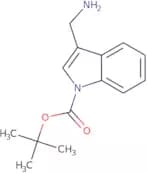
CAS:<p>Please enquire for more information about 10-Fluorodecan-1-Ol including the price, delivery time and more detailed product information at the technical inquiry form on this page</p>Formula:C10H21FOPurity:Min. 95%Molecular weight:176.27 g/moltert-Butyl 3-(aminomethyl)-1H-indole-1-carboxylate hydrochloride
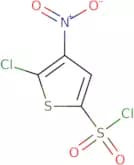
CAS:<p>Please enquire for more information about tert-Butyl 3-(aminomethyl)-1H-indole-1-carboxylate hydrochloride including the price, delivery time and more detailed product information at the technical inquiry form on this page</p>Formula:C14H18N2O2Purity:Min. 95%Molecular weight:246.31 g/mol5-Chloro-4-nitrothiophene-2-sulfonylchloride
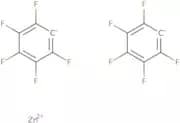
CAS:<p>Please enquire for more information about 5-Chloro-4-nitrothiophene-2-sulfonylchloride including the price, delivery time and more detailed product information at the technical inquiry form on this page</p>Formula:C4HCl2NO4S2Purity:Min. 95%Molecular weight:262.09 g/molBis(pentafluorophenyl)zinc
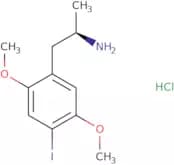
CAS:<p>Bis(pentafluorophenyl)zinc (BPFPZn) is a ring-opening polymerization catalyst that is used to synthesize polymers with pendant covalent adducts. BPFPZn has shown synergistic effects when used in combination with lactide, which is a monomer that can be polymerized to form polylactic acid. The reaction system used for the synthesis of BPFPZn and lactide involves nucleophilic attack on the zinc cation by the carbonyl group of lactide, leading to reductive elimination and coordination chemistry. This reaction system has been shown to produce architectures such as block copolymers and star polymers.</p>Formula:C12F10ZnPurity:Min. 95%Color and Shape:PowderMolecular weight:399.49 g/mol(R)(−)-DOI hydrochloride
CAS:Controlled Product<p>(R)(−)-DOI hydrochloride is a synthetic compound classified as a selective serotonin receptor agonist. It is primarily sourced from chemical synthesis processes designed to explore potential interactions within serotonergic pathways. The compound’s mode of action involves the activation of 5-HT2A, 5-HT2B, and 5-HT2C serotonin receptors, which play crucial roles in modulating neurotransmission and signaling pathways within the central nervous system.In research and experimental contexts, (R)(−)-DOI hydrochloride is utilized to investigate the molecular mechanisms of serotonin receptors, contributing to a deeper understanding of their role in neurophysiology and potential implications in neuropsychiatric disorders. Studies often explore its effects on cognition, perception, and mood regulation. Despite its promising role in scientific exploration, (R)(−)-DOI hydrochloride is not intended for therapeutic use and remains predominantly a tool for advancing the field of neuropharmacology through controlled experimental settings.</p>Formula:C11H17ClINO2Purity:Min. 95%Molecular weight:357.62 g/mol2-[(Ethylamino)methyl]-4-aminophenol dihydrochloride
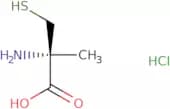
CAS:<p>Please enquire for more information about 2-[(Ethylamino)methyl]-4-aminophenol dihydrochloride including the price, delivery time and more detailed product information at the technical inquiry form on this page</p>Formula:C9H14N2O•(HCl)2Purity:Min. 95%Color and Shape:PowderMolecular weight:239.14 g/mol2-Methyl-L-cysteine hydrochloride
CAS:<p>2-Methyl-L-cysteine hydrochloride is a synthetic molecule that is used as an organic solvent. It can be produced from the reaction of an inorganic base with an ester hydrochloride and has been shown to have stereoselective properties. The spontaneous formation of this molecule was enhanced by the addition of hydrochloric acid, which increased the reaction yield. 2-Methyl-L-cysteine hydrochloride has been shown to react spontaneously with inorganic materials, such as titanium dioxide, which causes a color change from white to yellow.</p>Formula:C4H9NO2S·HClPurity:Min. 95%Color and Shape:White PowderMolecular weight:171.65 g/mol




![2-[(Ethylamino)methyl]-4-aminophenol dihydrochloride](/_next/image/?url=https%3A%2Fstatic.cymitquimica.com%2Fproducts%2F3D%2Fthumb-webp%2FFE23131.webp&w=3840&q=75)