Organic Halides
In this category, you can find organic molecules containing one or more halogen atoms in their structure. These organic halides include brominated, iodinated, chlorinated, and cyclic halide compounds. Organic halides are widely used in organic synthesis, pharmaceuticals, agrochemicals, and materials science due to their reactivity and ability to undergo a variety of chemical transformations. At CymitQuimica, we offer a comprehensive selection of high-quality organic halides to support your research and industrial applications, ensuring reliable and effective performance in your synthetic and analytical projects.
Subcategories of "Organic Halides"
Found 20437 products of "Organic Halides"
Sort by
Purity (%)
0
100
|
0
|
50
|
90
|
95
|
100
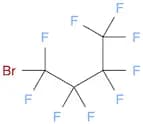
Butane,1-bromo-1,1,2,2,3,3,4,4,4-nonafluoro-
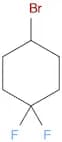
CAS:Formula:C4BrF9Purity:98%Color and Shape:LiquidMolecular weight:298.9324Cyclohexane, 4-bromo-1,1-difluoro-
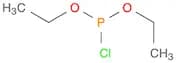
CAS:Formula:C6H9BrF2Purity:97%Color and Shape:LiquidMolecular weight:199.0365DIETHYL CHLOROPHOSPHITE
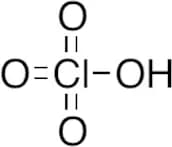
CAS:Formula:C4H10ClO2PPurity:95%Color and Shape:LiquidMolecular weight:156.5478Perchloric Acid (60%)
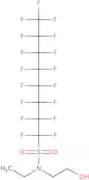
CAS:<p>Applications Perchloric Acid is a useful chemical reagent in the preparation of perchlorate salts. It is also known to be a strong oxidizer.<br> E0<br></p>Formula:ClHO4Purity:60%Color and Shape:NeatMolecular weight:100.4585N-Ethyl-N-(2-hydroxyethyl)perfluorooctylsulphonamide
CAS:Controlled Product<p>N-Ethyl-N-(2-hydroxyethyl)perfluorooctylsulphonamide is a novel glycol ester with cytotoxic effects. It has been shown to inhibit the growth of cancer cells in rat liver microsomes and in vivo. N-Ethyl-N-(2-hydroxyethyl)perfluorooctylsulphonamide inhibits the synthesis of fatty acids by inhibiting the enzyme lipoxygenase. This drug also has a reactive carbon nanotube that may be used as an anticancer agent, which can bind to cell membranes and disrupt their function.</p>Formula:C12H10F17NO3SPurity:Min. 95%Color and Shape:PowderMolecular weight:571.25 g/molRef: 3D-FE104045
Discontinued productDecafluorobis(Trifluoromethyl)Cyclohexane
CAS:Controlled Product<p>Decafluorobis(trifluoromethyl)cyclohexane is a film-forming polymer that can be used as a nutrient solution. It is synthesized by the thermal decomposition of hydrogen fluoride and caproic acid. Decafluorobis(trifluoromethyl)cyclohexane can be analyzed by combining it with fatty acids in an enzyme hydrolysis reaction. The product will then form a film on the surface of the container, which can be analyzed using ionization techniques such as mass spectrometry or nuclear magnetic resonance.</p>Formula:C8F16Purity:Min. 95%Molecular weight:400.06 g/mol7-[5-(Fluoro-methyl-phosphoryl)oxypentyl]-4-nitro-2,1,3-benzoxadiazole
CAS:Controlled Product<p>7-[5-(Fluoro-methyl-phosphoryl)oxypentyl]-4-nitro-2,1,3-benzoxadiazole is a reactivator of the central nervous system. It is a noncompetitive antagonist at muscarinic receptors and blocks postsynaptic acetylcholine release from cholinergic neurons. It has been shown to have no effect on blood pressure but does cause an increase in locomotor activity in animals. This drug binds to the hippocampal formation and the ventral hippocampus, which are areas of the brain that are involved in memory and spatial navigation. The distribution of this drug postulated to be due to its ability to penetrate micron sized openings in cell membranes.</p>Formula:C12H15FN3O5PPurity:Min. 95%Molecular weight:331.24 g/mol2-(Ethyl-Fluorophosphoryl)Oxypropane
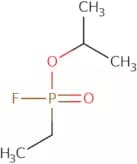
CAS:Controlled Product<p>2-(Ethyl-Fluorophosphoryl)Oxypropane (EFOP) is a chemical substance that is used as an analytical reagent in the detection of volatile and semi-volatile organic compounds in urine samples. EFOP has a high detection sensitivity, which allows it to be used for the analysis of low levels of chemicals in complex matrices. The matrix effect can be reduced by using human serum as the sample preparation medium. EFOP has been shown to be useful for determining sarin exposure in humans and mass analyzer data has shown that EFOP can detect high values of this chemical substance.</p>Formula:C5H12FO2PPurity:Min. 95%Molecular weight:154.12 g/molMethyltriphenoxyphosphonium Trifluoromethanesulfonate
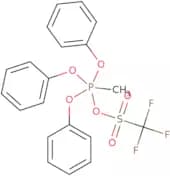
CAS:Controlled Product<p>Methyltriphenoxyphosphonium Trifluoromethanesulfonate is a reagent for the synthesis of alkenes, ethers, nitriles, esters and alkanes. It is also used to synthesize heterocycles. Methyltriphenoxyphosphonium Trifluoromethanesulfonate can be used to synthesise a wide variety of organic compounds. It reacts with electrophiles such as alcohols, amines and carboxylic acids to produce the corresponding ethers, nitriles, esters or alkanes. This reagent can also be used in many different cross-coupling reactions such as Suzuki-Miyaura reaction or Sonogashira reaction.</p>Formula:C20H18F3O6PSPurity:Min. 95%Molecular weight:474.39 g/mol(Fluoro-Methylphosphoryl)Oxycyclohexane
CAS:Controlled Product<p>(Fluoro-Methylphosphoryl)Oxycyclohexane is an organophosphorus compound that acts as a nerve agent. It inhibits the enzyme acetylcholinesterase, which is responsible for breaking down acetylcholine, leading to excess cholinergic stimulation. This can cause excessive contraction of muscles or even death. The exposure to (Fluoro-Methylphosphoryl)Oxycyclohexane can be detected by analytical methods such as gas chromatography/mass spectrometry. Oximes are used in the reactivation of acetylcholinesterase and are effective in preventing neuronal death. They bind to the phosphonyl group in (Fluoro-Methylphosphoryl)Oxycyclohexane and prevent it from inhibiting the enzyme acetylcholinesterase.</p>Formula:C7H14FO2PPurity:Min. 95%Molecular weight:180.16 g/molDifluoroamine
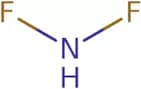
CAS:Controlled Product<p>Difluoroamine is a chemical compound that is used in the production of organic compounds. It has been shown to have high stability and detection sensitivity, which is attributed to its hydrogen bond forming ability. Difluoroamine also reacts with trifluoroacetic acid and hydrogen fluoride, both of which are strong acids. The reaction mechanism of difluoroamine involves the protonation of nitrogen atoms on the molecule followed by a nucleophilic attack on the electrophilic carbon atom that results in the formation of an amine group. This reaction can be carried out in a flow system as well as in a batch process. Difluoramine is an intermediate product during this process and can be converted into glycol ethers or nitrobenzene.</p>Formula:F2HNPurity:Min. 95%Molecular weight:53.01 g/mol1,1,1-Trichloropentafluoropropane
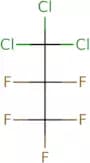
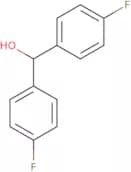
CAS:Controlled Product<p>1,1,1-Trichloropentafluoropropane is a hydrofluorocarbon that is used as a propellant in aerosol products. It is also used to produce other fluorocarbons and as a reactive solvent in chemical reactions. 1,1,1-Trichloropentafluoropropane (CFC-114) has three chlorine atoms and one fluorine atom. The reaction solution contains the reactants chloroform and hydrogen fluoride with an acid catalyst. The reaction can be carried out in two ways: the liquid phase process or the gas phase process. The liquid phase process occurs when there is no catalyst present in the reaction solution. This method produces two isomers of 1,1,1-trichloropentafluoropropane; CFC-114a and CFC-114b. The gas phase process occurs when an acid catalyst is present in the reaction solution and produces only one is</p>Formula:C3Cl3F5Purity:Min. 95%Molecular weight:237.38 g/mol4,4'-Difluorobenzhydrol
CAS:<p>4,4'-Difluorobenzhydrol is an inhibitor of the dopamine reuptake transporter. It is a fluorescent derivative of 4-fluorobenzhydrol and has a piperazine group as an analog to 4-fluoropiperazine. The reaction rate of the drug was determined in vitro by measuring fluorescence intensity over time. The analog is more potent than the original molecule and has a longer half-life in the body. Phase liquid chromatography was used to analyze the drugs in vivo studies. Coatings containing this agent are under development for use as anticaries agents.</p>Formula:C13H10F2OPurity:Min. 98%Color and Shape:White To Off-White To Light Brown SolidMolecular weight:220.21 g/molRef: 3D-FD38587
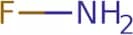
Discontinued productMonofluoroamine
CAS:Controlled Product<p>Monofluoroamine is a chemical substance with the chemical formula NH2F. It is a colorless liquid that is stable to both acidic and basic environments, but reacts with fluorine gas to form hydrofluoric acid. Monofluoroamine is used in the synthesis of pharmaceuticals, pesticides, and other organic compounds. This compound can be prepared by reacting ammonia with hydrogen fluoride at low temperature or by reacting ammonia with hydrogen fluoride at high pressure. The Friedel-Crafts reaction of monofluoroamine with an amide produces the corresponding amine. Monofluoroamine has been used as a conditioning agent in NMR spectroscopy experiments to remove the water signal from complex NMR spectra. In addition, this compound has been shown to have antiviral effects against HIV infection through its ability to inhibit protein synthesis.</p>Formula:FH2NPurity:Min. 95%Molecular weight:35.02 g/mol1-[4-Methyl-6-(trifluoromethyl)pyrimidin-2-yl]piperidine-3-carboxylic acid
CAS:<p>1-[4-Methyl-6-(trifluoromethyl)pyrimidin-2-yl]piperidine-3-carboxylic acid is a reagent that is used as a complex compound, as a useful intermediate, and as a fine chemical. It has been used in the manufacture of pharmaceuticals, agrochemicals, dyes, and pigments. It also has many applications in research such as its use as a building block for organic synthesis or to synthesize other compounds with potential uses in medicine.</p>Formula:C12H14F3N3O2Purity:Min. 95%Color and Shape:PowderMolecular weight:289.25 g/molRef: 3D-FM129640
Discontinued product1-[3-(Fluoro-Methylphosphoryl)Oxypropyl]Pyrene
CAS:Controlled Product<p>1-[3-(Fluoro-Methylphosphoryl)Oxypropyl]Pyrene is a fluorescent derivative of pyrene. It has been used to label DNA and proteins for experiments involving fluorescence. The fluorophores in 1-[3-(Fluoro-Methylphosphoryl)Oxypropyl]Pyrene are activated by laser light, which causes emission of light at a wavelength of 590 nm. The emission spectrum of 1-[3-(Fluoro-Methylphosphoryl)Oxypropyl]Pyrene is sensitive to the environment and changes with chemical modification.</p>Formula:C20H18FO2PPurity:Min. 95%Molecular weight:340.33 g/molPromazine hydrochloride
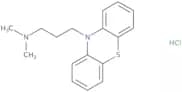
CAS:Controlled Product<p>Promazine hydrochloride is an amphiphilic phenothiazine drug that blocks postsynaptic dopaminergic receptors (D1, D2 and D4) in the mesolimbic and medullary chemoreceptor trigger zone (antipsychotic effects, decreasing stimulation of the vomiting centre). Promazine is an antagonist at serotonin 5HT receptors, exhibits anticholinergic activity by blocking alpha-1 adrenergic receptors and blocks histamine H1 and muscarinic receptors. Promazine is used for adults in the treatment of psychomotor agitation, to prevent and treat nausea and vomiting, to treat allergy symptoms. Promazine hydrochloride is also used in veterinary medicine especially in horses as a pre-anaesthetic agent. Promazine is showed to be among drugs that can be used as starting points for designing SARS-CoV proteinase inhibitors.</p>Formula:C17H20N2S•HClPurity:Min. 95%Color and Shape:White PowderMolecular weight:320.88 g/molRef: 3D-FP27180
Discontinued productIsopropyl ethylphosphonochloridate
CAS:Controlled Product<p>Please enquire for more information about Isopropyl ethylphosphonochloridate including the price, delivery time and more detailed product information at the technical inquiry form on this page</p>Formula:C5H12FO2PPurity:Min. 95%




![7-[5-(Fluoro-methyl-phosphoryl)oxypentyl]-4-nitro-2,1,3-benzoxadiazole](/_next/image/?url=https%3A%2Fstatic.cymitquimica.com%2Fproducts%2F3D%2Fthumb-webp%2FFF98971.webp&w=3840&q=75)

![1-[4-Methyl-6-(trifluoromethyl)pyrimidin-2-yl]piperidine-3-carboxylic acid](/_next/image/?url=https%3A%2Fstatic.cymitquimica.com%2Fproducts%2F3D%2Fthumb-webp%2FFM129640.webp&w=3840&q=75)
![1-[3-(Fluoro-Methylphosphoryl)Oxypropyl]Pyrene](/_next/image/?url=https%3A%2Fstatic.cymitquimica.com%2Fproducts%2F3D%2Fthumb-webp%2FFF89825.webp&w=3840&q=75)