Organic Halides
In this category, you can find organic molecules containing one or more halogen atoms in their structure. These organic halides include brominated, iodinated, chlorinated, and cyclic halide compounds. Organic halides are widely used in organic synthesis, pharmaceuticals, agrochemicals, and materials science due to their reactivity and ability to undergo a variety of chemical transformations. At CymitQuimica, we offer a comprehensive selection of high-quality organic halides to support your research and industrial applications, ensuring reliable and effective performance in your synthetic and analytical projects.
Subcategories of "Organic Halides"
Found 20437 products of "Organic Halides"
Sort by
Purity (%)
0
100
|
0
|
50
|
90
|
95
|
100
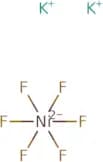
Potassium hexafluoronickelate(IV)
CAS:<p>Potassium hexafluoronickelate is a chemical compound that is a versatile building block and can be used as a reagent in organic synthesis. It is also an important intermediate for the preparation of other chemicals, such as potassium hexafluoroarsenate, which is used to make perfluorocarbons. Potassium hexafluoronickelate has many uses as a research chemical and as an intermediate in the production of other compounds. The compound has been shown to be useful in reactions involving carbon-carbon bond formation, such as the synthesis of heterocycles. Potassium hexafluoronickelate can also be used to produce metal complexes for use in catalysis or polymerization reactions.</p>Formula:F6K2NiPurity:Min. 95%Color and Shape:PowderMolecular weight:250.88 g/mol1-Bromopinacolone
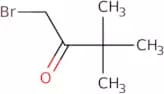
CAS:<p>1-Bromopinacolone is a synthetic analogue of the naturally occurring acetylcholine. It is used as a pharmaceutical preparation to treat psychotic disorders and inflammatory diseases, such as asthma. 1-Bromopinacolone has irreversible inhibition of the cholinergic receptor activity, which blocks the neurotransmitter signal from binding to its receptors. This drug also has an effect on the β-unsaturated ketones (PUFA), which are involved in syncytial virus infection. The molecular modelling of 1-bromopinacolone shows that it forms intramolecular hydrogen bonds with neighbouring nitrogen atoms and chlorine atoms, which stabilises its structure and leads to its high stability and low toxicity.</p>Formula:C6H11BrOPurity:Min. 95%Color and Shape:Colorless Clear LiquidMolecular weight:179.05 g/molRef: 3D-FB167518
Discontinued productSodium monofluorophosphate
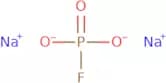
CAS:<p>Sodium monofluorophosphate is a salt that contains sodium cations and fluorine anions. It is used as an agent in the production of dental fillings, toothpaste, and other products. Sodium monofluorophosphate has been shown to inhibit the activity of serine proteases such as trypsin by interfering with their catalytic activity and binding to their active site. This agent has also been shown to react with p-nitrophenyl phosphate to form a fluorescent product, which can be detected at low concentrations. Sodium monofluorophosphate has a thermal expansion coefficient that is only slightly larger than those of water and glycerol, which makes it ideal for use in the production of dental fillings.</p>Formula:FNa2O3PPurity:Min. 95%Color and Shape:White PowderMolecular weight:143.95 g/molPotassium fluoroaluminate
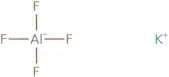
CAS:<p>Potassium fluoroaluminate (KAlF) is a reactive chemical compound that is used as a reducing agent in metallurgical processes. KAlF is not an aluminothermic reaction product, but it can be produced as a by-product of the reaction between aluminum and hydrogen fluoride. It is produced when potassium reacts with hydrogen fluoride in the presence of sodium carbonate or boron nitride. KAlF does not produce stable complexes with zinc or magnesium, but it does stabilize zirconium oxide to some extent. The human serum contains antibodies against KAlF particles, which may cause allergic reactions following inhalation or skin contact.</p>Formula:AlF4•KColor and Shape:PowderMolecular weight:142.07 g/mol3-Chlorobenzyl chloride
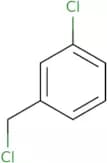
CAS:<p>3-Chlorobenzyl chloride is an aryl halide that binds to the p. aeruginosa group in the cell membrane and inhibits bacterial growth by inhibiting the synthesis of essential cell components such as proteins, nucleic acids, and lipids. 3-Chlorobenzyl chloride binds to inhibitory molecules on the p. aeruginosa cell surface by covalent bonds or ionic interactions, which prevents these molecules from interacting with other cells. This inhibits the production of functional groups such as chloride ions and cross-coupling reactions. 3-Chlorobenzyl chloride has been shown to have chemical properties that prevent it from being metabolized by microorganisms, which may be due to its resistance to hydrolysis or oxidative metabolism.</p>Formula:C7H6Cl2Purity:Min. 95%Color and Shape:Colorless Clear LiquidMolecular weight:161.03 g/molRef: 3D-FC34398
Discontinued productMagnesium hexafluorosilicate hexahydrate
CAS:<p>Magnesium hexafluorosilicate hexahydrate is a fine chemical that can be used as a versatile building block in the synthesis of organic compounds. It can also be used as a reaction component and provides a speciality chemical reagent for research purposes. Magnesium hexafluorosilicate hexahydrate is an intermediate in the synthesis of other chemicals and has been commercially available since 2006. This compound can also be used as a catalyst for the polymerization of polystyrene, polyurethane, and polyester resins. Magnesium hexafluorosilicate hexahydrate is high quality and is not hazardous to health or the environment.</p>Formula:F6Si•(H2O)6•MgPurity:Min. 95%Color and Shape:PowderMolecular weight:274.47 g/molRef: 3D-FH106107
Discontinued product4-Chloro-2-methylbenzoic acid
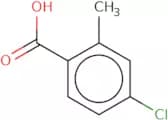
CAS:<p>4-Chloro-2-methylbenzoic acid is a high quality chemical that is used as an intermediate in the preparation of other compounds. It belongs to the group of complex compounds and has CAS No. 7499-07-2. This reagent can be used to synthesize speciality chemicals, research chemicals, and versatile building blocks. 4-Chloro-2-methylbenzoic acid is also useful as a reaction component for the synthesis of fine chemicals, pharmaceuticals, and agrochemicals.</p>Formula:C8H7ClO2Purity:Min. 95%Molecular weight:170.59 g/molSodium fluoride
CAS:Controlled Product<p>Sodium fluoride is a chemical that can be used to treat water and wastewater. It is an effective inhibitor of the growth of bacteria, fungi, and algae. The use of sodium fluoride improves the quality of drinking water by reducing levels of hydrogen ion and trihalomethanes (THMs). This chemical also has been shown to have beneficial effects in patients with inflammatory bowel disease. Sodium fluoride inhibits the activity of enzymes in mitochondria, which are responsible for converting food into energy. The inhibition leads to a decrease in the production of free radicals and reactive oxygen species, which may reduce oxidative stress in the body.</p>Formula:NaFPurity:Min. 95%Color and Shape:White PowderMolecular weight:41.99 g/molRef: 3D-FS29949
Discontinued product2-(Chloromethyl)-1,2-epoxybutane
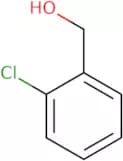
CAS:Formula:C5H9ClOPurity:>95.0%(GC)Color and Shape:Colorless to Almost colorless clear liquidMolecular weight:120.582-Chlorobenzyl alcohol
CAS:<p>2-Chlorobenzyl alcohol is a chemical compound that is used to synthesize other compounds. It is produced by the reaction of ethyl formate and hydrogen chloride in a reaction vessel. It reacts with benzoates to produce 2-chlorobenzoates, which are used as intermediates in the synthesis of pharmaceuticals. Hydroxyl groups can react with hydrogen fluoride to produce hydrofluoric acid, which is used as an industrial solvent. 2-Chlorobenzyl alcohol also reacts with hydroxide ions to produce ethylene glycol, which is used in making polyester fibers and plastics. This chemical compound has structural studies that show it has a proton and two hydroxyl groups that can react with hydrogen bond. Hydrogen bonds are important for the stability of DNA structures. The molecular structures of velvetleaf plants contain 2-chlorobenzyl alcohol, which may be due to its role in transferring oxygen from leaves to roots for respiration during</p>Formula:C7H7ClOPurity:Min. 95%Color and Shape:PowderMolecular weight:142.58 g/molRef: 3D-FC46928
Discontinued productAmmonium hexafluorotitanate(iv)
CAS:<p>Ammonium hexafluorotitanate(IV) is a fine chemical that can be used as a reagent, building block, or intermediate in the synthesis of other chemicals. It is a versatile building block and reacts with other compounds to form complex compounds. Ammonium hexafluorotitanate(IV) is also an intermediate for the production of ammonium hexafluorophosphate (III), which is used in the manufacture of fertilizers. Ammonium hexafluorotitanate(IV) can be used as a reactant to produce titanium metal, which has many industrial applications.</p>Formula:F6H8N2TiPurity:Min. 95%Color and Shape:White SolidMolecular weight:197.93 g/molRef: 3D-FA105292
Discontinued product2-Chloro-N-cyclohexyl-N-phenylpropanamide
<p>Please enquire for more information about 2-Chloro-N-cyclohexyl-N-phenylpropanamide including the price, delivery time and more detailed product information at the technical inquiry form on this page</p>Purity:Min. 95%Ref: 3D-FC169156
Discontinued product(4-{[5-(Trifluoromethyl)pyridin-2-yl]oxy}phenyl)amine
CAS:<p>Please enquire for more information about (4-{[5-(Trifluoromethyl)pyridin-2-yl]oxy}phenyl)amine including the price, delivery time and more detailed product information at the technical inquiry form on this page</p>Formula:C12H9F3N2OPurity:Min. 95%Molecular weight:254.21 g/molRef: 3D-FT130504
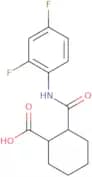
Discontinued product2-(N-(2,4-Difluorophenyl)carbamoyl)cyclohexanecarboxylic acid
CAS:<p>Please enquire for more information about 2-(N-(2,4-Difluorophenyl)carbamoyl)cyclohexanecarboxylic acid including the price, delivery time and more detailed product information at the technical inquiry form on this page</p>Formula:C14H15F2NO3Purity:Min. 95%Color and Shape:PowderMolecular weight:283.27 g/molRef: 3D-FD168902
Discontinued product2-Chloro-N-(4-methoxyphenyl)propanamide
CAS:<p>2-Chloro-N-(4-methoxyphenyl)propanamide (2CMPP) is an acetanilide with a chloro substituent. It is used in research and yields better results than 2-chlorobenzoyl chloride. Acetanilides are prepared by the catalytic reduction of nitrobenzenes or chlorobenzenes with sodium or potassium borohydride in the presence of water. The reaction is exothermic and produces a white solid, which can be purified by recrystallization or column chromatography. Preparative methods for acetanilides include reaction of phenols with acetic anhydride and formaldehyde, followed by hydrolysis of the resulting ester to yield the corresponding amide.</p>Formula:C10H12ClNO2Purity:Min. 95%Molecular weight:213.66 g/molRef: 3D-FC114008
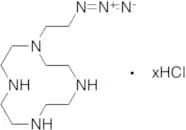
Discontinued productN-(2-Azidoethyl) Cyclen Hydrochloride
CAS:<p>Applications N-(2-Azidoethyl) Cyclen is used in the synthesis of lanthanide cyclen derivative complexes.<br>References Szijjarto, C., et al.: Dalton Trans., 41, 7660 (2012)<br></p>Formula:C10H23N7·xHClColor and Shape:White to Off-White SolidMolecular weight:241.34 + x(36.46)4-[(4-Methyl-1H-pyrazol-1-yl)methyl]piperidine dihydrochloride
CAS:Controlled Product<p>Please enquire for more information about 4-[(4-Methyl-1H-pyrazol-1-yl)methyl]piperidine dihydrochloride including the price, delivery time and more detailed product information at the technical inquiry form on this page</p>Formula:C10H17N3Purity:Min. 95%Molecular weight:179.26 g/molRef: 3D-FM122832
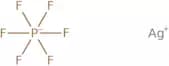
Discontinued productSilver hexafluorophosphate
CAS:<p>Silver hexafluorophosphate (AgPF) is a silver salt of the inorganic acid hexafluoro-phosphoric acid. It has been shown to have a high reactivity with organic compounds and is insoluble in water. Silver hexafluorophosphate is used as an additive for certain polymers, such as PVC, to improve their insulating properties. In addition, AgPF has shown biological properties that may be due to its ability to act as a chelate ligand and bind metal ions. The reaction mechanism of AgPF involves the formation of hydrogen bonding interactions with nitrogen atoms, which are found in biological molecules such as proteins and nucleic acids.</p>Formula:AgPF6Purity:Min. 95%Molecular weight:252.83 g/molPotassium fluoride dihydrate
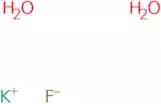
CAS:Controlled Product<p>Potassium fluoride is an inorganic chemical that is used in the water fluoridation process. It is also used as a source of fluoride ions for the synthesis of hydroxyapatite, a mineral found in teeth and bones. Fluoride ions are also used to treat certain infectious diseases, such as malaria. The asymmetric synthesis of potassium fluoride was first reported by M. S. Kharasch and J. A. Fink in 1943 using plasma mass spectrometry. This method has been widely adopted for commercial production of potassium fluoride because it can be scaled up easily and does not require specialized equipment.<br><br>Potassium fluoride has been shown to inhibit viral replication by hydrogen bonding with the guanine-cytosine base pairs on the viral dsDNA, which prevents the DNA from uncoiling and copying its genetic information into new viral particles. Potassium fluoride has also been shown to be effective against hepatitis B virus (HBV) and mammalian cells infected by HB</p>Formula:KF·2H2OPurity:Min. 95%Molecular weight:94.13 g/molRef: 3D-FP34794
Discontinued product2-Diethylamino)ethanol hydrochloride
CAS:Controlled Product<p>2-Diethylamino)ethanol hydrochloride is a chemical compound that is used in analytical chemistry as a stationary phase for thin layer chromatography. Sephadex G-100 was developed by Pharmacia & Upjohn Company and marketed in the 1970s. It has been shown to be useful in plasma mass spectrometry experiments, which measure the molecular weight of proteins and other compounds. The solubility of 2-diethylamino)ethanol hydrochloride has been studied using experimental solubility data, electrochemical impedance spectroscopy, and amines. The reaction mechanism of 2-diethylamino)ethanol hydrochloride is not well understood but it appears to involve potassium dichromate, hydrochloric acid, fluoroacetic acid, benzalkonium chloride and other chemicals.</p>Formula:C6H16ClNOPurity:Min. 95%Molecular weight:153.65 g/molRef: 3D-FD21828
Discontinued product







![(4-{[5-(Trifluoromethyl)pyridin-2-yl]oxy}phenyl)amine](/_next/image/?url=https%3A%2Fstatic.cymitquimica.com%2Fproducts%2F3D%2Fthumb-webp%2FFT130504.webp&w=3840&q=75)


![4-[(4-Methyl-1H-pyrazol-1-yl)methyl]piperidine dihydrochloride](/_next/image/?url=https%3A%2Fstatic.cymitquimica.com%2Fproducts%2F3D%2Fthumb-webp%2FFM122832.webp&w=3840&q=75)