Organic Halides
In this category, you can find organic molecules containing one or more halogen atoms in their structure. These organic halides include brominated, iodinated, chlorinated, and cyclic halide compounds. Organic halides are widely used in organic synthesis, pharmaceuticals, agrochemicals, and materials science due to their reactivity and ability to undergo a variety of chemical transformations. At CymitQuimica, we offer a comprehensive selection of high-quality organic halides to support your research and industrial applications, ensuring reliable and effective performance in your synthetic and analytical projects.
Subcategories of "Organic Halides"
Found 20437 products of "Organic Halides"
Sort by
Purity (%)
0
100
|
0
|
50
|
90
|
95
|
100
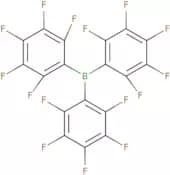
Tris(pentafluorophenyl)borane
CAS:<p>Tris(pentafluorophenyl)borane is a cationic polymerization agent that can be used to form stable complexes with amines. These complexes are useful for the synthesis of polymers, which are used in a variety of applications such as coatings and adhesives. Tris(pentafluorophenyl)borane is also an important reagent in transfer reactions, electrochemical impedance spectroscopy, kinetic studies, and chemical stability. It has been shown to react with intramolecular hydrogen atoms to form polymeric matrixes that have high kinetic energy and transport properties. In coordination geometry, tris(pentafluorophenyl)borane has a planar geometry with a triangular arrangement around the boron atom.</p>Formula:C18BF15Purity:Min. 95%Color and Shape:PowderMolecular weight:511.98 g/molRef: 3D-FT73249
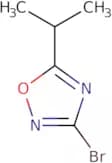
Discontinued product3-Bromo-5-isopropyl-1,2,4-oxadiazole
CAS:<p>3-Bromo-5-isopropyl-1,2,4-oxadiazole is a radiocarbon that was first detected in the atmosphere of Earth in the 1960s. It is produced by natural processes and is emitted into the atmosphere by human activities. 3-Bromo-5-isopropyl-1,2,4-oxadiazole has been found to be present in humans and other animals, as well as plants and soil. This compound has been detected in different parts of China and has been shown to be related to human activities. The evolution of 3-bromo-5-isopropyl-1,2,4 oxadiazole can be analysed using semantic approaches such as ideology sampling or repairing. Factors that may affect the production of 3-bromo 5 isopropyl 1 2 4 oxadiazole include climate change and technological development.</p>Formula:C5H7BrN2OPurity:Min. 95%Color and Shape:Colorless PowderMolecular weight:191.03 g/molRef: 3D-FB123862
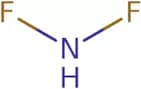
Discontinued productDifluoroamine
CAS:Controlled Product<p>Difluoroamine is a chemical compound that is used in the production of organic compounds. It has been shown to have high stability and detection sensitivity, which is attributed to its hydrogen bond forming ability. Difluoroamine also reacts with trifluoroacetic acid and hydrogen fluoride, both of which are strong acids. The reaction mechanism of difluoroamine involves the protonation of nitrogen atoms on the molecule followed by a nucleophilic attack on the electrophilic carbon atom that results in the formation of an amine group. This reaction can be carried out in a flow system as well as in a batch process. Difluoramine is an intermediate product during this process and can be converted into glycol ethers or nitrobenzene.</p>Formula:F2HNPurity:Min. 95%Molecular weight:53.01 g/molFluorescein
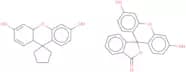
CAS:<p>Fluorescein is a fluorescent molecule often used in in vitro assays, immunohistochemistry, microscopy, and clinical analytics. Fluorescein is not a natural product and was first synthesized in 1871 by Adolf von Baeyer, a later Nobel-prize winner for his work on organic dyes. Fluorescein has an absorption maximum of 494 nm and an emission maximum of 512 nm; these values can however slightly change depending on the solution medium.<br>Fluorescein is used clinically in ophthalmology to assess the blood flow in the eye blood vessels and to detect eye injuries such as foreign bodies and possible abrasions. Interestingly, fluorescein has been found to possess peroxidase activity under certain conditions.</p>Formula:C20H12O5Color and Shape:PowderMolecular weight:332.31 g/molRef: 3D-FF23342
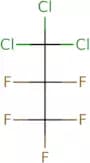
Discontinued product1,1,1-Trichloropentafluoropropane
CAS:Controlled Product<p>1,1,1-Trichloropentafluoropropane is a hydrofluorocarbon that is used as a propellant in aerosol products. It is also used to produce other fluorocarbons and as a reactive solvent in chemical reactions. 1,1,1-Trichloropentafluoropropane (CFC-114) has three chlorine atoms and one fluorine atom. The reaction solution contains the reactants chloroform and hydrogen fluoride with an acid catalyst. The reaction can be carried out in two ways: the liquid phase process or the gas phase process. The liquid phase process occurs when there is no catalyst present in the reaction solution. This method produces two isomers of 1,1,1-trichloropentafluoropropane; CFC-114a and CFC-114b. The gas phase process occurs when an acid catalyst is present in the reaction solution and produces only one is</p>Formula:C3Cl3F5Purity:Min. 95%Molecular weight:237.38 g/molDecafluorobis(Trifluoromethyl)Cyclohexane
CAS:Controlled Product<p>Decafluorobis(trifluoromethyl)cyclohexane is a film-forming polymer that can be used as a nutrient solution. It is synthesized by the thermal decomposition of hydrogen fluoride and caproic acid. Decafluorobis(trifluoromethyl)cyclohexane can be analyzed by combining it with fatty acids in an enzyme hydrolysis reaction. The product will then form a film on the surface of the container, which can be analyzed using ionization techniques such as mass spectrometry or nuclear magnetic resonance.</p>Formula:C8F16Purity:Min. 95%Molecular weight:400.06 g/molBis(2,2,2-trichloroethyl)azodicarboxylate
CAS:<p>Bis(2,2,2-trichloroethyl)azodicarboxylate is a nucleophile that can be used as an alkylating agent in the industrial process. It is also used to prepare chiral amines by adding an amine to the enantiomerically pure bis(2,2,2-trichloroethyl)azodicarboxylate. The anticancer activity of Bis(2,2,2-trichloroethyl)azodicarboxylate is due to its ability to inhibit tumor cell proliferation. Bis(2,2,2-trichloroethyl)azodicarboxylate is not effective against cancerous cells that do not have functional groups such as amino acids.</p>Formula:C6H4Cl6N2O4Purity:Min. 95%Color and Shape:Yellow SolidMolecular weight:380.82 g/molRef: 3D-FB01254
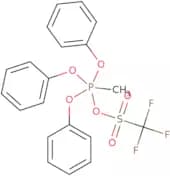
Discontinued productMethyltriphenoxyphosphonium Trifluoromethanesulfonate
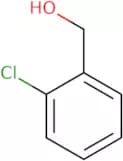
CAS:Controlled Product<p>Methyltriphenoxyphosphonium Trifluoromethanesulfonate is a reagent for the synthesis of alkenes, ethers, nitriles, esters and alkanes. It is also used to synthesize heterocycles. Methyltriphenoxyphosphonium Trifluoromethanesulfonate can be used to synthesise a wide variety of organic compounds. It reacts with electrophiles such as alcohols, amines and carboxylic acids to produce the corresponding ethers, nitriles, esters or alkanes. This reagent can also be used in many different cross-coupling reactions such as Suzuki-Miyaura reaction or Sonogashira reaction.</p>Formula:C20H18F3O6PSPurity:Min. 95%Molecular weight:474.39 g/mol2-Chlorobenzyl alcohol
CAS:<p>2-Chlorobenzyl alcohol is a chemical compound that is used to synthesize other compounds. It is produced by the reaction of ethyl formate and hydrogen chloride in a reaction vessel. It reacts with benzoates to produce 2-chlorobenzoates, which are used as intermediates in the synthesis of pharmaceuticals. Hydroxyl groups can react with hydrogen fluoride to produce hydrofluoric acid, which is used as an industrial solvent. 2-Chlorobenzyl alcohol also reacts with hydroxide ions to produce ethylene glycol, which is used in making polyester fibers and plastics. This chemical compound has structural studies that show it has a proton and two hydroxyl groups that can react with hydrogen bond. Hydrogen bonds are important for the stability of DNA structures. The molecular structures of velvetleaf plants contain 2-chlorobenzyl alcohol, which may be due to its role in transferring oxygen from leaves to roots for respiration during</p>Formula:C7H7ClOPurity:Min. 95%Color and Shape:PowderMolecular weight:142.58 g/molRef: 3D-FC46928
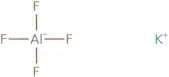
Discontinued productPotassium fluoroaluminate
CAS:<p>Potassium fluoroaluminate (KAlF) is a reactive chemical compound that is used as a reducing agent in metallurgical processes. KAlF is not an aluminothermic reaction product, but it can be produced as a by-product of the reaction between aluminum and hydrogen fluoride. It is produced when potassium reacts with hydrogen fluoride in the presence of sodium carbonate or boron nitride. KAlF does not produce stable complexes with zinc or magnesium, but it does stabilize zirconium oxide to some extent. The human serum contains antibodies against KAlF particles, which may cause allergic reactions following inhalation or skin contact.</p>Formula:AlF4•KColor and Shape:PowderMolecular weight:142.07 g/mol4-Chloro-2-methylbenzoic acid
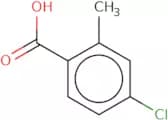
CAS:<p>4-Chloro-2-methylbenzoic acid is a high quality chemical that is used as an intermediate in the preparation of other compounds. It belongs to the group of complex compounds and has CAS No. 7499-07-2. This reagent can be used to synthesize speciality chemicals, research chemicals, and versatile building blocks. 4-Chloro-2-methylbenzoic acid is also useful as a reaction component for the synthesis of fine chemicals, pharmaceuticals, and agrochemicals.</p>Formula:C8H7ClO2Purity:Min. 95%Molecular weight:170.59 g/mol2-(Chloromethyl)-1,2-epoxybutane
CAS:Formula:C5H9ClOPurity:>95.0%(GC)Color and Shape:Colorless to Almost colorless clear liquidMolecular weight:120.58Magnesium hexafluorosilicate hexahydrate
CAS:<p>Magnesium hexafluorosilicate hexahydrate is a fine chemical that can be used as a versatile building block in the synthesis of organic compounds. It can also be used as a reaction component and provides a speciality chemical reagent for research purposes. Magnesium hexafluorosilicate hexahydrate is an intermediate in the synthesis of other chemicals and has been commercially available since 2006. This compound can also be used as a catalyst for the polymerization of polystyrene, polyurethane, and polyester resins. Magnesium hexafluorosilicate hexahydrate is high quality and is not hazardous to health or the environment.</p>Formula:F6Si•(H2O)6•MgPurity:Min. 95%Color and Shape:PowderMolecular weight:274.47 g/molRef: 3D-FH106107
Discontinued product1-Bromopinacolone
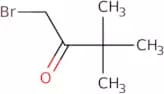
CAS:<p>1-Bromopinacolone is a synthetic analogue of the naturally occurring acetylcholine. It is used as a pharmaceutical preparation to treat psychotic disorders and inflammatory diseases, such as asthma. 1-Bromopinacolone has irreversible inhibition of the cholinergic receptor activity, which blocks the neurotransmitter signal from binding to its receptors. This drug also has an effect on the β-unsaturated ketones (PUFA), which are involved in syncytial virus infection. The molecular modelling of 1-bromopinacolone shows that it forms intramolecular hydrogen bonds with neighbouring nitrogen atoms and chlorine atoms, which stabilises its structure and leads to its high stability and low toxicity.</p>Formula:C6H11BrOPurity:Min. 95%Color and Shape:Colorless Clear LiquidMolecular weight:179.05 g/molRef: 3D-FB167518
Discontinued productAmmonium hexafluorotitanate(iv)
CAS:<p>Ammonium hexafluorotitanate(IV) is a fine chemical that can be used as a reagent, building block, or intermediate in the synthesis of other chemicals. It is a versatile building block and reacts with other compounds to form complex compounds. Ammonium hexafluorotitanate(IV) is also an intermediate for the production of ammonium hexafluorophosphate (III), which is used in the manufacture of fertilizers. Ammonium hexafluorotitanate(IV) can be used as a reactant to produce titanium metal, which has many industrial applications.</p>Formula:F6H8N2TiPurity:Min. 95%Color and Shape:White SolidMolecular weight:197.93 g/molRef: 3D-FA105292
Discontinued productSodium fluoride
CAS:Controlled Product<p>Sodium fluoride is a chemical that can be used to treat water and wastewater. It is an effective inhibitor of the growth of bacteria, fungi, and algae. The use of sodium fluoride improves the quality of drinking water by reducing levels of hydrogen ion and trihalomethanes (THMs). This chemical also has been shown to have beneficial effects in patients with inflammatory bowel disease. Sodium fluoride inhibits the activity of enzymes in mitochondria, which are responsible for converting food into energy. The inhibition leads to a decrease in the production of free radicals and reactive oxygen species, which may reduce oxidative stress in the body.</p>Formula:NaFPurity:Min. 95%Color and Shape:White PowderMolecular weight:41.99 g/molRef: 3D-FS29949
Discontinued productPotassium hexafluoronickelate(IV)
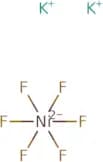
CAS:<p>Potassium hexafluoronickelate is a chemical compound that is a versatile building block and can be used as a reagent in organic synthesis. It is also an important intermediate for the preparation of other chemicals, such as potassium hexafluoroarsenate, which is used to make perfluorocarbons. Potassium hexafluoronickelate has many uses as a research chemical and as an intermediate in the production of other compounds. The compound has been shown to be useful in reactions involving carbon-carbon bond formation, such as the synthesis of heterocycles. Potassium hexafluoronickelate can also be used to produce metal complexes for use in catalysis or polymerization reactions.</p>Formula:F6K2NiPurity:Min. 95%Color and Shape:PowderMolecular weight:250.88 g/molSodium monofluorophosphate
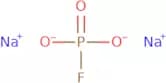
CAS:<p>Sodium monofluorophosphate is a salt that contains sodium cations and fluorine anions. It is used as an agent in the production of dental fillings, toothpaste, and other products. Sodium monofluorophosphate has been shown to inhibit the activity of serine proteases such as trypsin by interfering with their catalytic activity and binding to their active site. This agent has also been shown to react with p-nitrophenyl phosphate to form a fluorescent product, which can be detected at low concentrations. Sodium monofluorophosphate has a thermal expansion coefficient that is only slightly larger than those of water and glycerol, which makes it ideal for use in the production of dental fillings.</p>Formula:FNa2O3PPurity:Min. 95%Color and Shape:White PowderMolecular weight:143.95 g/mol2-Chloro-N-(4-methoxyphenyl)propanamide
CAS:<p>2-Chloro-N-(4-methoxyphenyl)propanamide (2CMPP) is an acetanilide with a chloro substituent. It is used in research and yields better results than 2-chlorobenzoyl chloride. Acetanilides are prepared by the catalytic reduction of nitrobenzenes or chlorobenzenes with sodium or potassium borohydride in the presence of water. The reaction is exothermic and produces a white solid, which can be purified by recrystallization or column chromatography. Preparative methods for acetanilides include reaction of phenols with acetic anhydride and formaldehyde, followed by hydrolysis of the resulting ester to yield the corresponding amide.</p>Formula:C10H12ClNO2Purity:Min. 95%Molecular weight:213.66 g/molRef: 3D-FC114008
Discontinued product2-Chloro-N-cyclohexyl-N-phenylpropanamide
<p>Please enquire for more information about 2-Chloro-N-cyclohexyl-N-phenylpropanamide including the price, delivery time and more detailed product information at the technical inquiry form on this page</p>Purity:Min. 95%Ref: 3D-FC169156
Discontinued product