Organic Halides
Subcategories of "Organic Halides"
Found 20442 products of "Organic Halides"
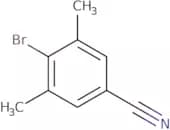
4-Bromo-3,5-dimethylbenzonitrile
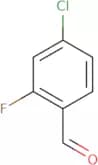
CAS:4-Bromo-3,5-dimethylbenzonitrile is a high quality reagent that has been used as an intermediate in the synthesis of complex compounds. This compound has been shown to be useful in the synthesis of fine chemicals and research chemicals. 4-Bromo-3,5-dimethylbenzonitrile is also a versatile building block for use in reactions for the production of speciality chemicals. The CAS number for this compound is 75344-77-3.Formula:C9H8BrNPurity:Min. 95%Color and Shape:PowderMolecular weight:210.07 g/mol4-Chloro-2-fluorobenzaldehyde
CAS:4-Chloro-2-fluorobenzaldehyde is an aryl aldehyde that belongs to the class of chemical compounds known as chloroaldehydes. It can be synthesized from 4-chlorophenylacetic acid and 2,3-dichloroacetone. The compound is chiral and has two enantiomers. One enantiomer is less reactive than the other, which is more reactive. 4-Chloro-2-fluorobenzaldehyde can be used in the synthesis of a variety of organic compounds, such as pharmaceuticals, herbicides, pesticides, and dyes. This compound can also be used for microbial strain identification by liquid chromatography (LC) with ultraviolet (UV) detection. The yields are typically high (>90%), and the process can be performed at room temperature without any need for vacuum or pressure conditions.Formula:C7H4ClFOPurity:Min. 95%Color and Shape:PowderMolecular weight:158.56 g/molScoulerin hydrochloride
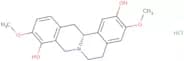
CAS:Scoulerin hydrochloride is a fine chemical that is a versatile building block for the synthesis of complex compounds. Scoulerin hydrochloride has CAS number 20180-95-4 and can be used as a research chemical, reagent, or speciality chemical. Scoulerin hydrochloride has been shown to be useful in the synthesis of high quality and useful intermediate products. This compound also serves as an important reaction component for the synthesis of useful scaffolds.
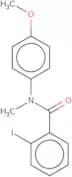
Formula:C19H21NO4·HClPurity:Min. 95%Molecular weight:363.84 g/mol2-Iodo-N-(4-methoxyphenyl)-N-methylbenzamide
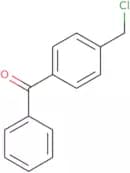
CAS:2-Iodo-N-(4-methoxyphenyl)-N-methylbenzamide is a versatile building block that can be used in research and as a reagent. It is a high quality chemical and useful as a building block or intermediate for the synthesis of more complex compounds. This chemical is also a useful scaffold for the synthesis of more complex molecules.Formula:C15H14INO2Purity:Min. 95%Molecular weight:367.18 g/mol4-Chloromethylbenzophenone
CAS:4-Chloromethylbenzophenone is a chemical compound that can be used as an efficacious pesticide. It is reactive and photodegrades in the environment. The compound has been shown to have a high toxicity to animals and humans, leading to dermatitis or phoma. 4-Chloromethylbenzophenone is also known as a chlorinated hydrocarbon and has been shown to cause bioaccumulation in the environment.
Formula:C14H11ClOPurity:Min. 95%Color and Shape:White to off-white solid.Molecular weight:230.69 g/mol3-Chloro-4-methylbenzonitrile
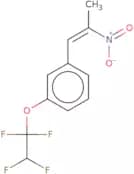
CAS:3-Chloro-4-methylbenzonitrile is a versatile building block that can be used as a reagent, intermediate, or scaffold for the synthesis of complex compounds. It is an important chemical in the pharmaceutical and chemical industries. 3-Chloro-4-methylbenzonitrile has been shown to react with many different types of functional groups including alcohols, amines, thiols, and halides. This compound has also been shown to have a high yield and purity when synthesized.Formula:C8H6ClNPurity:Min. 95%Molecular weight:151.59 g/mol3'-(Tetrafluoroethoxy)-beta-methyl-beta-nitrostyrene
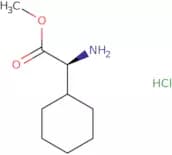
CAS:3'-(Tetrafluoroethoxy)-beta-methyl-beta-nitrostyrene is a versatile building block that can be used as a reaction component for the synthesis of more complex compounds. This compound is also known to have speciality chemical and research chemical properties. 3'-(Tetrafluoroethoxy)-beta-methyl-beta-nitrostyrene has been shown to be an effective reagent for the synthesis of high quality complex compounds.Formula:C11H9F4NO3Purity:Min. 95%Molecular weight:279.19 g/molH-Chg-OMe hydrochloride
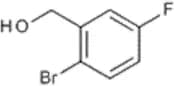
CAS:H-Chg-OMe hydrochloride is a fine chemical and reagent that is used in the synthesis of complex organic compounds and pharmaceuticals. This compound can be used as a versatile building block for a variety of reactions, such as reductive amination, reductive amination, reductive amination, and reductive amination. H-Chg-OMe hydrochloride has been shown to react with primary amines to form secondary amines. It has also been shown to react with alcohols to form ethers. CAS No. 14328-63-3Formula:C9H18ClNO2Purity:Min. 95%Color and Shape:White/Off-White SolidMolecular weight:207.7 g/mol2-Bromo-5-fluorobenzyl alcohol
CAS:2-Bromo-5-fluorobenzyl alcohol is a synthetic organoboron compound that can be used in the synthesis of other compounds. It has been shown to have a thermal expansion coefficient of 0.038 x 10^-6 K, which is an intermediate value for organic materials. The two polymorphic forms are monoclinic (space group P2/c) and hexagonal (P63). When 2-bromo-5-fluorobenzyl alcohol is irradiated with microwaves and magnetic fields, it undergoes anisotropic expansion, which suggests that intermolecular interactions are important in this phenomenon. This material has been shown to exhibit antifungal properties.
Formula:C7H6BrFOPurity:Min. 95%Color and Shape:PowderMolecular weight:205.02 g/mol2-Amino-4-(2,4-dichlorophenyl)-5-methylthiophene-3-carbonitrile
CAS:The frequency range of 2-Amino-4-(2,4-dichlorophenyl)-5-methylthiophene-3-carbonitrile is between 0.1 and 1.0 GHz. The channel is between 1 and 10 MHz. The algorithm used for this frequency is the Gaussian algorithm. This frequency has been shown to have a frequency range of 0.1 to 1.0 GHz with a channel of 1 to 10 MHz and an algorithm of the Gaussian algorithm.
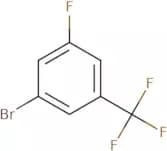
Formula:C12H8Cl2N2SPurity:Min. 95%Color and Shape:Brown PowderMolecular weight:283.18 g/mol3-Bromo-5-fluorobenzotrifluoride
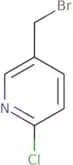
CAS:Please enquire for more information about 3-Bromo-5-fluorobenzotrifluoride including the price, delivery time and more detailed product information at the technical inquiry form on this pageFormula:C7H3BrF4Purity:Min. 95%Color and Shape:LiquidMolecular weight:243 g/mol5-(Bromomethyl)-2-chloropyridine
CAS:5-(Bromomethyl)-2-chloropyridine is a drug with mediated activity. It is a potent inhibitor of the enzyme aldehyde oxidase, which is responsible for the oxidation of aldehydes to carboxylic acids. The inhibition of this enzyme leads to an increase in the concentration of reactive aldehydes and reactive oxygen species, which can lead to cell death. 5-(Bromomethyl)-2-chloropyridine has been shown to be effective as an anti-inflammatory agent in animal models and has also been used as an immunosuppressant in organ transplantation. 5-(Bromomethyl)-2-chloropyridine analogues have been synthesized and shown to be potent inhibitors of aldehyde oxidase, with much better pharmacokinetics than the parent molecule.Formula:C6H5BrClNPurity:Min. 95%Color and Shape:SolidMolecular weight:206.47 g/mol4-Bromoisatin
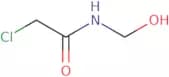
CAS:4-Bromoisatin is a synthetic compound that reversibly inhibits the activity of telomerase and has been shown to be effective against a broad range of bacterial species. It binds to the catalytic site on telomerase and prevents the synthesis of ribonucleotides, which are necessary for DNA replication. 4-Bromoisatin is synthesized by humans, but can also be found in plants such as coffee beans and black tea leaves. The antibacterial properties of 4-bromoisatin may be due to its ability to inhibit the biosynthesis of purine, an essential component in bacterial DNA synthesis.Formula:C8H4BrNO2Purity:Min. 95%Color and Shape:Orange PowderMolecular weight:226.03 g/mol2-Chloro-N-(hydroxymethyl)acetamide
CAS:2-Chloro-N-(hydroxymethyl)acetamide (2CHAA) is an inhibitor that has been shown to be effective against a number of infectious diseases. 2CHAA inhibits the growth of bacteria by inhibiting the synthesis of proteins from RNA. This drug is also active against viruses, including herpes simplex virus and human immunodeficiency virus type 1, as well as fungi, such as Aspergillus niger. 2CHAA has no genotoxic effects in humans, but it does have carcinogenic potential and can cause allergic reactions. It also reacts with strong acids to form toxic compounds.
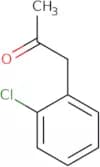
Formula:C3H6ClNO2Purity:Min. 95%Color and Shape:White PowderMolecular weight:123.54 g/mol2-Chlorophenylacetone
CAS:Controlled Product2-Chlorophenylacetone is an organic chemical compound that is a substrate for enzymes. It can be used as a reagent in the synthesis of phenylacetone and other substituted phenylacetic acids, which are chiral starting materials used in the production of pharmaceuticals, pesticides, dyes, and plastics. 2-Chlorophenylacetone binds to the active site on enzymes that catalyze reactions involving ethylene, nitroethane, chloride and phenylacetone. The binding site is defined by amino acid residues at positions corresponding to glycine (G), alanine (A), and aspartic acid (D) in the enzyme's active site. 2-Chlorophenylacetone has been shown to be a powerful inhibitor of dehydrogenase activity with IC50 values of 1.5 mM for acetaldehyde dehydrogenase from yeast cells and 3.2 mM for alcohol dehydrogenase from rat liver mitochondria. In addition, itFormula:C9H9ClOPurity:Min. 97%Color and Shape:LiquidMolecular weight:168.62 g/molTetraoctyl ammoniumchloride
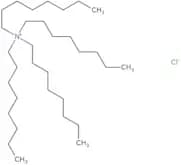
CAS:Tetraoctyl ammoniumchloride is an inexpensive chemical that has a high affinity for membranes. It is a cationic surfactant with a structure of four octyl chains, each containing an amine group. Tetraoctyl ammoniumchloride has been used to study the kinetics of ion transport in membranes and has been shown to be able to inhibit nitrate uptake by plant roots. This chemical also has light resistance properties and can be used to protect gold nanoparticles from degradation by light.
Formula:C32H68ClNPurity:Min. 95%Color and Shape:PowderMolecular weight:502.34 g/mol1-Phenyl-3-(4-chlorostyrene)pyrazole
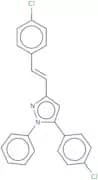
CAS:1-Phenyl-3-(4-chlorostyrene)pyrazole is a high quality reagent that can be used as an intermediate in the production of complex compounds. It is also used as a building block in the synthesis of speciality chemicals, research chemicals, and versatile building blocks. 1-Phenyl-3-(4-chlorostyrene)pyrazole has been shown to be useful as a reaction component in the synthesis of fine chemicals and useful scaffolds.
Formula:C23H16Cl2N2Purity:Min. 95%Molecular weight:391.29 g/mol3-Chlorophenylhydrazine hydrochloride
CAS:3-Chlorophenylhydrazine hydrochloride is a pyrazole that has been shown to have potent antibacterial activity. It is used in the treatment of inflammatory diseases and has been shown to be effective against Helicobacter pylori, which causes gastritis, peptic ulcers, and stomach cancer. 3-Chlorophenylhydrazine hydrochloride is an acidic compound with a molecular weight of 192.2 g/mol. It contains a pyrazole ring that is eluted with hydrochloric acid and reacts with gyrase enzymes in bacteria, inhibiting DNA synthesis. 3-Chlorophenylhydrazine hydrochloride also has anti-inflammatory properties due to its ability to inhibit prostaglandin synthesis.Formula:C6H7ClN2•HClPurity:Min. 95%Color and Shape:PowderMolecular weight:179.05 g/mol4-(Trifluoromethylthio)benzoic acid
CAS:4-(Trifluoromethylthio)benzoic acid is a versatile building block, useful intermediate, and reagent for research and development. 4-(Trifluoromethylthio)benzoic acid has been shown to be a high quality chemical with high purity. The CAS number for 4-(Trifluoromethylthio)benzoic acid is 330-17-6.
Formula:C8H5F3O2SPurity:Min. 98 Area-%Color and Shape:PowderMolecular weight:222.19 g/mol2,4-Dichlorophenol-6-sulphonyl chloride
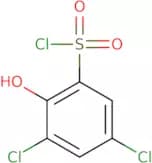
CAS:2,4-Dichlorophenol-6-sulphonyl chloride (2,4-DCP) is a molecule that has been shown to have antibacterial activity against Gram-positive and Gram-negative bacteria. It inhibits the growth of bacteria by binding to the cell wall and inhibiting enzyme activity. 2,4-DCP also has hemolytic activity in vitro. The mechanism of this effect is not well understood but may involve an interaction with membrane lipids or proteins in red blood cells. In addition, 2,4-DCP has been shown to inhibit the growth of staphylococcus and other bacterial strains in vitro. The inhibition of bacterial growth by 2,4-DCP is reversible with exposure to hydrated conditions.Formula:C6H3Cl3O3SPurity:Min. 95%Molecular weight:261.51 g/mol