Organic Halides
In this category, you can find organic molecules containing one or more halogen atoms in their structure. These organic halides include brominated, iodinated, chlorinated, and cyclic halide compounds. Organic halides are widely used in organic synthesis, pharmaceuticals, agrochemicals, and materials science due to their reactivity and ability to undergo a variety of chemical transformations. At CymitQuimica, we offer a comprehensive selection of high-quality organic halides to support your research and industrial applications, ensuring reliable and effective performance in your synthetic and analytical projects.
Subcategories of "Organic Halides"
Found 20442 products of "Organic Halides"
Sort by
Purity (%)
0
100
|
0
|
50
|
90
|
95
|
100
Ammonium chloride
CAS:Ammonium chloride is a salt of ammonium and chloride. It is used in wastewater treatment as a coagulant, to remove suspended solids from the water. In addition, ammonium chloride has been shown to have potent antitumor activity and is used in chemotherapy treatments. Ammonium chloride can be toxic if ingested or inhaled and should not be handled without proper safety precautions. Ammonium chloride also has an effect on the bowel disease, slowing down the rate at which it progresses. It is produced when trimethyl reacts with blood or water vapor. The surface methodology was used to obtain thermodynamic data for ammonium chloride. This method can be applied to other compounds that are difficult to analyze by other methods.Formula:NH4ClPurity:Min. 95%Color and Shape:PowderMolecular weight:53.49 g/mol[2-(Difluoromethyl)phenyl]boronic acid
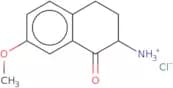
CAS:Please enquire for more information about [2-(Difluoromethyl)phenyl]boronic acid including the price, delivery time and more detailed product information at the technical inquiry form on this pageFormula:C7H7BF2O2Purity:Min. 95%Molecular weight:171.94 g/mol2-Amino-3,4-dihydro-7-methoxy-2H-1-naphthalenone, hydrochloride
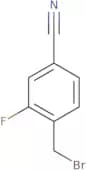
CAS:Controlled ProductPlease enquire for more information about 2-Amino-3,4-dihydro-7-methoxy-2H-1-naphthalenone, hydrochloride including the price, delivery time and more detailed product information at the technical inquiry form on this pageFormula:C11H14ClNO2Purity:Min. 95%Molecular weight:227.69 g/mol4-Cyano-2-fluorobenzyl bromide
CAS:4-Cyano-2-fluorobenzyl bromide is a methyl ester that can be used as a reagent for the synthesis of chiral α-amino acids. It can also be used as an enantioselective methylating agent for the synthesis of γ-secretase inhibitors. The methodology for the convergent synthesis of this compound includes alkylation with glycine followed by an enantioselective hydrolysis, which results in optically pure 4-cyano-2-fluorobenzyl bromide.
Formula:C8H5BrFNPurity:Min. 95%Color and Shape:PowderMolecular weight:214.03 g/mol1-Acetyl-5-bromoindol-3-ol
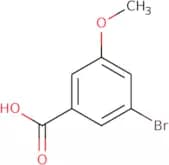
CAS:Please enquire for more information about 1-Acetyl-5-bromoindol-3-ol including the price, delivery time and more detailed product information at the technical inquiry form on this pageFormula:C10H8BrNO2Purity:Min. 95%Color and Shape:PowderMolecular weight:254.08 g/mol3-Bromo-5-methoxybenzoic acid
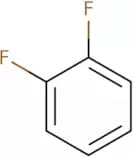
CAS:3-Bromo-5-methoxybenzoic acid is a cytotoxic agent that inhibits the activity of acid transporter, which is involved in the transport of organic acids from the cell to the blood. It is used as an antineoplastic agent for animal studies and has been shown to have a safety profile similar to benzbromarone. 3-Bromo-5-methoxybenzoic acid also inhibits uricosuric activity in mouse hepatocytes and metabolic activation in mice. This compound has inhibitory effects on mouse liver cells and can be used for the treatment of liver cancer.Formula:C8H7BrO3Purity:Min. 95%Molecular weight:231.04 g/mol1,2-Difluorobenzene
CAS:1,2-Difluorobenzene is an aromatic compound that is a member of the class of molecules called phenols. The 1,2-difluorobenzene molecule consists of two phenyl groups linked to a fluorine atom. The 1,2-difluorobenzene molecule has been shown to react with trifluoroacetic acid and chiral derivatives to form 1,1′-difluoroethane and 2,3-dichloro-1,4-benzenediol, respectively. It also reacts in a one-step reaction with p450 enzymes to form covid 19 pandemic and other related compounds. 1,2-Difluorobenzene also undergoes electrochemical studies. It absorbs ultraviolet light at wavelengths between 200 nm and 300 nm and produces an electric current when exposed to uv light. The 1,2-difluorobenzene molecule hasFormula:C6H4F2Purity:Min. 95%Molecular weight:114.09 g/mol[2-(1-Isobutyl-1H-benzimidazol-2-yl)ethyl]amine dihydrochloride
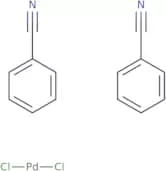
CAS:Controlled ProductPlease enquire for more information about [2-(1-Isobutyl-1H-benzimidazol-2-yl)ethyl]amine dihydrochloride including the price, delivery time and more detailed product information at the technical inquiry form on this pageFormula:C13H19N3Purity:Min. 95%Molecular weight:217.31 g/molBis(Benzonitrile)palladium(II) chloride
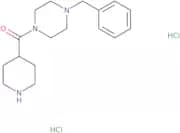
CAS:Controlled ProductBis(benzonitrile)palladium(II) chloride is a palladium complex with the coordination geometry of square-planar. It has been shown to undergo a suzuki coupling reaction when reacted with an aromatic hydrocarbon, such as benzene or toluene, in the presence of sodium carbonate and nitrogen gas. This reaction produces an intramolecular hydrogen bond between the oxygen atom of the hydroxyl group and the nitrogen atom on the chelate ligand. Bis(benzonitrile)palladium(II) chloride has also been shown to be useful for generating x-ray crystal structures of metal complexes by using ft-ir spectroscopy. The chlorine atom from bis(benzonitrile)palladium(II) chloride may react with hydrochloric acid to produce a soluble complex that can be isolated by crystallography.Formula:C14H10Cl2N2PdPurity:Min. 95%Molecular weight:383.57 g/mol(4-Benzylpiperazin-1-yl)piperidin-4-yl-methanone dihydrochloride
CAS:Controlled ProductPlease enquire for more information about (4-Benzylpiperazin-1-yl)piperidin-4-yl-methanone dihydrochloride including the price, delivery time and more detailed product information at the technical inquiry form on this pageFormula:C17H27Cl2N3OPurity:Min. 95%Molecular weight:360.32 g/mol7-Bromo-1-methyl-1H-imidazo[4,5-c]pyridine
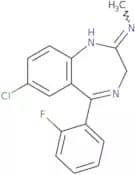
CAS:Please enquire for more information about 7-Bromo-1-methyl-1H-imidazo[4,5-c]pyridine including the price, delivery time and more detailed product information at the technical inquiry form on this pageFormula:C7H6BrN3Purity:Min. 95%Molecular weight:212.05 g/mol7-Chloro-5-(2-fluorophenyl)-2-methylamino-3H-1,4-benzodiazepine
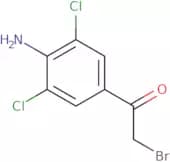
CAS:Controlled ProductPlease enquire for more information about 7-Chloro-5-(2-fluorophenyl)-2-methylamino-3H-1,4-benzodiazepine including the price, delivery time and more detailed product information at the technical inquiry form on this pageFormula:C16H13ClFN3Purity:Min. 95%Molecular weight:301.75 g/mol1-(4-Amino-3,5-dichloro-phenyl)-2-bromo-ethanone
CAS:Please enquire for more information about 1-(4-Amino-3,5-dichloro-phenyl)-2-bromo-ethanone including the price, delivery time and more detailed product information at the technical inquiry form on this pageFormula:C8H6BrCl2NOPurity:Min. 95%Molecular weight:282.95 g/molFluorescent Brightener 251
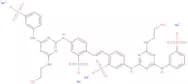
CAS:Fluorescent Brightener 251 is a quaternary ammonium salt that is used as a fluorescent whitening agent. It has been shown to be safe for use with human keratin and can be identified by its ultraviolet-visible spectra. This compound is a polybasic, anionic compound that is neutralized with a diluent and then chloride. The radiation emitted by the compound triggers the emission of visible light, which is what makes it fluorescent. Fluorescent Brightener 251 emits radiation in three wavelengths: 280 nm, 350 nm, and 420 nm. The evaporation rate of this compound depends on the counterions present in the solution. Fluorescent Brightener 251 undergoes a stepwise reaction with reactive compounds.Formula:C36H36N12O14S4•Na4Purity:Min. 95%Color and Shape:PowderMolecular weight:1,080.97 g/mol3-(Chloromethyl)-4-methoxybenzaldehyde
CAS:3-(Chloromethyl)-4-methoxybenzaldehyde is a natural product that can be extracted from the rhizomes of the plant. It has been shown to have antibacterial activity in laboratory experiments and has been used in traditional medicine for the treatment of fungus infections. 3-(Chloromethyl)-4-methoxybenzaldehyde is an imidazolylmethyl derivative with a hexane structure. It reacts with hydrochloric acid to form a molecule called chloromethylation, which is also known as an esterification reaction. Piperazine acts as a catalyst in this reaction, increasing its scalability and making it suitable for large-scale production. The compound exhibits radical scavenging activity, which may be due to its ability to donate electrons or hydrogen atoms to free radicals.Formula:C9H9CIO2Purity:Min. 95%Molecular weight:288.08 g/molMethyl chlorooxoacetate
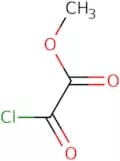
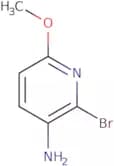
CAS:Methyl chlorooxoacetate is an oxalyl ester that has been used for the synthesis of glycol esters. Methyl chlorooxoacetate has been shown to have a high solubility in water and organic solvents, which is desirable for industrial processes. This molecule also has the ability to be acylated with various organic groups and can act as a process-optimization agent in plant physiology. Methyl chlorooxoacetate binds as a receptor to growth factors and HIV infection, which leads to amide formation and carbonyl group formation.Formula:C3H3ClO3Purity:Min. 95%Color and Shape:Clear LiquidMolecular weight:122.51 g/mol2-Bromo-6-methoxypyridin-3-amine
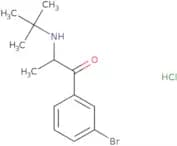
CAS:2-Bromo-6-methoxypyridin-3-amine is a perovskite that has been shown to have a high photoluminescence quantum yield and can be used in solar cells. This compound interacts with both the ligands and the acceptors, boosting the efficiency of these compounds. The 2-bromo-6 methoxypyridin-3 amine is a semiconductor with an electron affinity of 1.9 eV and a band gap of 1.6 eV. It has been shown to be efficient as a photoluminescent material in nanocrystals.Formula:C6H7BrN2OPurity:Min. 95%Molecular weight:203.04 g/molBupropion hydrochloride related compound B
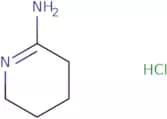
CAS:Controlled ProductPlease enquire for more information about Bupropion hydrochloride related compound B including the price, delivery time and more detailed product information at the technical inquiry form on this pageFormula:C13H18BrNOHClPurity:Min. 95%Color and Shape:White/Off-White SolidMolecular weight:320.65 g/mol2-Iminopiperidine hydrochloride
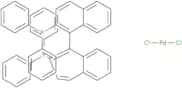
CAS:2-Iminopiperidine hydrochloride is an acetylcholine receptor agonist. It is used as a biochemical tool to study the function of acetylcholine receptors, which are important for the transmission of nerve impulses from the brain and spinal cord to other parts of the body. 2-Iminopiperidine hydrochloride has been shown to be effective in treating Alzheimer's disease, and may be a factor receptor for this disease. The compound has also been shown to have efficient methods of introducing into cells, such as hydrochloric acid and dimethyl formamide. 2-Iminopiperidine hydrochloride binds with phosphoinositides, which are important in intracellular signal transduction pathways. This compound is expressed at M1 receptors in various tissues, including the heart and gastrointestinal tract.Formula:C5H11ClN2Purity:Min. 95%Molecular weight:134.61 g/mol(R)-(+)-(2,2-Bis(Diphenylphosphino)-1,1-binaphthyl)palladium(II)chloride
CAS:Controlled Product(R)-(+)-(2,2-Bis(Diphenylphosphino)-1,1-binaphthyl)palladium(II)chloride is a colorless solid that can be made into a crystalline form. It has a molecular weight of 518.8 g/mol and the chemical formula C12H14P4Cl2. The compound has four asymmetric carbon atoms and two stereocenters in the molecule. This compound is used as a catalyst for organic reactions and in the synthesis of other compounds. (R)-(+)-(2,2-Bis(Diphenylphosphino)-1,1-binaphthyl)palladium(II)chloride is soluble in ethanol and ether but insoluble in water. It reacts with oxygen to produce phosphorous acid and hydrogen chloride gas. This compound has been shown to have nuclear magnetic resonance spectra at room temperature with chemical shifts (Formula:C44H33Cl2P2PdPurity:Min. 95%Molecular weight:801.01 g/mol


![[2-(Difluoromethyl)phenyl]boronic acid](/_next/image/?url=https%3A%2Fstatic.cymitquimica.com%2Fproducts%2F3D%2Fthumb-webp%2FFD84620.webp&w=3840&q=75)

![[2-(1-Isobutyl-1H-benzimidazol-2-yl)ethyl]amine dihydrochloride](/_next/image/?url=https%3A%2Fstatic.cymitquimica.com%2Fproducts%2F3D%2Fthumb-webp%2FFI135795.webp&w=3840&q=75)
![7-Bromo-1-methyl-1H-imidazo[4,5-c]pyridine](/_next/image/?url=https%3A%2Fstatic.cymitquimica.com%2Fproducts%2F3D%2Fthumb-webp%2FFB155304.webp&w=3840&q=75)