Organic Halides
Subcategories of "Organic Halides"
Found 20442 products of "Organic Halides"
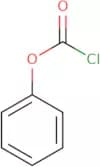
Phenyl chloroformate
CAS:Phenyl chloroformate is a phenyl compound that is used as a reagent for cationic polymerization. This chemical reacts with amines to form an N-substituted amide in the presence of hydrogen chloride. The mechanism of this reaction is based on nucleophilic substitutions by the hydroxyl group of the phenyl group. Phenyl chloroformate has been used in the synthesis of fatty acids, which are important components of metabolic disorders such as diabetes mellitus type 2.Formula:C7H5ClO2Purity:Min. 95%Color and Shape:PowderMolecular weight:156.57 g/molPinaverium bromide
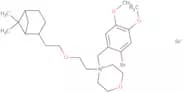
CAS:Pinaverium bromide is a drug with anti-inflammatory properties. It is used in the treatment of bowel disease and as a muscle relaxant. Pinaverium bromide has shown efficacy in treating bowel syndrome, but it also reduces blood flow to the bowel. Pinaverium bromide inhibits voltage-dependent calcium channels, leading to muscle relaxation. This drug also has been shown to inhibit the production of inflammatory mediators such as prostaglandins and leukotrienes, which may be due to its ability to inhibit basic fibroblast growth factor production. Pinaverium bromide is an effective drug that is used for the treatment of bowel disease and muscle spasms. It blocks voltage-dependent calcium channels, which leads to muscle relaxation without affecting heart function. The inhibition of basic fibroblast growth factor production may contribute to this drug's anti-inflammatory effects.!-- START: Description --> Pinaverium bromideFormula:C26H41Br2NO4Purity:Min. 95%Color and Shape:PowderMolecular weight:591.42 g/molPerfluorooctanesulphonyl Chloride
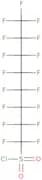
CAS:Controlled ProductPerfluorooctanesulphonyl Chloride (PFOS) is a chemical that belongs to the class of perfluoroalkyl substances. It is used in the synthesis of tetraethylammonium, peroxide, yields, telomeric, phosphine, cyclic ketone, phosphonium salt, chlorides and olefinic compounds. PFOS also has a number of commercial applications such as in fire-fighting foams and in the manufacture of fluoropolymers. PFOS is harmful to human health when it enters the body because it accumulates in the blood and remains there for years. It may cause low birth weight in newborns and thyroid hormone disruption. It can also cause liver damage in laboratory animals.
Formula:C8ClF17O2SPurity:Min. 95%Molecular weight:518.58 g/mol3-Aminophenylsulphur pentafluoride
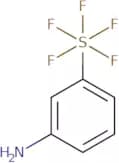
CAS:3-Aminophenylsulphur pentafluoride is a synthetic chemical compound. It is a ligand with an electron-withdrawing group and has been shown to be a strong oxidizing agent. 3-Aminophenylsulphur pentafluoride reacts with phosphine oxides, yielding phosphines. This reaction can be used for the synthesis of heterocycles that contain phosphorus in their ring system. 3-Aminophenylsulphur pentafluoride also reacts with alkyl halides to produce heterocycles containing sulphur, such as pyridines or thiophenes. The reaction time between 3-aminophenylsulphur pentafluoride and alkyl halides is dependent on the oxidation potential of the alkyl halides, which can be determined by measuring the absorption spectra of the resulting heterocycles. 3-Aminophenylsulf
Formula:C6H6F5NSPurity:Min. 95%Molecular weight:219.18 g/molCyclohexyl chloroformate
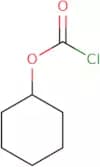
CAS:Cyclohexyl chloroformate is a hydroxyl group that is used as a catalyst for organic reactions. It can also be used to prepare 5-ht2a receptor agonists, which are drugs that stimulate the activity of serotonin in the brain. Cyclohexyl chloroformate has been shown to induce chemiluminescence and has an inhibition constant of 2.6x10 M.
Formula:C7H11ClO2Purity:Min. 95%Molecular weight:162.61 g/mol1-(4-Chloro-3-Trifluoromethylphenyl)Piperazine
CAS:Controlled ProductPlease enquire for more information about 1-(4-Chloro-3-Trifluoromethylphenyl)Piperazine including the price, delivery time and more detailed product information at the technical inquiry form on this pageFormula:C11H12ClF3N2Purity:Min. 95%Molecular weight:264.67 g/molBeta-CIT-FP
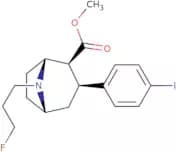
CAS:Controlled ProductMethyl (1R,2S,3S)-8-(3-Fluoropropyl)-3-(4-Iodophenyl)-8-Azabicyclo[3.2.1]Octane-2-Carboxylate is a potent dopamine receptor agonist with a high affinity for the D2 and D3 receptors in the brain. It has been shown to have antiparkinsonian effects in animal models of Parkinson's disease by increasing dopamine levels in the prefrontal cortex and striatum. This drug has also been shown to be effective in clinical studies for the diagnosis of Parkinson's disease. Methyl (1R,2S,3S)-8-(3-Fluoropropyl)-3-(4-Iodophenyl)-8-Azabicyclo[3.2.1]Octane-2-Carboxylate binds to both dopamine and serotonin receptors, which may account for its therapeutic effects on ParkinsonFormula:C18H23FINO2Purity:Min. 95%Molecular weight:431.28 g/mol[2-(1,2-Dimethyl-1H-indol-3-yl)ethyl]amine hydrochloride
CAS:Controlled ProductPlease enquire for more information about [2-(1,2-Dimethyl-1H-indol-3-yl)ethyl]amine hydrochloride including the price, delivery time and more detailed product information at the technical inquiry form on this page
Formula:C12H16N2Purity:Min. 95%Molecular weight:188.27 g/molN-Demethyltramadol hydrochloride
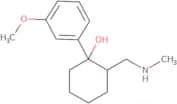
CAS:N-Demethyltramadol hydrochloride is a drug that belongs to the group of opioids. It is a metabolite of tramadol, which is an analgesic and antitussive. N-Demethyltramadol hydrochloride binds to opioid receptors in the brain and spinal cord, inhibiting the perception of pain and cough reflex. Tramadol was first synthesized in Germany in 1934 as an antidepressant, but its use was limited because it caused too many side effects. N-Demethyltramadol hydrochloride has been shown to be effective for treating long-term pain relief, but can cause addiction and dependency when used for long periods of time. The transformation of tramadol to n-demethyltramadol hydrochloride occurs in fruit, which may explain why this drug is found in wastewater samples from fruit processing plants.Formula:C15H23NO2·HClPurity:Min. 95%Molecular weight:285.81 g/molJ147
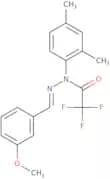
CAS:2,2,2-Trifluoroacetic acid 1-(2,4-dimethylphenyl)-2-[(3-methoxyphenyl)methylene]hydrazide is a neuroprotective drug that belongs to the class of hydrazides. It has been shown to have neurotrophic activity in vitro and in vivo and can be used for the treatment of conditions such as diabetic neuropathy or cancer tissues. 2,2,2-Trifluoroacetic acid 1-(2,4-dimethylphenyl)-2-[(3-methoxyphenyl)methylene]hydrazide also has anti-inflammatory properties and can be used for the treatment of autoimmune diseases. The drug's mechanism of action is not fully understood but is thought to involve monoamine neurotransmitters.Formula:C18H17F3N2O2Purity:Min. 95%Molecular weight:350.34 g/mol2,2,4-Trimethylpyrrolidine hydrochloride
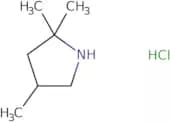
CAS:Please enquire for more information about 2,2,4-Trimethylpyrrolidine hydrochloride including the price, delivery time and more detailed product information at the technical inquiry form on this pageFormula:C7H15NPurity:Min. 95%Molecular weight:113.2 g/mol(-)-Ecgonine hydrochloride
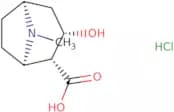
CAS:Controlled Product(-)-Ecgonine hydrochloride is a benzoyl ester that is used as an analytical reagent. It is a precursor in the synthesis of cocaine and other drugs. Ecgonine hydrochloride can be extracted from plant sources, such as coca leaves or khat leaves, by acid-base extraction. It has been shown to have toxic effects on human serum and the liver, which may be due to its structural similarity to cocaine.Formula:C9H16ClNO3Purity:Min. 95%Molecular weight:221.68 g/molFluorobenzene
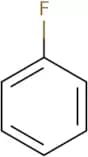
CAS:Fluorobenzene is a chemical compound that has the chemical formula CHF. It is a colorless liquid with a sweet odor. Fluorobenzene is an organic compound that is used in the synthesis of epidermal growth factor and other drugs. It also has shown anti-inflammatory activity and can be used to synthesize other organic compounds, such as amides, which are used in the production of pharmaceuticals. The reaction mechanism for this process has not been identified, but it may involve hydrogen bonding between the hydroxyl group of fluorobenzene and an electron-pair acceptor, such as oxygen or nitrogen.Formula:C6H5FPurity:Min. 95%Molecular weight:96.1 g/mol1-Bromoicosane
CAS:1-Bromoicosane is a viscous, hydrophobic organic solvent with a high boiling point. It has been used as an additive in the production of polyurethanes and as a cross-linking agent in rubber and plastics. The viscosity of 1-bromoicosane can be increased by adding it to other solvents, such as xylene. 1-Bromoicosane is also used as an additive in paints and varnishes, where it increases the glossiness of the final product. This compound is also used to prevent corrosion on metal surfaces when mixed with zinc chloride or phosphonium salt. 1-Bromoicosane has been shown to have antioxidative activities against lipid peroxidation, hydrogen peroxide oxidation, and nitric oxide induced hemoglobin oxidation.Formula:C20H41BrPurity:Min. 95%Color and Shape:White PowderMolecular weight:361.44 g/mol5-Bromo-3-methyl-1H-indazole
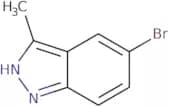
CAS:5-Bromo-3-methyl-1H-indazole is an organic compound that is synthesized from lithium diisopropylamide and lithium. 5-Bromo-3-methyl-1H-indazole is a white solid with a melting point of 151°C. It reacts with anhydrous hydrogen bromide to form 5,5'-dibromoindazole. The molecular weight of this compound is 202.2 g/mol.Formula:C8H7BrN2Purity:Min. 95%Molecular weight:211.06 g/molBarium chloride anhydrous
CAS:Barium chloride anhydrous is a chemical compound with the formula BaCl2. It is soluble in water and has been used for wastewater treatment. The solubility of this compound increases as temperature decreases. Barium chloride anhydrous can also be used to measure the levels of calcium ions in cells and tissues, by measuring the fluorescence intensity produced when the compound reacts with Ca2+. This property has been utilized to study neuronal death and Ca2+ overload. Barium chloride anhydrous also exhibits biological properties, such as enzyme activity or the ability to bind coumarin derivatives. X-ray diffraction data have shown that BaCl2 consists of a cubic crystalline structure, with each barium ion coordinated by six chloride ions. In solution, BaCl2 dissociates into Ba2+ and Cl-. Water vapor may cause the formation of anhydrous sodium carbonate on surfaces of objects exposed to it. The structural analysis of this compound has been modeled using particle methods.
Formula:BaCl2Purity:Min. 95%Molecular weight:208.23 g/molIsomethadone hydrochloride
CAS:Controlled ProductIsomethadone hydrochloride is the drug substance in a solid oral dosage form. It is an active substance that can be used to treat inflammatory diseases and target tissue. Isomethadone hydrochloride is a type of natural polymer with a metal ion as its active ingredient. The absorption mechanism for this drug is not known, but it appears to work by causing dysfunction in the membranes of cells. Isomethadone hydrochloride has been shown to cause addiction in animals and humans, and may have potential toxic effects on liver function. Symptoms of Isomethadone hydrochloride overdose include: -Nausea and vomiting -Constipation -Loss of appetite -Headache -Drowsiness -Confusion -Muscle spasms -Tremors and seizuresFormula:C21H28ClNOPurity:Min. 95%Molecular weight:345.91 g/mol(R)-(-)-1-[(4-Chlorophenyl)phenylmethyl]piperazine
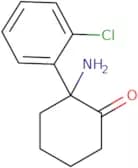
CAS:Controlled Product(R)-(-)-1-[(4-Chlorophenyl)phenylmethyl]piperazine is a chemical compound that belongs to the group of c1-4 alkyl, high yield. It has a chemical formula of C12H17ClN2O and an organic base. This compound is hydrolyzed in vivo to levocetirizine, its active form. (R)-(-)-1-[(4-Chlorophenyl)phenylmethyl]piperazine is an antihistamine that binds to H1 receptors in the central nervous system, which results in decreased production of histamine and other proinflammatory substances. It also has optical activity, with (+) being the active form.Formula:C17H19ClN2Purity:Min. 95%Molecular weight:286.8 g/mol2-Amino-2-(2-chlorophenyl)cyclohexan-1-one
CAS:Controlled Product2-Amino-2-(2-chlorophenyl)cyclohexan-1-one is an anesthetic drug that belongs to the group of ketamine. It is a chiral compound and has been shown to have central nervous system depressant effects, which are more pronounced than those of ketamine. This drug also affects the cardiovascular system and can cause respiratory depression. 2-Amino-2-(2-chlorophenyl)cyclohexan-1-one has been shown to be metabolized in humans by cytochrome P450 (CYP3A4). It may potentiate the effect of drugs that induce CYP3A4 activity such as erythromycin, rifampin, and phenobarbital. 2-Amino-2-(2-chlorophenyl)cyclohexan-1-one is not active against MRSA or methicillin resistant pseudomonas aeruginosa (MRFormula:C12H14ClNOPurity:Min. 95%Color and Shape:PowderMolecular weight:223.7 g/mol2,5-Diaminopyridine dihydrochloride
CAS:2,5-Diaminopyridine dihydrochloride is a compound that belongs to the class of hydroxamic acids. It is an intermediate in the synthesis of the anti-cancer drug, hydroxyurea (hydroxylamine). 2,5-Diaminopyridine dihydrochloride can be used as a cross-coupling reagent for coupling reactions with chlorinated and tritiated organic compounds. The efficiency of this reaction is dependent on the coulombic and mutagenic properties of 2,5-diaminopyridine dihydrochloride. 2,5-Diaminopyridine dihydrochloride has been shown to cause cancer in animal studies.Formula:C5H7N3•(HCl)2Purity:Min. 95%Molecular weight:182.05 g/mol


![[2-(1,2-Dimethyl-1H-indol-3-yl)ethyl]amine hydrochloride](/_next/image/?url=https%3A%2Fstatic.cymitquimica.com%2Fproducts%2F3D%2Fthumb-webp%2FFD135164.webp&w=3840&q=75)



![(R)-(-)-1-[(4-Chlorophenyl)phenylmethyl]piperazine](/_next/image/?url=https%3A%2Fstatic.cymitquimica.com%2Fproducts%2F3D%2Fthumb-webp%2FFC53712.webp&w=3840&q=75)