Organic Halides
Subcategories of "Organic Halides"
Found 20442 products of "Organic Halides"
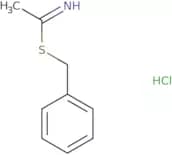
S-Benzylthioacetimidate, hydrochloride
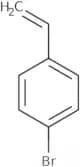
CAS:S-Benzylthioacetimidate, hydrochloride is a synthetic pyrazine compound that is used as an immunogen to produce antibodies against the influenza virus. It is also used in the synthesis of carboxy n-oxide and nitro derivatives. S-Benzylthioacetimidate, hydrochloride has been shown to have psychotropic effects in animals and humans by altering dopamine metabolism in the brain. This drug can cause psychosis, ganglia damage and may lead to Parkinson's disease.Formula:C9H11NS•HClPurity:Min. 95%Molecular weight:201.72 g/mol4-Bromostyrene
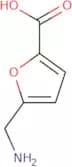
CAS:Bromostyrene is a colorless liquid that is soluble in ether and deionized water. It has a boiling point of about 147°C. Bromostyrene can be reduced with borohydride to produce 4-bromobutane. The graphical methods for determining the rate of bromohydride reduction are based on the change in proton concentration or the change in pH. Bromostyrene has been shown to have good proton transport properties, which may be due to its high dipole moment.Formula:C8H7BrPurity:Min. 95%Molecular weight:183.05 g/mol5-(Aminomethyl)-2-furoic acid hydrochloride
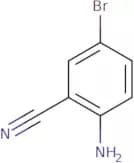
CAS:5-(Aminomethyl)-2-furoic acid hydrochloride is a molecule that belongs to the group of carboxylates. It has a molecular weight of 191.2 g/mol and a chemical formula of CHNO. The structure of 5-(aminomethyl)-2-furoic acid hydrochloride is similar to that of hexamethylenetetramine, a common organic compound with the formula (CH)N(H)CH. 5-(Aminomethyl)-2-furoic acid hydrochloride can be used as an acceptor in hydrogen chloride gas generation reactions, which are used in the synthesis of some pharmaceutical drugs and other organic compounds. The molecule also has potential use in telomerase research because it is structurally similar to natural telomeres. In addition, this molecule has been shown to have anti-inflammatory properties due to its ability to inhibit prostaglandin synthesis.Formula:C6H7NO3Purity:Min. 95%Molecular weight:141.12 g/mol2-Amino-5-bromobenzonitrile
CAS:2-Amino-5-bromobenzonitrile is a bioactive substance that belongs to the class of amines. It is used as an intermediate in the production of other industrial chemicals, such as polyurethanes and polyamides. 2-Amino-5-bromobenzonitrile can be found in faeces at a concentration of approximately 1 µg/g. The metabolic pathway for 2-amino-5-bromobenzonitrile has been shown to be cyp3a5 dependent.
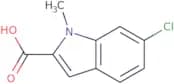
Formula:C7H5BrN2Purity:Min. 95%Color and Shape:Brown PowderMolecular weight:197.03 g/mol6-Chloro-1-methyl-1H-indole-2-carboxylic acid
CAS:Please enquire for more information about 6-Chloro-1-methyl-1H-indole-2-carboxylic acid including the price, delivery time and more detailed product information at the technical inquiry form on this pageFormula:C10H8ClNO2Purity:Min. 95%Molecular weight:209.63 g/mol(-)-B-Chlorodiisopinocampheylborane, 65% heptane solution
CAS:(-)-B-Chlorodiisopinocampheylborane is a synthetic compound that belongs to the class of diketones. It has been used in asymmetric synthesis, metathesis reactions, and as a catalyst for the preparation of chiral compounds. (-)-B-Chlorodiisopinocampheylborane can be synthesized from trifluoromethylation using chlorodiphenylsilane and sodium borohydride in heptane. This agent has been shown to be effective for the production of β-unsaturated ketones by reaction with carbonyl groups. The reaction produces a racemic mixture of enantiomers, which are isomers that are not identical but have the same chemical formula and similar physical properties. (-)-B-Chlorodiisopinocampheylborane can also be used as an intermediate for the synthesis of latanoprost lactol, which is a prostaglandinFormula:C20H34BClPurity:Min. 95%Color and Shape:Clear LiquidMolecular weight:320.75 g/mol4-Methoxybenzyl chloride - stabilised with potassium carbonate
CAS:4-Methoxybenzyl chloride is a chemotherapeutic agent that inhibits the binding of inhibitor molecules to their target proteins. It has been shown to inhibit the binding of uridine and methanol solvent to their targets, which are enzymes in the synthesis of nucleic acids. The inhibition of these enzymes prevents DNA replication and protein synthesis, leading to cell death. 4-Methoxybenzyl chloride has been found to be effective in treating autoimmune diseases and solid tumours, as well as being an antimicrobial treatment for microbial infections. 4-Methoxybenzyl chloride is also used in chemical syntheses for its ability to undergo cationic polymerization and asymmetric synthesis.Formula:C8H9ClOPurity:Min. 95%Color and Shape:Colorless Clear LiquidMolecular weight:156.61 g/mol1-(4-Bromobenzyl)piperazine
CAS:Controlled Product1-(4-Bromobenzyl)piperazine is a chemical compound that is an amine and an aromatic heterocycle. It has been shown to inhibit the growth of murine melanoma cells in culture, with a preferential effect on malignant cells. 1-(4-Bromobenzyl)piperazine binds to melanin, which may be due to its ability to cross the blood-brain barrier and accumulate in the brain. This compound also has diffraction properties and can be used as a high-energy radiation source for electron microscopy. 1-(4-Bromobenzyl)piperazine is used in the synthesis of benzylpiperazine, an aromatic amine that is used as a chemical intermediate in organic chemistry.Formula:C11H15BrN2Purity:Min. 95%Molecular weight:255.15 g/molTachyplesin I trifluoroacetate
CAS:Tachyplesin I trifluoroacetate is an antimicrobial peptide with action on bacterial and fungal membranes by disrupting their integrity and is used for research on antimicrobial properties and potential therapeutic applications.
Formula:C99H151N35O19S4•(C2HF3O2)xPurity:Min. 95%Color and Shape:PowderMolecular weight:2,263.75 g/molDichlorodiisopropylsilane
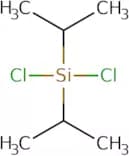
CAS:Dichlorodiisopropylsilane is a cycloaddition process, which is the addition of two molecules to create a new ring. It reacts with an unsaturated organic compound, such as an alkene or alkyne, to produce a reactive functional group. Dichlorodiisopropylsilane has been used in chemistry as a cross-linking agent for proteins and as a solid catalyst. The chemical stability of dichlorodiisopropylsilane makes it useful in the synthesis of model proteins. This compound also has low bioavailability due to its high reactivity with hydrochloric acid found in the stomach.
Formula:C6H14Cl2SiPurity:Min. 95%Color and Shape:Clear LiquidMolecular weight:185.17 g/molChloromethylated polystyrene - 0.8-1.5meq/g, 100-200Mesh
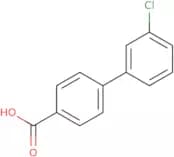
CAS:Chloromethylated polystyrene is a polymer that contains a hydroxyl group and a disulfide bond. It can be used to synthesize an asymmetric synthesis of the borane-tetrahydrofuran complex, which is an important reagent in organic synthesis. In this reaction, trifluoroacetic acid reacts with hydrogen fluoride to produce chloromethylated polystyrene. This product has been shown to be effective in preventing cancerous tissue growth and inhibiting infectious diseases by binding to nucleophilic sites on the cell surface.Purity:Min. 95%3'-Chloro-biphenyl-4-carboxylic acid
CAS:Please enquire for more information about 3'-Chloro-biphenyl-4-carboxylic acid including the price, delivery time and more detailed product information at the technical inquiry form on this pagePurity:Min. 95%2-Fluoroestradiol
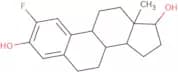
CAS:Controlled Product2-Fluoroestradiol is a synthetic form of 17β-estradiol that has been shown to inhibit the growth of tumor cells in an experimental model. 2-Fluoroestradiol binds to the estrogen receptor and inhibits the production of proteins needed for cell division, thus causing cancer. This drug has also been shown to inhibit lipoprotein lipase activity in rat liver microsomes, which may be due to its ability to induce chemical reactions. In addition, 2-fluoroestradiol inhibits lipid synthesis in fat cells and decreases lipogenesis in granulosa cells from ovaries. The inhibition of triglyceride synthesis by 2-fluoroestradiol is probably due to its ability to inhibit enzyme induction and increase the expression of mRNA for protein synthesis.Formula:C18H23FO2Purity:Min. 95%Molecular weight:290.37 g/molKisspeptin-54 (human) trifluoroacetate salt
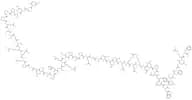
CAS:Kisspeptin-54 is a mammalian peptide hormone that regulates the release of gonadotropin-releasing hormone (GnRH) from the hypothalamus. Kisspeptin-54 has been shown to be potently immunogenic in humans and can be used as an antigen for the production of monoclonal antibodies. It is also a candidate drug for the treatment of obesity and may have neuroprotective effects. Kisspeptin-54 has been shown to reduce body mass index, which may be due to its ability to stimulate the immune system and promote antibody production against tumors. This peptide also has potent on-line binding properties that are useful in polymerase chain reactions.Formula:C258H401N79O78Purity:Min. 95%Molecular weight:5,857.43 g/molEthyl 2-chloropropionate
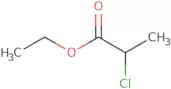
CAS:Ethyl 2-chloropropionate is an organic compound that is used in the synthesis of other compounds. It is a colorless liquid with a characteristic smell. Ethyl 2-chloropropionate has been shown to be a nucleophilic, aromatic hydrocarbon that reacts with electrophiles such as copper chloride and ethyl formate. This reaction forms the corresponding chloroethanol and methylformate. The reaction of ethyl 2-chloropropionate with diphenyl ether produces a chloroethyl ether derivative. This product can inhibit some enzymes, including epoxide hydrolase, which plays an important role in the metabolism of drugs such as ibuprofen and diclofenac. The kinetic behavior of this compound has been studied using enzyme inhibition and molecular modeling techniques.Formula:C5H9ClO2Purity:Min. 95%Molecular weight:136.58 g/molcis-Terbinafine hydrochloride
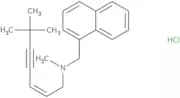
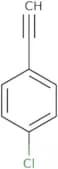
CAS:Please enquire for more information about cis-Terbinafine hydrochloride including the price, delivery time and more detailed product information at the technical inquiry form on this pageFormula:C21H25N•HClPurity:Min. 95%Molecular weight:327.89 g/mol4-Chlorophenylacetylene
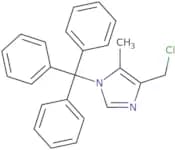
CAS:4-Chlorophenylacetylene is a compound that is created by the reaction of chloroform and acetylene. The reaction yield can be increased by using a catalytic amount of silicon, which increases the rate of hydration. Terminal alkynes react with 4-chlorophenylacetylene to form polymers, which are insoluble in most solvents. 4-Chlorophenylacetylene has been shown to have inhibitory activity against the growth of bacteria and fungi when tested in model species such as Escherichia coli and Saccharomyces cerevisiae.Formula:C8H5ClPurity:Min. 95%Color and Shape:PowderMolecular weight:136.58 g/mol4-(Chloromethyl)-5-methyl-1-(triphenylmethyl)-1H-imidazole
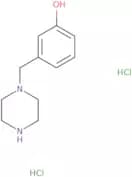
CAS:Controlled ProductPlease enquire for more information about 4-(Chloromethyl)-5-methyl-1-(triphenylmethyl)-1H-imidazole including the price, delivery time and more detailed product information at the technical inquiry form on this pageFormula:C24H21ClN2Purity:Min. 95%Molecular weight:372.89 g/mol3-(Piperazin-1-ylmethyl)phenol dihydrochloride
CAS:Controlled ProductPlease enquire for more information about 3-(Piperazin-1-ylmethyl)phenol dihydrochloride including the price, delivery time and more detailed product information at the technical inquiry form on this pageFormula:C11H16N2OPurity:Min. 95%Molecular weight:192.26 g/molMethyl 2-amino-4,6-dichloropyridine-3-carboxylate
CAS:Please enquire for more information about Methyl 2-amino-4,6-dichloropyridine-3-carboxylate including the price, delivery time and more detailed product information at the technical inquiry form on this pageFormula:C7H6Cl2N2O2Purity:Min. 95%Molecular weight:221.04 g/mol