Organic Halides
Subcategories of "Organic Halides"
Found 20443 products of "Organic Halides"
5-(Aminomethyl)-2-furoic acid hydrochloride
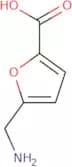
CAS:5-(Aminomethyl)-2-furoic acid hydrochloride is a molecule that belongs to the group of carboxylates. It has a molecular weight of 191.2 g/mol and a chemical formula of CHNO. The structure of 5-(aminomethyl)-2-furoic acid hydrochloride is similar to that of hexamethylenetetramine, a common organic compound with the formula (CH)N(H)CH. 5-(Aminomethyl)-2-furoic acid hydrochloride can be used as an acceptor in hydrogen chloride gas generation reactions, which are used in the synthesis of some pharmaceutical drugs and other organic compounds. The molecule also has potential use in telomerase research because it is structurally similar to natural telomeres. In addition, this molecule has been shown to have anti-inflammatory properties due to its ability to inhibit prostaglandin synthesis.Formula:C6H7NO3Purity:Min. 95%Molecular weight:141.12 g/mol1-(2-Chloroethyl)piperidine hydrochloride
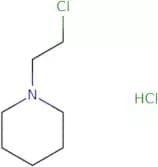
CAS:1-(2-Chloroethyl)piperidine hydrochloride is a chemical compound that has photochemical properties. It is used as an amine and in the synthesis of other chemicals. The crystal structure of 1-(2-Chloroethyl)piperidine hydrochloride has been determined by X-ray crystallography. It also has antibacterial activity and inhibits the growth of bacteria by binding to single-stranded DNA, which prevents DNA replication. 1-(2-Chloroethyl)piperidine hydrochloride binds to DNA with tetradentate coordination, forming a stable complex which does not allow the DNA polymerase to bind to the single strand. 1-(2-Chloroethyl)piperidine hydrochloride can be detected using mass spectrometry and nuclear magnetic resonance spectra.
Formula:C7H14ClN•HClPurity:Min. 95%Molecular weight:184.11 g/mol5-Methyl-4,5,6,7-tetrahydrothiazolo[5,4-c]pyridine-2-carboxylic acid hydrochloride
CAS:Intermediate in the synthesis of edoxabanFormula:C8H10N2O2S·HClPurity:Min. 95%Molecular weight:234.7 g/mol5-Amino-2,4-dichlorophenol
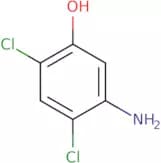
CAS:Please enquire for more information about 5-Amino-2,4-dichlorophenol including the price, delivery time and more detailed product information at the technical inquiry form on this page
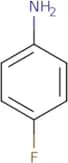
Formula:C6H5Cl2NOPurity:Min. 95%Color and Shape:PowderMolecular weight:178.02 g/mol4-Fluoroaniline
CAS:4-Fluoroaniline is an antimicrobial agent that inhibits microbial metabolism by binding to enzymes and blocking their activity. The enzyme activities are affected by the hydrogen bonding interactions between the 4-fluoroaniline molecule and other molecules in the enzyme active site. 4-Fluoroaniline can be used for wastewater treatment, as it has been shown to inhibit bacterial growth and help remove nitrogen from wastewater. Hydrogen fluoride (HF) is generated when 4-fluoroaniline is exposed to water, which may be toxic to aquatic life. The reaction mechanism of 4-fluoroaniline with a tetrazolium dye is dependent on the presence of nitrogens. Nitrogen atoms in the 4-fluoroaniline react with diazonium salt to form a diazonium intermediate, which reacts with a tetrazolium dye to produce a red compound that can be detected at low concentrations. A model system of 4-fluoro
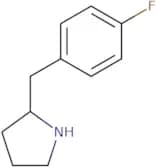
Formula:C6H6FNPurity:Min. 95%Molecular weight:111.12 g/mol2-(4-Fluoro-benzyl)pyrrolidine
CAS:Controlled ProductPlease enquire for more information about 2-(4-Fluoro-benzyl)pyrrolidine including the price, delivery time and more detailed product information at the technical inquiry form on this page
Formula:C11H14FNPurity:Min. 95%Molecular weight:179.23 g/molEthyl 2-[bis(2,2,2-trifluoroethyl)phosphono]propionate
CAS:Please enquire for more information about Ethyl 2-[bis(2,2,2-trifluoroethyl)phosphono]propionate including the price, delivery time and more detailed product information at the technical inquiry form on this page
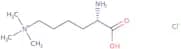
Formula:C9H13F6O5PPurity:Min. 95%Molecular weight:346.16 g/molNe-(trimethyl)-L-lysine chloride
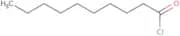
CAS:Please enquire for more information about Ne-(trimethyl)-L-lysine chloride including the price, delivery time and more detailed product information at the technical inquiry form on this pageFormula:C9H21ClN2O2Purity:Min. 95%Molecular weight:224.73 g/molDecanoyl chloride
CAS:Decanoyl chloride is a fatty acid derivative that acts as a surfactant and detergent. It is used in the formulation of detergent compositions, such as pluronic f127, which are used for the production of antireflux agents, wetting agents, and solubilizers. Decanoyl chloride is also used in the manufacture of glycol esters and acylation reactions. The molecular weight of decanoyl chloride is between 138-144 g/mol. The chemical formula for decanoyl chloride is C10H20O2. Decanoyl chloride has an acid dissociation constant (pKa) of 10.5 at 25°C. The infrared spectrum shows bands at 1626 cm-1 and 1602 cm-1 due to stretching vibrations of the alkanoic acid moiety or C=O bond. Decanoyl chloride has a redox potential of +0.76 V vs Ag/AgCl atFormula:C10H19ClOPurity:Min. 95%Molecular weight:190.71 g/molN,N-Didesmethyl diltiazem hydrochloride
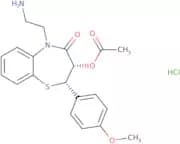
CAS:Please enquire for more information about N,N-Didesmethyl diltiazem hydrochloride including the price, delivery time and more detailed product information at the technical inquiry form on this pageFormula:C20H23ClN2O4SPurity:Min. 95%Molecular weight:422.93 g/mol4-Methyl-1-piperazinecarbonyl chloride hydrochloride
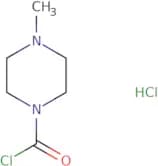
CAS:4-Methyl-1-piperazinecarbonyl chloride hydrochloride is a pyridine derivative that can be used to synthesize various alkyl esters. It is also used as a reagent in organic synthesis. 4-Methyl-1-piperazinecarbonyl chloride hydrochloride is soluble in organic solvents and has a low melting point. This compound can be used for the recrystallization of dibenzoyl, which is an important parameter for this reaction. 4-Methyl-1-piperazinecarbonyl chloride hydrochloride is an anhydrous compound, so it must be stored in a dry place to prevent water from forming crystals. Nonbenzodiazepine drugs are also made with 4-methyl-1-piperazinecarbonyl chloride hydrochloride. The enantiomers (mirror images) of this molecule may have different effects on the body, and this difference can beFormula:C6H11ClN2O•HClPurity:Min. 95%Color and Shape:PowderMolecular weight:199.08 g/mol1,3-Thiazol-5-ylmethylamineHydrochloride
CAS:Please enquire for more information about 1,3-Thiazol-5-ylmethylamineHydrochloride including the price, delivery time and more detailed product information at the technical inquiry form on this pageFormula:C4H7ClN2SPurity:Min. 95%Molecular weight:150.63 g/mol5-Bromo-2-methoxyphenethylamine hydrobromide
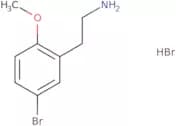
CAS:Controlled ProductPlease enquire for more information about 5-Bromo-2-methoxyphenethylamine hydrobromide including the price, delivery time and more detailed product information at the technical inquiry form on this page
Formula:C9H13Br2NOPurity:Min. 95%Molecular weight:311.01 g/mol4-(Methylthio)benzylchloride
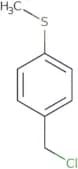
CAS:4-(Methylthio)benzylchloride is a molecule that belongs to the group of dendrons. It is a synthetic molecule with an acid chloride functional group. This compound has been synthesized by decarboxylation of 4-methylthiobenzaldehyde and then chlorination of the resulting alcohol. The microextraction technique was used to extract 4-(methylthio)benzylchloride from acidic solutions. In this technique, a small amount of solvent is absorbed on a solid phase and then eluted into another solvent in a laboratory instrument called the headspace. The headspace technique is used to extract 4-(methylthio)benzylchloride from acidic solutions because it has better sensitivity and selectivity than liquid-liquid extraction. The fluorescence properties of 4-(methylthio)benzylchloride allow it to be detected using luminescence spectroscopy at wavelengths between 400 nm and 700 nm, which makes it useful asFormula:C8H9ClSPurity:Min. 95%Molecular weight:172.68 g/mol4-Benzyloxy-3-methoxy-N-methylphenethylamine hydrochloride
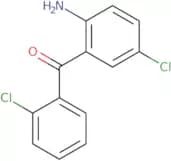
CAS:Controlled ProductPlease enquire for more information about 4-Benzyloxy-3-methoxy-N-methylphenethylamine hydrochloride including the price, delivery time and more detailed product information at the technical inquiry form on this pageFormula:C17H22ClNO2Purity:Min. 95%Molecular weight:307.81 g/mol2-Amino-2',5-dichlorobenzophenone
CAS:2-Amino-2',5-dichlorobenzophenone (2,5-DCP) is a molecule with a chromatographic retention time of 23.8 minutes. 2,5-DCP has been detected in human urine samples using the chemical ionization technique as well as the Nova-Pak C18 column and an acetic acid/methanol mobile phase. This compound has been used as a standard for the detection of benzodiazepine drugs such as diazepam and flunitrazepam in urine samples by gas chromatography. 2,5-DCP has also been used in analytical toxicology to detect lormetazepam and lorazepam metabolites in human urine samples.
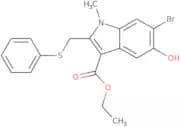
Formula:C13H9Cl2NOPurity:Min. 95%Color and Shape:Off-White PowderMolecular weight:266.12 g/molEthyl 6-bromo-5-hydroxy-1-methyl-2-(phenylsulfanylmethyl)indole-3-carboxylate
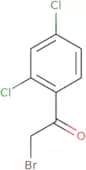
CAS:Controlled ProductPlease enquire for more information about Ethyl 6-bromo-5-hydroxy-1-methyl-2-(phenylsulfanylmethyl)indole-3-carboxylate including the price, delivery time and more detailed product information at the technical inquiry form on this pagePurity:Min. 95%2-Bromo-2',4'-dichloroacetophenone
CAS:2-Bromo-2',4'-dichloroacetophenone (2BDCA) is a drug that belongs to the class of active substances. 2BDCA has potent inhibitory activity against erythrocytes and is used in the treatment of leukaemia. 2BDCA is also an optical probe, which can be used to detect phosphate groups and dihedral angles in biological systems. It can be used as a fluorescent probe for biological systems, such as cells or proteins, and has been shown to be effective on red blood cells. 2BDCA binds to these molecules by hydrogen bonding and exhibits optical properties through fluorescence resonance energy transfer.Formula:C8H5BrCl2OPurity:Min. 95%Color and Shape:Clear LiquidMolecular weight:267.93 g/molTetrakis[N-tetrachlorophthaloyl-(S)-tert-leucinato]dirhodium Bis(ethyl Acetate) Adduct
CAS:Please enquire for more information about Tetrakis[N-tetrachlorophthaloyl-(S)-tert-leucinato]dirhodium Bis(ethyl Acetate) Adduct including the price, delivery time and more detailed product information at the technical inquiry form on this pageFormula:C56H40Cl16N4O16Rh2·C8H16O4Purity:Min. 95%Molecular weight:1,974.2 g/mol5-Bromonicotinoyl chloride
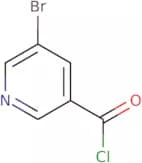
CAS:5-Bromonicotinoyl chloride is a synthetic compound that has been shown to be an inhibitor of some cancer cells. This compound has been shown to inhibit the enzyme phosphatidylinositol 3-kinase (PI3K) in a specific ligand-dependent manner. The precise mechanism of action is not yet understood, but it is thought that 5-bromonicotinoyl chloride may bind to the enzyme and inhibit its activity by hydrogen bonding interactions. This product inhibits PI3K, which is responsible for generating phosphatidylinositol 3,4,5-triphosphate (PIP3). PIP3 activates protein kinase B (AKT), which promotes cell proliferation and inhibits apoptosis. It also inhibits the enzyme phosphodiesterase type 4 (PDE4), which controls intracellular levels of cyclic GMP. PDE4 activity leads to vasodilation and platelet aggregation.
Formula:C6H3BrClNO2Purity:Min. 95%Molecular weight:236.54 g/mol

![5-Methyl-4,5,6,7-tetrahydrothiazolo[5,4-c]pyridine-2-carboxylic acid hydrochloride](/_next/image/?url=https%3A%2Fstatic.cymitquimica.com%2Fproducts%2F3D%2Fthumb-webp%2FFM63141.webp&w=3840&q=75)
![Ethyl 2-[bis(2,2,2-trifluoroethyl)phosphono]propionate](/_next/image/?url=https%3A%2Fstatic.cymitquimica.com%2Fproducts%2F3D%2Fthumb-webp%2FFE22959.webp&w=3840&q=75)


![Tetrakis[N-tetrachlorophthaloyl-(S)-tert-leucinato]dirhodium Bis(ethyl Acetate) Adduct](/_next/image/?url=https%3A%2Fstatic.cymitquimica.com%2Fproducts%2F3D%2Fthumb-webp%2FFT60020.webp&w=3840&q=75)