Organic Halides
Subcategories of "Organic Halides"
Found 20442 products of "Organic Halides"
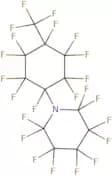
Perfluoro-N-(4-methylcyclohexyl)piperidine
CAS:Controlled ProductPerfluoro-N-(4-methylcyclohexyl)piperidine (4-FPP) is a fluorine compound that has been shown to inhibit the enzymatic activity of tyrosine kinases. It is a potent inhibitor of both human and murine tyrosine kinases, but it does not bind to bacterial tyrosine kinase domains. 4-FPP has been used in clinical studies as an anti-cancer drug, although it's clinical relevance remains unclear. It has also been shown to be effective against the influenza virus by inhibiting the synthesis of viral proteins that are involved in replication. The chemical structure of 4-FPP contains a carbonyl group that can react with other compounds through a photochemical process. This reaction is thought to result in the development of new drugs with similar biochemical properties to 4-FPP.
Formula:C12F23NPurity:Min. 95%Color and Shape:Clear LiquidMolecular weight:595.1 g/mol(Trifluoromethylthio) Silver(I)
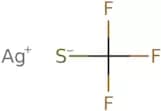
CAS:(Trifluoromethylthio) silver(I) is an efficient method for the synthesis of chiral, functionalized organosulfur compounds. It is prepared by the trifluoromethylthiolation of aryl acetonitriles in the presence of persulfate and a radical coupling agent. The reaction time can be adjusted to suit the desired product, with shorter times producing more complex molecules. This compound can be used as a nucleophile in organic reactions, including sulfide activation reactions.Formula:CHAgF3SPurity:Min. 95%Molecular weight:209.95 g/mol5-Chloro-2-nitrodiphenylamine
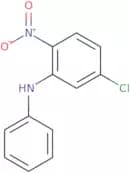
CAS:5-Chloro-2-nitrodiphenylamine is a synthetic dyestuff that belongs to the class of acridones. It can be used as an anti-epileptic drug, although it has not been approved for this use in any country. 5-Chloro-2-nitrodiphenylamine is manufactured by reacting a 6-carboxylic acid with an organic solvent and ammonolysis. This chemical is also known as 6'-chloroacridone and is used in the production of dyes and pigments. The manufacturing process produces impurities such as chloride, which must be removed by evaporation. Nitro groups are introduced during the manufacturing process to improve the dye's stability and color fastness under light exposure.Formula:C12H9ClN2O2Purity:Min. 95%Color and Shape:Orange To Red SolidMolecular weight:248.66 g/molDipivefrin hydrochloride
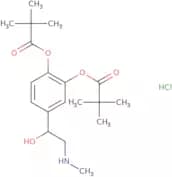
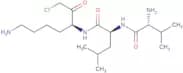
CAS:Dipivefrin hydrochloride is a drug that belongs to the class of prostaglandin analogues. It is used as a topical ophthalmic solution for the treatment of glaucoma and other intraocular disorders. Dipivefrin hydrochloride is not active against microbial infection or choroidal neovascularization, but has been shown to be effective in the pharmacological treatment of metabolic disorders. This drug interacts with the prostaglandin receptors in the eye, which can lead to increased production of cyclic GMP (cGMP), a second messenger that causes relaxation of smooth muscles in blood vessels and leads to decreased intraocular pressure. Dipivefrin hydrochloride also has antimicrobial properties due to its ability to inhibit bacterial growth through binding with microbial cell membranes, thereby inhibiting protein synthesis.Formula:C19H30ClNO5Purity:Min. 95%Molecular weight:387.9 g/molH-D-Val-Leu-Lys-chloromethylketone trifluoroacetate salt
CAS:Please enquire for more information about H-D-Val-Leu-Lys-chloromethylketone trifluoroacetate salt including the price, delivery time and more detailed product information at the technical inquiry form on this pageFormula:C18H35ClN4O3Purity:Min. 95%Molecular weight:390.95 g/molAnthranilyl-HIV Protease Substrate trifluoroacetate salt
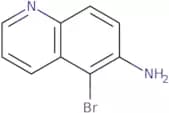
CAS:Please enquire for more information about Anthranilyl-HIV Protease Substrate trifluoroacetate salt including the price, delivery time and more detailed product information at the technical inquiry form on this pageFormula:C43H65N13O11Purity:Min. 95%Molecular weight:940.06 g/mol5-Bromoquinolin-6-amine
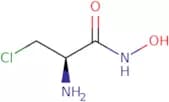
CAS:Please enquire for more information about 5-Bromoquinolin-6-amine including the price, delivery time and more detailed product information at the technical inquiry form on this pageFormula:C9H7BrN2Purity:Min. 95%Molecular weight:223.07 g/molH-beta-Chloro-Ala-NHOH hydrochloride salt
CAS:Please enquire for more information about H-beta-Chloro-Ala-NHOH hydrochloride salt including the price, delivery time and more detailed product information at the technical inquiry form on this page
Formula:C3H7ClN2O2Purity:Min. 95%Molecular weight:138.55 g/molCRAMP-18 (mouse) trifluoroacetate salt
CAS:Please enquire for more information about CRAMP-18 (mouse) trifluoroacetate salt including the price, delivery time and more detailed product information at the technical inquiry form on this pageFormula:C101H171N27O24Purity:Min. 95%Molecular weight:2,147.61 g/molH-Gly-Gly-AMC hydrochloride salt
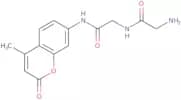
CAS:H-Gly-Gly-AMC is a fluorescent substrate for the detection of protease activity. It can be used in a homogeneous assay to measure the protease activity of cells. The assay provides an accurate measurement of protease activity and the ability to normalize data to account for differences in cell number and protein content. H-Gly-Gly-AMC hydrochloride salt (HGG) is also a fluorogenic substrate for the determination of cell death or damage, which can be measured using aminoluciferin. This assay is based on the release of aminoluciferin from lysed cells, which fluoresces in proportion to the amount released.Formula:C14H15N3O4Purity:Min. 95%Molecular weight:289.29 g/mol3-Bromo-5-chlorobenzaldehyde
CAS:3-Bromo-5-chlorobenzaldehyde is a fine chemical that is used as a building block in the synthesis of other chemicals. It is also a reagent and speciality chemical with high quality and versatility. 3-Bromo-5-chlorobenzaldehyde has been shown to be useful in the preparation of complex compounds, such as heterocyclic aromatic compounds, which are versatile scaffolds for drug discovery. 3-Bromo-5-chlorobenzaldehyde has a CAS No. 188813-05-0.Formula:C7H4BrClOPurity:Min. 95%Color and Shape:PowderMolecular weight:219.46 g/mol(Arg8)-Conopressin G trifluoroacetate salt
CAS:Please enquire for more information about (Arg8)-Conopressin G trifluoroacetate salt including the price, delivery time and more detailed product information at the technical inquiry form on this pageFormula:C44H71N17O10S2Purity:Min. 95%Molecular weight:1,062.28 g/molSalusin-alpha (human) trifluoroacetate salt
CAS:Please enquire for more information about Salusin-alpha (human) trifluoroacetate salt including the price, delivery time and more detailed product information at the technical inquiry form on this page
Formula:C114H192N40O30Purity:Min. 95%Molecular weight:2,603 g/mol5-Chlorovanillin
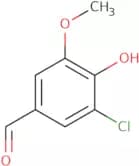
CAS:5-Chlorovanillin is a polymerase chain inhibitor that inhibits the activity of the enzyme ribonucleotide reductase. This inhibition leads to a decrease in the production of RNA and DNA, which in turn affects the transcription and replication of the bacterial DNA. 5-Chlorovanillin has been shown to have inhibitory effects on protein synthesis and cell division, as well as antimicrobial properties. It has a redox potential of -0.2 V at pH 7, making it an ideal candidate for electrochemical impedance spectroscopy (EIS).Formula:C8H7ClO3Purity:Min. 95%Color and Shape:White PowderMolecular weight:186.59 g/mol(7-Diethylaminocoumarin-3-yl)carbonyl-Amyloid b-Protein (1-40) trifluoroacetate salt
CAS:Please enquire for more information about (7-Diethylaminocoumarin-3-yl)carbonyl-Amyloid b-Protein (1-40) trifluoroacetate salt including the price, delivery time and more detailed product information at the technical inquiry form on this page
Formula:C208H308N54O61SPurity:Min. 95%Molecular weight:4,573.06 g/mol2,5-Dinitrofluorene
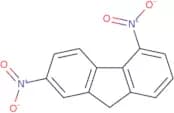
CAS:2,5-Dinitrofluorene is a carcinogenic compound that has been shown to cause cancer in laboratory animals. It can be found in high concentrations in tissues of rats and other animals. 2,5-Dinitrofluorene is metabolized by nitroreductase to the amide form. This compound has been shown to cause cancer in rats and mice when administered intramammary or topically. The tumorigenicity of 2,5-dinitrofluorene is significant at high doses, but it does not show significant effects at low doses. This agent also causes tumours on the skin of mice when applied topically. 2,5-Dinitrofluorene is an environmental pollutant that may be found in air emissions from coal burning power plants and vehicle exhausts, as well as in the soil near these facilities.Formula:C13H8N2O4Purity:Min. 95%Color and Shape:PowderMolecular weight:256.21 g/molCRAMP (mouse) trifluoroacetate salt
CAS:Please enquire for more information about CRAMP (mouse) trifluoroacetate salt including the price, delivery time and more detailed product information at the technical inquiry form on this pageFormula:C178H302N50O46Purity:Min. 95%Molecular weight:3,878.61 g/mol2,3-Dichloroanisole
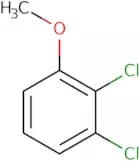
CAS:2,3-Dichloroanisole is a volatile organic compound that has been shown to be an attractant for termites. It is used as a pesticide and agrochemical. 2,3-Dichloroanisole is used as an insecticide against termites and other pests in agriculture. This chemical has been shown to inhibit the sodium channel of the nerve cell membrane, which leads to paralysis of insects. The mechanism of action for this compound is not well understood but it has been suggested that it may act by blocking the reorientation of the sodium ion channels. 2,3-Dichloroanisole can also be used as a metal salt in some thermodynamic reactions.Formula:C7H6Cl2OPurity:Min. 97%Color and Shape:PowderMolecular weight:177.03 g/mol(D-Arg2, Sar 4)-Dermorphin (1-4) trifluoroacetate salt
CAS:Please enquire for more information about (D-Arg2, Sar 4)-Dermorphin (1-4) trifluoroacetate salt including the price, delivery time and more detailed product information at the technical inquiry form on this pagePurity:Min. 95%Molecular weight:555.633-(Trifluoromethyl)phenylacetic acid
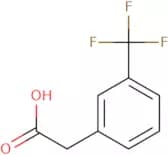
CAS:3-(Trifluoromethyl)phenylacetic acid is an isoquinoline alkaloid that has been found to have anti-inflammatory properties. It was shown to inhibit TNF-α production in mice with colitis, reducing the severity of the disease. 3-(Trifluoromethyl)phenylacetic acid can be administered orally, and it is metabolized reductively by dihydroisoquinoline reductase enzymes. The drug's pharmacokinetics are not well understood, but it is thought to be a substrate for CYP3A4 and P-glycoprotein. 3-(Trifluoromethyl)phenylacetic acid has been studied as a potential antiviral agent and systemic inflammatory response inhibitor.Formula:C9H7F3O2Purity:Min. 95%Molecular weight:204.15 g/mol